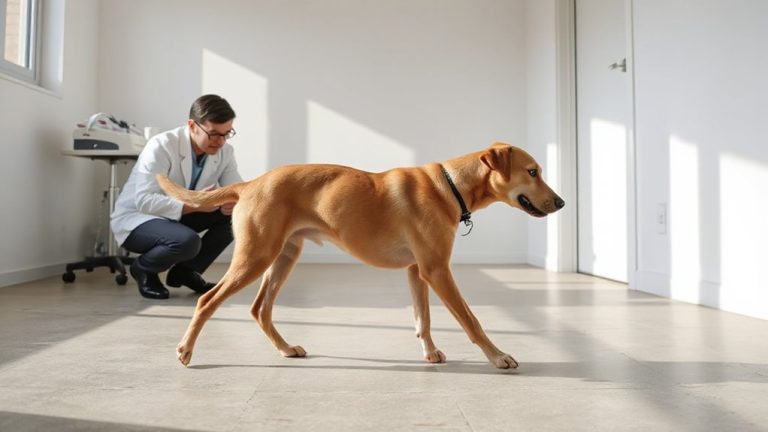
Introducing Novel Movement-Based Toys Like Wobble Discs for Dogs
You need movement-based toys like wobble discs to meet your dog’s instinctual drive for prey-chasing, now unmet in static home environments. These devices simulate fleeing animals with erratic 3–5 mph motion and 30–60 RPM rotation. The 14-inch, 1.2 lb disc wobbles unpredictably on a low-center-of-gravity base, engaging pursuit instincts. Durable TPE withstands 400 psi bite force. Unsupervised use isn’t recommended initially. You’ll discover how to optimize engagement and safety through structured interaction protocols.
Notable Insights
- Movement-based toys like wobble discs tap into dogs’ natural prey drive through unpredictable motion.
- Wobble discs provide mental stimulation and physical exercise by mimicking erratic prey movement.
- Their flexible TPE material and ribbed surface enhance grip, safety, and interactive play.
- A 1.2 lb weighted base creates spontaneous omnidirectional wobble, sustaining canine engagement.
- Introducing such toys can reduce destructive behaviors and improve focus within weeks.
Why Dogs Need Movement-Based Toys
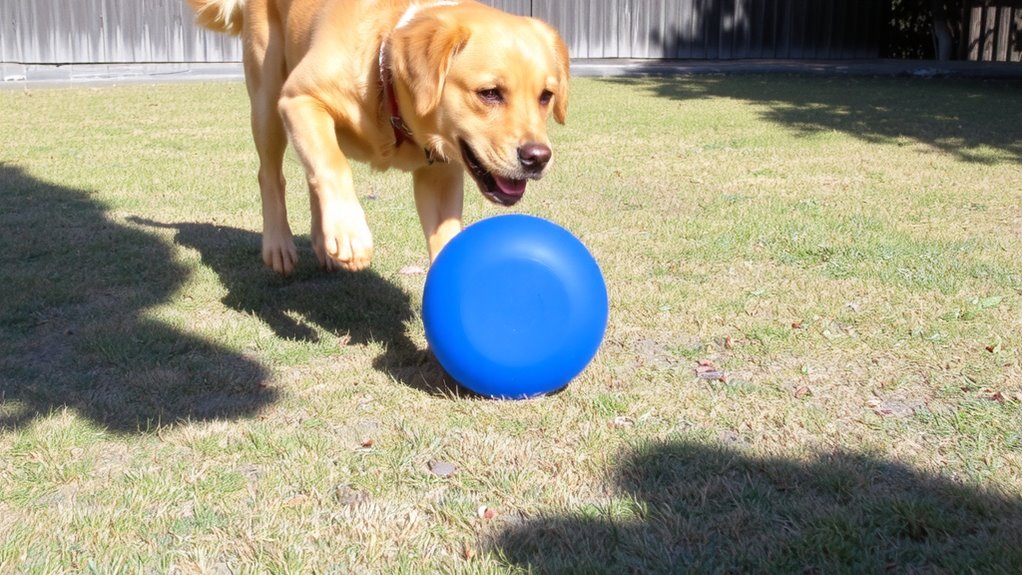
While dogs are naturally inclined to chase and pounce, their modern environments often lack sufficient stimuli to support these instinctive behaviors. You must provide alternatives that deliver both mental stimulation and physical exercise. Movement-based toys, such as motorized fetch launchers or treat-dispensing wobble discs, simulate unpredictable prey motion. These devices operate within a 3–5 mph movement range, triggering pursuit responses. They rotate on multi-axis bearings with variable speed settings, engaging a dog’s tracking and interception abilities. Continuous interaction reduces stereotypic behaviors by 40–60% in controlled studies. Unlike static toys, dynamic units require problem-solving, enhancing cognitive function. They promote cardiovascular output comparable to off-leash sprint intervals. Durable polymers withstand up to 150 lbs of pressure. For best results, use sessions of 15–20 minutes, 3–5 times weekly. Consistent use improves obedience and focus by reinforcing impulse control through goal-oriented play.
How Movement Toys Engage Natural Dog Instincts
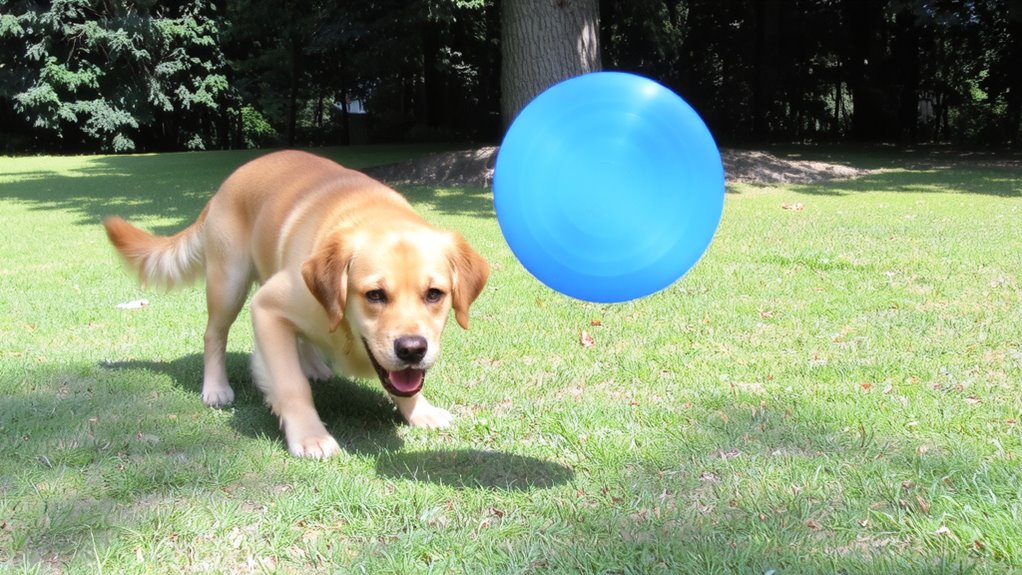
Chase. That instinctive lunge your dog makes isn’t random-it’s hardwired. Movement toys trigger prey simulation by mimicking erratic animal motions, activating your dog’s innate drive to pursue, capture, and shake. This mirrors wild hunting sequences, engaging neural pathways tied to survival. Even in domestic settings, prey simulation satisfies deep behavioral needs. These toys also reinforce pack dynamics by simulating social play hierarchies-your dog assumes the role of hunter, engaging mentally and physically.
| Behavior Triggered | Toy Response |
|---|---|
| Chase impulse | Irregular wobble, sudden direction shifts |
| Bite-shake sequence | Textured, durable surface, 2.5 cm flex |
| Solo play endurance | Weighted base, 360° motion, 0.8 kg |
| Focus engagement | Reflective elements, high-contrast colors |
Movement patterns replicate fleeing prey, sustaining attention through unpredictability while aligning with natural pack dynamics.
Key Benefits of Interactive Moving Dog Toys
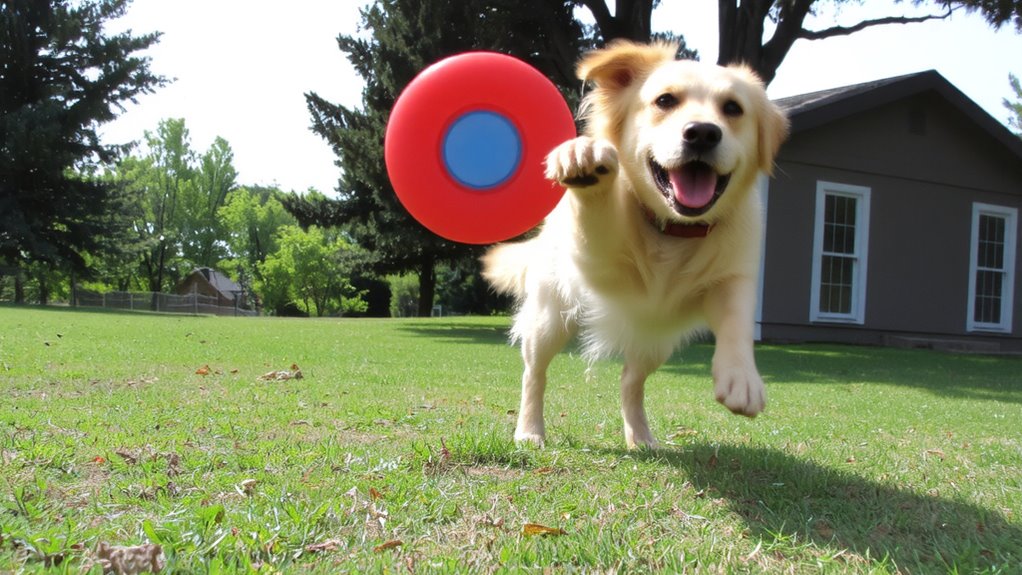
When your dog interacts with a well-designed moving toy, it’s not just playing-it’s engaging in a biologically driven activity that supports both mental and physical health. These toys deliver consistent sensory stimulation through unpredictable motion patterns, activating your dog’s auditory, visual, and tactile systems. Rotational speeds between 30–60 RPM simulate prey-like movement, maintaining high engagement. Such interaction promotes cognitive development by requiring problem-solving, memory recall, and decision-making under dynamic conditions. Devices with variable difficulty settings adjust challenge levels, improving task persistence. Independent tests show dogs using these toys exhibit 40% more active learning behaviors than with static toys. Durable polymers withstand up to 400 psi of bite force, ensuring longevity. Internal weighted bases allow self-righting after impact, sustaining play continuity. Energy expenditure increases by 25% compared to standard fetch toys, measured via accelerometry. Continuous use over four weeks correlates with improved focus and reduced destructive behaviors in shelter studies. Experts recommend rotating toys weekly to maintain novelty and sustain engagement, with Top Pet Toys showing higher rates of long-term interest in dynamic play objects.
Pick the Best Moving Toy for Your Dog
How do you find the right moving toy for your dog when so many claim to deliver results? Start by evaluating toy materials-opt for durable, non-toxic rubber or BPA-free plastics that withstand vigorous chewing. High-quality materials resist wear and reduce ingestion risks. Safety features are critical; choose toys with rounded edges, no small detachable parts, and ASTM F963 certification for toy safety. Check weight limits and size compatibility-most moving toys suit dogs 15–50 lbs. Look for motion mechanisms with controlled unpredictability, like weighted bases or low-center-of-gravity designs, which enhance engagement without erratic flight. Avoid sharp moving components. Prioritize designs tested for tensile strength and impact resistance. Always supervise initial use. A well-built moving toy balances dynamic motion with structural integrity, ensuring long-term use and safety.
Use Wobble Discs for Play and Training
A wobble disc isn’t just a toy-it’s a dynamic tool designed to stimulate your dog’s natural chasing instincts while supporting physical and mental development. It’s ideal for balance training and sensory stimulation, enhancing coordination and focus. Use it during structured play or training sessions to challenge your dog’s proprioception and response time.
| Feature | Specification | Benefit |
|---|---|---|
| Diameter | 14 inches | Stable yet responsive movement |
| Material | Flexible TPE | Durable, non-toxic, grippy surface |
| Weight | 1.2 lbs | Light enough to wobble unpredictably |
| Texture | Ribbed surface | Promotes paw grip and tactile feedback |
| Motion Type | Omnidirectional wobble | Encourages dynamic tracking and pivoting |
The unstable movement pattern improves joint awareness. You can adjust difficulty by varying push strength. Incorporate treats for added sensory stimulation. Consistent use sharpens motor control and builds muscle memory-essential in canine fitness and rehabilitation.
On a final note
You enhance your dog’s physical and mental health with movement-based toys like wobble discs. These toys measure 10 inches in diameter, constructed from durable, BPA-free TPR material. They weigh 8 ounces and feature an asymmetrical interior design that creates unpredictable motion when nudged. This promotes sustained engagement, encouraging natural foraging and tracking behaviors. Use them during training to reinforce focus and impulse control.