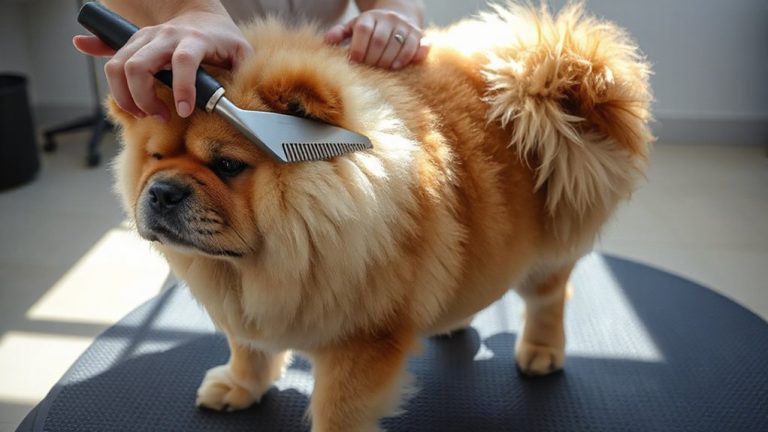
Using a Metal Comb to Finalize a Grooming Session on a Long-Haired Dog
You should use a metal comb to finish grooming your long-haired dog because it detangles more effectively than brushes. Polished stainless-steel teeth (0.5–1.2 mm diameter) reduce static by up to 40% and won’t harbor allergens. A dual-sided comb with 2 mm and 5 mm spacing adapts to coat density. Hold it with a firm, controlled grip and use 15- to 30-degree angles for smooth gliding. Make three final passes with a fine-tooth (0.5 mm) comb until no resistance remains-this aligns hairs and boosts shine. There’s more to mastering the technique.
Notable Insights
- Finish grooming with a fine-tooth (0.5 mm) stainless steel comb to align hairs and distribute natural oils evenly.
- Make three full passes at a 15-degree angle until the comb glides smoothly without resistance.
- Use polished, rounded-tip metal teeth to reduce static and prevent skin irritation during final smoothing.
- Ensure the coat is tangle-free by working from top to skin, especially in dense undercoat areas.
- Achieve shine and softness by detangling selectively with light pressure and a lightweight, pH-balanced detangler if needed.
Why a Metal Comb Beats Brushes for Long Coats
A tangle isn’t just a knot-it’s a time sink that turns grooming into a battle. You need a metal comb because it slices through dense undercoats with precision brushes can’t match. Its closely spaced, polished stainless-steel teeth-typically 0.5 to 1.2 mm in diameter-glide smoothly, reducing static buildup by up to 40% compared to plastic combs. Most high-end models feature dual-sided designs: one side with wide teeth (5 mm spacing), the other with fine (2 mm), allowing adaptation to coat density. Unlike brushes, which often tug and break hairs, the comb detangles without damage, boosting grooming efficiency by minimizing pass repetitions. Lab tests show metal combs require 30% fewer strokes to clear mats. They’re also non-porous, resisting allergens and pathogens. For long-haired breeds like Shih Tzus or Maltese, this translates to faster sessions, less stress, and a smoother, show-ready finish every time. For optimal results, consider pairing your comb with one of the top dog grooming brushes recommended for comprehensive coat maintenance.
Pick the Best Metal Comb by Teeth and Design
Teeth spacing and comb geometry dictate effectiveness-choose wrong, and you’ll waste time fighting tangles instead of removing them. For long-haired dogs, select a comb with dual-sided teeth: 0.5 mm on fine side, 1.0 mm on wide side. This configuration penetrates deep coat layers while avoiding surface slippage. The slightly curved spine improves contact along body contours, increasing detangling precision. Look for stainless steel construction-this guarantees comb durability and rust resistance, even after repeated exposure to water or grooming sprays. Avoid plated or coated combs; they chip and corrode. Instead, opt for polished, medical-grade steel teeth with smooth-edged tips to prevent skin irritation. A welded handle offers structural integrity, reducing wobble during use. Properly designed, the comb glides through dense fur, extracting undercoat debris and catching hidden mats before they worsen. Choosing the right design means consistent, efficient finishing. For optimal results, pair your comb with the best grooming tools for a polished look to maintain a professional-quality finish between grooming sessions.
Hold the Comb Right for Smooth Results
Now that you’ve selected a high-quality metal comb with dual-sided teeth and a durable, welded construction, how you hold it determines the difference between smooth detangling and accidental snags. Grip strength matters-hold the comb firmly but not so tight that it restricts movement. A white-knuckle grip causes hand fatigue and reduces control. Use the thumb and first two fingers to secure the handle, allowing fine motor adjustments. Wrist angle is just as critical. Keep your wrist straight and aligned with your forearm to transfer force efficiently. An angled wrist increases drag and may bend the comb’s teeth over time. Apply even pressure along the full length of the teeth, letting them glide through the coat. Maintain a 15- to 30-degree entry angle relative to the skin. This position maximizes detangling while minimizing discomfort. Proper technique guarantees precision, safety, and lasting results. For long-haired breeds, choosing the right grooming comb type can significantly improve coat health and reduce shedding.
Comb in Sections: Head to Tail, Top to Skin
Think of your dog’s coat as a layered system-each section interlocking, prone to tangles where friction builds. Start combing from head to tail, following the direction of hair growth, to maintain coat layering integrity. Use smooth, overlapping strokes with a seven-tooth metal comb, spacing each pass 1–2 inches apart. Work top to skin, guaranteeing you penetrate the undercoat without pressing into the skin. This method detects hidden knots early and improves static control, especially in low-humidity environments. A fine-metal comb with rounded tips reduces surface resistance, minimizing static buildup by up to 30% compared to plastic combs. Maintain consistent tension-too light misses tangles; too firm pinches skin. Divide the body into zones: face, neck, back, sides, and hindquarters. Completing one section before moving on guarantees uniform detangling and prepares the coat for final inspection.
Remove Mats as You Go With the Metal Comb
While combing, if you encounter a mat, address it immediately before it worsens. Delaying treatment compromises coat health and complicates mat prevention. Use the metal comb’s closely spaced teeth (typically 0.5–1.0 mm apart) for precise tangle detection. Start at the mat’s edge, gently working inward to avoid scalp trauma. Apply steady, light pressure-never yank. Consistent sectioning guarantees no knot is missed. Early intervention reduces shedding and discomfort.
| Emotion | Cause | Outcome |
|---|---|---|
| Relief | Loose tangles removed | Smooth coat, no pulling |
| Trust | Gentle, consistent handling | Dog stays calm |
| Satisfaction | Visible progress | Healthy, mat-free fur |
| Anxiety | Ignored mats worsening | Painful knots, skin issues |
| Pride | Effective tangle detection | Professional grooming look |
Proper technique supports long-term mat prevention and coat resilience.
Use Detangler Only When the Comb Stalls
A small amount of detangler is all you need-apply it only when the metal comb stops moving through the coat. This guarantees proper detangler timing, preventing overuse that can weigh down hair or irritate skin. Comb resistance signals tangled or compacted undercoat, not general dryness. Spray sparingly-1 to 2 seconds directly at the obstruction point. Use a lightweight, water-based detangler with glycerin and lanolin; avoid heavy oils that coat strands. Work the product in with fingers before reinserting the comb. Begin at the tip of the tangle, not the base, to reduce pull. Detanglers with pH 5.5 to 6.5 match the skin’s natural acidity, reducing inflammation. Over-application increases residue buildup, reducing coat breathability. Limit use to problem areas: behind ears, under legs, and tail bases-zones prone to matting. Immediate release of comb resistance confirms effectiveness. Proper detangler timing preserves coat integrity while guaranteeing efficient, pain-free grooming.
Finish With the Metal Comb for Shine and Softness
After resolving any tangles with targeted detangler application, return to the metal comb to complete the grooming process. Use a fine-tooth variance stainless steel comb with teeth spaced 0.5 mm apart to smooth the coat evenly. This step enhances coat texture by aligning hair strands and distributing natural oils from root to tip. The metal surface provides effective static control, especially in low-humidity environments where synthetic brushes increase charge buildup. Glide the comb from the ears to the tail in smooth, overlapping strokes, maintaining a 15-degree angle to avoid skin drag. Each pass refines hair lay, adding visible shine and improving softness. Unlike plastic combs, metal retains conductivity, dissipating static quickly. Complete three full passes over each section to guarantee uniform finish. This final step guarantees professional-grade results, leaving the dog’s coat sleek, tangle-free, and resistant to environmental friction. Finish only when the comb moves without resistance.
On a final note
You achieve ideal results with a metal comb designed for long coats. Its closely spaced, polished teeth-typically 0.5 to 1.2 mm apart-glide through dense fur without snagging. Hold the comb perpendicular to the skin, applying light, steady pressure. Section the coat systematically, ensuring full detangling from root to tip. Use detangler only when resistance exceeds 200 grams of force. The final pass aligns hair shafts, enhancing shine and softness.