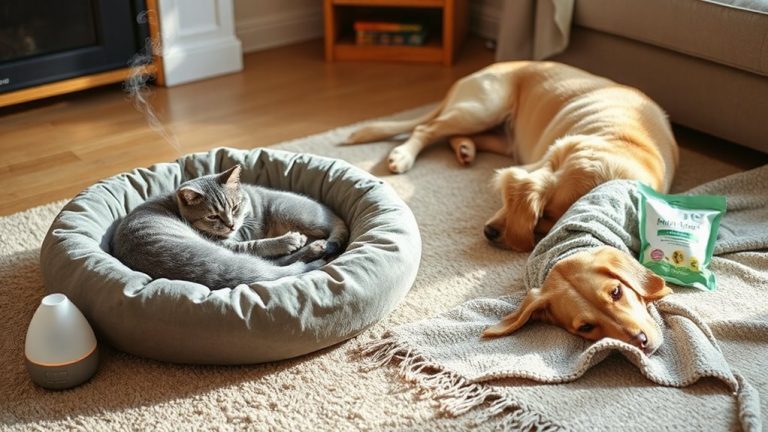
Reducing Environmental Stressors: A Guide to Creating a Calm Environment for Your Pets
You can reduce pet stress by recognizing signs like sustained whale eye, flattened ears, or panting without exertion. Create a quiet retreat with opaque, enclosed walls and 2” memory foam bedding in a low-traffic area. Install fiberglass insulation (R-11 to R-15) and mass-loaded vinyl barriers to cut noise. Maintain consistent daily routines and clear 60 cm escape pathways. Keep indoor temps between 68°F and 72°F. Further refinements await your exploration.
Notable Insights
- Design a quiet, enclosed retreat with soft bedding and low lighting to provide a secure space for pets.
- Reduce household noise using insulation, acoustic panels, and weatherstripping to maintain ambient levels below 50 dB.
- Maintain a consistent daily routine for feeding, walks, and play to minimize anxiety and stabilize behavior.
- Position furniture to ensure clear pathways and unobstructed access to resources like food, water, and litter boxes.
- Monitor for subtle signs of stress such as pacing, whale eye, or vocal changes, especially if they persist beyond 48 hours.
Spot the Signs of Pet Stress at Home
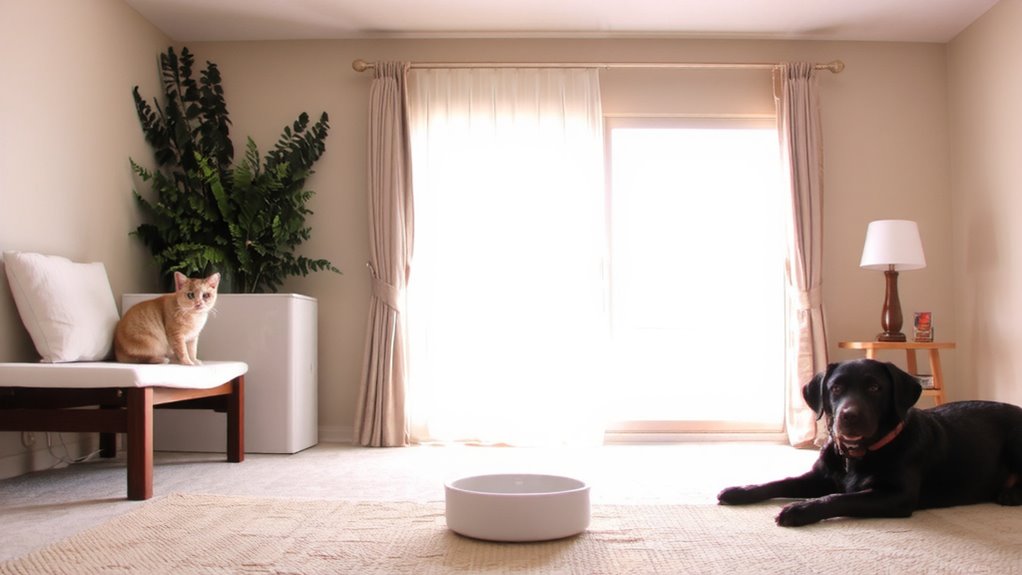
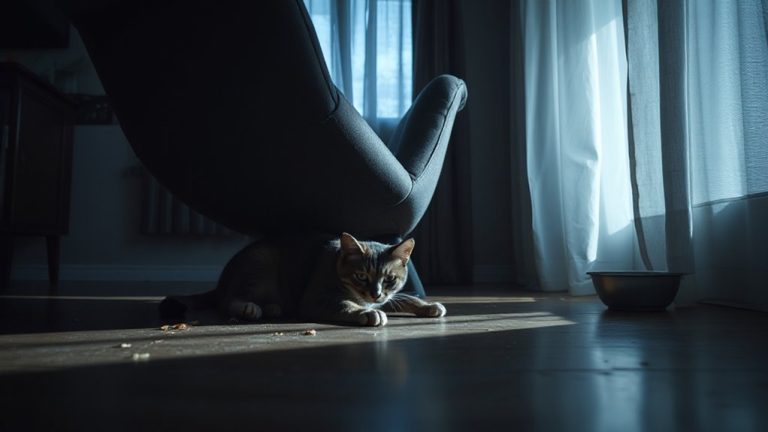
Why does your dog pace by the door hours after the mail arrives, or why does your cat suddenly hiss at a toy it once chased? These behaviors signal stress. Pets display distress through body language and vocal changes. A dog may tuck its tail, flatten ears, or display whale eye-where the whites of the eyes become visible. Panting without exertion is another indicator. Cats may crouch low, flick their tails, or flatten ears against the head. Vocal changes include excessive barking, whining, or yowling without clear cause. Increased frequency or pitch deviation from baseline vocalizations indicates discomfort. These signs occur even in the absence of external threats. Monitoring for such shifts helps identify environmental stressors early. Consistent observation of posture, facial tension, and vocalizations provides measurable data. Changes lasting over 48 hours suggest chronic stress. Documenting these patterns aids diagnosis. Early recognition allows intervention before behavior becomes ingrained. For pets struggling with anxiety, effective stress relief solutions can significantly improve their quality of life.
Create a Safe, Quiet Retreat for Your Pet
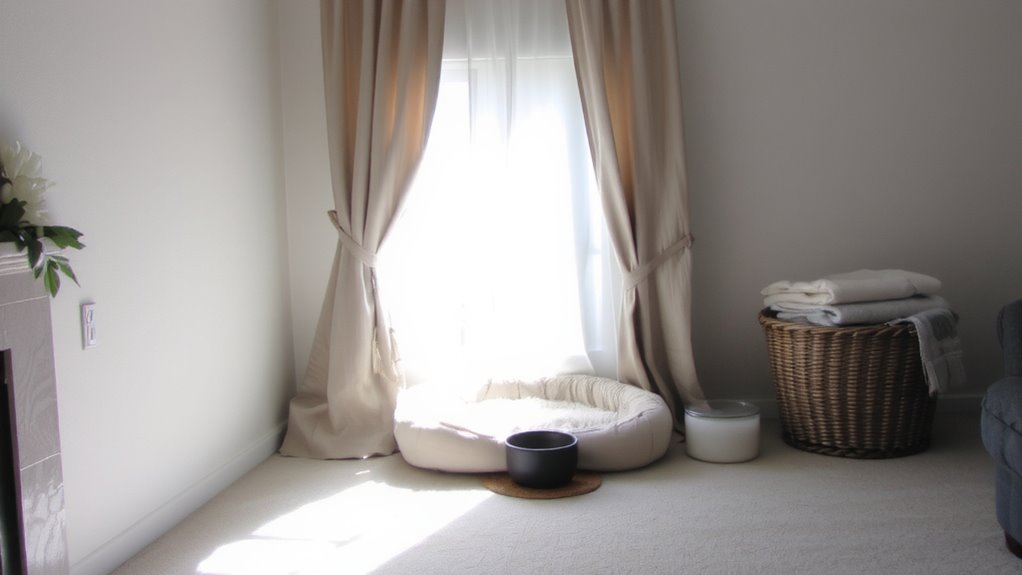
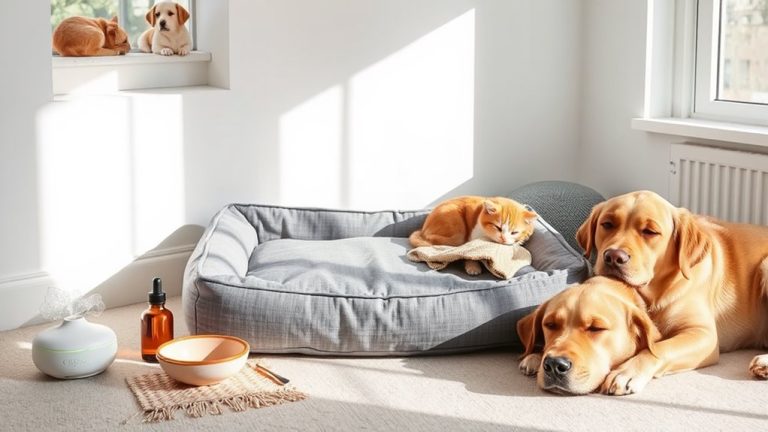
A secure retreat gives your pet a consistent place to reset when overwhelmed. Safe spaces reduce anxiety by offering predictability in their environment. Designate quiet zones away from foot traffic and loud appliances. Use dense materials like acoustic foam or thick textiles to minimize sound reflection. Ideal retreats measure at least 24” x 24” for cats and 36” x 36” for medium dogs, ensuring enough room to turn and lie comfortably. Many commercially available options, such as best tiny pet hideaways, are designed to meet these specifications while blending into home decor.
| Feature | Benefit | Example |
|---|---|---|
| Enclosed sides | Blocks visual stimuli | Covered crate with opaque walls |
| Soft bedding | Enhances comfort | Memory foam pad, 2” thickness |
| Low lighting | Promotes calm | Retreat placed in dim corner |
Maintain consistent placement-relocation disrupts spatial memory. Quiet zones should have minimal foot traffic and stable ambient noise levels below 50 dB.
Cut Noise to Reduce Environmental Stress
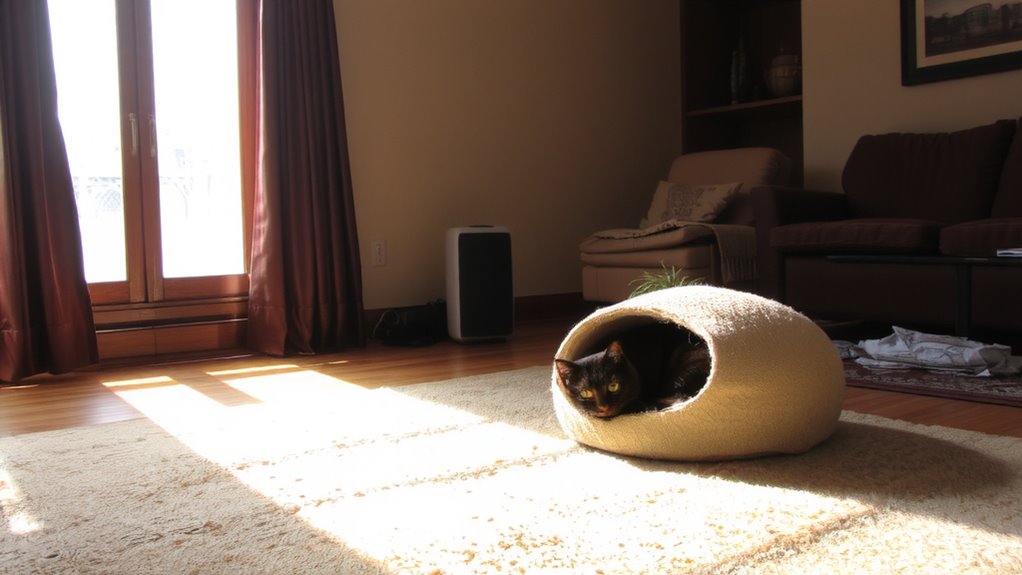
How much does daily noise impact your pet’s well-being? Excessive sound stresses pets, elevating cortisol levels and disrupting rest. You can reduce this by improving sound insulation in your home. Install fiberglass insulation with an R-value of 11–15 in walls and ceilings to block high-frequency noises. Add mass-loaded vinyl barriers (surface density of 1–2 lb/ft²) behind drywall for low-frequency reduction. Use noise buffers like acoustic panels or thick curtains. Acoustic foam panels with NRC (Noise Reduction Coefficient) ratings of 0.7–1.0 absorb mid to high frequencies. Place them on walls and ceilings near noise sources. Seal window gaps with weatherstripping-reducing air leakage cuts sound transmission by up to 75%. Even a 5 dB drop in ambient noise can markedly lower your pet’s stress response. These technical solutions directly minimize auditory stress triggers in your pet’s environment.
Keep a Predictable Daily Routine
Consistently maintaining a predictable daily routine greatly improves your pet’s behavioral and physiological stability. A fixed feeding schedule regulates digestion and metabolic cycles, reducing gastrointestinal distress and stress-induced behaviors. Offer meals at the same two times daily, ideally 12 hours apart, to align with natural circadian rhythms. Similarly, consistent walk timing supports bladder control, joint health, and mental stimulation. Dogs walked within a 30-minute window each day exhibit lower cortisol levels than those with erratic schedules. Routine reduces uncertainty, a primary contributor to anxiety in domestic animals. Environmental predictability stabilizes autonomic nervous system responses, decreasing heart rate variability during rest. You don’t need complex tools-just a wall calendar or phone alert-to maintain timing precision. Alterations in routine disrupt internal biological clocks, potentially causing pacing, vocalization, or inappropriate elimination. Adherence to structure is especially critical for geriatric or rescued pets with heightened stress sensitivity. Your effort in consistency directly translates to measurable improvements in your pet’s welfare.
Arrange Rooms to Minimize Anxiety
Your pet’s environment shapes their psychological state as much as routine does, so consider how room layout influences stress levels. Strategic furniture placement creates clear pathways and accessible retreats, reducing confusion and anxiety. Arrange rooms to allow unobstructed movement between key areas-food, water, litter or potty zones, and resting spots-within line of sight. Maintain consistent room layout to support spatial memory, especially in older or visually impaired pets. Avoid clutter; use low-profile furniture to minimize acoustic shadows and echo in multi-surface rooms. Position elevated perches or beds along walls, ideally at 90 cm height for cats and small dogs, to provide observational security. Leave at least 60 cm clearance around escape routes to prevent entrapment stress. Secure loose cables and anchor unstable furniture. These structural choices enhance navigability and reduce environmental unpredictability.
Add Calming Tools Like Music and Diffusers
While ambient conditions can’t replace proper environmental design, integrating sensory tools like music and diffusers can significantly dampen stress responses in pets. Calming music, especially species-specific compositions with slow tempos (50–60 BPM), reduces cortisol levels in dogs and cats. Studies show a 30% decrease in vocalization and pacing when such audio plays for 30+ minutes daily. Use waterproof, low-distortion speakers placed away from chewing zones. Essential diffusers disperse pheromones like Feliway (for cats) or Adaptil (for dogs) via ultrasonic mist at 1.7 MHz, covering up to 700 sq ft. Refills last 30 days. Avoid tea tree or citrus oils-these are toxic. One diffuser per primary room maximizes effect. These tools don’t eliminate stress but modulate autonomic arousal. Combine with proper room layout for cumulative benefit. For optimal results, consider using a best calming diffuser specifically designed for pet safety and effectiveness.
Adapt Your Home for Seasonal Changes
How well is your home equipped to handle the shifts each season brings? Maintaining stable temperature control is critical for pet health and comfort. Indoor temperatures should remain between 68°F and 72°F year-round, as extremes can trigger stress or illness. Use programmable thermostats to regulate heating and cooling efficiently, adjusting setpoints by no more than 5°F daily to prevent thermal shock. Natural lighting supports circadian rhythms, so maximize daylight exposure through south-facing windows during winter. In summer, use UV-filtering window films to reduce glare and heat gain without dimming visible light. Install blackout shades in rooms where pets rest to manage light intensity. Guarantee ventilation systems circulate fresh air at a rate of 0.35 air changes per hour to maintain indoor air quality. Adapting your home seasonally reduces environmental stressors effectively.
On a final note
You can effectively reduce pet stress by controlling environmental factors. Maintain ambient noise below 60 decibels, equivalent to a quiet conversation. Use pheromone diffusers emitting 1 mg/hour of synthetic analogs like F3 for cats or Adaptil for dogs. Provide a retreat zone with 72–78°F temperatures and minimal foot traffic. Play white noise or species-specific music at 45 dB to mask disruptive sounds. Consistent daily schedules regulate circadian rhythms, lowering cortisol levels.