The Truth About “Light” and “Reduced-Calorie” Pet Foods: Are They Effective?
You’re likely feeding a “light” diet, but many reduced-calorie pet foods cut energy with fillers, not smarter nutrition. “Light” means 25% fewer calories; “reduced-calorie” means 10–25% less (AAFCO standards). Effective weight-control foods have 250–300 kcal/cup (dogs), 200–250 (cats), 5–10% fiber, and real meat first. Cheap versions replace protein with indigestible fiber, reducing satiety. Look for balanced macronutrients, not just lower calories-what’s inside matters more than the label. There’s more to know about making the right choice.
Notable Insights
- “Light” pet foods must have at least 25% fewer calories than regular versions, per AAFCO standards.
- Reduced-calorie foods typically contain 10–25% less energy, often achieved by lowering fat and increasing fiber.
- Many weight-control foods use fillers like cellulose or soybean hulls, which add bulk but offer little nutrition.
- Effective weight-loss pet foods preserve muscle with high-quality protein and include 5–10% fiber for satiety.
- Not all “light” or “reduced-calorie” labels ensure weight loss; some cut protein or rely on indigestible fiber.
Why Pet Obesity Is a Growing Concern

A growing number of pets are classified as overweight or obese, with recent studies indicating that over 50% of dogs and cats in the U.S. fall into these categories according to veterinary assessments. You contribute to this trend through pet overfeeding and allowing sedentary lifestyles. Adult dogs require 20–30 kcal per pound of body weight daily, depending on activity level; exceeding this causes weight gain. Cats need approximately 20 kcal per pound. Feeding beyond these values, especially with high-calorie treats, escalates obesity risk. Most indoor pets burn fewer calories due to limited space and inconsistent exercise routines. A sedentary lifestyle in cats reduces energy expenditure by up to 30% compared to active counterparts. Overfeeding by just 10–15% above maintenance needs results in a one-pound annual gain in cats and up to four pounds in medium dogs. These excess pounds increase risks for diabetes, arthritis, and reduced lifespan.
What Do “Light” and “Reduced-Calorie” Pet Food Labels Mean?
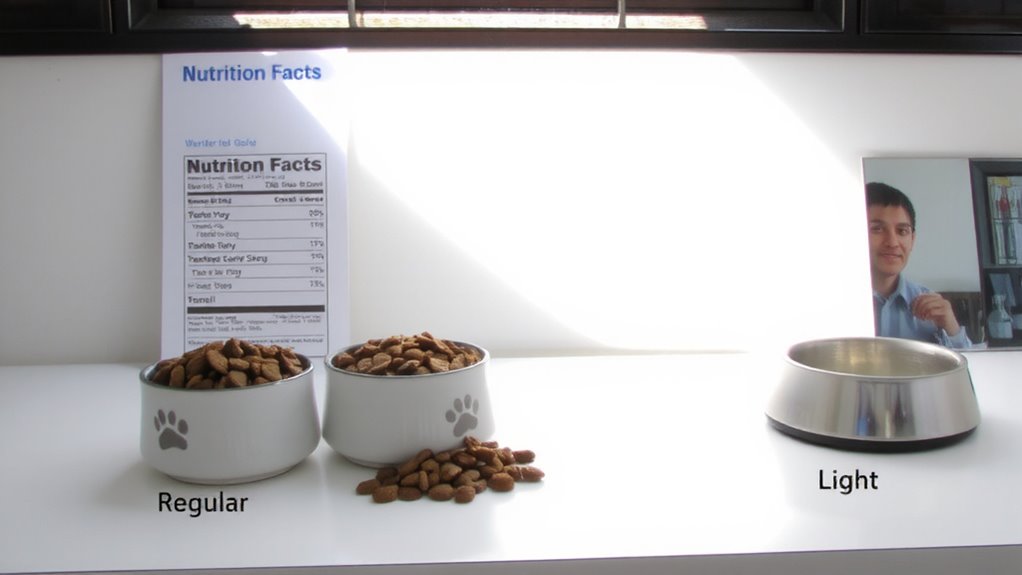
While shopping for pet food, you’ll likely encounter labels like “light” or “reduced-calorie,” but these terms aren’t just marketing jargon-they meet specific regulatory definitions. Label accuracy is enforced by the AAFCO, ensuring claims reflect actual caloric content. “Light” foods must have at least 25% fewer calories than standard versions. “Reduced-calorie” means 10–25% less energy. These products maintain nutritional balance, delivering essential vitamins and minerals despite lower energy density. Formulations often increase fiber or use leaner proteins to reduce calories without sacrificing nutrient adequacy.
| Term | Calorie Reduction | Regulatory Body |
|---|---|---|
| Light | ≥25% | AAFCO |
| Reduced-Calorie | 10–25% | AAFCO |
| Low-Fat | ≥25% less fat | AAFCO |
| Calorie-Controlled | Varies | Manufacturer |
How Do Weight-Control Pet Foods Help With Weight Loss?
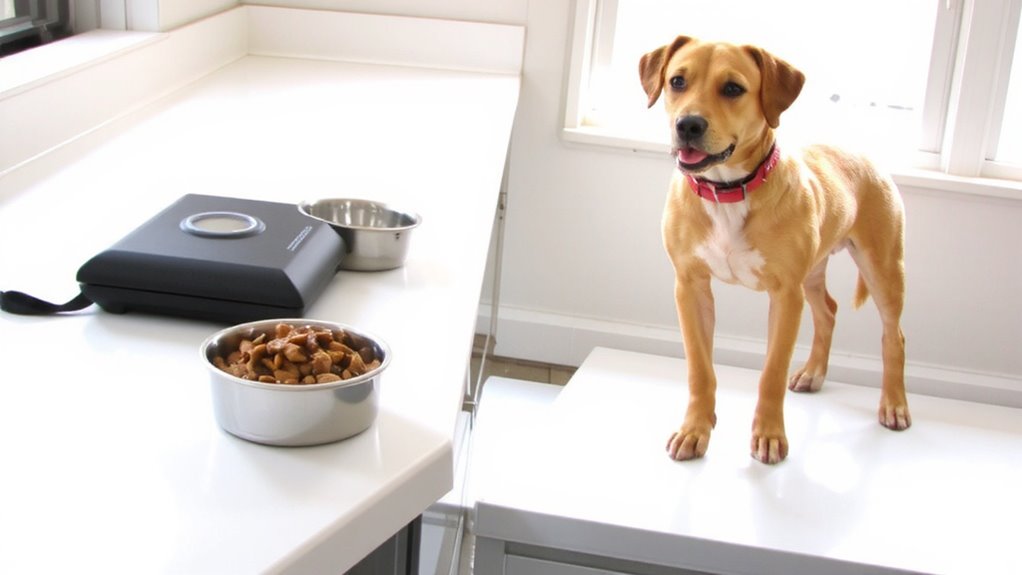
Because weight-control pet foods are formulated to limit calorie intake without sacrificing essential nutrients, they play a key role in managing your pet’s weight. These foods typically contain 15–25% fewer calories than regular formulas. They achieve this through reduced fat content and increased fiber, helping your pet feel full. Weight-control diets provide metabolic support by including ingredients like L-carnitine, which aids fat metabolism. They maintain nutrient balance with ideal levels of protein, vitamins, and minerals, preventing deficiencies during weight loss. High protein content-often 25–30% on a dry matter basis-preserves lean muscle mass. Fiber levels range from 5–10%, promoting satiety and digestive health. Unlike simple calorie restriction, these formulas support long-term health. You’re not just cutting calories-you’re optimizing your pet’s nutrition. Proper nutrient balance guarantees your pet loses fat, not muscle.
How Weight-Control Pet Foods Are Actually Designed to Work
Weight-control pet foods aren’t just lower in calories-they’re engineered to support healthy metabolism and sustained weight loss. They achieve this through increased fiber content, which promotes satiety and reduces overeating. High-fiber formulas often contain 8–12% crude fiber, compared to 2–4% in regular foods, helping your pet feel full on fewer calories. These diets also maintain high nutrient density, ensuring your pet gets essential vitamins, minerals, and protein despite reduced energy intake. Nutrient density is preserved by using lean protein sources like chicken meal or egg whites, which provide amino acids without excess fat. Many weight-control foods contain 25–30% protein on a dry matter basis, aligning with AAFCO guidelines for adult maintenance. Controlled fat levels-typically 8–12%-help limit caloric density. Together, balanced macronutrients, elevated fiber content, and ideal nutrient density create a scientifically sound approach to managing your pet’s weight effectively.
How Fillers and Marketing Tricks Undermine Pet Weight Loss
What if the “light” food keeping your pet from losing weight isn’t really designed for health at all? Many weight-control formulas rely on filler ingredients like corn bran, soybean hulls, and cellulose to add bulk with minimal calories. These components increase stool volume but offer little nutritional value. Meanwhile, deceptive packaging highlights “30% fewer calories” without clarifying that the reduction comes from trimming protein, not fat. Some brands replace meat with plant-based fillers, lowering digestibility. The result? Your pet feels hungrier, eats more, and loses no weight. Studies show kibble with over 15% indigestible fiber fails to support long-term satiety. Regulatory standards allow vague labeling, so “reduced-calorie” doesn’t guarantee effective weight management. You’re paying more for less nutrition. Always examine the guaranteed analysis and ingredient list instead of trusting marketing claims.
How to Pick a Weight-Control Food That Actually Works
How do you know if a weight-control food will actually help your pet lose weight-or just pad the profits of the manufacturer? Look beyond the label claims. Prioritize ingredient quality: choose foods with named animal proteins as the first ingredients and minimal fillers. High-quality protein maintains lean muscle during weight loss. Fiber content should be 5–10% (dry matter basis) to promote satiety without excess calories. Check the calorie density-ideal weight-control diets contain 250–300 kcal/cup for dogs, 200–250 for cats. Control feeding frequency: divide daily portions into two measured meals to regulate metabolism and prevent overeating. Avoid free-feeding. Follow the feeding guidelines based on your pet’s target weight, not current weight. Weigh your pet monthly and adjust portions by 10% if needed. Effective weight loss is 1–2% of body weight per week.
On a final note
You must choose weight-control pet foods with precise nutritional profiles. Look for 20–25% lower metabolizable energy density compared to regular adult formulas. Opt for diets with at least 30% protein on a dry matter basis to maintain lean mass. High insoluble fiber-10–12% crude fiber-promotes satiety. Avoid those relying solely on fillers like corn bran or cellulose. True efficacy demands scientific formulation, not just reduced calories.