How to Store Emergency Food Rations for Pets in Extreme Weather
Store pet food in a climate-stable area between 50–70°F with humidity below 60% to prevent nutrient loss. Use airtight, insulated containers with 5–10 mm closed-cell foam lining and oxygen transmission rates under 0.1 cc/m²/day. Vacuum-seal food in moisture-barrier bags to reduce oxygen to <0.5%, extending shelf life up to five years. Keep containers elevated on pallets in dry interior rooms, away from sunlight and exterior walls. Rotate stock every 90 days and check seals regularly-your next steps guarantee long-term protection.
Notable Insights
- Store pet food in a climate-stable indoor area between 50–70°F to prevent nutrient loss from heat or moisture.
- Use airtight, vacuum-sealed, insulated containers with moisture barriers to extend shelf life and block environmental damage.
- Avoid garages, attics, and basements due to temperature swings and humidity that degrade food quality.
- Rotate emergency rations every 90 days and replace annually to ensure freshness and safety.
- Label containers with dates, use FIFO rotation, and include sealed Mylar bags in a waterproof, durable emergency kit.
Protect Pet Food From Heat, Cold, and Spoilage
Store your pet’s emergency food in a climate-controlled environment to prevent degradation from extreme temperatures. Exposure to heat or cold accelerates thermal degradation, which damages food’s molecular structure. Temperatures above 75°F (24°C) increase oxidation rates, breaking down fats and proteins. Prolonged exposure can cause up to 30% nutrient loss in vitamins A, D, and E within six months. Freezing below 32°F (0°C) may compromise kibble integrity, leading to moisture absorption upon thawing. Thermal degradation also encourages microbial growth when food returns to ambient temperatures. Ideal storage is between 50–70°F (10–21°C) with humidity under 60%. These conditions minimize chemical reactions that reduce shelf life. You must monitor storage areas with a calibrated thermometer and hygrometer. Avoid attics, garages, or basements with temperature swings. Consistent climate control preserves nutritional value and safety, ensuring your pet receives full dietary benefits during emergencies.
Use Airtight, Insulated Containers
Even if you’ve chosen the best pet food for emergencies, its shelf life depends heavily on proper containment. Use airtight, insulated containers to maintain food quality under extreme temperatures. Airtight seals prevent air exchange, slowing oxidation and preserving nutrients. Vacuum sealing removes 99% of air, greatly reducing spoilage risk and extending shelf life up to 300% compared to open storage. Insulated containers with thermal lining-typically 5–10 mm of closed-cell foam-maintain internal stability, minimizing temperature fluctuations. A 7-quart container with a vacuum-sealed lid and thermal lining can keep contents within 10°F of ambient temperature during 24-hour exposure to extremes from 20°F to 100°F. This protection guarantees kibble doesn’t degrade prematurely. Choose containers made of FDA-approved, BPA-free polypropylene for safety. Always reseal immediately after use to preserve protection. Insulation combined with vacuum sealing gives your pet’s food the best defense against environmental stress. For long-term reliability, consider best pet food storage containers that are specifically designed for durability and freshness retention.
Keep Food Dry: Fight Humidity and Moisture
One gram of water can spoil nearly half a pound of dry pet food when humidity exceeds 60%. You must keep emergency rations dry to preserve nutritional integrity and prevent mold. Silica gel packets absorb moisture inside storage containers, maintaining safe humidity levels below 50%. Use food-grade silica gel-roughly 5 grams per quart of container volume-for best results. Vacuum sealing removes air and moisture, drastically slowing degradation. A vacuum sealer with a moisture barrier bag reduces oxygen content to below 0.5%, extending shelf life up to five years. Always inspect seals before long-term storage. Vacuum-sealed bags should feel rigid; any softness indicates a leak. Store sealed bags inside airtight plastic or metal containers as a secondary moisture barrier. Avoid damp basements or humid garages. Consistent dryness guarantees food remains safe, palatable, and nutritionally stable for your pet during emergencies. For long-term protection, consider using a moisture-proof pet food storage container designed to block humidity and pests.
Store in Temperature-Stable Indoor Spots
Since temperature fluctuations degrade pet food quality over time, choosing a climate-controlled indoor location is critical for long-term storage. A stable storage location prevents nutrient breakdown and spoilage. Ideal temperatures range between 50°F and 70°F, where fats and proteins remain chemically stable. Indoor climate control guarantees protection from external weather extremes. Avoid attics, garages, and sunrooms, as these areas experience wide thermal swings. Store food in airtight, opaque containers with moisture barriers, rated for oxygen transmission rates below 0.1 cc/m²/day. Rotating stock every six months maintains freshness, as most dry pet foods retain full nutritional value for up to 18 months under stable conditions. Monitor ambient humidity; keep levels below 60% to deter mold. A basement interior room or interior closet with consistent temperature provides maximum protection. Maintaining a stable storage location preserves caloric density and prevents vitamin degradation. For added convenience and mobility, consider using containers with wheels when storing large quantities of emergency pet food.
Don’t Risk It: Avoid Hot Cars and Damp Basements
While convenience might tempt you to leave pet food in the car or stack it in a basement corner, doing so risks rapid spoilage and nutrient loss. High temperatures in parked vehicles exceed 140°F, degrading fats and proteins and creating unsafe conditions-this isn’t just poor storage; it’s a car safety hazard for both pets and supplies. Moisture levels in damp basements often surpass 60% relative humidity, triggering mold growth within 48 hours on dry kibble. Mold prevention requires storing rations in airtight, FDA-compliant containers with oxygen absorbers. Opt for climate-controlled spaces where temps stay between 50°F and 70°F. Avoid concrete floors; elevate bins on wooden pallets to limit moisture transfer. Exposure to heat and humidity compromises vitamin stability, especially B-complex and E. Keep packaging intact until use to preserve nutrient density and prevent contamination. Proper storage guarantees full shelf-life performance.
Rotate and Check Food Every 3 Months
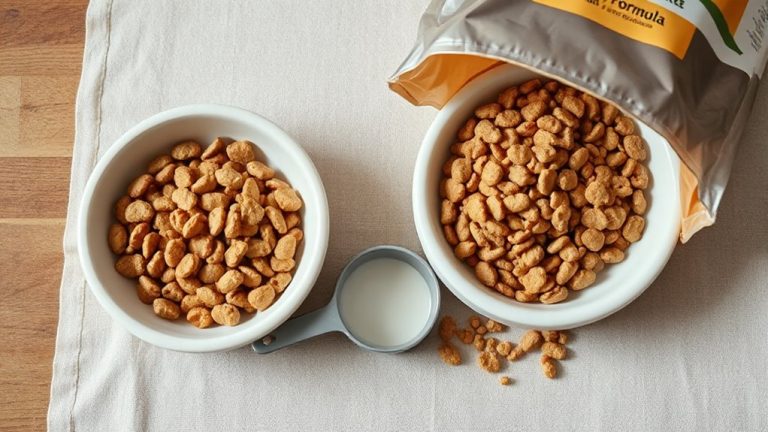
Storing food in a climate-controlled space keeps it safe, but that protection means nothing if you ignore shelf life. You must rotate and check your pet’s emergency rations every 90 days. Tracking expiration dates guarantees nutritional integrity and prevents spoilage. Use portion control to maintain supply accuracy and avoid overfeeding during emergencies.
| Checkpoint | Action |
|---|---|
| Expiration Dates | Discard expired food; log replacement date |
| Packaging Integrity | Look for tears, moisture, or pest damage |
| Portion Control | Rebalance stock based on consumption rates |
You should date all containers when stored. Dry kibble lasts 6–12 months unopened, 3 months after opening. Canned food keeps 2 years unopened, 24 hours after opening if refrigerated. Replacing oldest items first (FIFO method) maintains freshness. Accurate logs reduce waste and guarantee reliability when extreme weather hits. Consistent checks protect your pet’s health and your preparedness status.
Build a Weather-Ready Pet Emergency Kit
A well-packed pet emergency kit isn’t just a convenience-it’s your first line of defense when weather turns dangerous. Pet safety depends on preparedness, and emergency planning starts with a dedicated, portable kit. Include at least 3 days’ worth of sealed, moisture-resistant pet food (minimum 250 kcal/cup for dogs, 300 for cats), stored in FDA-compliant Mylar-lined bags. Add collapsible nylon bowls (capacity: 16 oz), a 1-liter filtered water bladder, and a battery-powered UV sterilizer (kills 99.9% of pathogens in 60 seconds). Incorporate a nylon harness with a reflective 3M Scotchlite strip (visibility up to 500 ft), a waterproof ID sleeve (4” x 6”), and a first-aid pack with vet-approved supplies: non-adherent pads, 10 cm wound tape, antiseptic wipes. Seal everything in an IP67-rated dry bag (12L volume) for full dust and immersion protection. Replace contents annually.
On a final note
Store pet food properly to maintain nutritional integrity. Use airtight containers with O-ring seals to block moisture; models like the Gamma Seal lid buckets reduce humidity ingress by 95%. Keep rations in climate-stable zones between 50–70°F. Avoid garages or cars where temperatures swing beyond 40–90°F. Rotate supplies every 90 days. Choose vacuum-sealed, mylar-packed foods with 5-year shelf lives. Test for clumping or odor quarterly.