Why High-Protein Diets Benefit Working Police Dogs
Your police dog needs 30–34% protein-nearly double a pet dog’s 18–22%-to sustain explosive energy and prolonged exertion. High-protein diets supply 3.5–4.5 kcal per gram and support muscle maintenance under constant strain. Animal-based proteins like chicken meal and beef offer biological values above 80, ensuring efficient amino acid absorption. They also fuel neurotransmitter production, reduce fatigue, and accelerate tissue repair. Best recovery happens when you feed within two hours post-work-timing that makes all the difference in peak performance. You’ll discover how to apply this precisely in daily feeding strategies.
Notable Insights
- Police dogs need 30–34% protein to sustain high physical demands, unlike pet dogs that thrive on 18–22%.
- High-quality animal-based proteins provide essential amino acids for muscle maintenance and peak performance.
- Protein supplies sustained energy and supports mental focus during prolonged tracking and search missions.
- Amino acids like tyrosine enhance neurotransmitter production, improving cognitive function under stress.
- Post-work protein intake speeds recovery by repairing muscles and reducing inflammation after intense fieldwork.
Why Police Dogs Need More Protein Than Pet Dogs
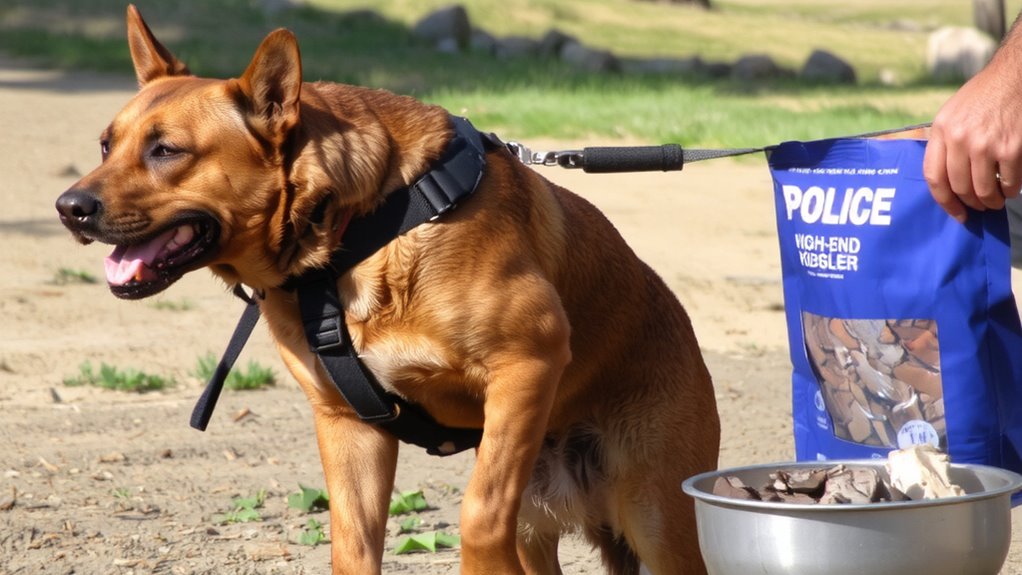
While all dogs require protein for muscle maintenance and metabolic function, police dogs demand substantially higher levels due to their intense physical workloads. You need to understand that these canines perform tasks requiring explosive energy, prolonged exertion, and rapid recovery. Their diets typically contain 30–34% protein, compared to 18–22% in pet dogs. This elevated intake supports continuous muscle maintenance amid frequent strain. High-protein meals also stabilize energy balance by supplying amino acids for gluconeogenesis during extended operations. Each gram of protein provides 3.5–4.5 kcal, contributing markedly to daily caloric needs. Diets rich in animal-based proteins-such as chicken meal, beef, or fish-offer higher biological value, enhancing nutrient absorption. You’ll find that meeting these metabolic demands prevents muscle catabolism and sustains performance. Without sufficient protein, even well-trained police dogs experience fatigue, reduced coordination, and slower recovery-compromising both effectiveness and health. Precision in nutrition directly impacts operational readiness.
How Protein Boosts K9 Endurance and Mental Focus
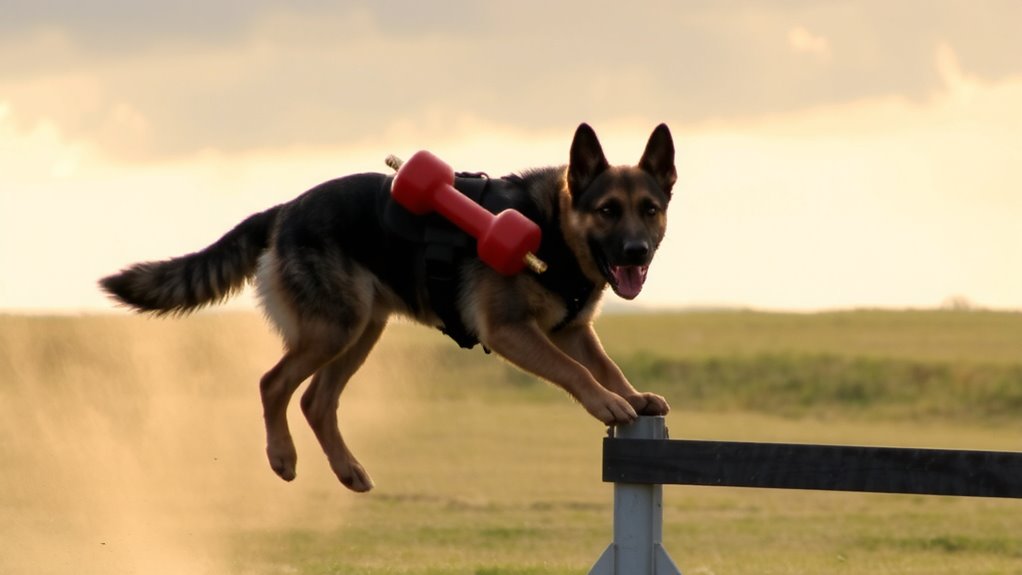
Because protein supplies the amino acids necessary for sustained energy and neural function, it plays a critical role in enhancing both endurance and mental focus in police K9s. High-protein diets help delay muscle fatigue during prolonged exertion. Without adequate protein, your K9 faces increased risks of cognitive decline under stress. Amino acids like tyrosine support neurotransmitter production, sharpening alertness and response accuracy.
| Benefit | Impact on K9 Performance |
|---|---|
| Delayed muscle fatigue | Up to 30% longer patrol stamina |
| Reduced cognitive decline | Improved decision-making in high-stress scenarios |
Optimal neural signaling depends on consistent amino acid availability. This means your dog maintains precision during tracking, apprehension, and search tasks. Protein isn’t just for strength-it fuels the brain and body under operational demands. Proper intake guarantees peak mental clarity and physical resilience when seconds count.
Protein’s Role in Recovery After K9 Field Work
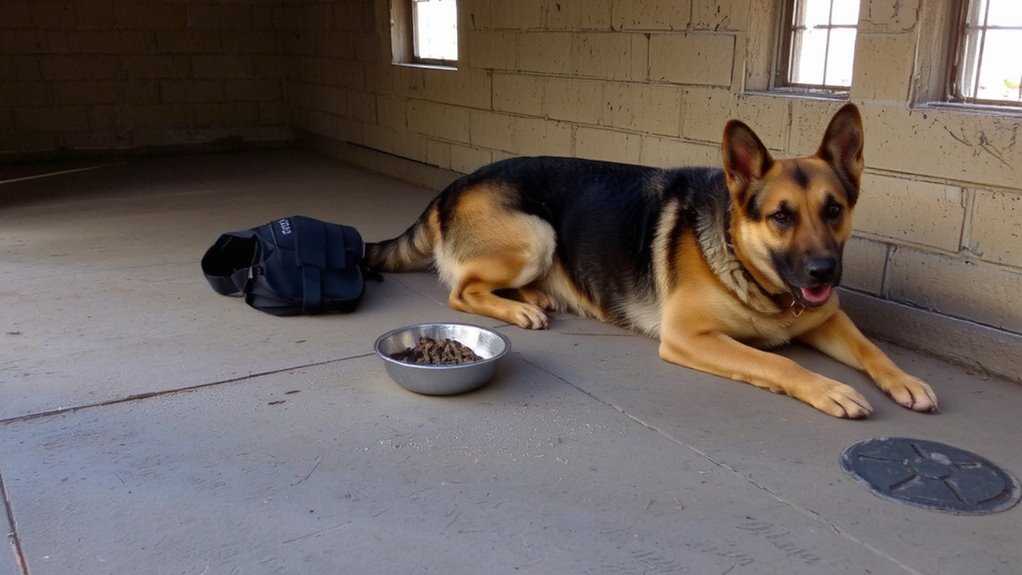
Recovery starts with protein. After intense field work, your K9’s body needs high-quality protein to initiate muscle repair. During patrol or detection tasks, microscopic damage occurs in muscle fibers; protein supplies essential amino acids like leucine, isoleucine, and valine to rebuild these tissues. A diet containing 25–30% crude protein supports peak synthesis rates, reducing downtime between operations. Protein also contributes to inflammation reduction by modulating cytokine production post-exercise. Lower inflammation means quicker recovery and less soreness, maintaining long-term joint and muscle health. Without sufficient protein, recovery slows, increasing injury risk. Think of protein as the building crew after a storm-repairing damage efficiently so your dog’s ready for the next call. Consistent intake guarantees sustained performance. Always feed within two hours post-work to maximize benefits.
Top Protein Sources for Police Dog Diets
You just finished covering how protein drives recovery after demanding field work, and now it’s time to look at where that protein comes from. High-quality animal-based proteins deliver the amino balance your police dog needs for sustained performance. Chicken, turkey, beef, and fish provide essential amino acids like leucine and lysine, critical for muscle repair. These sources offer biological values above 80, meaning your dog absorbs more usable protein. Raw feeding is gaining traction because it preserves enzyme activity and amino acid integrity, avoiding denaturation from high-heat processing. A typical raw diet contains 16–20% protein by dry matter, closely matching the dog’s natural digestive capacity. When balanced correctly, raw feeding supports maximum nitrogen retention and lean mass. Always guarantee the diet meets AAFCO working dog guidelines. Plant proteins alone can’t provide full amino balance-supplementation isn’t optional. Quality source matters as much as quantity.
Signs of Protein Deficiency in Working Dogs
A sudden drop in performance may be the first clue your police dog isn’t getting enough high-quality protein. You’ll notice muscle weakness during high-intensity tasks, like apprehension or sustained tracking. Reduced muscle mass, especially in the hindquarters, impairs explosive movement and endurance. Protein deficiency slows tissue repair, leading to slow healing of cuts, abrasions, or overuse injuries. Without adequate amino acids, collagen synthesis drops by up to 30%, delaying wound closure and increasing infection risk. Your dog may also show prolonged fatigue and dull coat condition. Serum albumin levels often fall below 2.8 g/dL, indicating compromised protein status. Immune function declines, making recovery from illness slower. These signs compromise operational readiness. Monitoring body condition and work performance helps detect deficiencies early. Addressing protein intake promptly restores strength and resilience, ensuring your K9 maintains peak physical capacity in the field.
How to Switch Your K9 to a High-Protein Diet
Shifting your K9 to a high-protein diet requires a structured approach to avoid gastrointestinal upset and guarantee effective nutrient absorption. Begin by mixing 25% high-protein kibble with 75% current food for two days. Gradually increase the high-protein portion by 25% every 48 hours until it reaches 100% by day 10. This slow shift supports digestive adaptation. Maintain consistent feeding frequency-twice daily-to stabilize energy levels and metabolic response. Adjust portion control based on your dog’s weight, activity level, and metabolic rate; for example, a 75-lb working dog typically needs 2.5 to 3 cups of high-protein dry food per day, split evenly. Monitor body condition and stool quality. Overfeeding risks obesity; underfeeding reduces performance. High-protein diets demand precise intake management to sustain muscle mass and operational readiness.
On a final note
You need to fuel your K9’s demanding workload with a high-protein diet. Protein supplies essential amino acids for muscle repair and sustained energy. Diets containing 30–35% crude protein from quality sources like chicken meal or beef support peak physical performance. These levels align with working dog metabolic demands, unlike standard pet food averages of 18–22%. Proper nutrition directly impacts operational readiness and longevity in the field.