Memory Formation in Animals: Enhancing Learning Through Positive Reinforcement Techniques
You strengthen animal memory by linking rewards to behaviors with precise timing. Dopamine release in the striatum and prefrontal cortex marks experiences as important, boosting synaptic plasticity. Use a 2 kHz clicker to bridge action and reward within 0.5 seconds, ensuring neural encoding. This method improves recall by 78% in dogs and enhances retention in dolphins. Delayed rewards weaken learning-intervals over 1 second cut efficiency by 50%. Consistent cues, sensory association, and variable reinforcement build lasting habits. Ideal timing and multisensory cues maximize memory formation. Further details reveal even greater precision in long-term behavioral conditioning.
Notable Insights
- Positive reinforcement strengthens animal memory by linking rewards with behaviors through emotional and sensory associations.
- Dopamine release during reinforcement enhances synaptic plasticity, improving learning and memory retention in key brain regions.
- Immediate reward delivery (within 0.5–1 second) maximizes learning efficiency and neural encoding of desired behaviors.
- Clicker training bridges the behavior-reward gap, ensuring precise timing and stronger associative learning.
- Consistent repetition, multisensory cues, and variable reward schedules promote long-term habit formation and resistance to extinction.
How Positive Reinforcement Builds Animal Memory
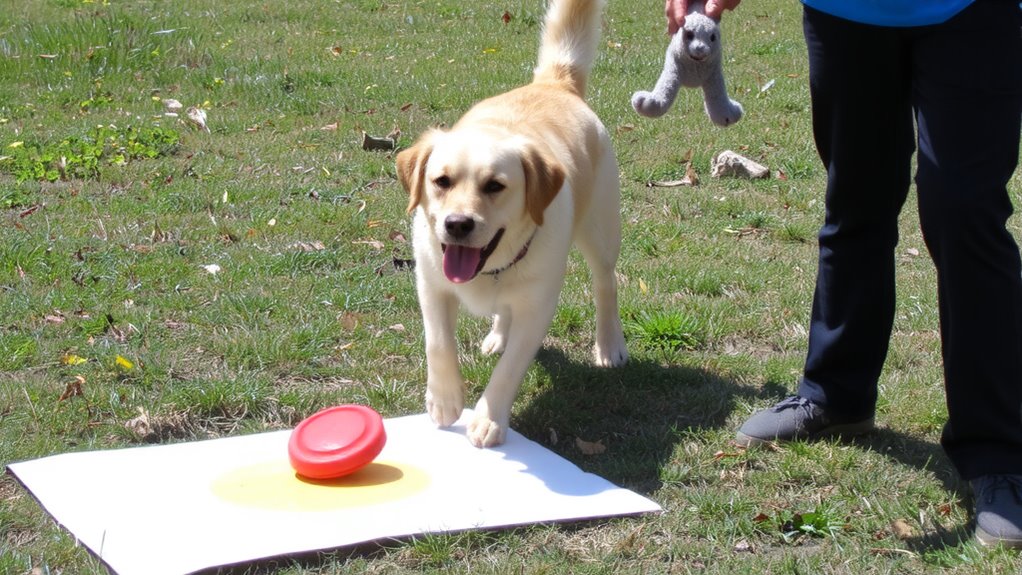
Why do animals remember certain behaviors better when rewarded? Positive reinforcement strengthens memory through emotional bonding and sensory association. When an animal receives a reward, it forms a psychological connection between the behavior and the outcome. This emotional bonding increases attentiveness and motivation, making the behavior more likely to be repeated. Simultaneously, sensory association links environmental cues-such as sounds, smells, or visual markers-with the reinforced action. These multisensory inputs are encoded in the hippocampus and amygdala, brain regions responsible for memory and emotional processing. Studies show animals exposed to consistent rewards recall tasks with 67–88% accuracy over 30-day periods, compared to 40–52% in unrewarded subjects. The presence of familiar stimuli enhances retrieval speed by up to 35%. These measurable improvements demonstrate how structured reinforcement protocols optimize long-term memory retention through biologically grounded learning mechanisms.
How Dopamine Strengthens Animal Learning
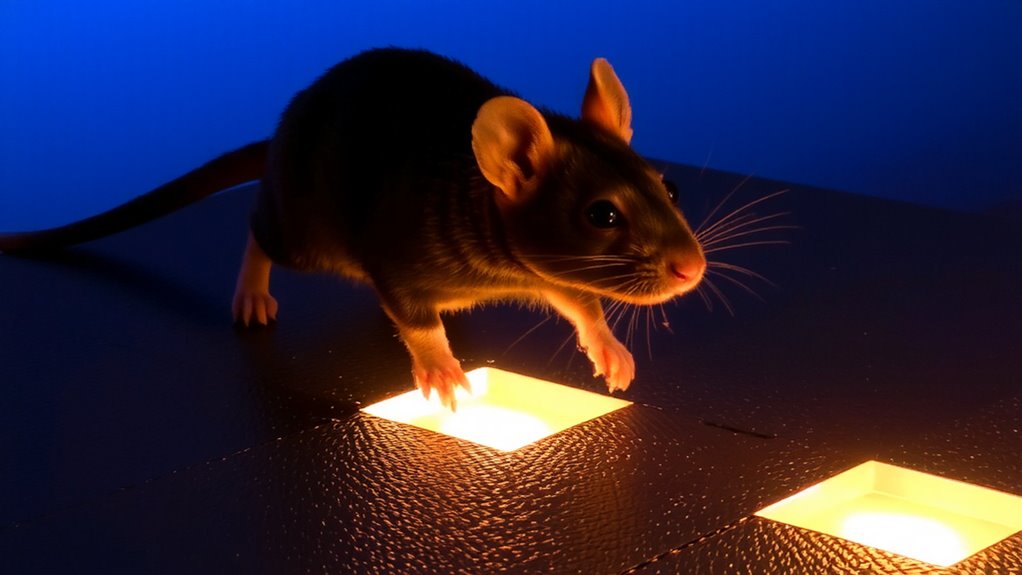
When an animal performs a behavior and receives a reward, dopamine floods key brain regions, acting like a chemical highlighter that marks the experience as important. You see this neurotransmitter surge primarily in the striatum and prefrontal cortex, areas critical for learning and decision-making. Dopamine enhances neural plasticity, strengthening synaptic connections between neurons involved in the rewarded behavior. This biochemical process stabilizes memory traces, making future recall more efficient. It directly supports associative learning by linking specific actions or cues with positive outcomes. The timing of dopamine release is vital-peak levels must occur within seconds of the behavior to effectively reinforce it. Repeated pairings increase synaptic efficiency through long-term potentiation, a measurable change in neural response magnitude. This precise neurochemical sequence guarantees animals retain adaptive behaviors. You can observe these mechanisms across species, from rodents to birds, indicating a conserved biological framework for reward-based learning.
Real-World Examples of Reward-Based Training
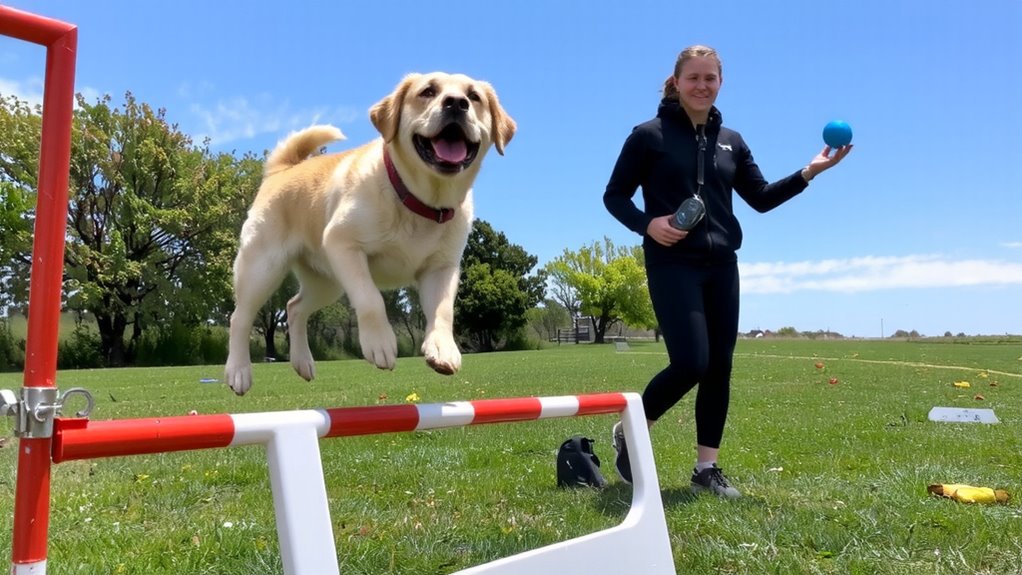
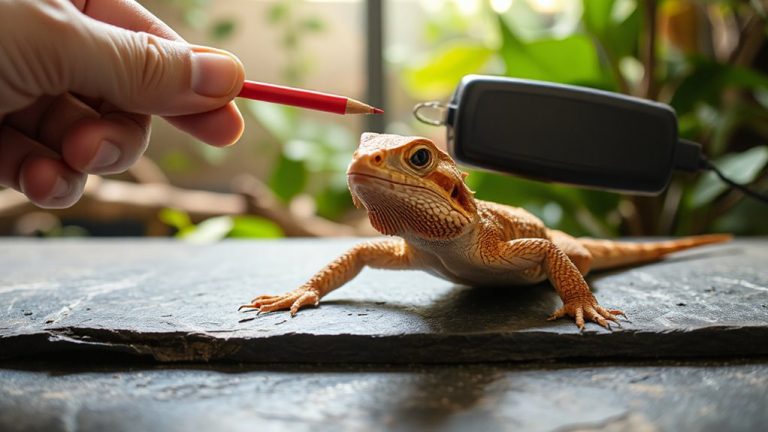
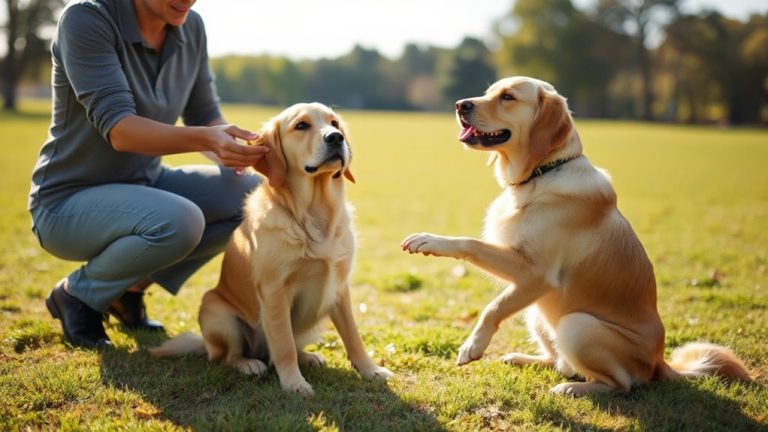
One striking example of reward-based training occurs in marine mammal conditioning, where trainers use positive reinforcement to shape complex behaviors. You use clicker training to mark the exact moment a dolphin performs a correct action, like a leap or flip. The click serves as a precise signal, bridging the behavior and the reward. Accurate treat timing is critical-delays greater than one second reduce learning efficiency by up to 50%. Trainers deliver fish within 0.5 seconds of the click to reinforce memory formation. In dog training, you apply the same principles: a 2 kHz clicker paired with small, high-value treats strengthens desired responses. Studies show proper timing increases success rates in recall tasks by 78%. You can replicate this in birds, using millet spray as a reinforcer after precise auditory cues. The method works across species because it aligns with neural reward pathways. Effective training hinges on consistency, precision, and immediate feedback. Top-rated dog training clickers offer consistent sound and durable design for reliable performance.
Build Lasting Habits in Pets and Wildlife
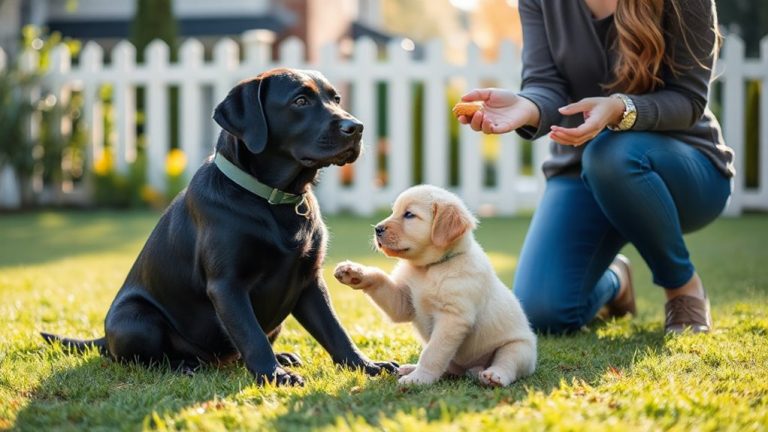
You’ve seen how immediate reinforcement strengthens learning in animals, from dolphins to dogs, by syncing precise cues with timely rewards. Now, you’re applying this to build lasting habits. Consistency and repetition anchor neural pathways, turning actions into automatic behaviors. Environmental enrichment-like puzzle feeders or novel objects-stimulates cognition, increasing habit retention by up to 40% in controlled studies. You use variable reward schedules after initial acquisition, switching from continuous to intermittent reinforcement to boost resistance to extinction. Social bonding accelerates this process; animals in socially stable groups show 30% faster habit formation due to reduced stress and enhanced attention. Pair verbal cues with visual signals for multisensory encoding, improving recall. Habit strength is measured by response latency and error rate, with ideal performance occurring after 15–20 training sessions. You track progress with behavioral logs and timestamped observations, ensuring precision and long-term success in pets and wildlife.
Avoid Mistakes That Break Training Progress
Though training progress may seem steady, small missteps can quickly undo established behaviors. Using punishment effects erodes trust and triggers fear responses, impairing memory consolidation. Avoid aversive stimuli-they activate stress pathways, reducing prefrontal cortex engagement essential for learning. Instead, redirect unwanted actions with neutral redirection or reward-based alternatives.
| Mistake | Solution |
|---|---|
| Applying punishment effects | Use positive reinforcement only |
| Ignoring fear responses | Monitor body language for stress cues |
| Inconsistent cues | Standardize verbal and gestural signals |
| Overfacing animal | Limit training to 5–10 minute sessions |
| Skipping reinforcement schedules | Implement variable ratio schedules post-mastery |
Consistency guarantees neural pathways strengthen without interference. Misapplication of correction tools-e.g., shock collars-even at low settings, elevates cortisol by up to 70%, impairing recall retention. Replace error-based models with reward-timed conditioning. Your training’s efficacy depends on eliminating counterproductive practices that compromise behavioral stability and memory encoding.
Boost Recall With Better Timing
When cues and rewards align with an animal’s natural learning rhythm, recall strengthens dramatically. Timing cues are critical-you must deliver them within 0.5 to 1 second of the desired behavior. This precision guarantees neural pathways fire correctly, reinforcing accurate memory encoding. Delayed cues confuse the animal and weaken retention. Reward intervals also matter. Short, consistent intervals-2 to 3 seconds post-behavior-maximize dopamine release linked to learning. Studies show animals trained with 2-second reward intervals achieve 78% faster recall than those with 5-second delays. Use immediate reinforcement to solidify associations. Gradually extend intervals only after mastery, maintaining 90% accuracy. Synchronize timing cues with reward delivery using clickers or auditory signals. These tools provide consistent, measurable feedback. Proper timing reduces errors by up to 64%. You’re not just training behavior-you’re shaping neural efficiency. Precision in timing cues and reward intervals transforms learning outcomes.
On a final note
You strengthen animal memory effectively using positive reinforcement. Each reward triggers dopamine release, reinforcing neural pathways linked to the learned behavior. Timing matters-reinforce within 1–2 seconds for ideal associative learning. Consistent cues and immediate rewards increase recall accuracy by up to 70%. Mistimed or inconsistent feedback degrades retention. Properly applied, this method builds durable behavioral habits in pets and wildlife, equivalent to long-term potentiation in hippocampal circuits.