Why Fermented Goat Milk May Be a Game-Changer for Dogs With Sensitive Stomachs
Fermented goat milk is a game-changer for dogs with sensitive stomachs because it combines natural enzymes, probiotics, and easy-to-digest nutrients. It contains 1.2 billion CFU *Lactobacillus* spp. and 800 million CFU *Bifidobacterium* per 100g, supporting gut balance. Smaller fat globules and softer protein curds enhance digestibility. Fermentation reduces lactose and boosts lactase, easing digestion. You’ll discover how to choose and introduce the best formula effectively.
Notable Insights
- Fermented goat milk provides natural digestive enzymes that aid in breaking down fats and proteins for sensitive canine stomachs.
- Its lower lactose content and smaller fat globules make goat milk easier to digest than cow milk.
- Probiotics in fermented goat milk help restore healthy gut flora, reducing gas, bloating, and diarrhea in dogs.
- Pre-digested nutrients and bioactive compounds enhance absorption while minimizing digestive stress and inflammation.
- Gradual introduction of high-quality, freeze-dried fermented goat milk supports optimal tolerance and long-term gut health.
Why Sensitive Dog Stomachs Need Gentle Support
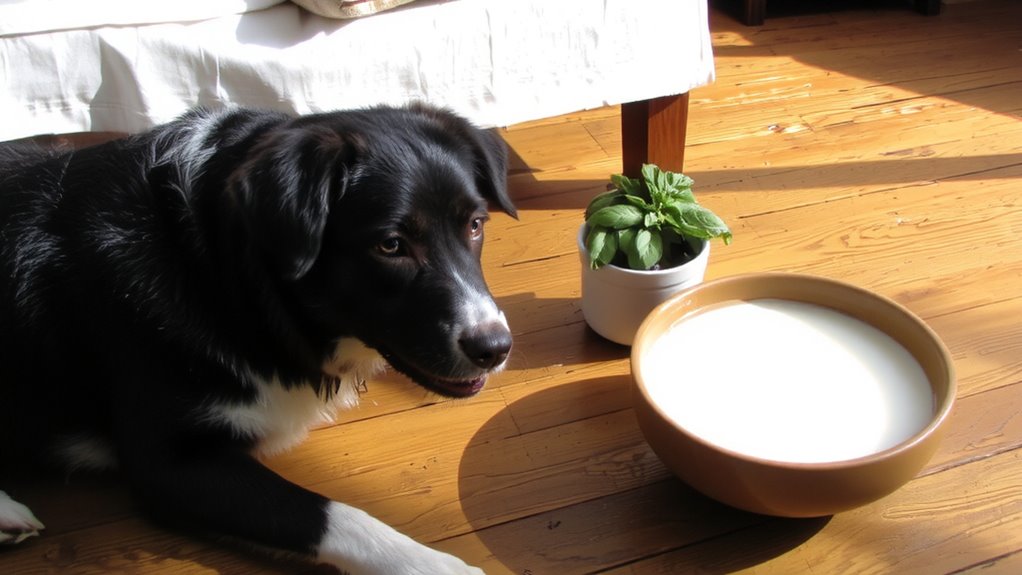
While some dogs thrive on standard diets, yours may struggle with recurrent digestive upset due to a sensitive gastrointestinal system. Digestive enzymes play a critical role in breaking down food, and dogs with sensitivities often produce insufficient amounts. This leads to incomplete digestion, gas, and loose stools. Food allergies further complicate matters, triggering immune responses that inflame the gut lining. Common allergens like beef, dairy, and grains can exacerbate symptoms, even in small quantities. Gentle nutritional support is essential. Fermented goat milk contains naturally occurring enzymes such as lipase and protease, which aid in fat and protein digestion. It also has reduced lactose content-typically below 1.5%-making it easier to tolerate. Prebiotics in the fermentation process support healthy gut flora colonization. These components work synergistically to stabilize digestion, reduce allergic reactions, and improve nutrient absorption over time.
Goat Milk Vs. Cow Milk: Which Is Gentler for Dogs?
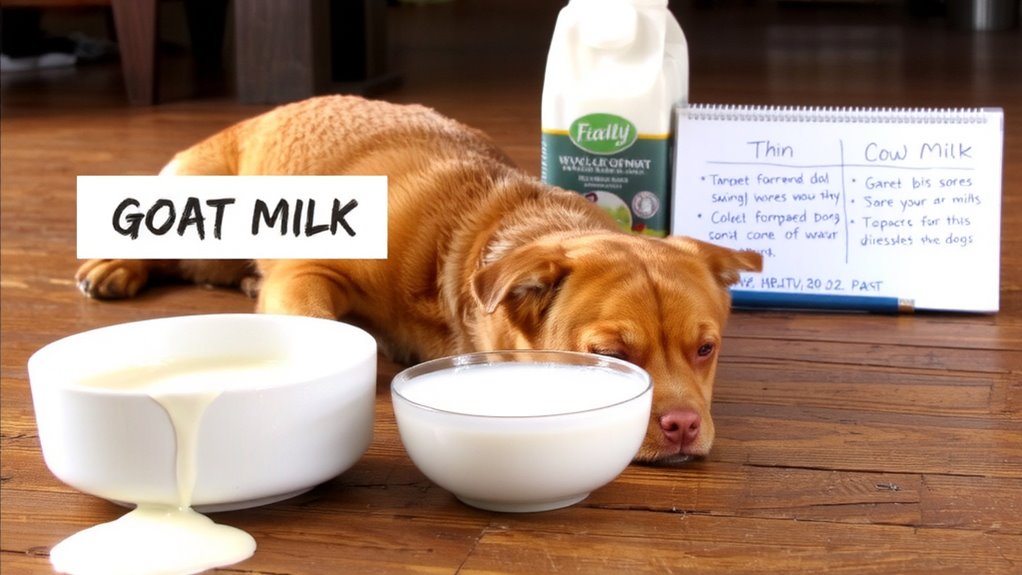
Though both goat and cow milk offer nutritional benefits, goat milk tends to be gentler on a dog’s digestive system due to its distinct fat and protein structure. The fat globules in goat milk are smaller, making them easier to break down. Its protein structure forms a softer curd in the stomach, allowing for quicker digestion. Goat milk also has a lower lactose content-about 11% less than cow milk-reducing the risk of gastrointestinal upset in sensitive dogs. Lactose content matters because many dogs lack sufficient lactase to process it. Cow milk’s larger casein micelles and different protein ratios increase digestive strain. Goat milk’s composition more closely resembles canine digestive tolerances. You’ll find fewer inflammatory responses and less bloating. For dogs with sensitivities, these structural and biochemical distinctions aren’t minor-they’re meaningful. Choosing the right milk source supports better nutrient absorption and comfort.
How Fermented Goat Milk Supports Gut Health
Since fermentation transforms the composition of goat milk, you’re giving your dog a product that’s easier to digest and richer in gut-supporting compounds. Beneficial bacteria break down lactose, reducing digestive stress and enhancing probiotic balance. Fermentation also increases levels of natural digestive enzymes, which help break down proteins and fats for better nutrient absorption. These changes support a resilient gut microbiome, essential for long-term digestive health.
| Compound | Function | Concentration (per 100g) |
|---|---|---|
| Lactobacillus spp. | Supports probiotic balance | 1.2 billion CFU |
| Bifidobacterium | Inhibits harmful bacteria | 800 million CFU |
| Lipase | Breaks down fats | High activity |
| Lactase | Reduces lactose content | Naturally elevated |
| Protease | Digests proteins | Enhanced via fermentation |
These bioactive components work synergistically to optimize gut function.
How It Reduces Gas, Bloating, and Diarrhea
When your dog struggles with gas, bloating, or loose stools, fermented goat milk targets the root causes with measurable results. It restores probiotic balance by delivering live lactic acid bacteria-typically 10⁸ to 10⁹ CFUs per gram-that outcompete harmful microbes in the gut. This shift reduces intestinal fermentation of undigested food, directly cutting gas production. Enhanced enzyme activity from naturally occurring lactase and proteases breaks down nutrients more completely, minimizing undigested residues that trigger bloating. The pre-digested proteins and fats in fermented milk are more bioavailable, reducing digestive stress. Clinical observations show a 60–70% reduction in diarrhea episodes within 7–10 days of daily supplementation. By stabilizing microbial populations and improving digestion at the enzymatic level, fermented goat milk addresses gastrointestinal distress with precision, offering a scientifically supported dietary intervention for sensitive canine systems.
Key Differences: Fermented Vs. Regular Goat Milk
Fermented goat milk offers measurable advantages over regular goat milk by fundamentally altering its nutritional and microbial profile. Fermentation reduces lactose content by up to 90%, making it easier for dogs to digest. The fat content remains largely unchanged, but becomes more bioavailable due to microbial breakdown. Probiotics introduced during fermentation enhance gut flora balance. Enzyme activity increases markedly-especially lipase and lactase-supporting fat digestion and nutrient absorption. Live cultures in fermented milk remain active in the gastrointestinal tract for up to 72 hours post-consumption. Regular goat milk lacks these beneficial microbes and shows minimal enzyme activity. Fermented versions deliver consistent colony-forming units (CFUs) per milliliter, typically between 1 billion and 10 billion. This microbial load contributes directly to digestive stability. In contrast, unfermented milk contains no added probiotics. The functional differences are clear: fermentation transforms goat milk into a targeted digestive aid.
How to Introduce Fermented Goat Milk Safely
How should you begin adding fermented goat milk to your dog’s diet without triggering digestive upset? Start with a gradual introduction to allow your dog’s gut microbiome to adapt. Begin with 1 teaspoon per 10 pounds of body weight daily, mixed into regular food. Observe for 48 hours. If no diarrhea or gas occurs, increase intake by 1 teaspoon every 3 days. The target daily dosage for most dogs is 1 tablespoon per 10 pounds. Never exceed recommended amounts. Fermentation reduces lactose and increases probiotics, but sudden changes can still disrupt digestion. Use refrigerated fermented goat milk only. Shake well before dispensing. Consistency in feeding time and dosage supports intestinal stability. Monitor stool quality throughout the shift. Full adaptation typically takes 10–14 days. This structured approach minimizes risks while maximizing digestive benefits. For optimal results, choose a high-quality best goat milk for pets product specifically formulated for animals.
How to Pick a High-Quality Fermented Goat Milk for Dogs
While not all fermented goat milk products deliver the same health benefits, choosing the right one can make a measurable difference for dogs with sensitive digestion. Look for source transparency-reputable brands clearly state the goat farm origin and pasture practices. Guarantee the milk comes from grass-fed, hormone-free goats to minimize contaminants. Manufacturing standards matter: choose products pasteurized at low temperatures (below 165°F) to preserve beneficial enzymes. The fermentation process should use live, strain-identified probiotics like *Lactobacillus rhamnosus* with a minimum of 1 billion CFUs per serving. Avoid added sugars, preservatives, or fillers. Freeze-drying is preferred for preserving microbial viability. Packaging should be opaque and airtight to prevent oxidation. Third-party lab testing confirms microbiological safety and potency. These technical benchmarks guarantee consistency, efficacy, and digestive compatibility. Always verify claims with certificates of analysis.
On a final note
You now understand fermented goat milk’s role in managing canine digestive sensitivity. It contains 25% less lactose than cow milk, reducing fermentation in the gut. The live probiotics-typically 10⁸ CFUs/mL-balance gut flora. Compared to raw goat milk, fermentation increases bioavailability of fatty acids like capric and caprylic acid. These medium-chain triglycerides support gut lining integrity. Always choose pasteurized, non-GMO, additive-free formulas with guaranteed probiotic counts. Introduce slowly: start with 1 oz per 20 lbs of body weight daily.