Using Positive Reinforcement to Encourage Use of Cat Trees
Place the cat tree in a quiet, low-traffic area with at least 3 feet from walls and a base of 18″ x 18″ or larger. Use high-value treats immediately-within one to two seconds-when your cat touches the tree. Pair the action with a cue like “up” to build association. Engage with a wand toy angled at 45 degrees, encouraging upward movement in short 5- to 7-minute sessions. Reinforce each contact consistently at first, then shift to variable rewards once usage reaches 90% reliability. Position the tree near a window but keep the litter box at least six feet away to avoid territorial stress. A stable, well-placed structure with immediate rewards will shape lasting use-especially when aligned with your cat’s activity level and confidence. You’ll see how small adjustments create lasting habits.
Notable Insights
- Reward your cat with high-value treats within two seconds of approaching the cat tree to reinforce initial interaction.
- Use verbal cues like “up” or “go” consistently during training to condition desired climbing behavior.
- Guide climbing with wand toys angled at 45 degrees, simulating prey to naturally encourage upward movement.
- Conduct short, frequent play sessions of 2–5 minutes, 2–3 times daily, to build positive associations with the tree.
- Transition from continuous to variable treat rewards once your cat uses the tree consistently 90% of the time.
Why Your Cat Ignores the Tree (And How to Fix It)
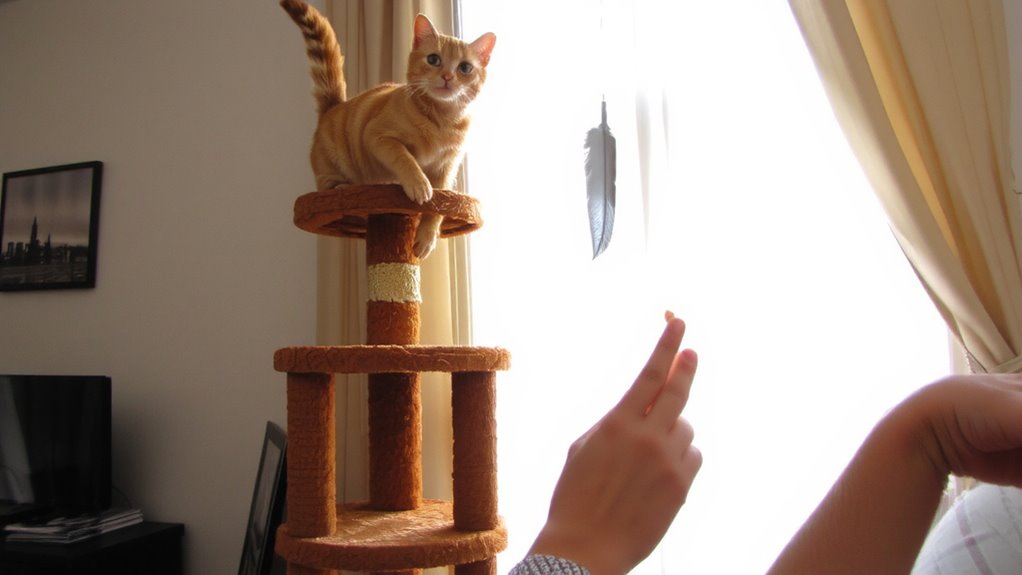
Why does your cat ignore the cat tree you invested in? Territory disputes may be the unseen barrier. Cats are territorial, and a new structure can disrupt established boundaries, provoking avoidance. Place the cat tree in a low-traffic zone, at least 3 feet from walls, to reduce confrontations between multi-cat household members. Height anxiety is another factor-some cats avoid elevated platforms if they feel unstable. Make sure the base measures a minimum of 18″ x 18″ and weighs at least 10 lbs to prevent wobbling. Platforms should be spaced 8–10 inches apart vertically for safe, confident jumps. Use pheromone sprays to reduce stress and mark the tree as safe. Gradual acclimation and placement near familiar resting spots increase acceptance. Positioning and stability are key-your cat needs to perceive the tree as both secure and non-threatening within their domain. For large cats, choosing models designed for heavier weight ensures long-term safety and comfort, such as those recommended in the Best Cat Trees for Large Cats.
Pick a Cat Tree That Fits Your Cat’s Style
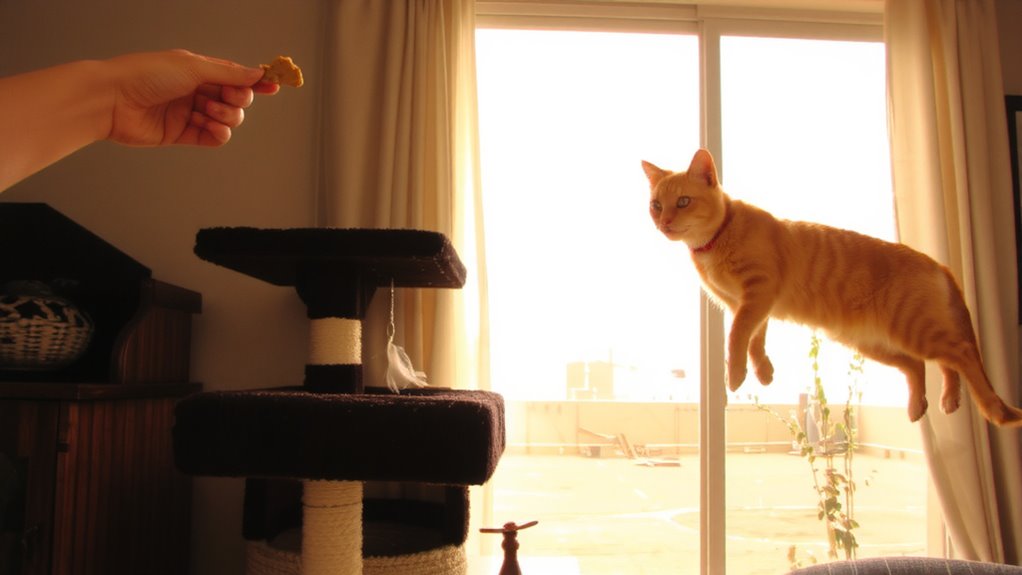
While your cat’s personality plays a key role in how they interact with their environment, choosing a cat tree that matches their behavioral preferences guarantees long-term use. You must consider your cat’s preferences-whether they climb, lounge, or observe from height-when selecting structure type. Active cats need vertical height; choose models with 5+ levels and sisal-wrapped posts of at least 3 inches in diameter for secure scratching. Shy cats prefer enclosed condos with side hideaways; prioritize compact designs under 24 inches wide. Tree placement impacts accessibility and usage. Position the unit near windows or social areas to attract interest. Guarantee stability-bases should exceed 18 x 18 inches to prevent tipping. Avoid placing near fragile items; use wall anchors rated for 50 lbs. Matching design to behavior increases interaction. A well-placed, species-appropriate tree supports natural feline behaviors and promotes consistent use. For tall cats that love to climb, consider investing in one of the best tall cat trees that combine height with durable, multi-level structures.
Reward the First Steps on the Tree
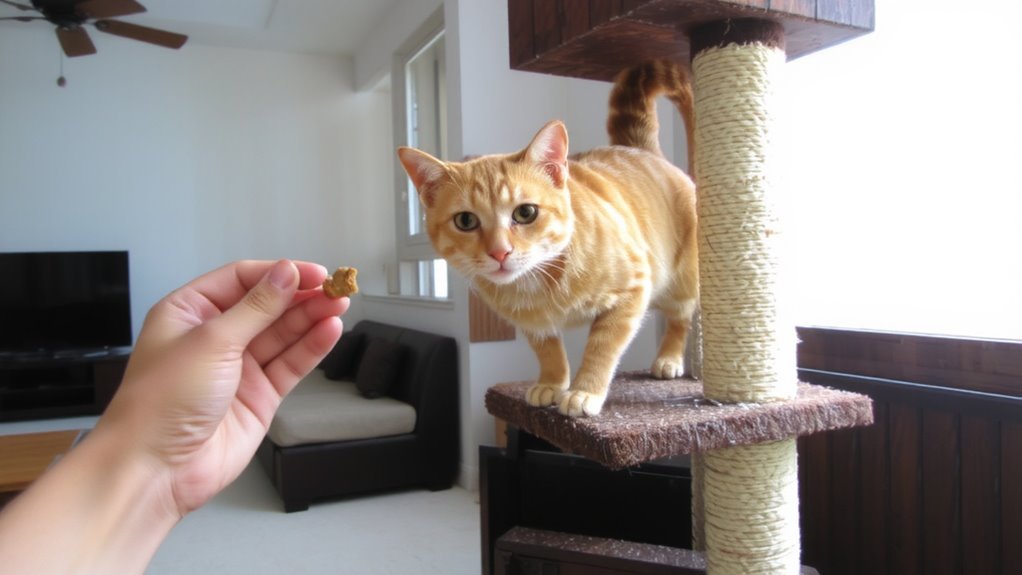
Success begins the moment your cat steps onto the structure. Rewarding this initial contact is critical for establishing positive associations. Use high-value treats and precise treat timing-offer the reward within two seconds of the behavior to reinforce the action accurately. Pair the moment with a verbal cue like “up” or “go” to create consistent cues your cat will begin to recognize. Immediate reinforcement strengthens the connection between stepping on the tree and receiving a reward. Perform training sessions in short intervals, two to five minutes, two to three times daily, to maintain focus without overstimulation. Over time, consistent cues and accurate treat timing condition your cat to approach and step onto the base reliably. This foundational behavior is essential before progressing. Avoid delaying rewards, as delayed reinforcement reduces learning efficiency by up to 70%. Precision and repetition drive successful habit formation. For best results, choose top pet training rewards that are highly palatable and easy to consume quickly.
Use Play to Guide Them Upward
Once your cat consistently steps onto the base of the tree, you can begin guiding them upward using interactive play. Use wand toys to create playful incentives that encourage vertical exploration. Hold the toy just above each level to prompt upward movement. Reward reaching new heights with treats or affection. Consistent repetition builds learned behavior.
| Level Height (in) | Recommended Toy Length (in) | Avg. Time to Mastery (days) |
|---|---|---|
| 12 | 18 | 3 |
| 24 | 24 | 5 |
| 36 | 30 | 7 |
| 48 | 36 | 9 |
| 60 | 36 | 12 |
Position the wand at a 45-degree angle to simulate prey motion. This method increases engagement. The cat associates climbing with successful hunting. Play sessions should last 5–7 minutes, twice daily. Avoid forcing movement-use only positive, playful incentives.
Keep Rewarding Every Tree Visit
Always reinforce each visit to the cat tree with an immediate reward to solidify the behavior. Consistent encouragement strengthens neural associations, increasing repetition. Use high-value treats like freeze-dried chicken (5–10 calories each) or 1–2 seconds of play with a wand toy. Deliver the reward within 1–2 seconds of contact to guarantee correct behavior mapping. Immediate praise-such as verbal affirmations or clicker sounds-acts as a conditioned reinforcer when paired correctly. Begin with a 1:1 reward ratio: every touch earns a treat. Apply operant conditioning principles precisely. Over time, shift to variable reinforcement after behavior reaches 90% consistency over five consecutive sessions. Monitor duration, frequency, and posture during visits using a log. Record each instance: time, duration (in seconds), and reward type. Accuracy in timing and delivery guarantees maximal efficacy. This method yields measurable improvements in vertical space utilization.
Fix Common Reasons Cats Avoid the Tree
Your cat’s consistent use of the tree depends not just on rewards but also on eliminating factors that discourage approach. Incorrect litter box placement can deter use-keep it at least six feet from the cat tree to prevent territorial aversion. Cats avoid elevated spaces if they associate nearby areas with waste. Health issues such as arthritis or joint pain may limit mobility; observe for reluctance in jumping or limping. Trees with platforms spaced no more than 8–10 inches apart accommodate reduced mobility. Guarantee the structure is stable-wobbling overloads a cat’s vestibular system, causing stress. Base measurements should offer a footprint of at least 20” x 20” for balance. Poor location near loud appliances or high-traffic zones also reduces use. Position the tree in a quiet, predictable area with natural light. Address these technical and behavioral barriers to improve accessibility and comfort for consistent, long-term use.
On a final note
You must consistently reinforce desired behavior. Positive reinforcement builds reliable habits. Each time your cat uses the tree, deliver a high-value treat immediately-within two seconds-for effective associative learning. Choose a tree at least 30 inches tall with sisal-wrapped posts (minimum diameter: 12 inches) to support scratching and stretching. Include multiple platforms spaced 8–12 inches apart. These specs match feline biomechanics, encouraging full climbing engagement.