How Veterinarians Use Body Condition Scoring in Pet Health Assessments
Your vet uses body condition scoring (BCS) to assess your pet’s fat and muscle distribution on a 9-point scale, where 4–5 is ideal. They visually check for a defined waist and abdominal tuck, then palpate ribs with light pressure-ideal coverage feels like the back of your hand. This method is more accurate than weight alone, as it identifies health risks linked to excess fat, especially abdominal fat. You’ll discover how to apply these techniques at home with simple, consistent checks.
Notable Insights
- Veterinarians use a 9-point scale to assess body fat and muscle mass through visual and tactile evaluation.
- They evaluate ribs, waistline, and abdominal tuck to determine if a pet is at an ideal body condition score.
- Palpation of ribs with minimal fat coverage and a visible waist from above indicate a healthy 4–5 score.
- BCS helps differentiate between fat and muscle, providing a more accurate health assessment than weight alone.
- Vets combine BCS with diet, exercise, and breed considerations to guide personalized pet health plans.
What Is Body Condition Scoring and Why It Matters
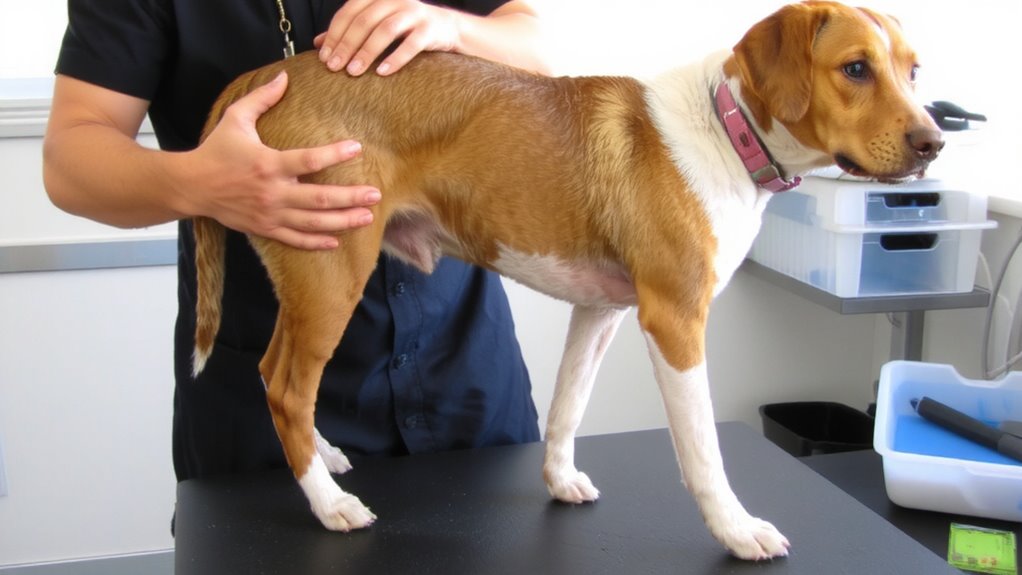
Body condition scoring is a clinical tool used to evaluate an animal’s weight and overall health. You use it to evaluate body fat and muscle mass through visual and tactile examination. Genetic predispositions influence how your pet stores fat, making some breeds more prone to obesity or underweight conditions. Evaluating these traits helps you adjust care strategies. Nutritional balance is critical-diets must match metabolic needs, activity levels, and health status. An ideal score indicates symmetry in fat coverage and a defined waist. You’ll palpate the ribs, spine, and pelvic bones; ideal condition means ribs are easily felt but not visible. Muscle wasting or excess fat alters mobility and organ function. Regular scoring detects changes early, supporting preventive care. This method isn’t guesswork-it’s standardized, repeatable, and quantifiable. You rely on objective criteria, not subjective impressions, ensuring consistency across evaluations.
The 9-Point BCS Scale Explained
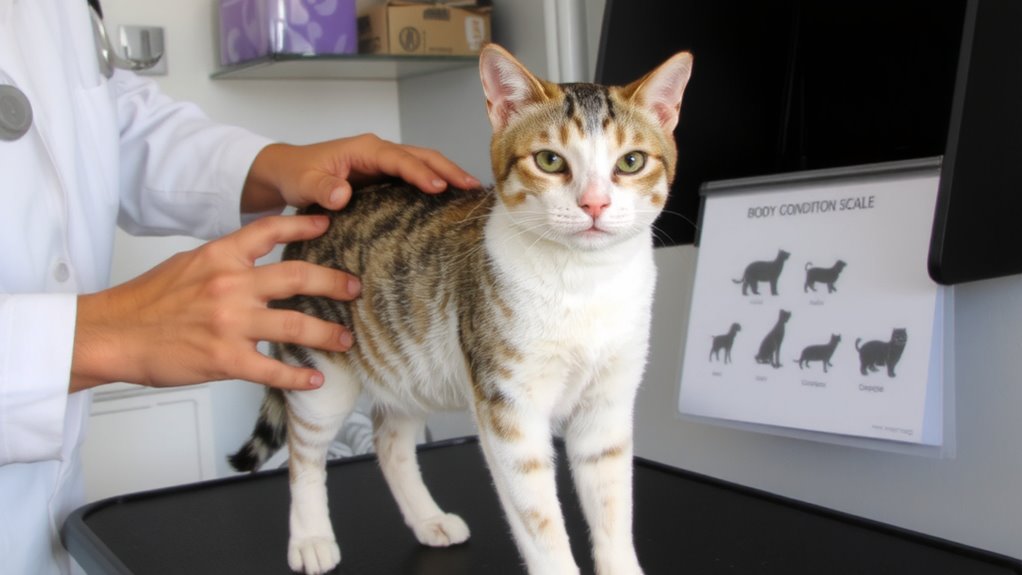
You assess body condition using a standardized 9-point scale, where each score reflects specific fat coverage and muscle characteristics. A score of 1 is emaciated, with visible bones and no palpable fat; 9 indicates extreme obesity, with massive fat deposition and no discernible waist. The ideal weight falls at 4–5 for cats and 4–5 for dogs, depending on breed and frame. At this range, you’ll notice a clear waistline and abdominal tuck during visual assessment. Ribs are easily felt with minimal fat covering, and muscle mass is well-maintained. Scores below or above this range signal underweight or overweight conditions. Visual assessment, combined with tactile evaluation, guarantees accuracy. Each point on the scale represents a measurable shift in body composition. This system gives you an objective, repeatable method to track changes over time. It’s essential for maintaining long-term pet health.
How Your Vet Checks Your Pet’s Body Condition
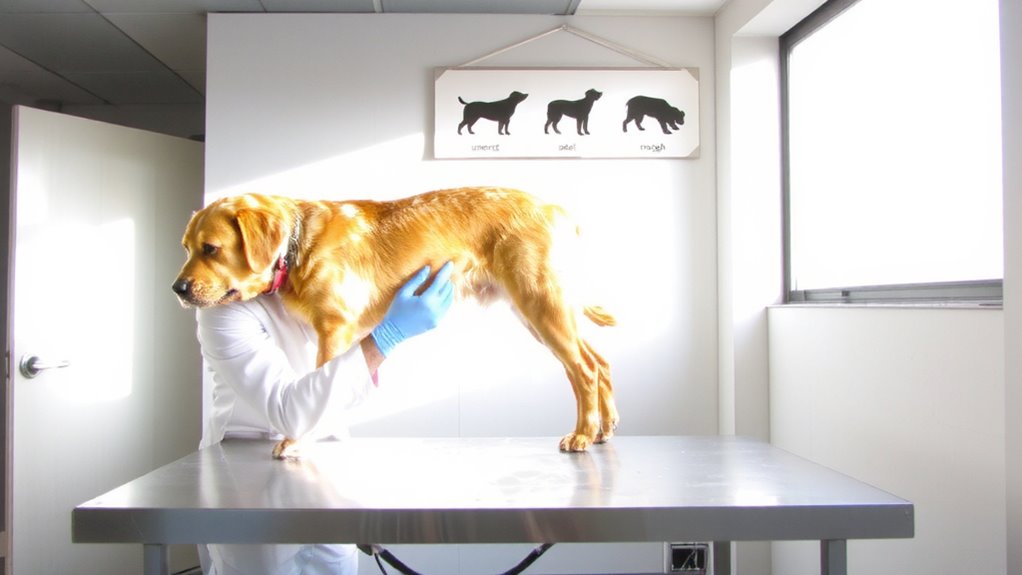
How does your vet determine if your pet is at a healthy weight? Your veterinarian uses visual assessment and hands-on palpation to evaluate body condition. They’ll look at your pet’s waistline from above and tuck from the side-both should be visible and defined. A BCS of 4–5 out of 9 is ideal. Ribs should be palpable with minimal fat covering, but not visible. The abdomen must be tucked, not pendulous. Your vet considers your pet’s frame size, muscle mass, and breed standards. They’ll ask about nutrition habits, like portion sizes, treats, and food type, to assess caloric intake. Exercise routines are reviewed-duration, frequency, and intensity of activity. These factors directly influence body composition. Palpation techniques follow standardized pressure guidelines to guarantee consistency. This hands-on method is more accurate than weight alone.
Why Body Condition Beats the Scale
What if the number on the scale doesn’t tell the whole story? It can’t distinguish between fat and muscle mass. Two pets with identical weights may have drastically different health profiles due to variations in weight distribution. A lean, muscular dog might register the same weight as an overweight one, but only body condition scoring reveals the truth. Muscle mass is metabolically active and supports joint stability, while excess fat increases disease risk. Weight alone misses where fat is stored-abdominal fat, for instance, poses greater health threats than subcutaneous deposits. BCS evaluates visual and tactile cues across nine body regions, providing a precise health snapshot. Your pet’s shape, rib coverage, and waistline indicate fitness far better than a number. That’s why body condition beats the scale-every time. Accurate assessments depend on structure, not just mass.
How BCS Helps Spot Health Problems Early
While weight trends offer some insight, they often lag behind physical changes that BCS detects early. You can identify subtle shifts in muscle mass and fat distribution before the scale reflects a problem. This early detection is key to addressing obesity risks and nutritional imbalances before they lead to chronic disease. BCS links physical findings to health outcomes, giving you actionable data.
| BCS (1–9) | Risk Indicator |
|---|---|
| 1–2 | Underweight, muscle wasting |
| 3 | Thin, possible nutritional imbalances |
| 4–5 | Ideal, balanced condition |
| 6–7 | Overweight, rising obesity risks |
| 8–9 | Obese, high disease susceptibility |
Using this system, you recognize patterns linked to metabolic stress, joint strain, and organ dysfunction. A score above 7 demands intervention. Changes in BCS over time reflect dietary efficacy and health status more accurately than weight alone.
How to Check Your Pet’s Body Condition at Home
Where should you start when evaluating your pet’s body condition at home? Begin with a hands-on assessment during routine pet grooming. Run your hands along your pet’s ribs-without pressing hard. You should feel a thin layer of fat over each rib, like the back of your hand. A visible waist when viewed from above and a tucked abdomen when seen from the side are key visual cues. Use home measurement techniques: note the chest-to-waist ratio. For dogs, a waist should be 70–80% of chest width. Cats typically score accurately when ribs are palpable with light pressure and no bulging fat. This method mirrors veterinary BCS scales, which rate pets from 1 (emaciated) to 9 (obese). A score of 4–5 is ideal. Consistent weekly checks help track changes early. Combine visual exams, palpation, and grooming time to maintain accuracy.
On a final note
You rely on body condition scoring (BCS) to assess your pet’s health accurately. BCS uses a 9-point scale, where 4–5 is ideal. Ribs should be palpable with minimal fat, waist visible from above, abdomen tucked from side view. Unlike weight alone, BCS detects fat distribution. Veterinarians use it to predict risks like diabetes or arthritis. You apply it at home monthly. Consistency matters. Early changes prompt earlier intervention.