How to Clean Your Pet’s Face Without Touching Their Eyes Directly
Avoid direct eye contact when cleaning your pet’s face-keep tools at least 1 cm from the eyelid margin to prevent corneal damage. Use soft, lint-free microfiber cloths or vet-approved, pH-balanced wipes free of alcohol and fragrance. Moisten with sterile saline and apply no more than 10–15 grams of pressure in gentle, outward strokes from forehead to cheeks. Clean facial folds daily with 0.05% chlorhexidine if needed, and always dry thoroughly. Watch for discharge, redness, or squinting-early signs of trouble mean it’s time to act.
Notable Insights
- Clean only the periorbital areas around the eyes, keeping cleaning tools at least 1 cm from the eyelid margin.
- Use soft, lint-free cloths or vet-approved, ophthalmologist-tested wipes free of alcohol and fragrance.
- Moisten a cloth or wipe with sterile saline and gently wipe from the forehead outward toward the cheeks.
- Focus on facial folds and muzzle, using gentle tools like gauze or silicone-tipped brushes to avoid eye contact.
- Apply minimal pressure, limit cleaning to 60–90 seconds, and inspect for eye redness or discharge daily.
Don’t Touch Your Pet’s Eyes While Cleaning
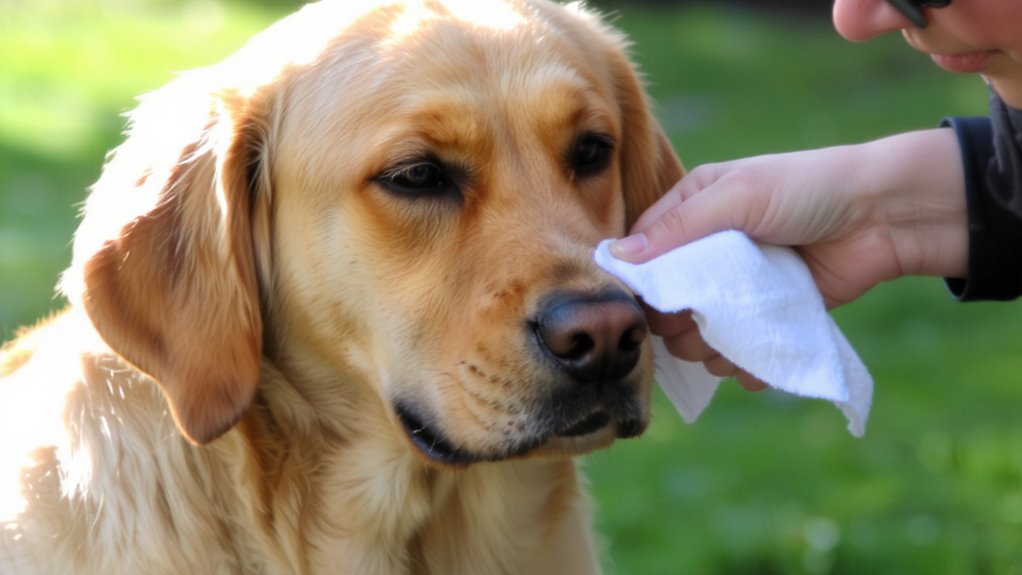
Your pet’s eyes are delicate and easily irritated, so avoiding direct contact during face cleaning is essential. Avoid pressure near the ocular area to prevent discomfort and potential injury. The cornea in pets is thinner than in humans, measuring approximately 0.5 mm in dogs, increasing vulnerability to abrasions. Even light touching can disrupt the tear film, leading to dryness or corneal ulcers. Prevent irritation by cleaning only the periorbital regions-the areas around, not on, the eye. Use controlled, gentle motions moving outward from the nose. Never wipe directly over the eyeball. Most pets have sensitive conjunctival membranes, which react swiftly to foreign particles or friction. Minimize risk by keeping cleaning tools at least 1 cm away from the eyelid margin. This approach maintains ocular health, reduces reflex blinking, and guarantees cooperation during future sessions. Precision and restraint improve safety and effectiveness.
Use Soft Cloths and Vet-Approved Wipes
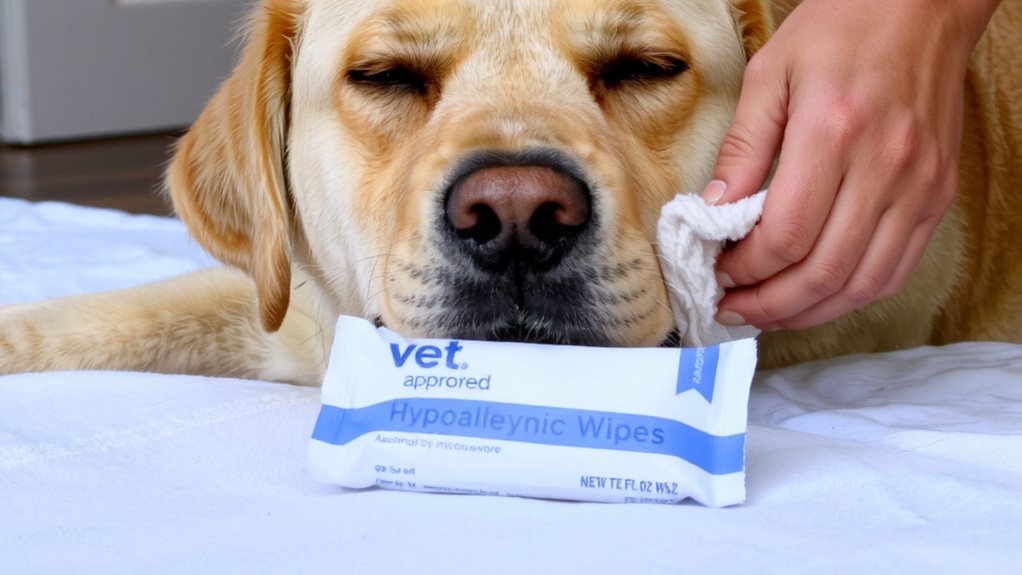
When cleaning your pet’s face, always choose materials that minimize irritation and maximize safety. Soft, lint-free cloths made from microfiber or cotton are ideal for gentle wiping. Their texture reduces friction against sensitive skin, preventing micro-abrasions. Material safety is critical-avoid rough fabrics or paper towels, which can scratch or inflame facial tissue. Vet-approved wipes are formulated specifically for pets, with pH-balanced solutions that match your animal’s skin chemistry. Always check product labels for alcohol, fragrance, and chemical additives; these irritants can damage mucous membranes near the eyes. Look for wipes labeled “ophthalmologist-tested” or “ocular-safe” to guarantee periocular compatibility. Most vet-recommended wipes use hypochlorous acid or mild chlorhexidine at concentrations below 0.05%, proven safe for facial use. These antimicrobial agents reduce bacterial load without disrupting skin flora. Using the right materials guarantees effective cleaning while protecting your pet’s delicate facial structures.
Wipe Your Pet’s Face Step by Step
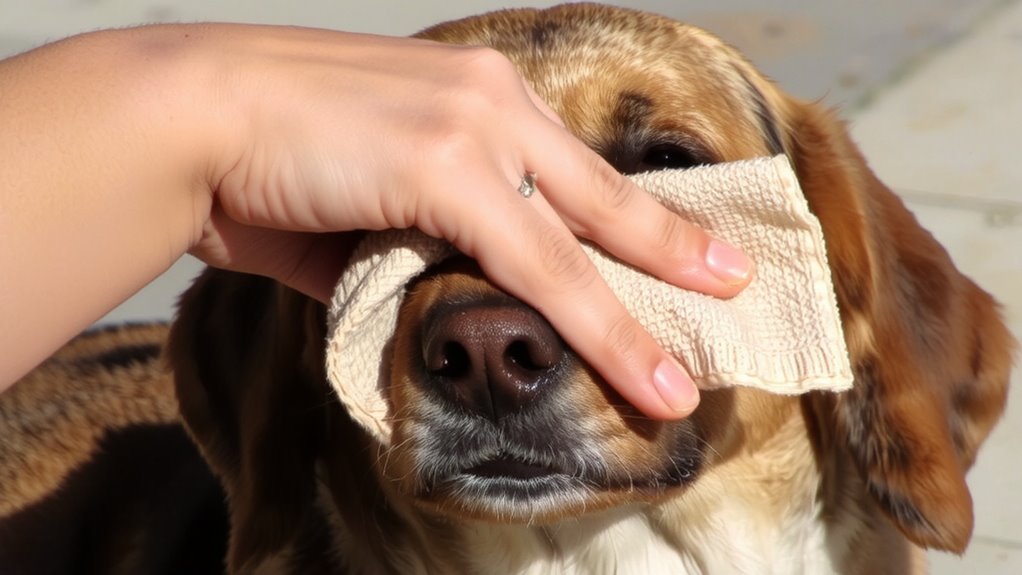
A methodical approach guarantees safety and effectiveness when wiping your pet’s face. Begin by selecting a soft, lint-free cloth or vet-approved wipe designed for facial hygiene. Moisten the cloth with sterile saline or a veterinarian-recommended cleanser-avoid alcohol or harsh chemicals. Perform gentle wiping motions, starting from the forehead and moving outward toward the cheeks. Apply minimal pressure-no more than 10–15 grams of force-to prevent skin irritation. Avoid direct contact with eyes, nostrils, and ear canals. Use a dampened corner of the cloth for hard-to-reach areas, folding it frequently to maintain cleanliness. Complete the process within 60–90 seconds to minimize stress. Consistent technique secures effective debris removal and reduces microbial load. Perform facial cleaning 2–3 times weekly, depending on breed and skin condition, to maintain ideal hygiene without disrupting natural oil balance.
Clean Common Trouble Spots: Folds and Muzzle
Pet owners of brachycephalic breeds often face the challenge of maintaining hygiene in facial folds and around the muzzle, where moisture and debris accumulate rapidly. Facial folds create warm, dark environments ideal for bacterial and yeast overgrowth. To prevent infection, clean these areas daily using a gauze pad dampened with a veterinarian-approved chlorhexidine solution (0.05% concentration). Gently lift and wipe each fold without excessive pressure. Dry thoroughly with a soft, absorbent cloth to eliminate residual moisture. For muzzle care, use hypoallergenic wipes or a silicone-tipped brush to dislodge trapped food and debris, especially in dogs with deep muzzles or heavy whisker beds. Inspect weekly for redness, odor, or inflammation-early signs of dermatitis. Consistent cleaning reduces skin fold dermatitis incidence by up to 70%. Proper technique and tools are essential for effective, safe hygiene maintenance in these high-risk zones.
Keep Your Pet Calm With Treats and Touch
You’re more likely to succeed when your pet stays relaxed during facial cleaning, and pairing gentle touch with well-timed treats makes all the difference. Positive reinforcement strengthens cooperation. Use soft verbal praise and small, tasty rewards to mark calm behavior. Practice gentle handling regularly, so your pet associates facial contact with positive experiences. Start sessions when your pet is naturally calm, like after a walk.
| Body Part | Touch Duration (sec) | Treat Given After |
|---|---|---|
| Cheek | 5 | Immediate |
| Muzzle | 3 | 1 sec delay |
| Ear Base | 7 | Immediate |
| Forehead | 4 | 2 sec delay |
Consistency guarantees predictability. This structured approach improves compliance. Combine gentle handling with precise timing to reinforce desired responses. Treat size should be pea-sized to avoid overfeeding.
Spot Eye Problems Early and Call the Vet
What if a small change in your pet’s gaze signaled something serious? Early detection of eye issues can prevent permanent damage. Look for redness, cloudiness, excessive tearing, or uneven pupil size. Discharge that’s yellow or green often indicates infection. Pets can’t tell you their vision is blurred, so behavioral cues like bumping into objects matter. Squinting or pawing at the face suggests pain or irritation. Some conditions, like glaucoma, increase intraocular pressure rapidly-measured via tonometry above 25 mmHg in dogs-and require immediate vet consultation. Others, such as corneal ulcers, appear as epithelial defects visible under fluorescein stain. Daily facial checks during cleaning let you compare both eyes for symmetry. Swelling or protrusion demands same-day care. Early detection improves treatment success rates by up to 70%. Never wait. Schedule a vet consultation at the first sign of abnormality. Prompt action preserves vision.
On a final note
You should never touch your pet’s eyes directly during facial cleaning. Use only soft, lint-free cloths or vet-approved hypoallergenic wipes with pH-balanced, non-irritating formulas. Gently wipe from eyelid outward, avoiding ocular contact. Focus on facial folds and muzzle, where debris accumulates. Monitor for redness or discharge. Regular, careful cleaning prevents infections and supports ocular health. Report abnormalities to your veterinarian promptly.