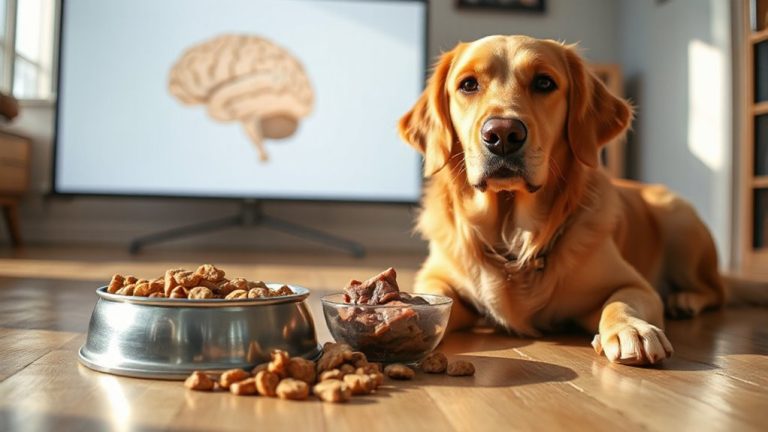
Understanding Chronic Pancreatitis in Dogs: Symptoms and Enzyme Supplementation
Chronic pancreatitis in dogs causes progressive pancreatic damage, leading to reduced enzyme production. You’ll notice weight loss, greasy stools, and abdominal discomfort due to fat malabsorption. The pancreas fails to secrete enough lipase, protease, and amylase, essential for digesting fats, proteins, and carbs. Use porcine-based enzyme supplements with high FCC units-1–2 teaspoons per 10 lbs daily, mixed with food. Ideal digestion occurs at intestinal pH 6.5–7.5. Long-term, combine low-fat diets with consistent supplementation to support nutrient absorption and pancreatic health. Further details reveal how targeted management improves clinical outcomes.
Notable Insights
- Chronic pancreatitis in dogs causes irreversible pancreatic damage, leading to pain, weight loss, and eventual exocrine pancreatic insufficiency (EPI).
- Early signs include intermittent abdominal pain, greasy stools (steatorrhea), and weight loss despite normal appetite.
- Reduced enzyme output impairs digestion, resulting in maldigestion and poor nutrient absorption in affected dogs.
- Effective enzyme supplements contain high levels of porcine-derived lipase, protease, and amylase for optimal canine digestion.
- Long-term management involves low-fat diets, consistent enzyme supplementation, and regular veterinary monitoring to support pancreatic health.
What Is Chronic Pancreatitis in Dogs?
Chronic pancreatitis in dogs is a long-term inflammatory condition of the pancreas that leads to irreversible structural damage and loss of function over time. You’ll find that persistent pancreatic inflammation gradually destroys healthy tissue. This ongoing damage triggers the formation of scar tissue, replacing functional acinar and islet cells. Scar tissue lacks digestive enzyme production capacity, impairing food breakdown. Over months or years, this results in exocrine pancreatic insufficiency (EPI) in many cases. The pancreas measures approximately 7–10 cm in adult dogs, and histological analysis shows fibrosis replacing up to 80% of parenchyma in advanced stages. Chronic inflammation disrupts both enzyme synthesis and insulin production. Diagnostic imaging often reveals pancreatic atrophy or calcification. Unlike acute episodes, symptoms here are subtle but progressive. You must rely on clinical history, serum trypsin-like immunoreactivity (TLI), and advanced ultrasound for confirmation. Early intervention slows degeneration but can’t reverse established scar tissue. Supplementing with high-quality pancreatic enzymes for dogs can significantly improve digestion and nutrient absorption in affected animals.
Early Signs of Pancreatic Dysfunction
How quickly can you recognize the subtle shift in your dog’s digestion before irreversible damage sets in? Early signs of pancreatic dysfunction often go unnoticed. Your dog may experience intermittent abdominal pain, evidenced by restlessness, reluctance to move, or a hunched posture. Digestive enzymes aren’t secreted efficiently, leading to malabsorption. You’ll observe gradual weight loss despite a normal or increased appetite. Stools may become pale, bulky, and greasy-a condition known as steatorrhea-due to undigested fats. Fecal elastase levels drop below 5 µg/g in affected dogs, indicating exocrine pancreatic insufficiency. Chronic inflammation can persist for months before clinical signs escalate. Monitoring body condition score and digestive consistency helps detection. Early intervention can slow progression. Recognizing these signals allows timely veterinary evaluation and improves long-term management outcomes.
How Pancreatic Enzymes Aid Digestion
Think of your dog’s pancreas as a precision enzyme factory, quietly powering digestion with biochemical accuracy. Enzyme function begins when the pancreas releases amylase, lipase, and protease into the small intestine. Amylase breaks down carbohydrates into simple sugars. Lipase processes fats into fatty acids and glycerol. Protease digests proteins into amino acids. Without sufficient enzyme function, food remains undigested, impairing nutrient absorption. These enzymes work best in a pH range of 6.5–7.5, matching the alkaline environment of the duodenum. Proper enzyme activity guarantees 90–95% nutrient absorption efficiency in healthy dogs. When chronic pancreatitis damages exocrine cells, enzyme output drops sharply. This leads to maldigestion, even if your dog eats a nutritionally complete diet. Undigested nutrients pass through the colon, causing weight loss, diarrhea, and malnutrition. Supporting natural enzyme function is essential. Efficient digestion depends on timely, targeted enzyme release-exactly what a compromised pancreas struggles to provide.
Choosing the Best Enzyme Supplement for Dogs
You rely on your dog’s pancreas to produce digestive enzymes, but when chronic damage reduces output, supplementation becomes necessary to restore proper digestion. Choose a supplement with high activity levels of lipase, protease, and amylase-measured in FCC units-to guarantee effective breakdown of fats, proteins, and carbohydrates. Ideal supplement sourcing matters: prefer porcine-derived enzymes, as they closely match canine digestive physiology. Avoid plant-based or fungal enzymes, which are less effective in dogs. Administer the supplement mixed with food, ideally allowing 20–30 minutes for activation before feeding. Follow consistent dosage frequency-typically before each meal-as enzyme activity lasts only briefly in the gut. Dosage depends on your dog’s weight and disease severity; start at 1–2 teaspoons per 10 lbs of body weight daily, divided by meals. Always consult your vet to tailor enzyme levels and frequency to your dog’s specific needs.
Long-Term Management of Canine Pancreatitis
While chronic pancreatitis can’t be reversed, consistent long-term management helps stabilize your dog’s condition and prevent flare-ups. Diet modification is essential. You must feed a low-fat, highly digestible diet-typically containing less than 10% fat on a dry matter basis-to reduce pancreatic stimulation. Prescription veterinary diets like Hill’s i/d or Royal Canin Gastrointestinal Low Fat are formulated specifically for this. Enzyme supplementation, dosed at 1–2 grams per meal, aids digestion if EPI develops. Regular monitoring includes quarterly blood work, focusing on cPLI (canine pancreatic lipase immunoreactivity), to detect subclinical inflammation. Annual abdominal ultrasounds assess structural changes. Avoid high-fat treats and sudden diet changes. Consistent meal timing-two to three meals daily-supports metabolic rhythm. Strict adherence to protocol reduces hospitalization risk by up to 70%. You’re managing a chronic condition, not curing it-ongoing diligence is non-negotiable.
On a final note
You manage chronic pancreatitis in dogs by recognizing early signs and supporting digestion. Pancreatic enzyme supplements, like pancrelipase, contain amylase, lipase, and protease to break down carbs, fats, and proteins. Choose enteric-coated powders-60,000 USP units lipase per dose-for targeted release in the small intestine. Dose with each meal. Monitor stool quality and adjust as needed. Consistent enzyme use improves nutrient absorption and reduces pancreatic stress over time.