Why Cats With Chronic Constipation Often Need Both Fiber and Hydration Support
Your cat needs both fiber and hydration because dry kibble and low water intake cause hard stools. Fiber increases bulk but worsens constipation without enough moisture. Soluble fibers like psyllium absorb water, expanding 10–30 times their volume to soften feces. Cats drinking ≥60 ml/kg/day have 30% faster colonic transit. Wet food, water fountains, and pumpkin or psyllium supplements support motility. Without proper hydration, fiber leads to impaction. You’ll discover effective ways to combine these solutions for long-term relief.
Notable Insights
- Dry kibble and low water intake contribute to hard stools, making hydration essential for softening fecal matter.
- Fiber increases stool bulk but requires adequate water to prevent worsening constipation.
- Without sufficient moisture, fiber absorbs intestinal fluid and leads to larger, harder stools.
- Proper hydration supports colonic motility and reduces transit time by up to 30%.
- Combining fiber supplements with increased water intake promotes regular, comfortable bowel movements.
What Causes Constipation in Cats?
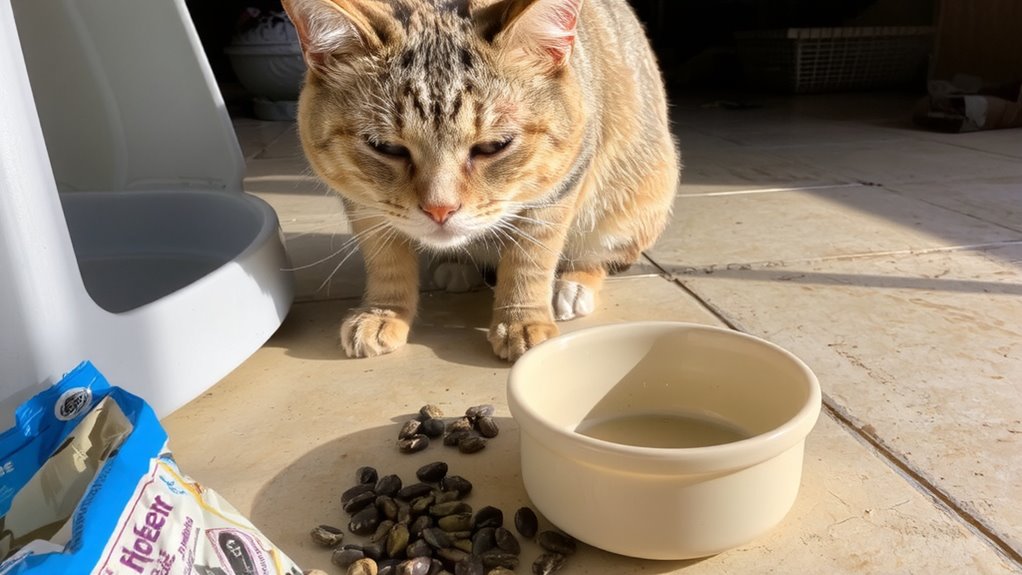
Why does your cat struggle to pass stool? A common culprit is diet imbalance. Your cat’s digestive system relies on precise nutrient ratios, and too little moisture or inadequate protein quality disrupts normal motility. Dry kibble, often low in moisture (typically 10–12% water), contributes to hard, dry feces. This increases colonic absorption, elevating stool density by up to 30%. Concurrently, medical conditions such as megacolon, hyperthyroidism, or pelvic trauma can impair neuromuscular function. These disorders reduce intestinal contractions by disrupting smooth muscle coordination or nerve signaling. Dehydration exacerbates these issues, decreasing intraluminal fluid volume and increasing transit time. Chronic pain, especially from arthritis, may cause voluntary retention. Tumors or strictures physically obstruct the distal colon, measurable via radiographic imaging or ultrasound. Identifying the underlying factor-whether nutritional or pathological-is critical. Treatment must address root causes, not just symptoms, to restore regular defecation patterns.
Why Fiber Can Worsen Constipation Without Water
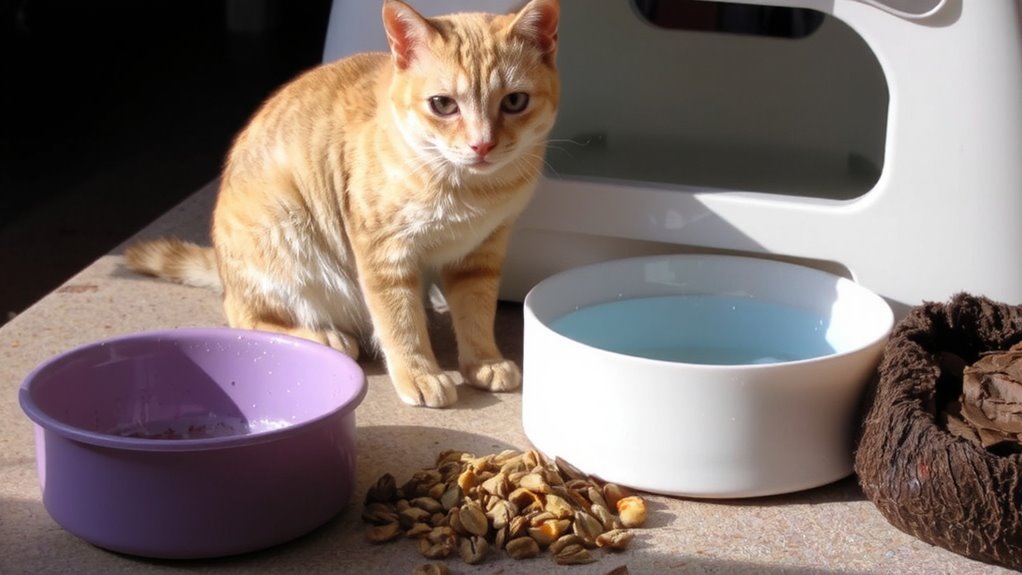
While fiber can support bowel regularity in well-hydrated cats, it may worsen constipation when water intake is inadequate. You must recognize dry fiber effects-without sufficient moisture, fiber absorbs fluid from the intestinal tract, increasing stool hardness. This leads to slower transit times and greater straining. Most soluble and insoluble fibers, including psyllium and beet pulp, require water to function properly. Their expansion capacity ranges from 10 to 30 times their dry volume, demanding hydration to soften fecal matter. Without it, you risk compounding impaction. Water dependency risks are especially high in senior or chronically constipated cats. These cats often have diminished thirst response or kidney-related fluid retention issues. Administering fiber without ensuring concurrent water intake may result in a net negative effect on motility. Always pair fiber supplementation with hydration strategies.
Why Hydration Prevents Feline Constipation
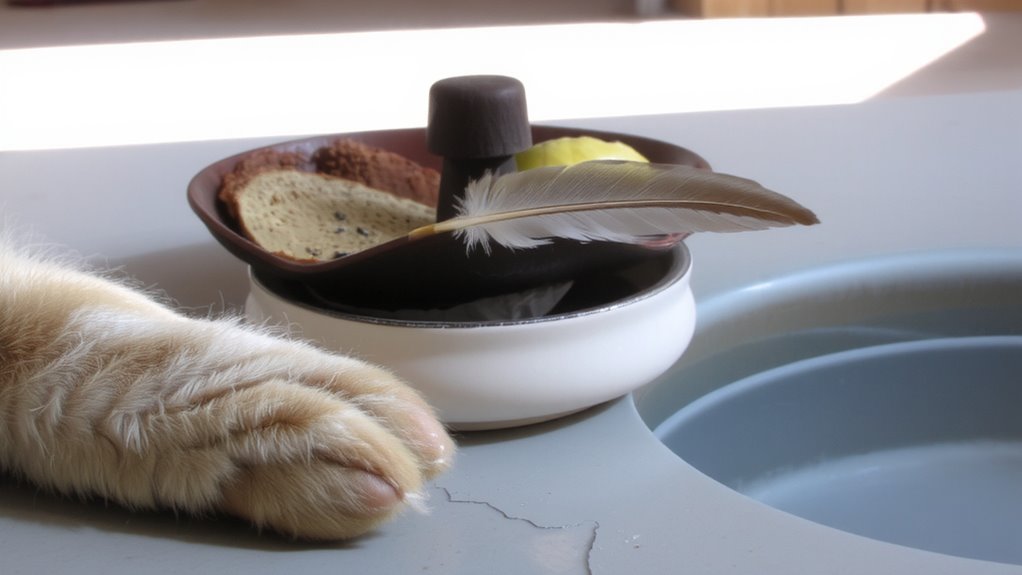
When your cat doesn’t consume enough water, the colon absorbs excess fluid from the feces, leading to hard, dry stools that are difficult to pass. This excessive water absorption dehydrates the intestinal contents, increasing stool density. Proper hydration reduces this effect, maintaining softer fecal matter that moves more easily. Water also supports intestinal motility-your cat’s gut relies on smooth muscle contractions to propel waste, and these contractions function less efficiently when contents are too dry. Low moisture levels increase transit time, raising the risk of impaction. Studies show cats consuming at least 60 ml/kg/day of water exhibit 30% faster colonic transit. Wet food, contributing up to 80% moisture versus 10% in kibble, greatly boosts intake. Ideal hydration guarantees efficient processing, reducing strain during defecation. Consistent fluid levels stabilize the digestive environment, preventing the slowdowns that lead to chronic constipation. Water isn’t just supportive-it’s essential for mechanical function.
Signs Your Cat Is Dehydrated or Constipated
How can you tell if your cat’s digestive struggles stem from dehydration or constipation? Check for physical indicators. Dry gums suggest dehydration; a healthy cat’s gums are moist and pink. Press gently on the gum line-it should blanch white then return to pink within 1–2 seconds. Delayed capillary refill indicates poor hydration. Sunken eyes are another clinical sign of fluid depletion; the globe may recede into the orbit due to reduced intraocular pressure. Constipated cats often strain in the litter box or produce hard, dry stools less than once every 48 hours. You may notice abdominal rigidity or decreased appetite. Unlike acute diarrhea, chronic constipation presents with infrequent defecation and incomplete evacuation. These symptoms often coexist: dehydration concentrates intestinal contents, increasing stool hardness. Early recognition allows timely fluid therapy or dietary adjustment. Monitor both gum moisture and eye appearance daily in at-risk cats.
Best Fiber Supplements for Constipated Cats
If your cat struggles with chronic constipation, adding a fiber supplement can help regulate bowel movements by increasing stool bulk and stimulating colonic motility. Psyllium husk is a soluble fiber that absorbs water and forms a gel, easing stool passage. Canned pumpkin, rich in insoluble fiber, adds mass and encourages intestinal contractions. Always introduce fiber gradually to avoid gas or bloating.
| Supplement | Dosage (per 10 lbs) | Fiber Type |
|---|---|---|
| Psyllium husk | 1/4 tsp daily | Soluble |
| Canned pumpkin | 1 tsp daily | Insoluble |
| Wheat bran | 1/8 tsp daily | Insoluble |
| Inulin powder | 1/16 tsp daily | Prebiotic |
| Cellulose powder | 1/8 tsp daily | Non-fermentable |
Easy Ways to Increase Your Cat’s Water Intake
Why does your cat drink so little water? Domestic cats evolved from desert-dwelling ancestors with low thirst drives, making them prone to inadequate hydration. Encourage water intake with multiple accessible sources. Water fountains increase consumption by 20–50% compared to bowls, according to veterinary studies. Flowing water attracts cats through movement and sound, mimicking natural streams. Use fountains with activated carbon filters to reduce bacteria and chlorine, changing filters every 2–4 weeks. Place at least two fountains in quiet, low-traffic areas, away from food to prevent contamination. Top pet drinking fountains are designed with multi-stage filtration and quiet pumps to enhance water appeal and safety. Supplement hydration with moist treats. These contain 65–80% water versus 10% in dry kibble. Offer small portions twice daily to avoid digestive upset. Rotate flavors to maintain interest. Combine moist treats with scheduled free-feeding of wet food to maximize fluid retention. Consistent access to water supports intestinal motility and reduces fecal dehydration.
When to Take a Constipated Cat to the Vet
A cat that isn’t drinking enough may face serious digestive consequences, including worsening constipation. Dehydration reduces intestinal motility, hardening stools and increasing discomfort. You should seek veterinary intervention if your cat hasn’t defecated in over 48 hours or shows repeated straining with no output. Certain signs demand immediate attention-these are emergency symptoms.
| Symptom | Action Needed |
|---|---|
| No stool for 72+ hours | Urgent veterinary intervention |
| Vomiting alongside constipation | Seek care immediately |
| Lethargy or refusal to eat | Evaluate for obstruction |
| Abdominal distension | Possible megacolon |
| Blood in stool or crying in litter box | Requires diagnostic testing |
Delaying care can lead to irreversible colon damage. Emergency symptoms often indicate obstruction or systemic illness. Early diagnosis improves prognosis. Monitor closely and act quickly-your cat’s GI health depends on timely veterinary intervention.
On a final note
You need both fiber and hydration to manage feline constipation effectively. Fiber absorbs water, increasing stool bulk and stimulating bowel movement-typically 1–2 grams per 10 lbs of body weight daily. Without adequate hydration, fiber can dry out the colon, worsening impaction. Cats require 60–80 ml of water per kg of body weight each day. Wet food, water fountains, and subcutaneous fluids help meet hydration needs and maintain intestinal motility.