Creating a Pet Emergency Kit for Households With Turtles and Tortoises
You need a specialized emergency kit for your turtle or tortoise to meet their strict thermal and hydration needs. Include a 20″ x 12″ insulated carrier with 6 mm ventilation slots and a latchable lid. Pack a 20,000 mAh power bank, chemical heat packs, and a digital thermometer accurate to ±0.5°C. Add a hydration kit with sphagnum moss and dechlorinated water. A complete plan accounts for species-specific needs, including diet and medical records-key details follow.
Notable Insights
- Include a secure, ventilated carrier made of durable plastic with a latchable lid to safely transport turtles and tortoises.
- Pack a reptile-safe heat source like chemical heat packs or battery-powered pads with auto-shutoff to maintain proper body temperature.
- Add a digital thermometer and hygrometer to monitor temperature and humidity levels in the emergency enclosure.
- Store species-specific supplies such as hydrated moss, dechlorinated water spray, and emergency food portions in waterproof containers.
- Keep medical records, diet plans, and habitat details in a labeled emergency kit and review the plan quarterly.
Know Your Turtle’s Emergency Needs
Every turtle and tortoise owner should be prepared-emergencies don’t wait. You must recognize emergency signs early. Lethargy, labored breathing, or swollen eyes indicate urgent health issues. Shell softening or discoloration often signals metabolic bone disease. Check hydration levels daily-pinch the skin above the hind legs; slow retraction means dehydration. Normal hydration shows immediate elasticity, like damp sponge rebound. For aquatic species, sunken eyes and wrinkled skin are red flags. Land tortoises may pass dry, chalky urates when dehydrated. Maintain hydration with shallow soaks at 82–86°F for 20 minutes twice weekly. Neonates need daily soaking. Monitor weight weekly using a digital gram scale accurate to 0.1g. Sudden loss over 5% body weight demands immediate care. You need baseline health records-this data guides emergency decisions. Know your pet’s normal posture, appetite, and waste patterns. Deviations are early warnings. Stay alert. Act fast.
Build a Turtle Emergency Kit
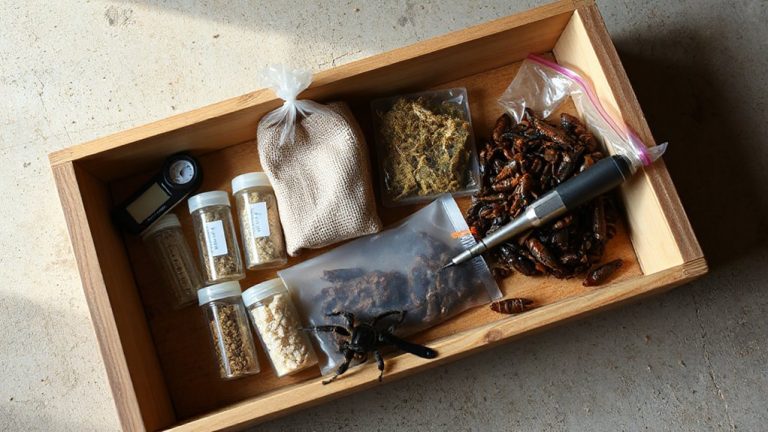
Now that you’re monitoring your turtle’s health with regular checks and keeping detailed records, it’s time to assemble a dedicated emergency kit. Include essentials for immediate care during crises. A reliable temporary shelter maintains stable conditions during displacement. Pair it with emergency lighting to guarantee proper heat and UV exposure. Consider including a novel protein dog food option if you have pets with dietary sensitivities, ensuring all animals in the household can be safely fed during emergencies.
| Item | Purpose | Specifications |
|---|---|---|
| Insulated plastic bin | Temporary shelter | 20″ x 12″, lid with air holes |
| Battery-powered lamp | Emergency lighting | 50–75 watt, clamp-style, 120V |
| Digital thermometer | Monitor internal temperature | Range: -10°C to 50°C, ±0.5°C accuracy |
| Rechargeable power bank | Power devices up to 24 hours | 20,000 mAh, dual USB output |
Store all components in a waterproof container. Test equipment monthly.
Choose the Right Evacuation Carrier
When moving your turtle during an emergency, a secure and well-ventilated carrier is essential. Choose a container with high carrier durability, such as reinforced polypropylene or impact-resistant plastic, to withstand rough handling. The carrier must have a tight-fitting, latchable lid to prevent escape. Best ventilation design includes molded air slots on all four sides, positioned above the expected water line for aquatic species. Each vent should be no larger than 6 mm in diameter to prevent limb entrapment. For tortoises, use a solid-bottom carrier at least 1.5 times your pet’s length in all directions. Interior surfaces should be non-abrasive and easy to clean. Avoid soft-sided pet carriers-they lack structural integrity. Rigid, stackable designs offer better protection and efficient storage during non-emergencies. For long-term housing solutions, consider the best turtle tanks for optimal health and ease of transport preparation.
Keep Your Turtle Warm and Hydrated
During an emergency evacuation, maintaining your turtle’s body temperature and hydration is critical to preventing shock and physiological stress. Thermal regulation guarantees your pet stays within its preferred ideal temperature zone (POTZ), typically 75–85°F for most species. Use a chemical heat pack rated for reptiles-never direct heat-or a battery-powered heat pad with an auto-shutoff to avoid burns. Insulate the carrier with towels to retain warmth. For hydration methods, offer shallow soaking in dechlorinated water at 70–75°F for 15–20 minutes every 24 hours, preventing drowning while enabling cloacal water absorption. Inject moisture into the kit via a damp sphagnum moss pouch, maintaining humidity at 60–80%. Avoid feeding during displacement to reduce metabolic demands. Dehydration signs include sunken eyes and dry skin-monitor closely. These protocols support homeostasis when normal habitats are inaccessible.
Create a Turtle-Specific Evacuation Plan
If you’re responsible for a turtle or tortoise, having a tailored evacuation plan isn’t optional-it’s essential for survival. Turtle temperament varies by species; some retreat into their shells and remain still, while others become stressed and attempt escape. Account for this in your strategy. Evacuation timing is critical-begin preparations at the first official warning, not when danger is imminent. Delay increases risk.
| Step | Action |
|---|---|
| 1 | Secure a ventilated, escape-proof carrier (minimum 20″ x 12″ x 10″) |
| 2 | Pre-load with hydration spray, thermal blanket, and species-specific food |
| 3 | Assign one person to handle the turtle, minimizing stress from multiple handlers |
Use a labeled kit with medical records, diet plans, and habitat details. Practice the plan quarterly.
On a final note
You’re prepared when disaster strikes. A turtle emergency kit guarantees survival during crises. Include a secure, insulated carrier: minimum 10 gallons for average adults, with ventilation holes and a latch. Pack hydrated sphagnum moss, a hygrometer, and a chemical-free heat pack (maintains 70–80°F for 48 hours). Store freshwater in BPA-free bottles. Your plan must list vet records, species-specific needs, and evacuation routes.