Why Senior Pets Need Different Weight-Loss Approaches Than Younger Animals
Your senior pet’s metabolism slows by 15–20%, reducing calorie needs and increasing fat storage. Joint pain from arthritis limits exercise, requiring pain control with NSAIDs or omega-3s (EPA 游戏副本20 mg/kg/day). Muscle loss risks frailty and organ decline, so diets need ≥3.5–4.5 g protein per 100 kcal. Gradual diet changes over 7–10 days prevent digestion issues. Safe mobility relies on short walks or swimming. Chronic diseases demand blood monitoring every 3–6 months. You’ll find targeted strategies that match aging physiology.
Notable Insights
- Senior pets have slower metabolisms, requiring 15–20% fewer calories than younger animals to maintain a healthy weight.
- Age-related muscle loss (sarcopenia) demands higher-quality, more bioavailable protein to preserve lean mass during weight loss.
- Joint pain from arthritis limits mobility, reducing exercise tolerance and necessitating low-impact activities like swimming.
- Hormonal changes, including reduced thyroid function and insulin sensitivity, alter metabolism and fat storage patterns.
- Chronic conditions like kidney disease or diabetes require tailored weight-loss plans and close medical monitoring.
Why Senior Pets Lose Weight Differently

While younger pets often shed pounds through increased activity and mild dietary adjustments, senior pets face distinct physiological changes that alter how they lose weight. Metabolic slowdown reduces caloric needs by 15–20% compared to younger adults. This decline stems from decreased lean muscle mass and organ function. Hormonal changes further complicate weight regulation. Insulin sensitivity drops, and thyroid activity often diminishes, reducing basal metabolic rate. Leptin and ghrelin imbalances affect appetite control, increasing fat storage. You must adjust calorie intake by 20–30% to match reduced energy expenditure. Standard adult pet foods typically provide 300–400 kcal/cup-too high for inactive seniors. Use senior-specific formulas with controlled calorie density (250–325 kcal/cup), higher fiber (5–8% dry matter), and ideal protein (25–30% crude protein) to preserve muscle. These adjustments address metabolic slowdown and hormonal changes effectively.
How Joint Pain Limits Safe Weight Loss

Joint pain markedly restricts your senior pet’s ability to lose weight safely, even when you’ve adjusted their diet for lower caloric intake. Reduced mobility from degenerative joint disease limits exercise tolerance, slowing metabolic rate and fat oxidation. You must prioritize arthritis management to restore functional movement. Nonsteroidal anti-inflammatory drugs (NSAIDs), such as carprofen at 2.2–4.4 mg/kg daily, improve lameness scores in 70% of canine patients within 7–14 days. Incorporate omega-3 fatty acids (EPA 20 mg/kg/day) to decrease joint inflammation. Perform regular pain assessment using validated tools like the Client-Specific Outcome Measures (CSOM) or Visual Analog Scale (VAS). These quantify discomfort and track response to intervention. Restricted activity mimics sedentary human metabolic profiles, reducing daily energy expenditure by up to 30%. Without intervention, weight loss plateaus occur within 8–10 weeks. Effective pain control increases willingness to move, supporting gradual, safe fat loss at 1–2% body weight per week. Supportive bedding can enhance comfort and mobility, with orthopedic foam best pet beds for arthritis showing significant improvement in rest quality and ease of rising in arthritic dogs.
Why Muscle Loss Is Dangerous for Older Pets
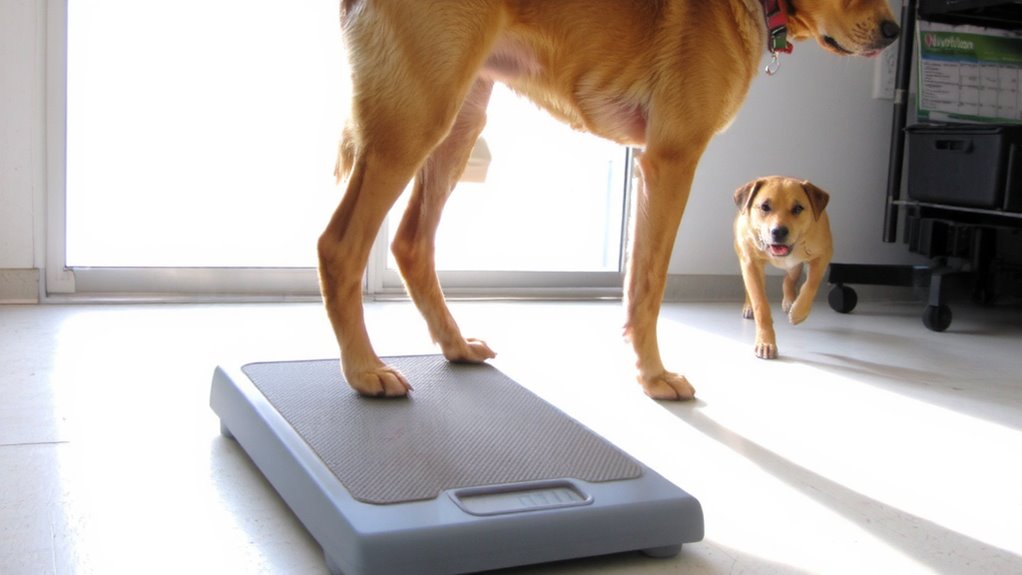
Sarcopenia-the age-related loss of muscle mass-puts your senior pet at serious risk, even if weight appears stable. Muscle decline accelerates with metabolic slowdown, reducing calorie needs while increasing susceptibility to weakness. Loss of muscle directly impacts organ function, diminishing resilience and recovery capacity. Without intervention, frailty progresses silently.
| Factor | Impact on Senior Pets |
|---|---|
| Muscle mass decrease | Up to 30% by age 12 in dogs |
| Metabolic slowdown | 15–20% lower energy needs vs. adults |
| Organ function decline | Reduced liver/kidney processing efficiency |
Preserving lean mass supports mobility and internal health. Lower metabolism doesn’t mean less nutrition-just more targeted nutrients. High-quality protein intake is essential to counteract catabolism. Muscle isn’t just strength; it’s metabolic stability and organ protection. Prioritizing it prevents functional decline more effectively than focusing on scale weight alone. Maintaining proper tank conditions, such as stable water temperature, can also support metabolic health in aquatic pets, much like how a reliable aquarium heater ensures a consistent environment for sensitive species.
How to Adjust Diets Gradually for Senior Pets
You can maintain your senior pet’s muscle mass and metabolic health by adjusting their diet with precision and timing. Gradual shifts over 7–10 days prevent digestive upset. Start by mixing 25% new food with 75% current food, increasing the new food incrementally every two to three days. Sudden changes impair nutrient absorption. Focus on high nutrient density to meet reduced caloric needs without sacrificing essential vitamins, minerals, and quality protein. Older pets require 20–30% more bioavailable protein to counteract sarcopenia. Choose diets with at least 3.5–4.5 grams of protein per 100 kcal. Fiber should be moderate-5–8% dry matter-to aid satiety without reducing mineral uptake. Monitor body condition score weekly. Use measured portions, not free feeding. Precision scales guarantee consistency. These steps support effective, safe weight loss while preserving lean mass in aging pets.
Managing Chronic Conditions During Weight Loss
While managing weight loss in senior pets, underlying chronic conditions like osteoarthritis, diabetes, or renal disease can’t be ignored-they directly influence dietary and activity recommendations. You must monitor thyroid management closely, as hypothyroidism slows metabolism and complicates weight loss. Blood tests every 3–6 months help track T4 levels and guide medication adjustments. For pets with kidney disease, prioritize kidney support through phosphorus-restricted diets containing 0.4–0.6% dry matter phosphorus and high-quality, digestible proteins. These formulations reduce renal workload while maintaining muscle mass during calorie restriction. Concurrent diabetes requires fiber-rich diets with 8–12% crude fiber to stabilize blood glucose. Always coordinate with your vet to balance weight-loss goals with disease management. Ignoring chronic conditions risks accelerating organ damage. Effective weight control in seniors isn’t just about calories-it’s about integrating medical needs into a safe, sustainable plan. Consider incorporating pet kidney support products to further assist renal function in aging animals.
Safe Exercise Options for Senior Pets
How do you keep a senior pet active without risking injury? Focus on low impact activities that support joint health and cardiovascular function. Short, controlled leash walks of 10–15 minutes, twice daily, maintain mobility without overexertion. These walks should occur on flat, even surfaces to reduce tripping risk. Swimming is another excellent low impact activity, providing buoyant resistance that reduces stress on arthritic joints. For indoor exercise, use slow-moving laser pointers or food-dispensing toys to encourage movement. Incorporate gentle stretching into your routine-extend each limb slowly through its range of motion, holding for 15–20 seconds to improve flexibility. Avoid sudden movements. Perform stretching daily, ideally after a short warm-up. The goal is consistent, moderate activity that enhances circulation, muscle tone, and joint lubrication without inducing fatigue or pain.
On a final note
You must adjust weight loss strategies for senior pets due to slowed metabolism and decreased organ function. Unlike younger animals, older pets lose muscle mass more rapidly-sarcopenia of aging reduces strength and mobility. Implement calorie-restricted, high-protein diets with L-carnitine (250 mg/kg daily) to preserve lean mass. Low-impact exercise like 10-minute leash walks twice daily prevents joint stress. Monitor creatinine, BUN, and thyroid levels monthly.