Creating a Low-Calorie, High-Volume Diet Using Safe Veggies for Dogs
You can create a low-calorie, high-volume diet for your dog using safe vegetables like carrots (35 kcal/cup), green beans (31 kcal/cup), and cucumber (16 kcal/cup). These fibrous, water-rich veggies increase satiety while providing minimal energy. Steam cruciferous types to reduce goitrogens and chop all pieces to ½ inch for safety. Limit vegetable intake to 10% of total calories to maintain nutritional balance. More details on best prep and portioning follow.
Notable Insights
- Choose low-calorie vegetables like cucumber, zucchini, and green beans to increase diet volume without excess calories.
- Steam or finely chop veggies to enhance digestibility and nutrient availability, especially for older or sensitive dogs.
- Limit vegetable intake to 10% of total daily calories to maintain nutritional balance and prevent deficiencies.
- Replace high-calorie treats with raw or lightly cooked veggie pieces to support weight loss and satiety.
- Combine safe, high-fiber vegetables with a complete, AAFCO-compliant diet to ensure balanced nutrition.
Why Veggies Help Dogs Lose Weight
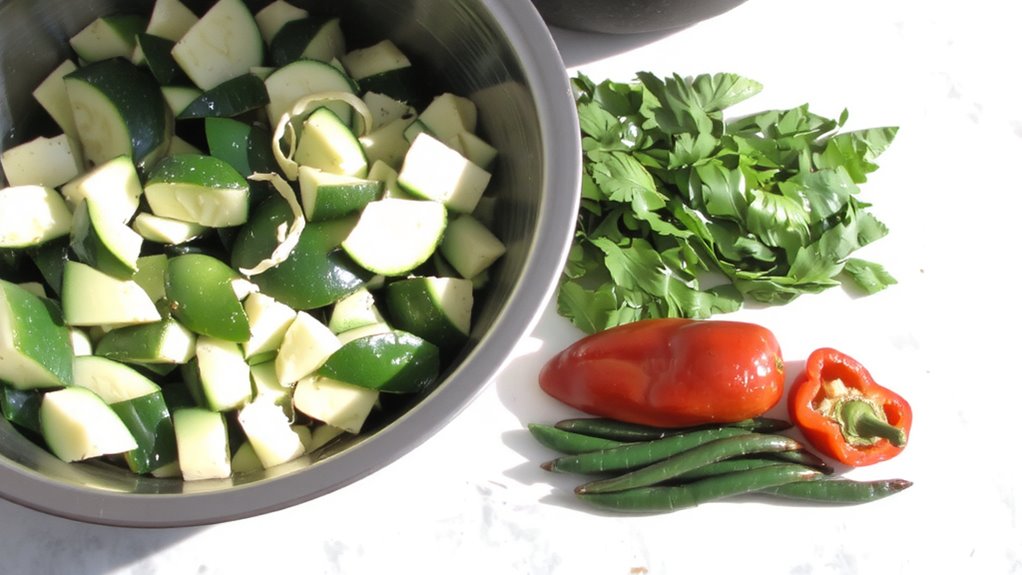
While dogs are primarily carnivores, incorporating certain low-calorie vegetables into their diet can effectively support weight loss by increasing satiety without adding excess energy. You can use veggies to aid portion control, replacing high-calorie fillers with nutrient-dense, voluminous options. High water and fiber content in vegetables slows gastric emptying, promoting fullness. The fiber benefits include improved digestion and stable blood glucose levels. Soluble fiber forms a gel-like substance in the gut, reducing fat and sugar absorption. Insoluble fiber adds bulk, supporting regular bowel movements. These mechanisms help regulate calorie intake. At 10–30 kcal per cup, most safe vegetables contribute minimal energy. By substituting 10–20% of your dog’s daily intake with cooked or raw veggies, you maintain meal volume while cutting calories. This strategy supports gradual, sustainable weight loss without triggering hunger.
Top 5 Low-Calorie Veggies for Dogs
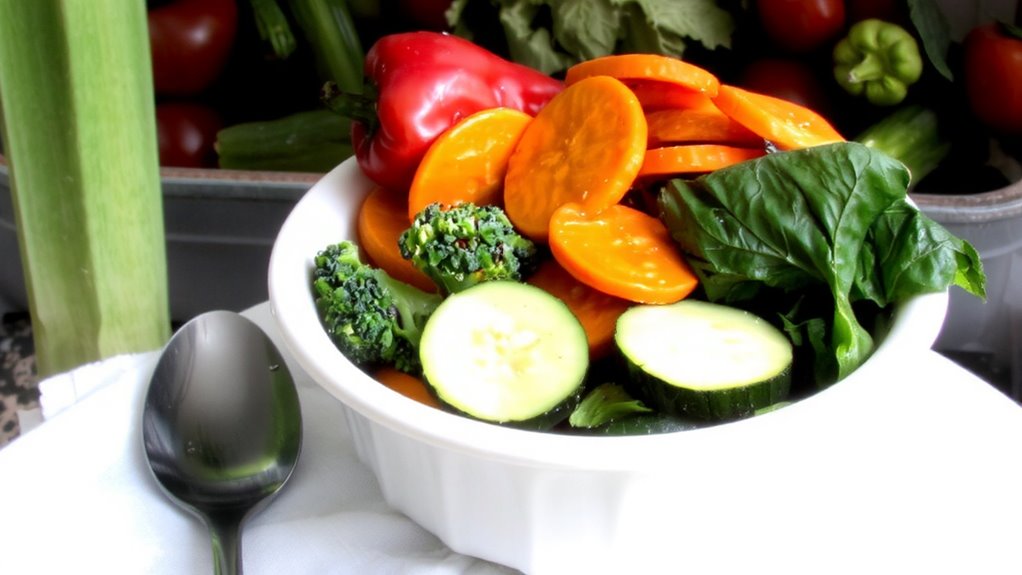
Five low-calorie vegetables stand out for safely supporting your dog’s weight loss without sacrificing nutrition or meal volume. Carrots provide 35 kcal per cup, offering crunchy textures that promote chewing and satiety. Green beans contain just 31 kcal per cup and deliver fiber (3.4 g) plus vitamin C. Cucumber, at 16 kcal per cup, adds hydration with 96% water content and mild flavor variety. Zucchini has 20 kcal per cup, supplying vitamin A and a soft crunch when raw. Broccoli (31 kcal per cup) offers glucosinolates, though limit it to 10% of daily intake due to isothiocyanate content. These vegetables balance digestible fiber, micronutrients, and low energy density. Their differing textures and flavor variety enhance palatability without excess calories. Including them increases meal bulk, aiding caloric restriction while maintaining fullness. Always introduce new vegetables gradually to monitor tolerance.
Safe and Digestible Veggie Prep for Dogs
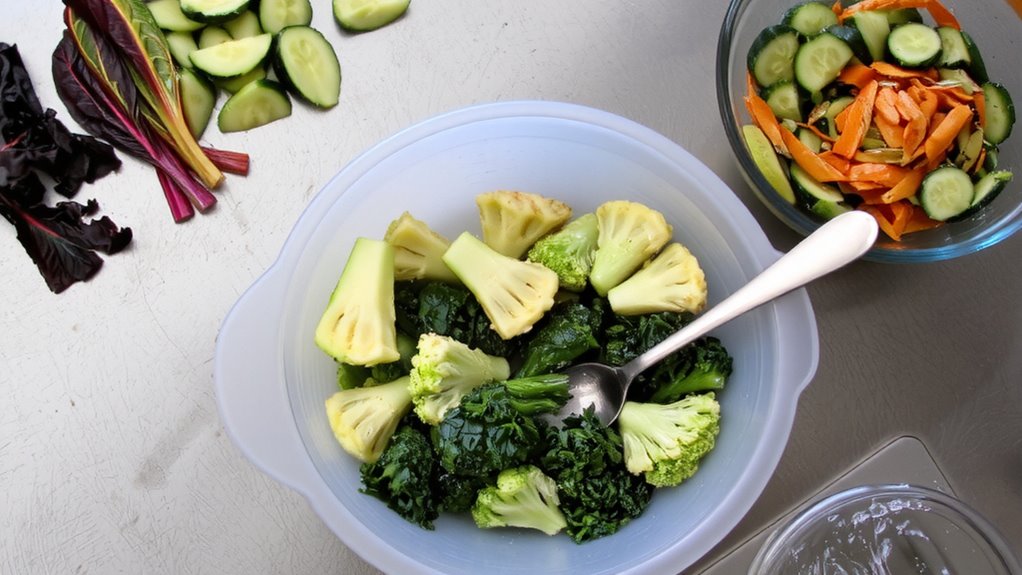
Proper preparation guarantees vegetables deliver maximum nutrition without digestive upset. You must prioritize safe cooking methods to minimize veggie toxicity risks. Raw cruciferous vegetables, like broccoli, contain goitrogens; steaming reduces these compounds by up to 30%. Boiling increases water-soluble vitamin loss by 40–60%, while steaming retains 80–90% of nutrients. Limit boiling to carrots and zucchini when improved softness is needed. Pureeing fibrous veggies like pumpkin enhances digestibility, especially for senior dogs. Chop all vegetables into uniform ½-inch pieces for consistent cooking. Never use seasonings, onions, or garlic-these increase toxicity risks. Light steaming for 5–8 minutes optimizes cell wall breakdown, boosting nutrient absorption. Always cool veggies to room temperature before serving. This prep protocol maximizes safety, digestibility, and nutritional yield-critical for dogs on low-calorie, high-volume diets.
Swap High-Calorie Treats for Veggies
Many commercial dog treats contain 30–50 calories per piece, contributing substantially to weight gain when fed regularly. Swapping them with low-calorie vegetable treat alternatives reduces caloric intake without sacrificing volume. Carrots, green beans, and cucumber slices contain fewer than 10 calories per 1/4 cup, offering a safe, high-fiber option. These vegetables support portion control by increasing chewing time and satiety. For dogs accustomed to soft textures, steam broccoli or zucchini lightly-no oils or seasonings-to improve palatability while preserving nutrient content. Limit portions to 1 cup daily for medium-sized dogs to prevent digestive upset. Unlike processed treats, raw or steamed veggies lack fillers and artificial additives. Always introduce new foods gradually. Properly measured vegetable treat alternatives align with energy requirements, helping maintain ideal body condition. This substitution strategy supports weight management through precise caloric reduction and increased dietary bulk.
Keep Your Dog Nutritionally Balanced
Swapping out high-calorie treats for vegetables helps manage your dog’s weight, but it’s only effective if the rest of their diet stays balanced. You must guarantee your dog receives all essential macronutrients and micronutrients daily. Nutrient tracking is critical-use a dietary log or app to monitor intake of protein (minimum 18% for adults), fats, vitamins, and minerals. Vegetables alone lack sufficient amino acids and fatty acids. Relying solely on them risks deficiencies. Consider your dog’s psychology: sudden changes may affect eating behavior. Introduce new foods gradually. Maintain consistency in meal composition to support metabolic health. Pair safe, low-calorie veggies like zucchini or green beans with a complete commercial diet meeting AAFCO standards. Do not replace more than 10% of total daily calories with treats or vegetables without veterinary guidance. Proper balance supports long-term health, energy, and digestion. Monitor body condition score monthly.
Signs Your Dog’s Veggie Diet Is Working
You’ll know your dog’s veggie-inclusive diet is on track when their body condition score stabilizes between 4 and 5 on a 9-point scale. A visible waistline and palpable ribs with minimal fat cover confirm ideal weight. Improved energy levels often follow within two to three weeks, evident in increased play frequency and longer walks without fatigue. This boost reflects efficient caloric utilization and stable blood glucose. Reduced hunger cues-like whining, scavenging, or begging-indicate high-fiber vegetables are increasing satiety. Fiber content in safe veggies like pumpkin (2.7 g per 100 g) and green beans (3.4 g per 100 g) expands in the stomach, promoting fullness. Stool volume may increase slightly due to insoluble fiber, but consistency should remain firm. Monitor hydration, as fiber requires adequate water intake. Consistent weight trends, sustained activity, and calmer behavior between meals confirm the diet’s effectiveness.
On a final note
You can safely reduce your dog’s caloric intake by incorporating high-volume, low-calorie vegetables. Replace 10–20% of daily calories with steamed broccoli, zucchini, or green beans to increase satiety without nutrient loss. Fiber content (2–4% dry matter) supports digestion and reduces hunger. Make sure veggies are chopped or pure excitability. Monitor body condition score monthly; a drop of 1 point every 4–6 weeks indicates effective, sustainable weight loss.