The Importance of Hydration in Weight-Loss Diets for Cats and Dogs
You need to keep your pet well-hydrated during weight loss-water fuels fat metabolism in the liver and muscles. Dehydration slows enzymatic reactions, reducing energy expenditure by up to 18%. Cats and dogs need 50–70 ml of water per kg of body weight daily. Wet food provides 70–80% moisture, far more than dry kibble’s 5–10%, supporting kidney function and nutrient transport. Use stainless steel bowls or fountains to encourage consistent intake. There’s more to optimizing hydration than just water availability.
Notable Insights
- Proper hydration boosts metabolism, aiding fat breakdown and helping dogs lose up to 18% more body fat during weight-loss programs.
- Dehydration impairs liver function, reducing the conversion of stored fat into energy and slowing weight-loss progress in pets.
- Wet food provides 70–80% moisture, significantly increasing hydration compared to dry kibble, which contains only 5–10%.
- Adequate water intake enhances nutrient transport, supporting muscle and liver function essential for efficient fat metabolism in cats and dogs.
- Signs like sunken eyes, dry gums, and slow skin turgor indicate dehydration, which can hinder weight loss and require immediate attention.
How Water Helps Cats and Dogs Lose Weight
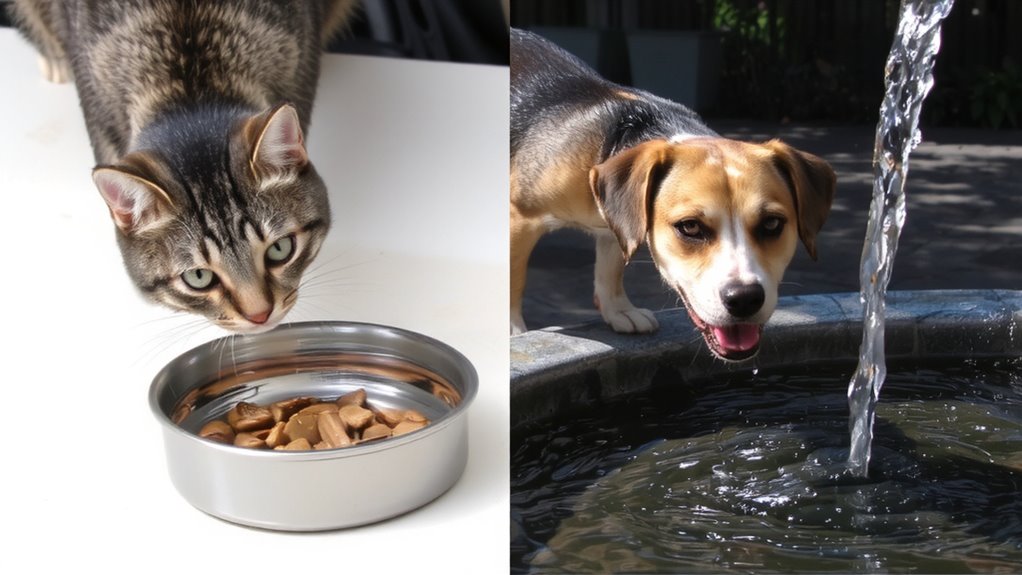
Although it might seem simple, water plays a critical role in helping your cat or dog lose weight effectively and safely. Water supports a metabolic boost by enabling efficient enzymatic reactions in the liver and muscles. Without adequate hydration, fat metabolism slows, reducing weight-loss efficiency. You should guarantee constant access to clean water-ideally 50–70 ml per kg of body weight daily. Proper hydration enhances nutrient transport, moving vitamins, glucose, and amino acids through the bloodstream to cells. This guarantees lean tissue maintenance during caloric restriction. Even mild dehydration impairs cellular function, decreasing energy expenditure. In clinical studies, well-hydrated dogs on weight-loss plans lost 18% more body fat over 12 weeks than underhydrated counterparts. Water also increases satiety, reducing overeating. For cats, who naturally drink less, consider wet food, which contains 70–80% moisture versus 10% in kibble. Always monitor intake, as ideal hydration directly supports metabolic rate and nutrient distribution critical to safe weight reduction.
When Dehydration Slows Pet Weight Loss
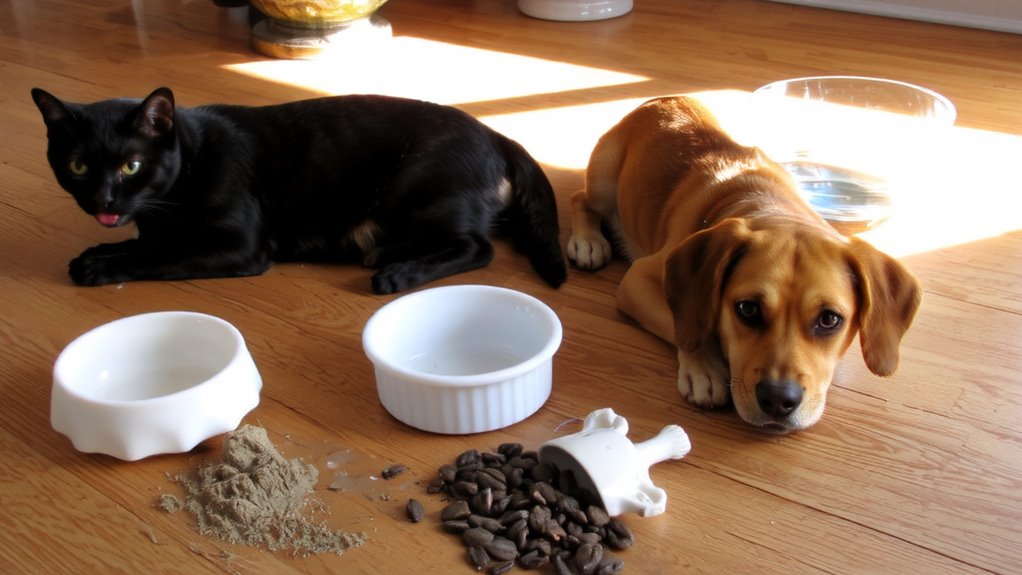
When pets don’t drink enough water, their bodies struggle to burn fat efficiently, and weight-loss progress stalls. Dehydration impairs metabolic function, reducing the liver’s ability to convert stored fat into energy. Without sufficient fluid, cellular processes slow, including those regulating energy expenditure. An electrolyte imbalance often follows, disrupting nerve and muscle function, which can lead to lethargy. You may notice reduced mobility, as dehydrated joints lose lubrication and muscles fatigue faster. Even mild dehydration-just 5% fluid loss-decreases aerobic capacity and endurance. This limits your pet’s ability to engage in the physical activity necessary for weight loss. Blood volume drops, lowering oxygen delivery to tissues and further suppressing metabolism. Chronic dehydration also strains the kidneys, reducing their efficiency in filtering waste. These physiological setbacks create a cycle: less activity leads to more weight retention, which worsens mobility. Ensuring consistent water intake is critical to maintaining metabolic momentum and supporting sustainable weight loss in cats and dogs.
Why Wet Food Hydrates Better Than Dry
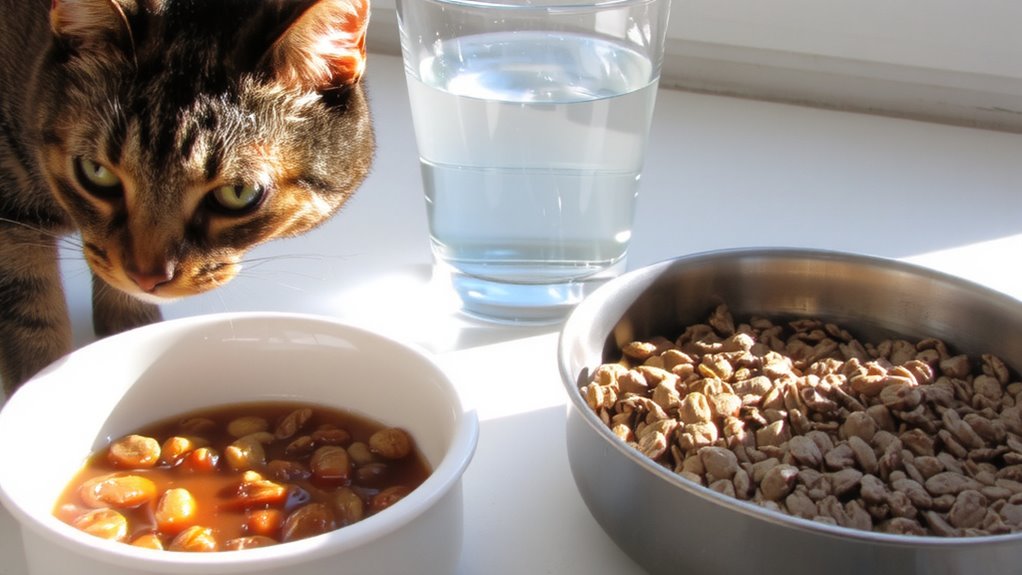
Wet food supports hydration more effectively than dry because of its substantially higher moisture content. Most wet foods contain 70–80% water, while dry kibble averages only 5–10%. This texture difference directly impacts your pet’s daily fluid intake. The semi-liquid consistency of wet food mimics natural prey, encouraging more frequent consumption and better hydration. Improved hydration supports kidney function and metabolic efficiency, both critical in weight-loss regimens. Additionally, the lower processing temperatures used in wet food production enhance nutrient retention, preserving essential amino acids and vitamins that can degrade in high-heat dry-food manufacturing. The increased moisture also aids digestion and nutrient absorption, reducing strain on the gastrointestinal tract. You’ll notice less concentrated urine and improved energy levels in your pet. Unlike dry food, which requires supplemental water intake to offset its dehydrating effect, wet food delivers water with every bite-making it a more physiologically appropriate choice for maintaining ideal hydration during weight loss. For optimal results, consider choosing from the Top Canned Cat Food Picks that emphasize moisture and nutrient quality.
How to Get Picky Pets to Drink More Water
How do you encourage a reluctant pet to drink enough water? Use flavor enhancement and strategic bowl placement. Add a teaspoon of low-sodium bone broth to water for taste without excess sodium. Flavor enhancement increases palatability, especially in cats, who rely on taste and smell. Rotate water daily to prevent bacterial growth and maintain freshness. Place at least two wide, shallow bowls per pet-stainless steel or ceramic-in quiet, low-traffic zones. Avoid plastic to reduce biofilm formation. Position one bowl away from food; pets often avoid drinking near eating areas due to instinctual contamination concerns. Elevate bowls for large dogs to align with their esophagus, reducing strain. For cats, use dispensers with multiple outlets, simulating natural flowing water. A pet drinking fountain can further encourage hydration by offering continuously filtered, circulating water that many pets find more appealing. These methods, grounded in behavioral and physiological preferences, improve daily water intake efficiently and safely.
When to Worry About Your Pet’s Hydration
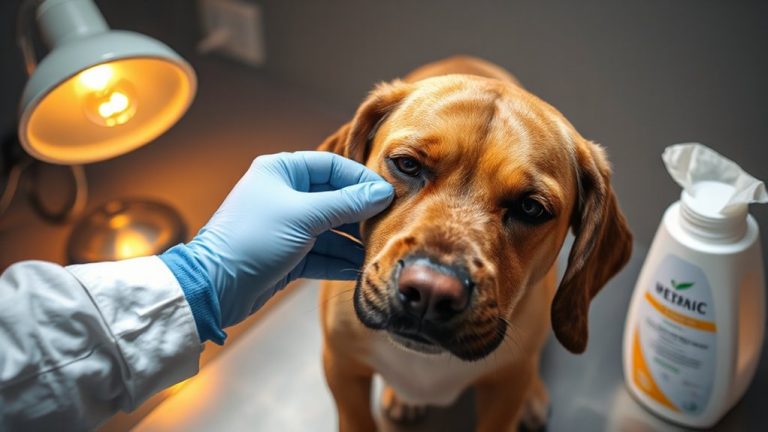
Monitoring your pet’s water intake is just as important as encouraging it. Watch for signs of dehydration, especially during weight-loss diets that alter metabolism. Sunken eyes are a clinical indicator of fluid deficit, often appearing when body water drops below 5% loss. If you notice this, act immediately. Prolonged vomiting episodes impair hydration by reducing fluid retention and increasing electrolyte loss. More than two vomiting episodes in 24 hours warrant veterinary assessment. Check skin turgor by gently pulling the scruff; if it doesn’t snap back within two seconds, dehydration is likely. Normal water intake is 20–40 ml per pound of body weight daily. Significant deviation, especially decreases, requires intervention. Advanced stages may present with dry gums, lethargy, and decreased capillary refill time. These are medical indicators, not behavioral quirks. Prompt response prevents complications, particularly in metabolically stressed, overweight pets adjusting to dietary changes.
On a final note
You must prioritize hydration in your pet’s weight-loss plan. Water regulates metabolism and supports kidney function during fat loss. Wet food typically contains 70–80% moisture, versus 10–12% in dry kibble, markedly boosting hydration. Dehydration reduces urinary output and may impair lipolysis efficiency. Provide fresh water daily; consider a 0.5–1 liter gravity dispenser. Monitor urine concentration-specific gravity above 1.050 in cats or 1.030 in dogs signals inadequate intake.