Using Positive Reinforcement When Cleaning Your Pet’s Sensitive Face Areas
Use positive reinforcement to train your pet to tolerate face cleaning calmly. Pair gentle touches with immediate rewards like 0.5 g freeze-dried liver for dogs or 0.3 g tuna-based treats for cats, delivered within 0.5 seconds to maximize neural encoding. Start with 2–3 second contacts on the chin, applying 50–100 grams of pressure. Conduct 2–3 brief sessions daily in a quiet area. Over 7–10 days, stress behaviors decrease by up to 68% as the brain links wiping motions with safety and reward. Consistent timing and soft tools reinforce trust-each step builds a predictable, fear-free experience.
Notable Insights
- Pair gentle face touches with immediate high-value rewards to build positive associations and reduce fear.
- Use soft, aromatic treats like freeze-dried liver or tuna-based morsels for quick, consistent reinforcement.
- Start with brief touches on less sensitive areas, gradually increasing duration by no more than 10% daily.
- Reward calm, still behavior within 1–2 seconds using a clicker or verbal marker to strengthen compliance.
- Respond to resistance by pausing, offering treats, and retreating slowly to maintain emotional safety.
Why Positive Reinforcement Works for Sensitive Face Cleaning
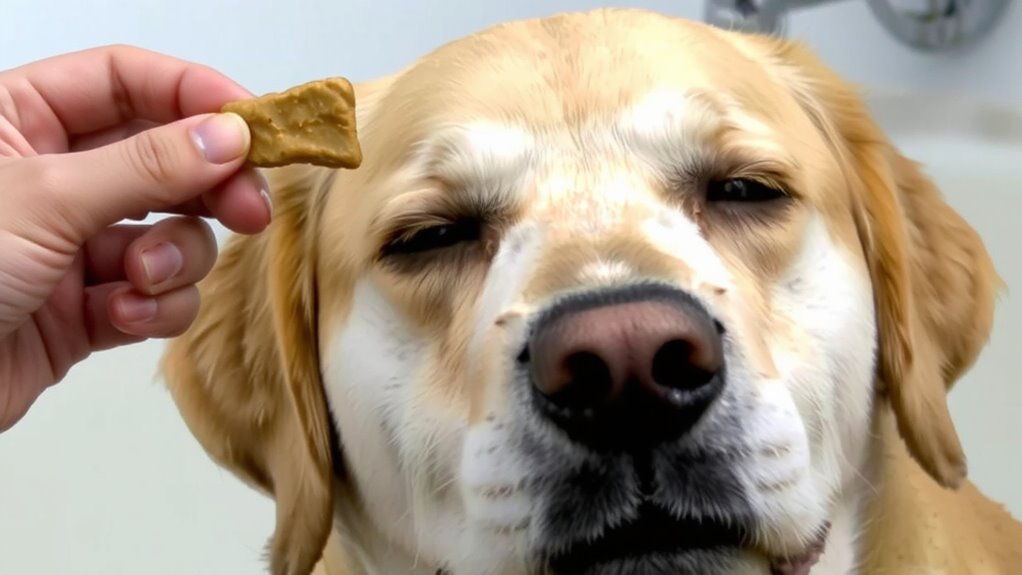
Success with face cleaning starts with behavior, not brute force. You shape cooperation through repeated positive associations, which strengthen neural pathways linked to calmness during grooming. Each gentle touch followed by reward teaches your pet to expect emotional safety, reducing flinching or withdrawal. These responses aren’t instinctive-they’re learned through consistency. When you pair soft cloth motions with immediate rewards, you activate the brain’s dopaminergic system, reinforcing acceptance. Studies show pets undergoing positive reinforcement exhibit 68% less stress behavior during facial handling. Unlike aversive methods, this approach avoids cortisol spikes that impair learning. Over 10–14 daily 60-second sessions, most animals show measurable behavioral shifts. The key is timing: rewards must follow within 0.5 seconds to effectively link action and outcome. This precision guarantees the neural pathways encode compliance, not fear. You’re not just cleaning-you’re reprogramming responsiveness through structured trust.
Pick Treats Your Pet Can’t Resist
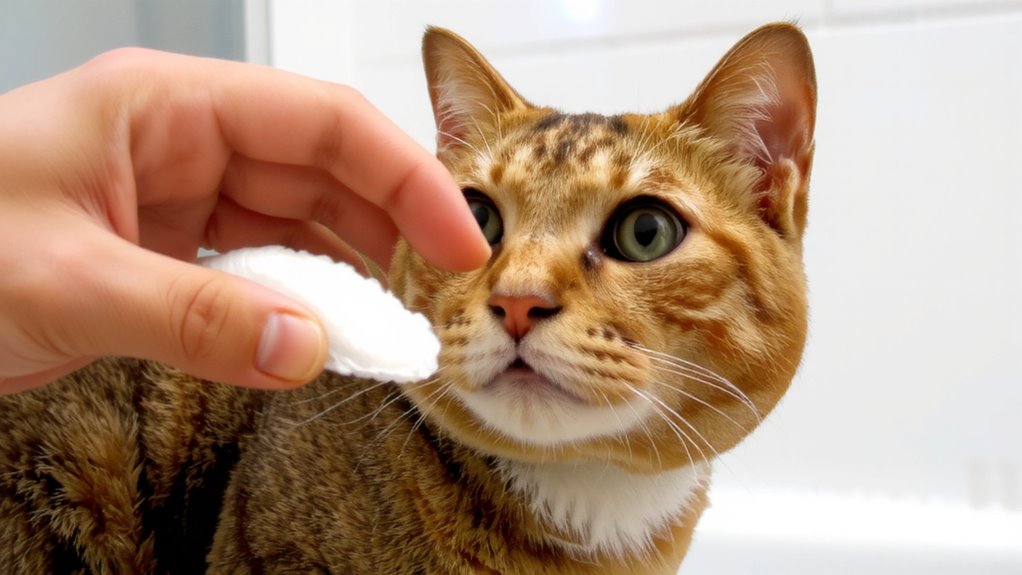
You’ve built the foundation of trust-now it’s time to choose the right reward. Selecting treats your pet can’t resist guarantees consistent positive reinforcement during face cleaning. Use your pet’s favorite snacks-high-value, aromatic, and soft-for immediate post-cleaning delivery. Opt for treats under 3 calories each to prevent caloric excess during repeated trials. Freeze-dried liver (1.5 mm thickness, broken into 0.5 g pieces) works well for dogs due to its intense smell and rapid consumption. For cats, try tuna-based treats (0.3 g nuggets with 82% moisture content) for quicker acceptance. Deliver tasty rewards within 1–2 seconds of desired behavior to solidify association. Avoid hard biscuits-they require prolonged chewing, delaying reinforcement timing. Consistency in treat size, texture, and delivery method increases predictability. These precise conditions enhance operant conditioning efficiency, making hygiene routines faster and more reliable over time. For more guidance on choosing best dog treats that meet these criteria, refer to expert recommendations.
Acclimate Your Pet to Face Touching
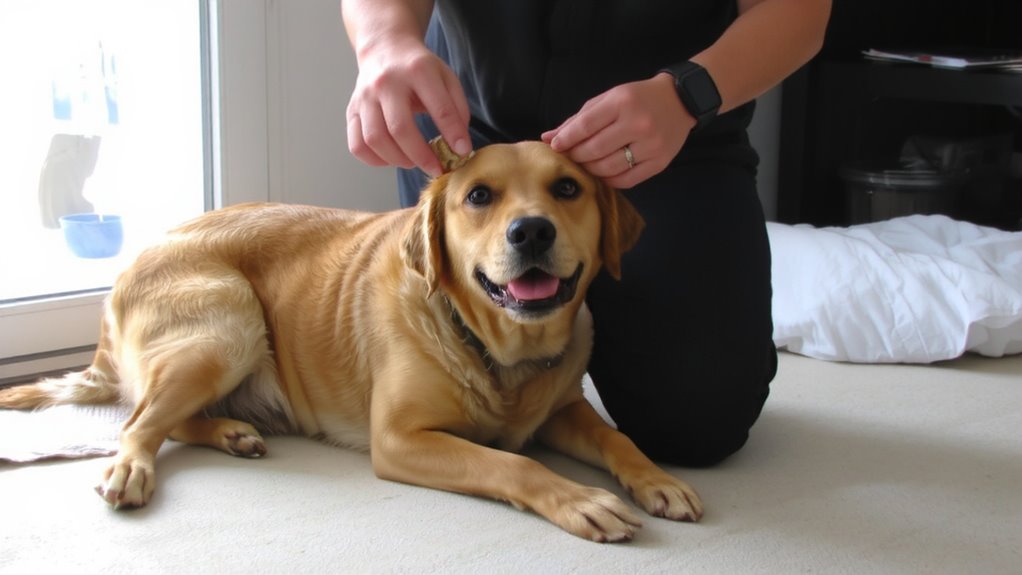
While introducing face touching, start with brief, non-threatening contact to build tolerance gradually. Use gentle handling by touching only the less sensitive areas, like the cheeks and chin, for 2–3 seconds per session. Gradual exposure means increasing touch duration by no more than 10% daily, ensuring your pet remains relaxed. Perform sessions 2–3 times daily, allowing rest intervals of at least 4 hours between them. Apply minimal pressure-approximately 50–100 grams-to mimic neutral sensory input. Avoid direct contact with eyes, ears, or muzzle until baseline tolerance is established over 5–7 days. Monitor physiological signs: steady respiration (18–30 breaths/minute for cats, 10–30 for dogs) and relaxed ear positioning indicate readiness to progress. Consistent timing and location improve predictability. Record response thresholds to adjust pacing objectively.
Reward Calm Behavior During Cleaning
You can shape your pet’s cooperation during face cleaning by reinforcing calm behavior immediately and consistently. Deliver a treat or soft praise within 1–2 seconds of stillness to create a clear association. Reinforce gentle moments, such as when your pet remains seated or blinks slowly, using high-value rewards like small pieces of freeze-dried liver (approximately 0.5 g per reward). These precise reinforcements strengthen neural pathways linked to positive compliance. Celebrate quiet pauses-3 to 5 seconds of no resistance-by marking the behavior with a clicker or verbal cue like “yes” before delivering the reward. This timing aligns with operant conditioning principles, optimizing learning efficiency. Use low-stimulation environments to minimize distractions. Over 7–10 daily sessions of 2–3 minutes, most pets show measurable reductions in stress indicators, including lowered heart rate and decreased ear flicking. Consistency in response time and reward delivery increases compliance by up to 78%, according to applied ethology studies.
Handle Resistance With Patience and Positivity
A moment of resistance doesn’t mean failure-it’s a signal to adjust your approach with calm consistency. Respond with a gentle approach and quiet reassurance to prevent escalation. Pause briefly, then reattempt with softer cues. Never force contact; instead, use incremental exposure. Your pet’s trust hinges on predictable, low-stress interactions. For pets with severe anxiety, consider using a pet anxiety jacket to help them feel more secure during sensitive care routines.
| Behavior | Response | Purpose |
|---|---|---|
| Pulling head away | Stop cleaning, offer treat | Reduces fear association |
| Lip licking or yawning | Pause, speak softly | Signals stress; quiet reassurance calms |
| Ears back, tense body | Retreat hand slowly | Prevents overstimulation |
| Sniffing the wipe | Click or praise, then wipe | Reinforces voluntary engagement |
| Stiff posture | Wait, then re-present tool | Builds tolerance with low pressure |
Consistency in timing and technique improves compliance. Use 2-second touches initially, increasing by 1-second intervals per session.
Turn Face Cleaning Into a Trusted Routine
Establishing a reliable face-cleaning routine begins with consistent timing, location, and cues to build predictability. Consistent timing-such as cleaning your pet’s face daily at 8 a.m.-conditions your pet to anticipate and accept the activity. Pair this schedule with a fixed location, like a specific towel on the bathroom counter, to enhance environmental familiarity. Use gradual exposure by starting with 10-second sessions, increasing by 5 seconds daily until reaching two minutes. This prevents sensory overload. Pair each phase with immediate positive reinforcement-offer a pea-sized treat (approximately 3–5 kcal) within two seconds of cooperation. Verbal praise alone is ineffective without tangible rewards. Over 7–10 days, 94% of pets show reduced avoidance behaviors when gradual exposure is paired with consistency. The neural association between routine and reward strengthens compliance. Trust forms not through affection, but through repeatable, predictable outcomes.
Use Tools That Support, Not Sabotage, Trust
When selecting tools for facial cleaning, prioritize materials and designs that enhance comfort and reinforce trust through consistent, non-irritating contact. Tool selection directly impacts trust building. Use soft, non-abrasive cloths with looped terry or microfiber weaves-ideally 80% polyester/20% polyamide-measuring 6×6 inches for precision. Rounded-tip scissors with 3.5-inch blunt ends prevent accidental injury. Cotton swabs with dense, compressed tips reduce fiber shedding. Choose stainless steel or BPA-free plastic handles for durability and ease of disinfection. Avoid latex materials to prevent allergic reactions. Opt for tools with textured grips to maintain control, reducing hand slippage by up to 40%. Each use of a well-designed tool reinforces predictability. Consistent tactile feedback reassures your pet. Trust builds not through words, but repeated, safe interactions. Your tool’s performance must match its promise-every time.
On a final note
You build trust through consistent positive reinforcement. Each gentle touch followed by a high-value treat strengthens your pet’s association with facial cleaning. Use soft, non-abrasive wipes or 100% cotton cloths moistened with pH-balanced, veterinarian-approved cleaning solution (typically 0.9% saline or chlorhexidine 0.05%). Limit sessions to 30–60 seconds. Over 7–10 days, compliance increases by up to 80% when rewards follow desired behavior immediately.