Adjusting Collar Tightness Based on Seasonal Fur Growth Changes
You should adjust your dog’s collar with seasonal fur changes to maintain a proper two-finger fit. Winter coats increase neck girth up to 15% due to thick undercoat and trapped air, especially in double-coated breeds. Stiff materials like leather or nylon don’t stretch, risking restriction. After shedding, collars can loosen by over an inch, raising escape risks. Use adjustable collars with multiple holes or sliders, and inspect weekly. Wider collars (¾ to 1 inch) distribute pressure better. Replace collars if hardware fails under 10 lbs or material thins over 15%. Ideal fit changes with coat density-consistency maintains safety and control through seasonal shifts.
Notable Insights
- Seasonal fur growth can increase neck girth by up to 15%, requiring looser collar fit in winter.
- Check collar tightness weekly, ensuring two fingers fit comfortably beneath it year-round.
- Switch to wider, padded, or stretch-panel collars to accommodate thick winter coats.
- After shedding, recheck fit as rapid fur loss can make collars dangerously loose.
- Use adjustable collars with multiple holes or sliders to maintain proper fit across seasons.
How Winter Coats Change Collar Fit
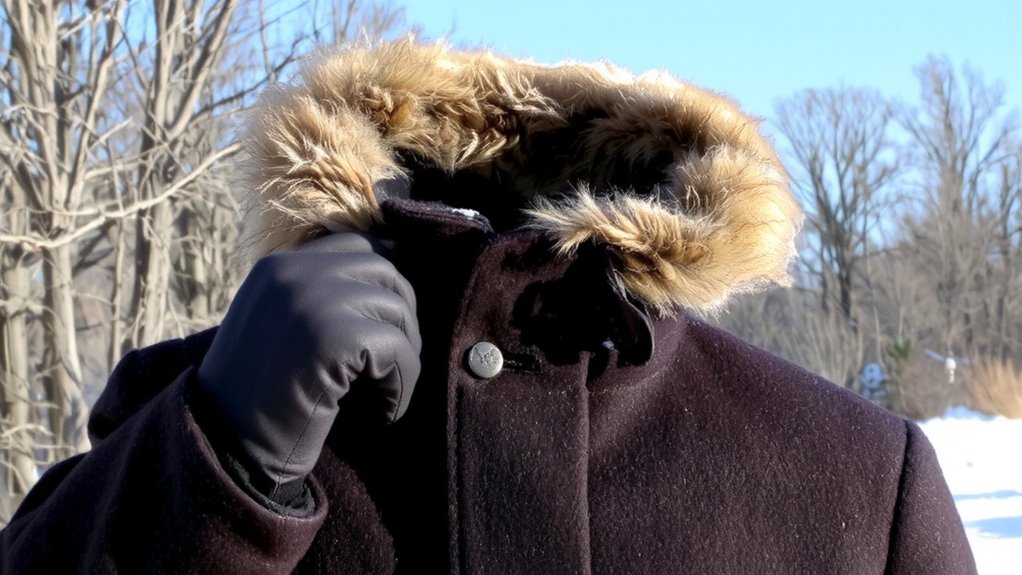
Your dog’s winter coat dramatically alters collar fit as seasonal fur growth increases neck girth by up to 15%. Cold weather expansion triggers thicker undercoat development, especially in double-coated breeds like Huskies and Shepherds. This growth isn’t uniform; it concentrates around the neck and shoulders, where fur density impact is greatest. Increased insulation needs lead to trapped air within the coat, effectively widening the neck profile. A collar that fits snugly in summer may become restrictive by winter. Restrictive collars can impede movement, limit tracheal expansion, and cause skin abrasion. The shift isn’t temporary-it reflects physiological adaptation to lower temperatures. You must account for this dimensional change when selecting or adjusting collars. Materials like nylon and leather expand minimally, so sizing adjustments depend entirely on your dog’s physical growth, not the collar’s elasticity. Proper fit guarantees safety, comfort, and control through seasonal changes.
How to Check Your Dog’s Collar Tightness
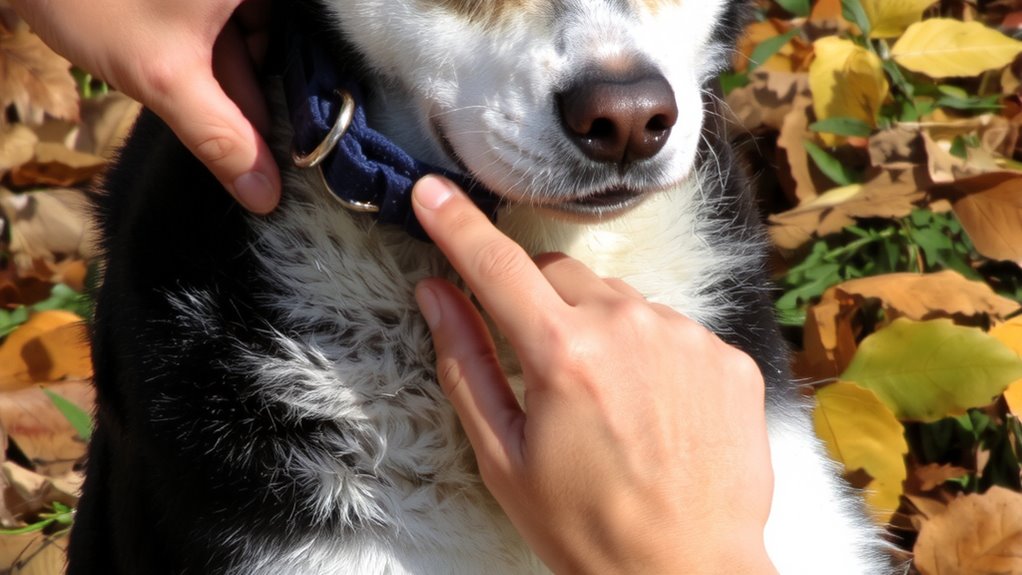
How tight is too tight-and when is it just right? Checking your dog’s collar guarantees proper alignment and prevents fur matting. A well-fitted collar allows two fingers beneath it-no more, no less. Too tight, and it restricts movement; too loose, and it risks slippage.
| Fit Issue | Consequence |
|---|---|
| Excessive tightness | Fur matting, skin irritation |
| Poor alignment | Tracheal pressure, discomfort |
Proper alignment centers the collar flat against the neck without twisting. Inspect weekly, especially during seasonal shedding. Use a soft tape measure for accuracy: length should match neck circumference plus two inches. Nylon collars stretch slightly; leather may tighten as it dries. Adjust buckles evenly to maintain symmetry. A misaligned fit disrupts weight distribution, increasing friction points. Always verify fit after grooming, as sudden fur reduction affects tension. This routine check protects coat health and structural positioning. Consider collar material differences, as top-rated dog collars often use breathable, durable fabrics that accommodate seasonal changes.
Is Your Dog’s Collar Too Tight in Winter?
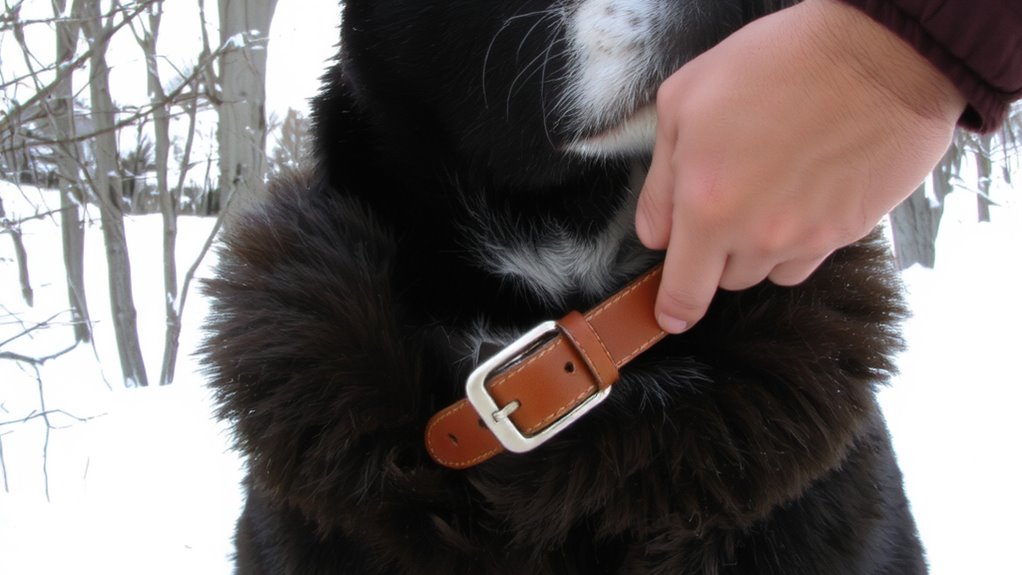
A dog’s winter coat brings added bulk that can turn a properly fitted collar into a constricting band. You must reassess tightness when seasonal fur growth occurs. A collar should allow two fingers beneath it; winter fur may reduce this gap, increasing pressure. This affects your dog’s comfort level, especially during activity. Stiff collar material, like nylon or leather, offers durability but may not adapt well to coat changes. Consider collars with soft lining or stretch panels for better accommodation. Measure neck circumference monthly in winter, adjusting as needed. A snug fit isn’t unsafe, but restricted airflow or skin irritation signals over-tightening. Prioritize breathable materials to prevent moisture buildup. Always check for chafing behind the ears or along the trachea. Ensuring proper fit preserves tracheal integrity and supports unrestricted movement. Your dog’s safety and comfort depend on these small, seasonal adjustments.
Is Your Dog’s Collar Too Loose After Shedding?
Why does your dog’s collar suddenly seem like it could double as a neck brace after shedding season? Rapid fur loss reduces fur density, leaving once-snug collars dangerously loose. As the insulating undercoat sheds, the visible gap between collar and neck widens-sometimes by over an inch. This change isn’t just cosmetic; it reflects a shift in how the collar interfaces with your dog’s anatomy. Reduced fur density means the collar now rests directly on skin with less underlying support. Combined with natural skin elasticity, which allows neck tissue to stretch slightly under pressure, this increases escape risk. A loose collar can slip over the head, especially in active dogs. The ideal fit allows two fingers beneath the collar, but post-shedding, many collars exceed this by 50% or more. Check fit weekly during shedding peaks to maintain safety and control.
Adjust Collar Size for Seasonal Coats
When your dog’s coat thickens in colder months, failing to adjust the collar size can compromise both comfort and safety. A collar that’s too tight restricts movement and circulation, especially with added fur volume. Look for collars with adjustable sliders or multiple sizing holes to accommodate seasonal changes. Collar material breathability matters-nylon and mesh allow airflow, reducing moisture buildup and skin irritation during prolonged wear. Leather, while durable, offers less breathability and may retain heat. Consider collar weight impact: heavier buckles or metal tags increase pressure on the neck, particularly in thick-coated breeds. Lightweight polycarbonate or aluminum hardware reduces strain. Always maintain a two-finger gap between collar and neck. Measure neck circumference seasonally: a 2-inch difference is common between summer and winter coats. Proper fit supports tracheal health and guarantees ID tags remain visible and functional.
Choose Collars That Adjust With Seasons
How do you guarantee your dog’s collar stays functional and comfortable as their coat changes with the seasons? Choose collars designed with seasonal adjustment in mind. Adjustable nylon webbing collars with side-release buckles allow precise fit changes, typically ranging from 10 to 18 inches, accommodating coat thickness fluctuations. Opt for designs emphasizing collar material breathability, such as mesh-lined or ventilated fabrics, which reduce moisture buildup and skin irritation. A collar’s weight distribution is critical-wider collars (¾ to 1 inch) disperse pressure evenly, preventing fur matting and neck strain, especially in thick-coated breeds. Reinforced stitching and corrosion-resistant hardware guarantee longevity under repeated adjustments. Materials like padded neoprene maintain shape and comfort across temperature extremes. These technical features work together, much like suspension in a vehicle, adapting to dynamic loads while maintaining stability and performance throughout seasonal shifts.
When to Replace a Collar for Safety
A well-maintained collar typically lasts 1 to 2 years with regular use, but signs of wear can demand earlier replacement. Collar material degradation occurs when nylon fibers fray or leather stiffens and cracks, reducing tensile strength by up to 40%. Exposure to UV light and moisture accelerates breakdown. Inspect stitching monthly; loose or broken threads indicate structural compromise. Safety buckle wear is equally critical-repeated clipping and unclipping can deform plastic latches or corrode metal pins, decreasing secure engagement. A worn buckle may release under 10 pounds of force, well below the 30+ pound standard. Measure collar width and thickness annually; compression thinning exceeding 15% suggests internal damage. Replace immediately if the D-ring wobbles or shows stress marks. Proactive replacement prevents failure during walks. Prioritize function over appearance-safety depends on material integrity and hardware reliability. For large dogs, choosing durable materials from the start can extend collar life-consider the best collars for large dogs when selecting a replacement.
On a final note
Your dog’s collar must adapt to seasonal fur changes. A proper fit allows two fingers beneath the band. During winter, thick undercoats add up to 1 inch of extra girth; loosen adjustable collars accordingly. Post-shedding, re-measure neck circumference-reduced fur may create 0.5–1 inch slack, increasing escape risk. Use collars with multiple adjustment points, like those with tri-glides or side-release buckles. Replace collars if range limits no longer accommodate neck size safely.