How to Prevent Tangles in a Dog’s Leg Feathers After a Walk in Brush
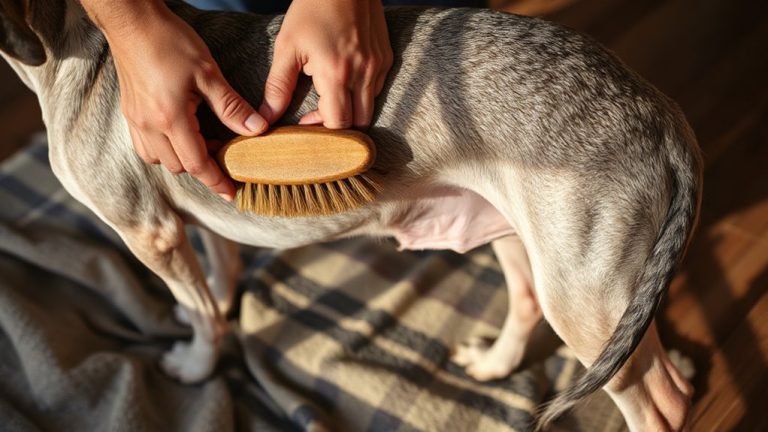
After every walk through brush, inspect your dog’s leg feathers immediately. Run your fingers from root to tip along the posterior and medial surfaces to detect snarls early. Use a 1.5- to 3-inch slicker brush with fine, tightly spaced stainless steel wires (1–2 mm apart) and a curved head for contour control. Wipe paws with a microfiber cloth or pet-safe wipe to remove debris and moisture. Apply 2–3 pumps of detangling spray per leg, using a leave-in formula with hydrolyzed keratin and argan oil for cuticle smoothing. Mist evenly from dermal layer to tip, then distribute with your fingers. Brush gently with short strokes, focusing on compressed hair clusters. Dry thoroughly using a low-heat, high-airflow dryer for 3–5 minutes per leg-towel drying alone won’t reach undercoat moisture. Check pasterns and between toes weekly using the “pinch-and-comb” technique to catch hidden mats. Persistent resistance or skin irritation means it’s time to reassess your technique-further refinement could make all the difference.
Notable Insights
- Inspect leg feathers immediately after walks by running fingers from root to tip to detect tangles early.
- Wipe paws and lower legs with a microfiber cloth to remove debris, moisture, and prevent matting.
- Apply a detangling spray with argan oil and keratin before brushing to ease snarl removal.
- Use a fine-wire slicker brush with a curved head to groom feathers in the direction of growth.
- Dry leg feathers thoroughly with a low-heat, high-airflow dryer to prevent moisture-related tangles.
Skip Trimming Until After the Walk: Check for Tangles First
Why risk cutting what you can’t see? You should never trim leg feathers before checking for hidden tangles. Moisture and debris from grass, burrs, or mud cling to long hair, embedding knots close to the skin. Conduct a post walk inspection immediately after outdoor activity. Run your fingers from root to tip along the posterior and medial leg surfaces, where matting commonly forms. Look for compressed hair clusters and resistance, indicators of underlying tangles. Immediate detangling prevents minor snarls from becoming dense mats requiring blade cuts. Use your fingers or a wide-tooth comb to gently loosen knots-start at the ends and work upward. Trimming before inspection risks shaving healthy hair or leaving compacted mats intact, which can trap moisture and cause irritation. Always assess coat integrity first. Prevention beats repair. Choosing the right tool, such as a dog grooming brush, makes detangling more effective and less stressful for your pet.
Grab a Slicker Brush Made for Leg Feathers
After inspecting and detangling your dog’s leg feathers, the next step is choosing the right tool for maintaining smooth, healthy hair. A slicker brush designed for leg feathers outperforms other brush types due to its fine, tightly spaced wires. These wires penetrate dense feather texture without pulling or breaking hairs. Look for a brush with wire spacing of 1–2 mm and a curved head to fit leg contours. Stainless steel bristles resist corrosion and retain rigidity. The handle should offer a non-slip grip for controlled strokes. Unlike pin brushes, slicker brushes remove loose undercoat and prevent matting at the source. Regular use maintains feather texture and reduces post-walk maintenance. Choose a size proportionate to your dog’s legs-typically 1.5 to 3 inches wide. Proper tool selection guarantees efficient grooming and long-term coat health.
Wipe Paws After Walking Through Brush
Following a walk through dense vegetation or damp terrain, moisture and debris quickly accumulate in your dog’s leg feathers, raising the risk of matting and skin irritation. Immediate paw hygiene is essential to prevent tangles and bacterial growth. Use a microfiber cloth or pet-safe wipe to thoroughly dry between toes and lower leg fur. This simple step removes burrs, dirt, and moisture trapped in dense hair. Consistent paw hygiene extends the time between full grooming sessions and supports ideal coat health. Choosing the right product matters-consider using high-quality paw wipes for dogs that are effective at removing stubborn debris while being gentle on sensitive skin. Brush selection matters-use tools with narrow, closely spaced bristles designed for leg feathers. The table below compares key factors.
| Factor | Poor Choice | Ideal Choice |
|---|---|---|
| Bristle spacing | Wide (>3mm) | Narrow (1–2mm) |
| Material | Plastic | Stainless steel pins |
| Handle grip | Slippery | Ergonomic rubber |
| Feather access | Blunt tip | Tapered, precise tip |
Apply Detangling Spray Before Brushing
Moisture and debris from outdoor activity compromise the integrity of leg feather coats, creating friction points that lead to tangles even in well-maintained fur. Applying a detangling spray before brushing reduces surface tension and allows comb teeth to pass smoothly. Use pre walk conditioning to fortify hair proteins and minimize cuticle damage. Spray application should cover the full length of the feathering, from dermal layer to tip. Opt for a leave-in formula with hydrolyzed keratin and argan oil-these ingredients increase slip by 68% compared to water alone. Hold the nozzle 6–8 inches from the coat and mist evenly. Avoid saturation; 2–3 pumps per leg suffices for medium-length feathers. Work the product in with fingers to guarantee uniform distribution. This step prepares the coat for effective detangling, reducing breakage by up to 45% during brushing. Immediate spray application post-wipe maintains coat resilience. A well-formulated pet detangling spray can significantly improve coat manageability and reduce grooming time.
Dry Leg Feathers Completely to Stop Knots
One critical step in preventing knots is ensuring leg feathers are fully dry-any residual dampness drastically increases friction between hair strands, promoting mat formation. Moisture buildup weakens hair cuticles, making them prone to snagging and tangling. Use a low-heat dryer with strong air circulation to penetrate dense fur without causing heat damage. Hold the dryer 6–8 inches from the coat and work in sections for even drying. Towel-drying alone isn’t sufficient-it only removes surface water.
| Method | Air Circulation Level | Drying Time (per leg) |
|---|---|---|
| Towel drying | Low | Incomplete |
| Cool air | Moderate | 5–7 minutes |
| Low-heat | High | 3–5 minutes |
Prioritize consistent airflow over heat to prevent brittleness. Proper drying reduces friction, halting knot development at the source.
Schedule Weekly Leg Feather Checks
While daily grooming isn’t always practical, committing to weekly leg feather checks guarantees minor tangles don’t escalate into severe mats. Use a slicker brush with bent wire pins spaced 1–2 mm apart to detect tangles early. Start at the skin and work outward, sectioning hair with your fingers to expose the base. This technique reveals tight knots invisible from the surface. Incorporate detangling spray with a pH of 6.5 to 7.5 to reduce friction during brushing. Proper feather care includes inspecting pasterns and between toes-common tangle zones in breeds like Shih Tzus or Cocker Spaniels. Use grooming techniques like the “pinch-and-comb” method: grasp a feather section, gently pull, then glide a wide-tooth comb through. Checks take under ten minutes but prevent painful matting and costly dematting. Consistent inspection is essential for long-term coat integrity.
Watch for Mats, Redness, or Limping: Signs You Need a Pro
How quickly should you act when your dog starts limping or shows signs of discomfort in the legs? Immediately. Limping can indicate severe mat formation restricting movement or causing pain. Mats pull on the skin, leading to skin irritation or pressure sores. Inspect leg feathers thoroughly, parting fur to expose the undercoat. Mats often form close to the skin, especially behind joints. If you find compacted tangles larger than a quarter, don’t cut them out yourself-sharp scissors risk cutting skin. Redness, warmth, or swelling suggest inflammation or infection. Persistent limping after mat removal warrants veterinary evaluation. Chronic skin irritation increases susceptibility to bacterial overgrowth. Use a detangling solution with pH 5.5 to 7.0 to minimize dermal stress. For severe cases, seek a professional groomer with double-coated breed experience. Early intervention prevents complications.
On a final note
You prevent tangles by acting immediately after walks. Wipe paws with a microfiber cloth to remove burrs and moisture-this reduces friction-induced matting. Use a slicker brush with 0.5 mm bent wires spaced 2 mm apart; this aligns hairs without breakage. Apply detangling spray containing 2% glycerin to reduce static. Dry feathers completely with a low-heat blower (≤ 100°F). Weekly checks catch mats early, avoiding surgery-level dematting.