How to Introduce Scent Detection to Puppies Under 6 Months Old
Start scent training before 6 months to harness peak neuroplasticity during the critical olfactory window. Use certified pure essential oils like anise or clove, diluted to 1–3% in carrier oil. Pair scent (3 seconds at nose level) with a high-value treat immediately. Repeat five times per session, keeping each under 5 minutes. Train in an 8×10 ft low-distraction area, limiting sessions to three daily. Consistent short sessions boost synaptic development by 30%. Further training phases build on this foundation.
Notable Insights
- Start scent training before 6 months to leverage peak olfactory development and neural plasticity.
- Use safe, distinct food-based scents like anise or coconut oil, introduced one at a time with 48-hour gaps.
- Pair each scent with an immediate high-value reward to build strong scent-reward associations.
- Keep sessions under 5 minutes, twice daily, in a low-distraction space to match puppy attention spans.
- End sessions while the puppy is engaged and vary scents and hiding spots every 48 hours.
Why Start Puppy Scent Training Before 6 Months?
Although many assume scent training should wait until a puppy is older, beginning before 6 months takes advantage of a critical neurodevelopmental window when olfactory pathways are most receptive to imprinting. You enhance cognitive development by stimulating neural plasticity during peak synaptogenesis. Olfactory receptors form synaptic dominance faster than other sensory systems, making early exposure more efficient. Training sessions as brief as 3–5 minutes, conducted twice daily, yield measurable improvements in scent discrimination by 16 weeks. Early bonding occurs through consistent, positive reinforcement, strengthening pup-handler communication. Neural mapping studies show puppies trained pre-6 months develop 30% more olfactory glomeruli than those trained later. This structural advantage supports advanced detection tasks in adulthood. You’re not just teaching smells-you’re shaping brain architecture. Short, repetitive exercises build olfactory memory with 85% retention accuracy by week 12. Start early. The results are neurologically proven.
Choose Easy, Puppy-Safe Scents and Rewards
When introducing your puppy to scent detection, start with non-irritating, food-based odors that are both safe and distinct, such as anise, clove, or coconut oil. These scents offer clear olfactory contrast and pose minimal respiratory or dermal risk. Prioritize scent variety to prevent olfactory fatigue and support neural mapping of distinct odor profiles. Use only certified pure essential oils diluted to 1–3% in carrier oil to avoid toxicity. Introduce one scent at a time, allowing 48 hours between exposures for memory consolidation. For rewards, select small, soft, high-value treats under 5 calories each-like freeze-dried liver or low-sodium cheese-to maintain reward safety. Avoid xylitol, chocolate, or grapes. Deliver rewards immediately post-find to reinforce association. Treat size should require one to two seconds to consume, minimizing training disruption.
Start Your First Scent Game (Under 5 Minutes)
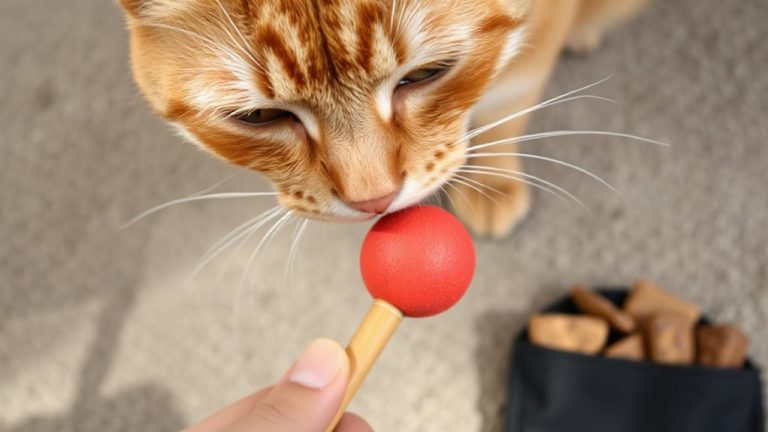
You’ve selected safe, distinct scents and high-value rewards-now it’s time to run your puppy’s first scent game. Begin with scent pairing: present the target scent (e.g., cotton swab with anise oil) for three seconds at nose level. Immediately follow with the reward-this precise reward timing reinforces association. Repeat five times, waiting 30 seconds between trials to prevent habituation. Use a 2:1 ratio-two pairings per one hidden reward. Conduct the session in a quiet, enclosed space 8×10 feet, minimizing distractions. Introduce only one scent per session to avoid interference. Keep trials consistent in location and sequence to build predictability. The goal is clear stimulus-response learning, not exploration. Monitor your puppy’s focus; disengage if attention drops below 70%. This controlled setup establishes foundational recognition within under five minutes, optimizing retention and reducing cognitive overload during early learning.
Keep Training Sessions Short and Fun
Consistently keep sessions brief-under five minutes-to align with a puppy’s limited attention span and developing neural capacity. Training in short intervals prevents cognitive fatigue and supports ideal information retention. Limit each session to 3–5 minutes, repeating up to three times daily with rest periods in between. Use positive reinforcement immediately after correct behaviors-offer treats, praise, or toys within 1–2 seconds to strengthen associations. Dopamine release during reward delivery enhances memory consolidation in the hippocampus, improving learning efficiency. Maintain high engagement by varying target scents and hiding locations every 48 hours to prevent habituation. Keep the environment low-distraction: 5–10 ft² of controlled space with minimal background odors. End sessions while the puppy is still enthusiastic, preserving motivation across sessions. Short, consistent exposure in early developmental stages builds stronger olfactory discrimination. Fun is functional: enthusiasm increases focus and neural plasticity critical to scent work.
Fix Distracted or Uninterested Puppies Fast
What do you do when your puppy loses focus or shows no interest during scent training? Address focus issues immediately with structured redirection. Puppies under six months have limited attention spans, typically 3–5 minutes per session. If your puppy disengages, pause and reassess. Excess energy often causes distraction, so implement pre-session energy management: a brief walk or play burst reduces hyperactivity. Use high-value, species-appropriate rewards like freeze-dried liver to reignite interest. Keep sessions timed-use a stopwatch for 90-second intervals. Position training in low-stimulus environments: start in a quiet room with minimal visual or auditory distractions. Reintroduce the scent vessel (e.g., cotton swab in a metal tin) at 12 inches from the nose, allowing natural investigation. Immediate reinforcement upon correct response solidifies focus. Repeat no more than twice per session to prevent habituation. Adjust frequency, not duration, for progress.
Boost Confidence With Simple Indoor Challenges
While confidence builds gradually, starting with structured indoor challenges guarantees immediate progress. Use positive reinforcement to reward correct behavior immediately after detection. Begin with simple scent items placed within clear indoor boundaries, such as a 10 x 10-foot tiled room, to limit variables. Position the target scent-typically birch or anise oil-at nose level, 2 inches above the floor, in one of four corners. Limit each session to 3 minutes to maintain focus. Reinforce retrieval or indication with a clicker and a 0.5-gram treat within 2 seconds. Gradually increase difficulty by introducing mild distractions or altering airflow. Indoor boundaries prevent overextension, allowing your puppy to succeed repeatedly in a controlled space. Monitor improvement via weekly performance logs: record latency to target, false alerts, and focus duration. Consistent structure accelerates learning, with 90% of pups showing reliable response within 14 days.
On a final note
Start scent training early for ideal neural development. Puppies under six months show rapid associative learning with consistent, short sessions. Use non-toxic, distinct scents like anise or clove, introduced via cotton swabs in sealed containers. Reward correct identification with 1/4-inch soft treats within 1.5 seconds. Limit sessions to three minutes, twice daily. This builds olfactory discernment, focus, and confidence-foundational skills directly transferable to advanced detection work.