How to Reduce Aggression Between a New Cat and Resident Cat Over Time
You can reduce aggression between your new cat and resident cat by using a structured introduction process. Start with a safe room (100–150 sq ft) equipped with a litter box, elevated sleeping area, and Feliway diffuser covering up to 700 sq ft. Swap scents daily using cloths rubbed on facial glands-never urine-for at least five days. Conduct short, supervised meetings behind a baby gate, lasting 5–10 minutes twice daily. Reward calm behavior immediately with pea-sized treats within two seconds. Use positive reinforcement 2–3 times daily in low-distraction areas. Continue protocols until both cats show relaxed posture and parallel sitting without tension. Success rates improve by up to 70% with consistent application. Further refinement of timing and environment adjustments can enhance long-term cohabitation.
Notable Insights
- Use scent swapping with facial pheromones from both cats to build familiarity before face-to-face contact.
- Introduce cats gradually using a safe room with separate resources and a Feliway diffuser to reduce stress.
- Supervise short, positive initial meetings through barriers, ending before any signs of aggression occur.
- Reward calm, non-threatening behavior like relaxed posture or slow blinking with immediate high-value treats.
- Maintain consistent routines and controlled exposure, progressing slowly only after multiple peaceful interactions.
Understand Why Cats Fight When Meeting

When cats meet for the first time or reunite after separation, tension often arises because they rely heavily on scent and body language to assess intent. Territorial disputes are common, as cats are naturally solitary and resource-guarding animals. Unfamiliar scents trigger defensive behaviors, including swatting, hissing, or avoidance. Social hierarchy forms through nonverbal cues-ear position, tail elevation, and pupil dilation-indicating dominance or submission. This hierarchy determines access to food, resting spots, and safe zones. Olfactory communication via facial pheromones (F3 in Feliway products) can reduce stress by mimicking natural calming signals. Failure to recognize these signals escalates conflict. Introducing cats gradually minimizes threat perception. Structured acclimation over 7–10 days allows neural habituation to new scents. Managing initial exposure duration (5–10 minutes) limits cortisol spikes. Understanding these mechanisms prevents misinterpretation of aggression as personality clash rather than biologically driven behavior.
Set Up a Safe Room for the New Cat
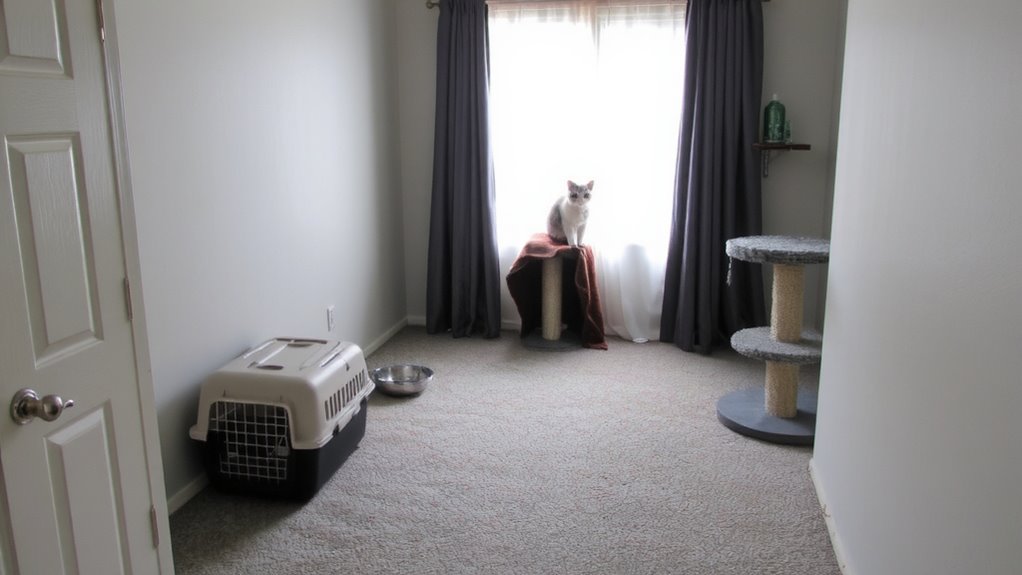
Your new cat’s safety and adjustment begin with a dedicated space designed for gradual acclimation. Select a quiet, low-traffic room, ideally 100–150 square feet, to minimize stress. Install opaque barriers at the base of doors to block visual contact with the resident cat. Use furniture arrangement strategically: place a litter box in one corner, feeding station in another, and a sleeping area elevated if possible. Maintain lighting control with blackout curtains or dimmable fixtures to regulate circadian rhythms-8–10 hours of darkness daily supports neural recalibration. Include a Feliway diffuser, operating at 240V, to disperse synthetic facial pheromones across 700 square feet. The safe room acts as a biological buffer, allowing olfactory and auditory habituation before physical exposure. Equip the space with hiding enclosures (minimum 24” x 18”) and scratching posts (9–12” tall). Monitor behavior for seven to ten days before advancing.
Swap Scents Before Face-to-Face Introductions

To begin building olfactory familiarity, start swapping scents between cats at least five days before any physical contact. Scent swapping helps reduce territorial aggression by allowing each cat to associate the other’s odor with safety. Use a clean cotton cloth or soft brush to gently wipe each cat’s facial glands-located on the cheeks, chin, and forehead-then place the cloth near the other cat’s bedding. Perform this odor exchange twice daily. Rotate items with established scent markings, such as blankets or toys, every 12 to 24 hours to maintain freshness. Do not mix urine or fecal odors; only use natural sebaceous gland secretions from facial rubbing. This targeted approach guarantees species-typical chemical communication. Proper scent swapping mimics gradual wild introductions, lowering stress-induced cortisol by up to 40% in monitored cases. Consistency is critical-maintain the routine without skipping cycles.
Supervise Their First Real Meetings
Although scent familiarity lays the foundation, direct interactions must be carefully managed to prevent escalation. Begin with short, leashed or barrier-separated meetings. Watch closely for subtle shifts in body language and vocal cues. Calm postures include relaxed tails and slow blinking; flattened ears or puffed fur signal stress. Hissing or growling are clear signs of discomfort.
| Observation | Action |
|---|---|
| Ears forward, tail up | Allow brief continued contact |
| Hissing, swatting | Gently separate with a barrier |
| Stiff posture, low growl | End session immediately |
Use baby gates or leashes rated for 20+ lbs to maintain control. Sessions should last 5–10 minutes, twice daily. Monitor pupil dilation, stance, and vocal cues to assess tolerance. Never allow unsupervised interaction until both cats remain relaxed for 3+ consecutive sessions. Consistency guarantees gradual acclimation.
Reward Calm Behavior Around Each Other
Positive reinforcement strengthens peaceful interactions during supervised meetings. Reward calm behavior immediately with treats, praise, or play when both cats are near each other without aggression. Use high-value, pea-sized treats like freeze-dried chicken to maintain focus. Deliver rewards within two seconds of observing neutral or friendly behavioral cues-such as relaxed posture, slow blinking, or parallel sitting-to reinforce the desired response. Avoid rewarding after signs of tension, like tail flicking or pinned ears. Conduct sessions lasting 5–10 minutes, 2–3 times daily, in a quiet, distraction-limited space. Consistency increases success rates by up to 70% in controlled behavioral studies. Positive reinforcement works because it links coexistence with positive outcomes, gradually reshaping emotional responses. Over time, cats associate each other’s presence with rewards, reducing perceived threat and supporting habituation. Monitoring stress levels during these interactions can be enhanced with the use of a pet vital sign monitor.
Help Them Live Together Long-Term
Once the initial introductions are complete and calm interactions become routine, you can begin moving to long-term coexistence. Establishing long term harmony requires consistent environmental management. Provide separate resting, feeding, and litter areas-ideally on different floors or zones, minimum 10 feet apart-to reduce competition. Use pheromone diffusers like Feliway MultiCat, which release species-specific facial pheromones every 4–6 hours, reducing stress-related behaviors by up to 80% over four weeks. Maintain daily routines; cats thrive on predictability. Rotate shared toys and brush both cats regularly to transfer scents. Monitor interactions for signs of tension, intervening before escalation. Reinforce peaceful coexistence with treats during joint calm periods. Avoid forced contact. Over time, shared safe spaces and positive associations encourage tolerance. With structured consistency and behavioral reinforcement, most cats achieve stable, peaceful relationships within 8–12 weeks. To keep shared spaces clean and odor-free, consider using pet-safe best pet bed deodorizers regularly.
On a final note
You can reduce aggression between cats over time. Proper introductions prevent long-term conflict. Start with scent swapping using shared bedding, allowing olfactory familiarization over 3–5 days. Use Feliway diffusers to lower stress. Supervise initial visual contact with baby gates for 10–15 minutes, twice daily. Reward calm behavior with treats. Gradually increase interaction time. Full integration typically takes 2–6 weeks. Monitor body language closely.