The Benefits of Adding Ground Flaxseed to Your Dog’s Meals for Fiber and Omega-3s
You get more fiber and omega-3s from ground flaxseed because its hard outer hull resists digestion intact. Grinding seeds below 200 microns breaks cellulose walls, releasing bioavailable alpha-linolenic acid (ALA) and soluble fiber. This supports digestion, reduces inflammation via COX-2 inhibition, and improves skin barrier function with 29% oil content. Daily use enhances coat shine and joint mobility. For best results, include proper dosing and storage considerations in your feeding routine.
Notable Insights
- Ground flaxseed provides highly bioavailable fiber and omega-3s, unlike whole seeds that pass undigested.
- It supports digestive health with soluble and insoluble fiber, improving stool quality and reducing bloating.
- Alpha-linolenic acid (ALA) in flaxseed reduces inflammation, aiding joint comfort and mobility.
- Omega-3s strengthen the skin’s barrier, decreasing dryness and promoting a shiny, healthy coat.
- For maximum benefit, feed 1 teaspoon per 10 pounds of body weight daily, using freshly ground, refrigerated flaxseed.
Why Ground Flaxseed Works Better Than Whole

Digestibility is the key reason ground flaxseed outperforms whole. Your dog can’t break down whole flaxseed’s tough outer hull, which resists stomach acids and enzymatic action in the digestive tract. As a result, whole seeds pass through undigested, limiting fiber absorption and nutrient release. When flaxseed is finely ground, the protective shell is disrupted, exposing the inner matrix containing soluble and insoluble fiber, lignans, and alpha-linolenic acid (ALA). This mechanical breakdown enhances bioavailability by up to 70%, according to comparative digestibility studies. Ground particles measuring under 200 microns show maximum nutrient release in canine digestion models. In contrast, whole seeds retain nutrients inside indigestible cellulose walls, rendering them ineffective. Proper milling guarantees consistent particle size, maximizing fiber absorption and promoting systemic utilization of omega-3 fatty acids essential for skin, coat, and joint health. For measurable benefits, only ground form delivers.
How Ground Flaxseed Aids Dog Digestion

A small amount-just one teaspoon per 20 pounds of body weight-of ground flaxseed can significantly improve your dog’s digestive function. The soluble and insoluble fiber blend in flaxseed supports balanced gut microbiota and regulates intestinal transit. Improved motility results from consistent fiber intake, promoting efficient movement of food through the digestive tract. Insoluble fiber adds bulk to stool, aiding peristalsis, while soluble fiber absorbs water, forming a gel that softens waste. This dual-action mechanism minimizes gastrointestinal stagnation. You’ll often see reduced bloating within days of regular inclusion in meals. Gas production decreases due to stabilized fermentation processes in the colon. Unlike bulk-only fibers, flaxseed’s balanced composition prevents over-fermentation, which can exacerbate discomfort. Ground flaxseed’s particle size also guarantees maximum fiber release, unlike whole seeds, which often pass undigested. This accessibility makes it highly effective for digestive maintenance when dosed correctly.
Omega-3s in Flaxseed Reduce Inflammation
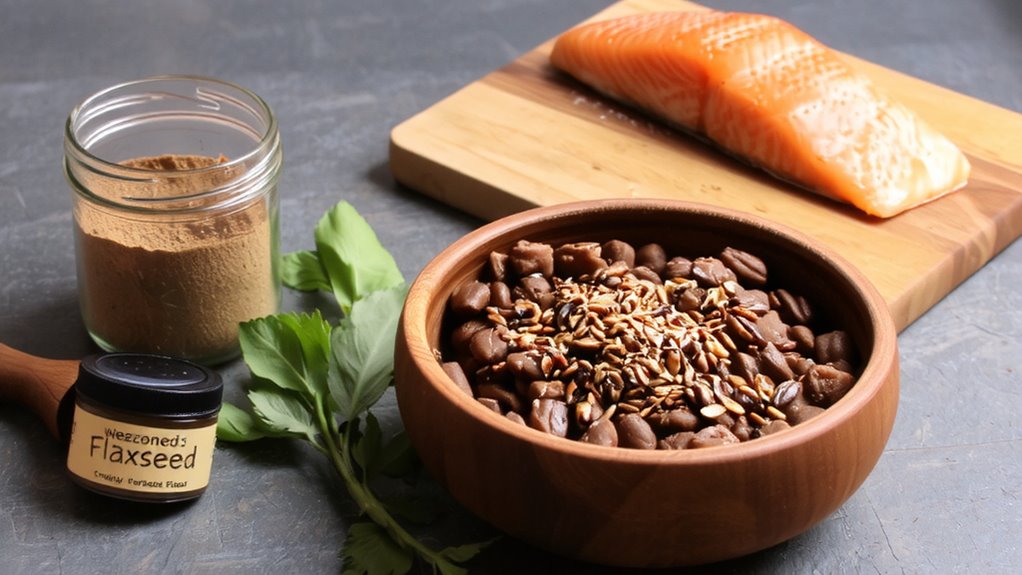
Flaxseed’s real power goes beyond digestion-it’s packed with alpha-linolenic acid (ALA), a plant-based omega-3 fatty acid that actively fights inflammation in your dog’s body. The anti inflammatory properties of ALA help reduce chronic swelling, especially in older dogs or those with arthritis. You’ll notice improved joint health support as stiffness decreases and mobility increases over time. While dogs convert ALA to EPA and DHA less efficiently than humans, consistent intake still delivers measurable benefits.
| Benefit | Mechanism | Typical Daily Dose (for 50 lb dog) |
|---|---|---|
| Reduced joint swelling | ALA inhibits COX-2 enzymes | 1 tsp ground flaxseed |
| Improved mobility | Lower inflammatory markers | 500 mg ALA |
| Enhanced tissue repair | Increased cell membrane fluidity | 2,000 mg omega-3s |
| Decreased pain sensitivity | Modulated cytokine production | 14 g fiber + omega combo |
| Long-term joint health support | Sustained anti inflammatory properties | Up to 2 tsp daily |
Natural Skin and Coat Benefits of Flaxseed
While your dog’s coat may seem like just a layer of fur, it’s actually a visible indicator of internal health-and ground flaxseed plays a direct role in optimizing it. The omega-3 fatty acids in flaxseed support skin nourishment by reinforcing the lipid barrier, reducing transepidermal water loss by up to 30%. Alpha-linolenic acid (ALA), the primary omega-3 in flax, moderates inflammatory pathways that contribute to dry, flaky skin. Regular intake promotes coat conditioning, resulting in increased shine and reduced brittleness. Flaxseed’s 29% oil content, rich in polyunsaturated fats, helps maintain epidermal cell membrane fluidity. Lignans and soluble fiber aid in detoxification, indirectly supporting dermal health. Unlike animal-based fats, flaxseed provides a plant-sourced, stable form of fatty acids that integrate into sebum composition over 4–6 weeks. You’ll notice fewer hot spots and less shedding. This isn’t cosmetic-it’s cellular renewal driven by nutritional biochemistry.
How Much Ground Flaxseed Can Your Dog Have?
One teaspoon per ten pounds of body weight per day is the safest starting point when adding ground flaxseed to your dog’s diet. This guideline guarantees dosage safety and supports gradual digestive adaptation. For a 30-pound dog, that’s 3 teaspoons (1 tablespoon) daily. Larger dogs may require proportionally more, but exceeding recommended amounts increases risk without added benefit. Portion frequency should be limited to once daily, mixed into a meal to aid absorption. Whole flaxseed passes undigested, so only use ground flaxseed for nutrient availability. Omega-3 content averages 5,000–6,000 mg per 100 grams, primarily as ALA. Store in the refrigerator to prevent rancidity. Adjust based on your dog’s size, age, and health, but always consult your vet before regular supplementation.
Flaxseed Side Effects and When to Avoid It
You’ve now established a safe starting dose, but it’s equally important to recognize when flaxseed may do more harm than good. Some dogs experience allergic reactions, including itching, swelling, or gastrointestinal upset. Discontinue use immediately if these symptoms occur. Flaxseed contains compounds called lignans and cyanogenic glucosides, which in rare cases can interfere with thyroid function. This means potential thyroid interactions, particularly in dogs with existing hypothyroidism. The goitrogens in flaxseed may inhibit iodine uptake, reducing thyroid hormone production. Avoid flaxseed if your dog has a diagnosed thyroid disorder or is on medication like levothyroxine. Raw, unripe flaxseed poses higher risks than commercially processed, ground versions. Always consult your veterinarian before use, especially for dogs with chronic conditions. Monitor closely for adverse effects after introduction.
Easy Ways to Add Ground Flaxseed to Dog Food
Since flaxseed must be ground to release its nutrients, always use pre-ground flaxseed or grind whole seeds fresh before feeding, as intact seeds pass through the digestive tract undigested. Start with ½ teaspoon for small dogs or 1 tablespoon for large breeds daily. Follow precise sprinkling tips: apply evenly over food to guarantee consistent intake. Use gradual mixing methods-blend flaxseed into wet or dry food thoroughly to prevent separation. For picky eaters, mix with broth, plain yogurt, or canned pumpkin to improve palatability. Store unused portions in an airtight container in the refrigerator for up to 30 days to prevent rancidity. Omega-3 fatty acids degrade rapidly when exposed to heat or light, so avoid cooking flaxseed. Rotate supplements every few months to maintain nutrient absorption efficiency. Always monitor stool quality to adjust dosage appropriately.
On a final note
You should feed your dog ground flaxseed for its high soluble fiber and alpha-linolenic acid (ALA) content. Whole seeds pass undigested, reducing nutrient availability. Ground flaxseed improves stool quality and supports colon health. It provides up to 29% ALA by weight, helping modulate inflammatory pathways. Limit intake to 1 teaspoon per 10 pounds of body weight daily. Excess consumption may cause gastrointestinal upset or imbalanced omega-6 to omega-3 ratios.