Training Your Cat to Accept Nail Trims Through Gradual Desensitization
You can train your cat to accept nail trims by using gradual desensitization. Start with daily 2–3 minute paw handling sessions, pairing touch with high-value treats. Use sharp, cat-specific guillotine or scissor-style trimmers weighing under 2 ounces. Let your cat sniff the tool, then briefly activate it nearby for 1–2 seconds over 3–5 days. Trim just one nail per session, cutting 2–3 mm from the quick. Further steps build on this foundation.
Notable Insights
- Begin by gently touching your cat’s paws daily, pairing the contact with treats to build positive associations.
- Gradually increase paw handling duration over 7–10 days, using consistent verbal cues like “paw” for reinforcement.
- Introduce clippers by letting your cat sniff them, then progress to brief, distant activation with treat rewards.
- Trim just one nail per session, cutting 2–3 mm from the quick using sharp, cat-specific clippers.
- Keep sessions under two minutes, and end positively to reduce stress and build long-term cooperation.
Why Cats Fear Nail Trims
Why does such a simple task as trimming nails provoke intense resistance in cats? Your cat’s aversion often stems from biological and psychological factors. Cats have high pain sensitivity in their digit flexor tendons and quicks, where blood vessels and nerves reside. Applying pressure or cutting too close triggers acute discomfort. This pain sensitivity makes them instinctively resist handling. Past trauma intensifies this response-prior painful trims or restraint create lasting associative memories. These memories activate fear circuits in the amygdala, increasing cortisol levels. Even gentle attempts may trigger panic, as your cat anticipates harm. Resistance isn’t defiance; it’s a survival response. Understanding this reframes cooperation as trust-building. Desensitization bypasses fear by rewiring neural associations. You’re not training behavior-you’re modifying physiological stress responses through repeated, non-threatening exposure. This precision approach yields measurable reductions in heart rate and vocalization over time.
Choose the Right Nail Trimming Tools
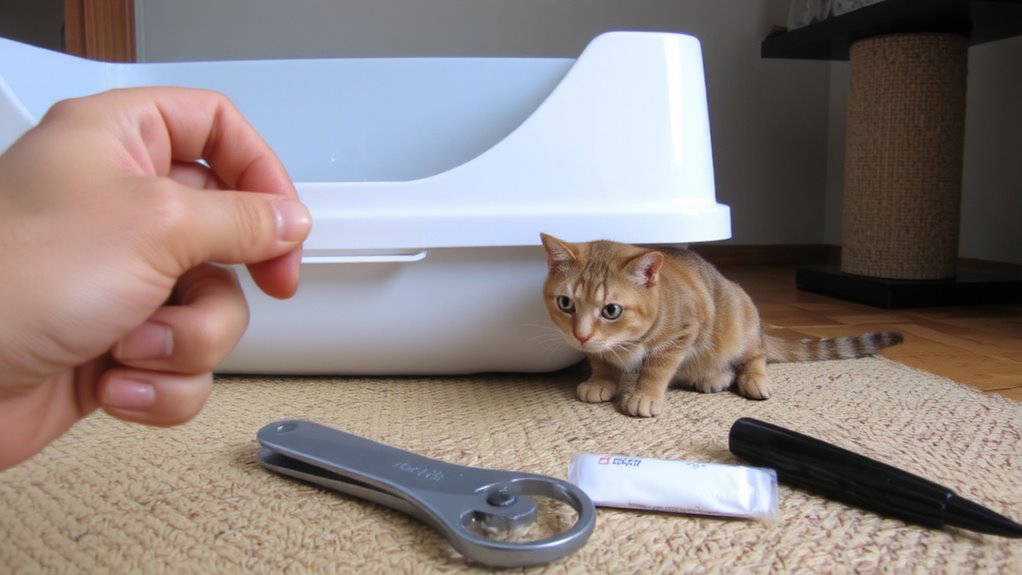
The right tool makes all the difference-your cat’s safety and comfort depend on it. For cat grooming, use only trimmers designed specifically for felines. Guillotine-style clippers, like the Safari Professional, feature a sharp rotating hole that minimizes splitting; however, they require precise alignment. Alternatively, scissor-style trimmers, such as the JW Pet Preferred, offer better visibility and control with stainless steel blades and spring-assisted action. Avoid human nail clippers-they’re too large and increase injury risk. Tool safety is critical: guarantee blades stay sharp to prevent crushing nails. Most cat-specific models measure 3.5 to 4.5 inches long and weigh under 2 ounces, making them easy to handle. Choose ergonomic grips to reduce hand fatigue during use. Always inspect tools before each session-replace worn parts immediately. Proper equipment reduces stress and increases precision, making trimming safer for you and your cat. According to expert reviews, the best pet nail trimmers combine precision, durability, and species-specific design for optimal results.
Get Your Cat Used to Paw Touching
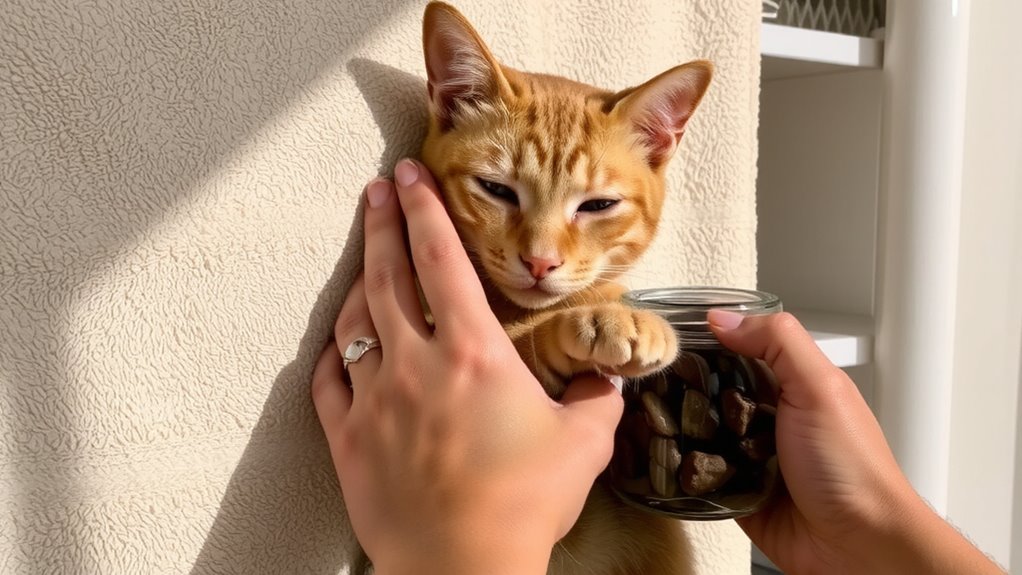
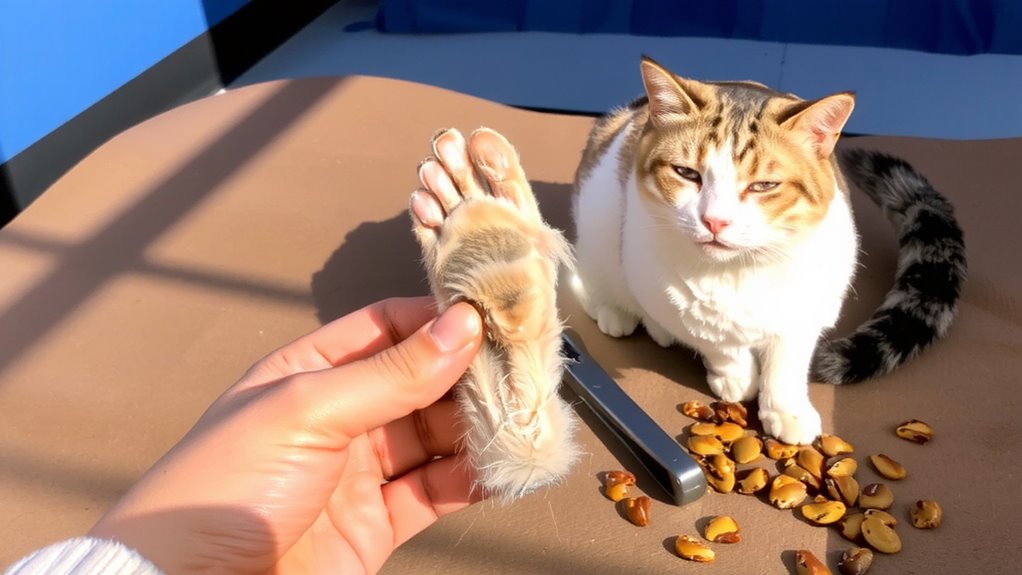
Start by desensitizing your cat to paw handling, especially if you’ve just selected the right trimming tool. Begin with short, controlled sessions lasting 2–3 minutes daily to support trust building. Gently hold one paw, applying light pressure to extend the claw, then release immediately. Pair each touch with positive reinforcement such as a high-value treat or verbal praise. Use consistent cues like “paw” to reinforce the behavior. Gradually increase handling duration to 5 minutes over 7–10 days. Focus on all four paws equally to avoid sensitivity in untreated limbs. Desensitization works because repeated, non-threatening contact reduces fear-based reflexes. This process rewires your cat’s response from defensive to neutral. Avoid restraint that triggers struggle; instead, let your cat withdraw and re-engage voluntarily. Reliable success depends on timing, consistency, and respect for your cat’s stress signals. Choosing the right tool matters-using the best cat nail clippers can make trimming safer and less stressful for both you and your cat.
Let Your Cat Sniff and Hear the Clippers
Clippers introduce a new sensory phase in your cat’s nail-trimming preparation. Begin by letting your cat engage in a structured sniffing routine while the clippers are turned off. This allows familiarization with the tool’s shape, scent, and texture. Use precision trimmers with stainless steel blades measuring 1.2 inches, designed for small animal nails. After five to ten seconds of sniffing, activate the clippers briefly to expose your cat to the clipper sounds. Limit initial sound exposure to one to two seconds, maintaining a distance of at least six inches from the cat. Repeat daily for three to five days. Gradually decrease distance and increase sound duration by one-second intervals. Avoid forcing interaction. Positive reinforcement with treats after each session improves association. Monitor ear position and body posture for signs of stress. This phased auditory exposure reduces startle reflexes, enhancing compliance during actual trimming sessions. For reliable performance, consider using a model recognized among the best small dog nail clippers for precision and durability.
Practice Holding Paws Gently
Paw handling builds trust and prepares your cat for restraint during nail trimming. Begin by touching one paw for 2–3 seconds, applying gentle pressure to mimic restraint. Gradually increase duration to 30 seconds over 7–10 sessions. Use a non-slip surface to stabilize your cat. Perform paw massage daily to desensitize sensitive areas, focusing on the metacarpal and digital pads. Apply consistent, light force-approximately 100–150 grams-enough to depress the pad without causing withdrawal. Pair handling with high-value treats to reinforce calm behavior. Rotate paws systematically to guarantee equal exposure. Sessions should occur 2–3 times daily, spaced by at least two hours. Observe ear position and tail movement for signs of stress. Consistent tactile exposure improves compliance and reduces resistance during actual trimming. Paw massage combined with controlled, gentle pressure accelerates habituation and enhances cooperation.
Trim One Nail at a Time Safely
You’ve built a foundation of trust and tolerance through consistent paw handling, and now it’s time to apply that progress directly to nail maintenance. Begin by trimming just one nail per session. Use sharp, guillotine-style clippers designed for cats, which offer precise cuts and reduce splintering. Position the blade perpendicular to the nail, avoiding the quick-the pink vascular core visible in light-colored nails. Cut only the translucent tip, 2–3 mm from the quick. Each session should last under two minutes. Short sessions prevent stress and reinforce cooperation. Immediately after the trim, apply positive reinforcement with a high-value treat or affection. Repeat daily, rotating paws, until all nails are maintained. This incremental method guarantees safety, minimizes restraint, and builds procedural reliability. Mastery develops through repetition, not speed. Trust grows with predictability and consistency.
Fix Common Nail Trimming Problems
Why does your cat resist nail trims despite careful preparation? Handling resistance begins with identifying triggers like restraint discomfort or past trauma. Cats may associate handling with stress, escalating avoidance. To minimize this, use a secure yet gentle grasp: place your thumb on the paw pad, press lightly to extend the claw, then trim just the clear tip, avoiding the pink quick. Preventing escapes requires a controlled environment-a quiet room with minimal distractions and nonslip flooring. Consider using a towel wrap to limit movement without causing distress. If your cat struggles, pause and resume later. Short sessions of 2–3 minutes, repeated daily, build tolerance. Use blunt-tipped, stainless steel clippers designed for small animals. Consistent handling, paired with immediate positive reinforcement, reshapes your cat’s behavioral response over time.
On a final note
You can successfully train your cat to accept nail trims with consistent, calm repetition. Gradual desensitization reduces stress by building familiarity over days or weeks. Start with touch, then introduce clippers auditory and tactile stimuli. Use sharp, scissor-type trimmers with a 3mm blade gap for clean cuts. Trim only the translucent tip, avoiding the pink quick. This method guarantees safety, control, and long-term cooperation without restraint.