Hydration Tips for Dogs That Eat Snow in Winter
Don’t rely on snow to hydrate your dog-snow is 90% air and yields only 60% usable water after your dog’s body expends energy to melt it. Ingesting snow lowers core temperature and lacks essential electrolytes, increasing dehydration risk. Provide liquid water using a thermostatically controlled heated bowl that maintains 40–50°F, even at 0°F. Add water-rich foods like canned food or cucumber to meals. Monitor intake-your dog needs 1 oz of water per 3 lbs of body weight daily. More effective strategies follow.
Notable Insights
- Snow is not a reliable water source, as it provides minimal hydration and increases energy loss from melting internally.
- Ingesting snow can lower body temperature and contribute to dehydration due to its lack of electrolytes and high air content.
- Use heated water bowls to keep fresh water available and prevent freezing in subzero temperatures.
- Supplement your dog’s diet with water-rich foods like canned food or raw vegetables to boost moisture intake.
- Monitor hydration closely, offering water every 2–3 hours and tracking intake to prevent dehydration, especially during activity.
Why Snow Isn’t Enough for Dog Hydration
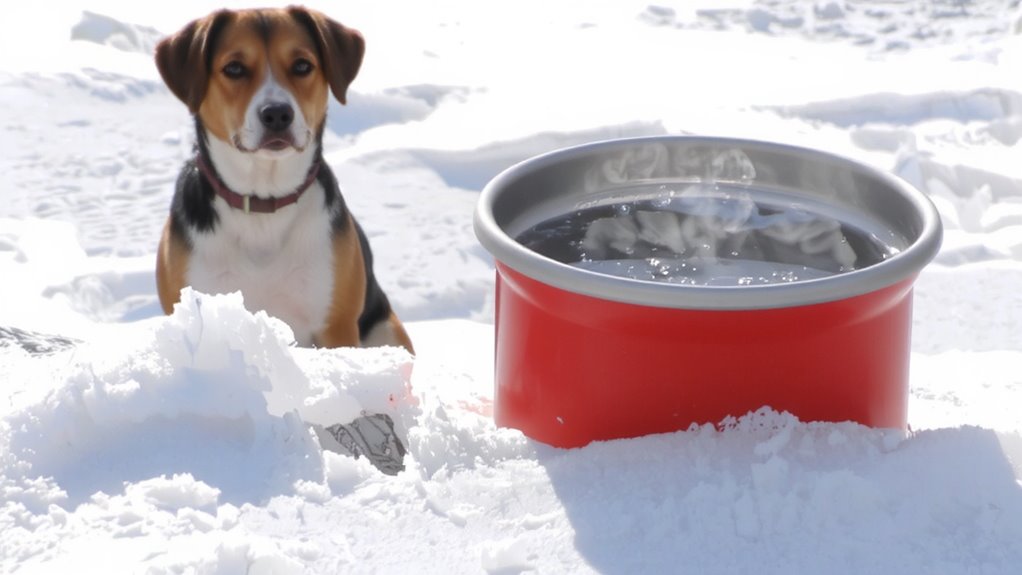
While snow may seem like a convenient source of moisture during winter hikes, it doesn’t meet your dog’s core hydration needs. Snow is mostly air-up to 90%-requiring large volumes to yield minimal water. Your dog must expend energy to melt it, increasing caloric demand without delivering adequate fluid. This poses snow consumption risks, including reduced internal temperature and impaired circulation. Additionally, snow lacks essential minerals, heightening electrolyte imbalance concerns. Dogs lose sodium and potassium through urine and respiration in cold air, and ingesting pure water from snow exacerbates dilution of blood electrolytes. Prolonged imbalance can trigger muscle weakness or cardiac irregularities. Unlike balanced hydration solutions containing 50–100 mg/dL sodium, snow provides zero electrolyte replenishment. Relying on it compromises your dog’s cellular function and thermoregulation. Proper hydration requires liquid water with bioavailable solutes. Snow simply cannot deliver.
Prevent Cold-Induced Dehydration in Dogs
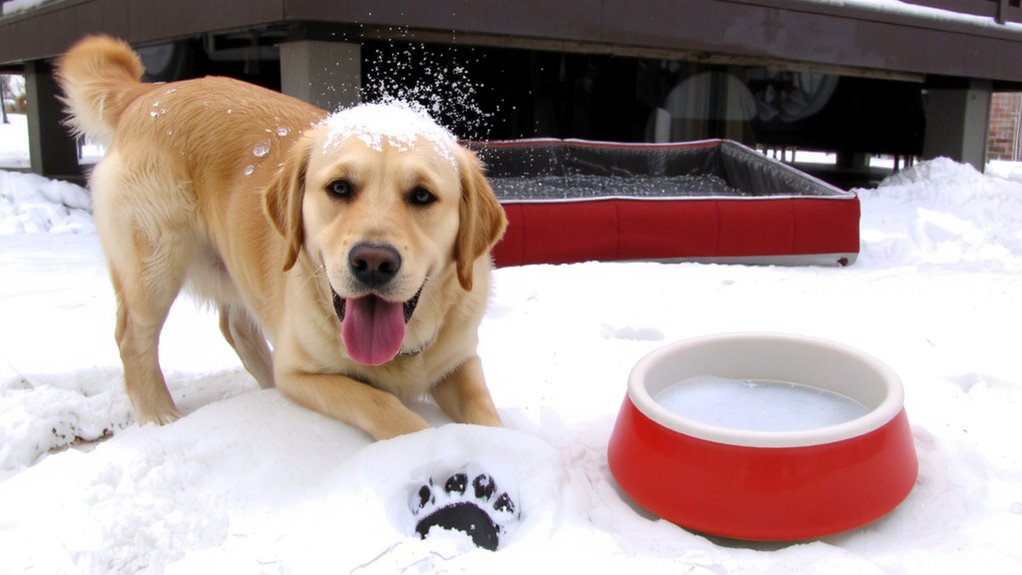
To prevent cold-induced dehydration in dogs, start by ensuring consistent access to unfrozen, clean water. Cold air holds less moisture, increasing the risk due to dry air and elevated respiratory water loss. Winter breathing in low humidity environments accelerates evaporation from your dog’s lungs, contributing to fluid depletion. Maintain hydration by providing warmed indoor spaces and monitoring water intake frequently. Dogs lose moisture through panting and exhaled vapor, especially in subzero temperatures where relative humidity can drop below 20%. This desiccating effect stresses thermoregulation and reduces plasma volume. A 30-pound dog may need 12–18 ounces of water daily, more if active. Dehydration impairs circulation, joint lubrication, and kidney function. Even mild fluid deficit-just 5% loss-can cause lethargy and dry gums. Prevent this by checking water bowls every few hours. Proper hydration supports metabolic efficiency and cellular function during cold exposure, minimizing physiological strain.
Provide Fresh Water With Heated Bowls
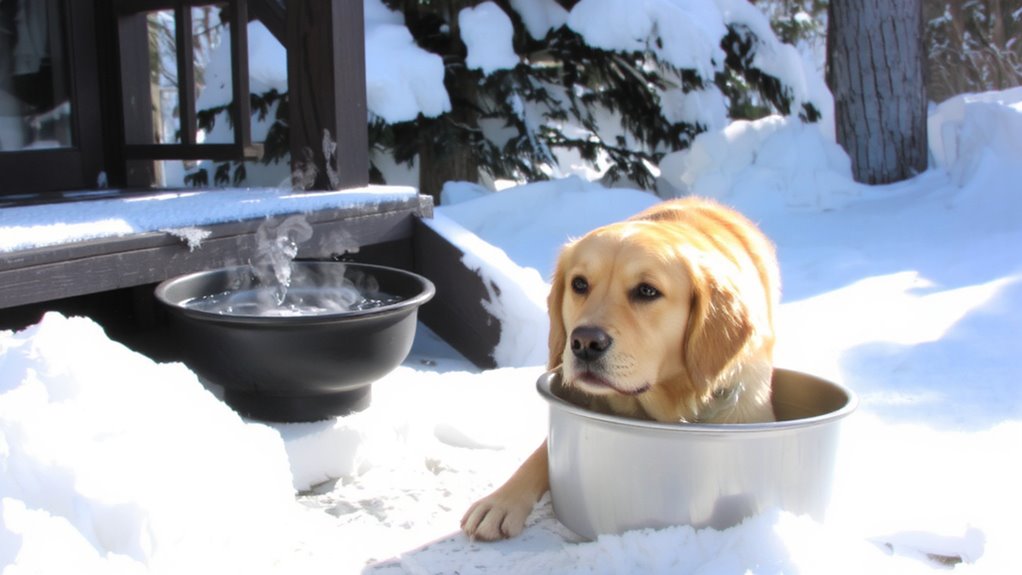
Cold air and frozen water bowls make hydration difficult for dogs in winter, even when you’re offering water regularly. A heated bowl guarantees continuous access to liquid water. Heated bowl safety is critical-choose models with UL certification, grounded plugs, and chew-resistant cords. Most operate at 120V and maintain water temperature between 40–50°F (4–10°C), aligning with canine water temperature preference. Avoid models that exceed 70°F to prevent bacterial growth.
| Feature | Specification |
|---|---|
| Voltage | 120V AC |
| Safe Surface Temp | <100°F (38°C) |
| Cord Length | 6–10 ft, braided |
| Freeze Protection | Down to 0°F (-18°C) |
These bowls use thermostatically controlled heating elements that activate only when needed. Proper placement on level, dry surfaces reduces risks. Always follow manufacturer guidelines to balance efficiency with heated bowl safety.
Add Water-Rich Foods to Their Meals
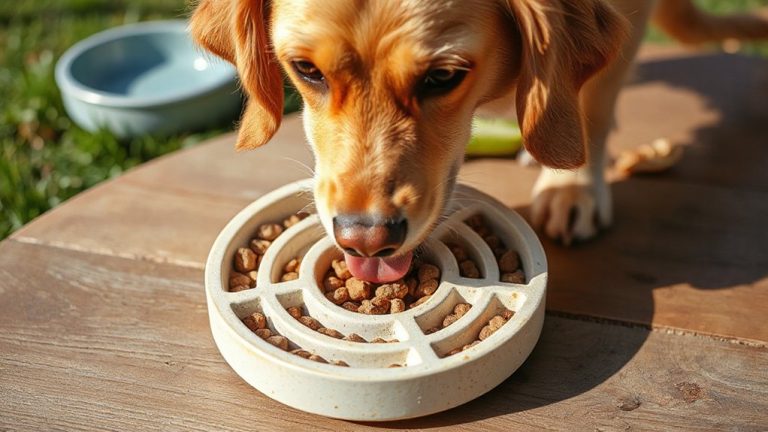
Adding water-rich foods to your dog’s meals is an effective way to boost hydration, especially when they’re eating snow or refusing cold water. You can counteract the effects of ice consumption by increasing dietary moisture through raw vegetables, canned food, or soaked kibble. Foods like cucumber, zucchini, and watermelon contain over 90% water by weight, directly enhancing fluid intake. Canned dog foods typically offer 60–80% moisture, compared to 10–12% in dry kibble. For dogs on a kibble diet, adding ½ cup of warm water per cup of food increases dietary moisture and palatability. This method guarantees consistent hydration without relying on external water sources. Introduce new foods gradually to avoid gastrointestinal upset. Always monitor your dog’s total fluid consumption, particularly in freezing temperatures when thirst mechanisms decrease. Water-rich additions serve as a reliable hydration backup when drinking is inconsistent.
Spot the Signs of Winter Dehydration
Why might your dog seem sluggish after playing in the snow? Lethargic behavior can signal winter dehydration, even in cold climates. Snow is not a reliable water source-its low moisture density and subfreezing temperature reduce net hydration. Your dog must expend body heat to melt it, increasing net fluid loss. Clinical signs include dry mouth, indicated by tacky gums and reduced saliva consistency. Normally, a dog’s mucous membranes are moist and slick; dryness suggests fluid deficit. Other markers include decreased skin elasticity-gently lift the scruff; slow recoil indicates mild to moderate dehydration. Panting, even minimally in cold air, accelerates respiratory water loss. Core body water deficits impair thermoregulation and cellular function. Unlike liquid water, snow provides negligible immediate hydration due to thermal conversion demands. Monitor closely after outdoor exposure. Early recognition of dry mouth and lethargic behavior enables timely rehydration, preventing complications.
Build a Daily Hydration Routine
A consistent daily hydration routine keeps your dog’s physiological systems functioning efficiently, especially during winter months when dehydration risks increase. Begin by scheduling regular water breaks every two to three hours, regardless of observed thirst. Offer 1 ounce of water per 3 pounds of body weight daily as a baseline. Adjust volume based on activity timing-provide 20% more fluid before and after outdoor exposure. Use insulated, non-tip bowls to maintain water accessibility and prevent freezing. Monitor intake with marked reservoirs to track consumption accurately. Automate refills with gravity-fed systems rated for sub-zero operation. For active breeds, incorporate electrolyte supplements at 1.5 mS/cm conductivity to support osmotic balance. Avoid hydration reliance on snow, which requires metabolic energy to warm and yields only 60% usable water. Consistent access guarantees peak renal clearance and thermoregulation.
On a final note
You must not rely on snow for your dog’s hydration. Snow has low moisture density and forces the body to expend energy melting it, increasing dehydration risk. Use heated bowls that operate at 35–45°F to prevent freezing and maintain water accessibility. Add broth or water-rich foods providing at least 10% extra moisture to meals. Monitor capillary refill time-over two seconds indicates dehydration. Follow a strict hydration schedule to sustain ideal physiological function.