How to Brush a Dog After a Rainy Walk to Prevent Damp-Induced Matting
After a rainy walk, blot your dog’s coat with a microfiber towel to reduce moisture and friction. Use a wide-tooth comb with 1/4-inch spacing or an undercoat rake at a 45-degree angle to gently detangle damp fur. Avoid fine-tooth combs or slicker brushes on soaking coats-they worsen tangles. Start at the shoulders, work in 2-inch sections, and lift hair against the grain. Monitor for discomfort. Dry with a low-heat (80–90°F), high-airflow (≥1.5 m³/min) pet dryer to prevent protein damage. Consistent post-walk care keeps coats matte-free and supports long-term skin health. Further refinement of technique improves results over time.
Notable Insights
- Blot your dog’s coat with a microfiber towel to gently remove excess moisture and reduce friction that causes tangles.
- Inspect high-risk areas like behind ears, under legs, and along the belly for early signs of tangles after walks.
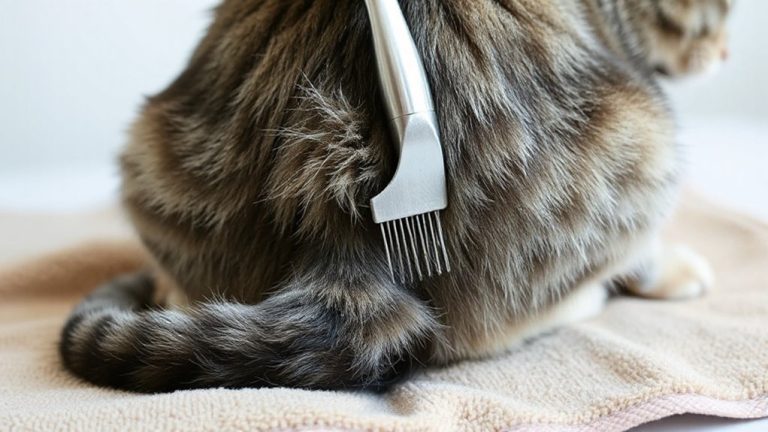
- Use a wide-tooth comb or undercoat rake suited to your dog’s coat type to safely detangle damp fur.
- Brush in small sections, lifting hair against the grain to expose damp undercoat layers and prevent matting.
- Dry thoroughly with a low-heat, high-airflow pet dryer to avoid coat damage and discourage moisture-trapping tangles.
Stop Matting Before It Starts
While rain might seem harmless, it can quickly lead to coat damage if you don’t act promptly. Moisture softens the outer cuticle, making hair more prone to tangling. You must address this before matting sets in. Early detection is essential-run your fingers through your dog’s coat immediately after a walk. Check areas behind the ears, under the legs, and along the belly, where tangles start. Coat texture determines matting risk; double-coated breeds with dense undercoats trap moisture faster. A 2019 study showed damp fur increases friction between strands by up to 40%, accelerating mat formation. Use your fingertips like a probe-any resistance signals early tangles. Catching knots now prevents skin irritation later. Don’t wait until the coat dries. Immediate inspection takes under two minutes but prevents hours of grooming. Early detection saves coat integrity.
Choose the Right Brush for Wet Coats
A dog’s wet coat demands the right tool-one that works with the hair’s swollen cuticle, not against it. Brush selection is critical when the coat is damp, as improper tools can worsen tangles or irritate the skin. For long, thick coats like a collie’s, use a wide-tooth comb with 1/4-inch spacing to gently separate mats without breakage. Short-coated breeds, such as boxers, respond best to rubber curry brushes that lift dirt without scratching. Always avoid fine-tooth combs or slicker brushes on soaking fur-they compact tangles. Match brush type to coat type: double-coated dogs (e.g., huskies) need an undercoat rake with 1-inch teeth to reach dense underfur. Stainless steel bristles resist rust and maintain tension. Choose ergonomic handles for better control during wet brushing. The right tool reduces friction, preserving hair strength and preventing future matting. For added safety during grooming sessions, especially with active dogs, consider securing them with a well-fitted cat harness designed for small pets.
Brush Your Dog After Rain: Step-by-Step
Once your dog is back inside after a rainy walk, start by gently blotting excess water from the coat with a microfiber towel-these absorb up to seven times their weight in water and reduce friction better than cotton, minimizing tangles. Assess your dog’s coat texture before brushing; thick undercoats trap moisture, increasing matting risk. Begin at the shoulders, using smooth, forward-and-back strokes with a slicker brush, applying 2–3 oz of pressure to avoid skin irritation. Monitor dog behavior closely-whining or shaking may signal discomfort. Work in 2-inch sections, lifting hair against the grain to expose damp layers. For best results, choose a brush suited to your dog’s coat type, as recommended in reviews of the best dog grooming brushes.
Dry Your Dog the Right Way
Your dog’s comfort depends on thorough drying after a rain-soaked walk. Begin with towel drying using an absorbent, microfiber towel capable of wicking moisture without surface friction. Press firmly along the coat, avoiding vigorous rubbing that can tangle undercoats. For double-coated breeds, allow 5–7 minutes of manual drying to reduce residual dampness. Use multiple towels if necessary. Heat avoidance is critical-never apply hair dryers above 100°F (38°C), as excessive heat degrades coat proteins and irritates skin. Opt for a pet dryer with adjustable low-heat settings (80–90°F) and high airflow (≥1.5 m³/min). Direct airflow parallel to the coat to lift layers without tangling. Complete drying prevents microclimate formation near the skin, which accelerates matting and microbial growth. Guarantee the coat is fully dry to the root, especially in dense undercoats, before storing equipment or resuming indoor activity. Consider using one of the best pet hair dryers for efficient, safe drying tailored to your pet’s coat type.
Build a Post-Walk Grooming Habit
Regularly grooming your dog after a rainy walk isn’t optional-it’s essential for long-term coat and skin health. Consistency matters in preventing damp-induced matting and microbial growth. A structured approach reduces shedding by up to 80% and improves circulation. Routine benefits include early detection of skin issues, such as hot spots or fungal infections. Within 15 minutes post-walk, perform a full coat inspection. Use a slicker brush with 0.5 mm stainless steel pins spaced 2 mm apart for dense coats. Follow with a wide-tooth comb to remove residual tangles. For double-coated breeds, add an undercoat rake angled at 45 degrees. Apply light, even strokes-10 per section-working against hair growth. Perform this process weekly in dry conditions; after rain, execute immediately. This habit maintains coat integrity and minimizes long-term damage.
On a final note
You prevent matting by brushing immediately after rainy walks. Start with a slicker brush featuring bent wire bristles (0.5 mm diameter) to penetrate the wet undercoat. Follow with a medium-tooth comb (1.2 cm spacing) to detect tangles. Towel-dry using absorbent microfiber (300 g/m² weight) before low-heat air drying. Maintain this process consistently-within 15 minutes post-walk-to reduce mat formation by up to 90%.