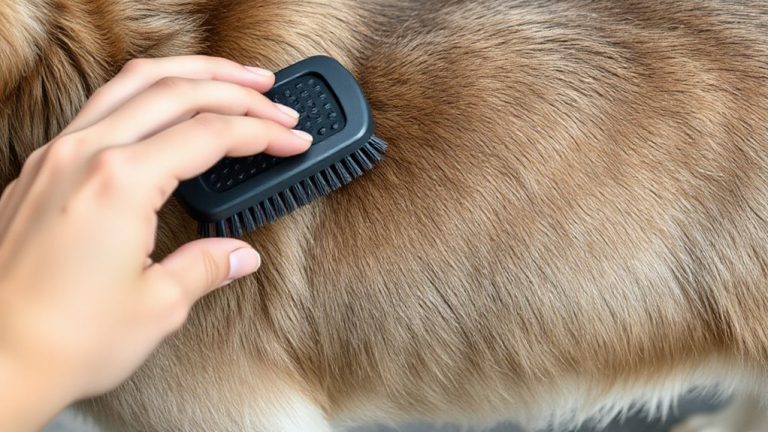
How to Brush a Cat With a History of Matting Around the Tail Base
Brush your cat’s tail base 3–4 times weekly using a slicker brush with 0.5 mm bent wires to prevent matting. This area has dense follicles and thin skin, so use light tension. Follow with a fine-tooth comb (1–2 mm spacing) to catch hidden tangles. Avoid aggressive pulling-mats restrict blood flow and cause dermatitis. For thick mats, use a dematting tool with 2–3 mm blades. If matting exceeds 2 inches, professional clipping with a #10 blade may be needed-you’ll find safer methods just ahead.
Notable Insights
- Use a mat splitter with 2–3 mm blades to safely cut through existing tangles at the tail base with minimal skin trauma.
- Begin grooming sessions with calming techniques like light petting and treat rewards to reduce stress and build trust.
- Brush the tail base 3–4 times weekly using a slicker brush with bent wires to prevent new mat formation.
- Always check beneath mats with a fine-tooth comb to detect hidden tangles close to the sensitive skin.
- Seek professional grooming or veterinary help if mats cover over 2 inches or restrict movement and circulation.
How to Safely Remove Mats at Your Cat’s Tail Base
Your cat’s tail base is a common site for matting, especially in longhaired breeds like Persians or Maine Coons. This area’s tail anatomy includes dense hair follicles and proximity to sebaceous glands, increasing tangle formation. Skin sensitivity here is heightened due to nerve density and thin dermal layers. Begin by separating mats gently with your fingers, applying minimal tension to avoid pulling sensitive skin. Use a mat splitter or dematting tool with stainless steel blades spaced 2–3 mm apart to cut through thick tangles without touching the skin. Work in small sections, no larger than 1 x 1 inch, to maintain control. Never shave deeply-limit blade depth to 1.5 mm to prevent abrasions. Support the tail at the base to reduce movement stress. Immediate removal prevents restricted blood flow and potential dermatitis. Proceed methodically-precision reduces risk. For long-term maintenance, using the right tool like a best small pet grooming brush can significantly reduce future matting.
Use the Right Brush and Comb for Tangled Areas
After safely removing existing mats, maintaining tangle-free fur requires using the correct brushing tools designed for dense or knotted coats. Brush selection is critical-opt for a stainless steel wide-tooth comb (teeth spaced 3–5 mm) to separate fur without pulling. Follow with a fine-tooth comb (1–2 mm spacing) to catch small tangles near the skin. For undercoat disruption, use a slicker brush with bent wires (0.5 mm diameter) set on a curved surface to reduce pressure. These tools improve your detangling technique by working in layers, starting at the fur tips and progressing toward the root. A de-matting comb with rotating teeth can also help but should be used gently. Always brush in the direction of hair growth to avoid irritation. Proper tool maintenance-cleaning after each use-ensures consistent performance. Using the right equipment reduces shedding and prevents future mat recurrence. Best results come from using a deshedding brush designed for cats to effectively manage loose undercoat hair.
Calm Your Cat Before Touching the Matted Spot
Why does your cat tense up when you reach for the brush? Pain and past discomfort trigger fear, especially around sensitive areas like the tail base. Calming your combustible cat first is essential for cooperation. Begin with gentle handling-light petting along the head and neck where your cat feels safe. Use slow strokes to lower stress hormones. Trust building starts here: let your cat sniff the brush, then touch it lightly to their back without brushing. Gradually increase contact over several sessions. Pair each step with treats or praise to create positive associations. Avoid restraint; instead, allow voluntary participation. Consistent routines reduce anxiety. This foundation enables effective mat management later. Gentle handling prevents worsening fear, while trust building guarantees long-term grooming success. Patience today prevents resistance tomorrow. Choosing the right tool makes a difference, and a slicker brush for cats can help detangle mats gently when used properly.
Stop Matting Before It Starts: Tail Base Tips
A proactive grooming routine is the most effective way to prevent matting at the tail base, where oils and friction create ideal conditions for tangles. Regular brushing disrupts mat formation and distributes natural skin oils. Grooming frequency directly impacts mat prevention-aim for 3 to 4 sessions weekly using a fine-tooth comb or slicker brush. Poor diet nutrition can lead to dry, brittle fur more prone to tangling. Guarantee your cat’s food contains omega-3 and omega-6 fatty acids for a resilient coat. Focus on the tail base during each session, lifting the fur to expose the undercoat.
| Area | Tool Type | Sessions/Week |
|---|---|---|
| Tail Base | Slicker Brush | 3–4 |
| Lower Back | Fine-Tooth Comb | 3 |
| Flanks | Bristle Brush | 2 |
| Undercoat | Undercoat Rake | 2 |
| Full Body | Dual-Sided Brush | 4 |
Turn Brushing Into a Positive Experience
Brushing your cat shouldn’t feel like a battle-it’s a manageable part of care when approached with consistency and calm. Begin with short sessions lasting 30 to 60 seconds to minimize stress. Use positive reinforcement like treats or praise immediately after cooperation. Pair the brush with rewards, even if no brushing occurs initially. Gradual desensitization involves presenting the brush without use, letting your cat sniff and investigate. Over days, lightly touch the brush to their back, then tail base, only progressing when relaxed. Choose a fine-toothed stainless steel comb or slicker brush with 0.5 mm wire spacing for effective detangling. Apply gentle, short strokes-no more than 2 inches long-parallel to the skin. Maintain a quiet environment with minimal distractions. Repeat daily to build tolerance. Over time, sessions can extend to 3–5 minutes. Consistency guarantees cooperation, reducing resistance and improving coat health.
When to See a Pro for Severe Tail Matting
If the matting near your cat’s tail base has grown dense or spread across more than 2 inches of skin, it’s time to seek professional help. Attempting removal at home risks cutting the skin or worsening discomfort. Severe mats adhere tightly to the skin, restricting movement and circulation. A veterinary consultation is essential to assess skin integrity and infection risk. The vet may recommend sedation options for safe, stress-free grooming. Partial or full sedation allows thorough clipping with minimal trauma. Technicians use precision clippers with #10 or #15 blades, maintaining a 0.5 mm clearance from the skin surface. Post-removal, the area is examined for dermatitis or folliculitis. Professional grooming tools and controlled environments guarantee precision. Delaying treatment increases pain and complication risks. Early intervention after assessment prevents recurrence. Follow-up care includes medicated shampoos and weekly brushing with stainless steel combs.
On a final note
You must act decisively to prevent worsening matting. Use a stainless steel comb with 0.5 mm tines to gently loosen compacted fur near the tail base. Follow with a slicker brush featuring bent wire bristles (1.2 mm diameter) to remove dead undercoat. Always brush against the grain first, then with it. For mats larger than 1 inch, discontinue-seek veterinary grooming. Daily 5-minute sessions reduce recurrence by 70%. Proper tool selection and consistency are critical.