Why Daily Brushing Is Essential for a Long-Haired Dachshund
You need to brush your long-haired dachshund daily to prevent painful matting. Loose undercoat hairs snag on guard hairs within 24 hours, forming tight clusters that pull on the skin. Daily detangling with a slicker brush-featuring 2–3 mm spaced titanium pins-removes 85–90% of loose hair and stops mats before they form. This reduces fur tension, prevents skin irritation, and maintains coat integrity. Consistent brushing also supports healthy sebum distribution and blood flow. Discover how the right tools and technique make this routine more effective.
Notable Insights
- Daily brushing prevents painful matting by detangling loose undercoat and guard hairs before they snag and tighten.
- It reduces fur tension and knot sensitivity, stopping discomfort from light touch or movement.
- Regular detangling with a slicker brush removes 85–90% of loose hair weekly, preventing early mat formation.
- Brushing stimulates blood flow, distributes sebum evenly, and maintains skin barrier health in long-haired Dachshunds.
- Using proper tools like undercoat rakes and dual-length combs detects hidden tangles and prevents skin irritation.
Why Daily Brushing Prevents Pain in Long-Haired Dachshunds
Regularly brushing your long-haired Dachshund isn’t just about keeping their coat neat-it’s an essential step in preventing painful matting and skin irritation. Daily brushing reduces fur tension, which occurs when loose undercoat hairs tangle with topcoat guard hairs, pulling on follicles and causing discomfort. Without intervention, this tension escalates into knot sensitivity, where even light touch triggers pain responses. A high-quality slicker brush with bent titanium pins, spaced 2–3 mm apart, penetrates the 2–4 inch coat depth without damaging skin. Brushes with adjustable tension settings allow precise pressure control, minimizing trauma during detangling. Using consistent, overlapping strokes from base to tip guarantees complete coverage. This process removes 85–90% of loose hair weekly, disrupting mat formation before it starts. You maintain coat integrity and guarantee localized ischemia caused by restricted blood flow under severe tangles. Prevention is efficient, taking under ten minutes daily, versus painful, time-consuming mat removal later. For optimal results, consider using one of the top dog grooming brushes recommended for long-haired breeds.
How Mats Form on Long-Haired Dachshunds (And Why They Hurt)
Mats don’t form overnight-they develop through a predictable cycle of hair entanglement that begins with loose undercoat fibers snagging against longer guard hairs. This initiates mat formation, especially in areas with high friction like behind the ears or under the legs. Without daily intervention, tangled fur compacts into dense, immovable clusters. Mats pull on the skin, causing discomfort, restricted movement, and even sores.
| Sensation Your Dog Feels | What You Might Observe |
|---|---|
| Constant pulling on skin | Whimpering when touched |
| Pressure from tight mats | Hesitation to walk or play |
| Pain at mat roots | Excessive licking or biting |
| Restricted mobility | Matted patches near joints |
Tangled fur close to the skin traps moisture and debris, worsening irritation. Mat formation progresses silently, making daily inspection critical. Early detection prevents pain and costly grooming interventions. Using the right dog mat remover can significantly reduce discomfort during detangling.
How Brushing Keeps Skin Healthy and Coat Shiny
While brushing may seem like a simple grooming task, it plays a critical role in maintaining your long-haired Dachshund’s skin health and coat condition. Brushing stimulates blood circulation in the dermal layer, promoting healthy skin and efficient sebum distribution. Sebum naturally conditions the coat, directly improving coat texture by reducing brittleness and increasing shine. Regular brushing removes dead hair, dirt, and allergens that, if left, can clog hair follicles and lead to skin irritation. This preventive action reduces inflammation and minimizes risks of dermatitis. By detangling fur daily, you prevent abrasions from friction, which can otherwise compromise the skin barrier. A clean, well-circulated scalp supports stronger hair growth with improved elasticity. Proper brushing preserves the coat’s insulating properties and water resistance. Consistent grooming guarantees the outer guard hairs align properly over the soft undercoat, maintaining ideal coat texture and reducing susceptibility to environmental irritants and skin irritation.
Best Brushes for Long-Haired Dachshunds
A quality brush is your first line of defense against tangles and matting in your long-haired Dachshund’s dense double coat. Pin brushes with rounded tips, typically 7–9 inches long, gently lift surface knots without irritating skin. Bristle brushes distribute natural oils, enhancing coat shine while removing fine debris. For undercoat penetration, use an undercoat rake with teeth spaced 3–5 mm apart to reduce shedding by up to 60%. Combining multiple brush types guarantees thorough coat management. A stainless-steel comb with dual tooth lengths (fine and medium) detects hidden tangles. Detangling tools like slicker brushes with adjustable tension break up mats effectively. Choose tools with ergonomic, non-slip handles for better control. High-tensile wire bristles resist bending. Replace worn heads every 6–12 months. Consistent use of proper detangling tools prevents discomfort and coat damage during grooming sessions. Investing in the best grooming tools ensures a polished, healthy coat with minimal effort.
Daily Brushing Routine for Long-Haired Dachshunds
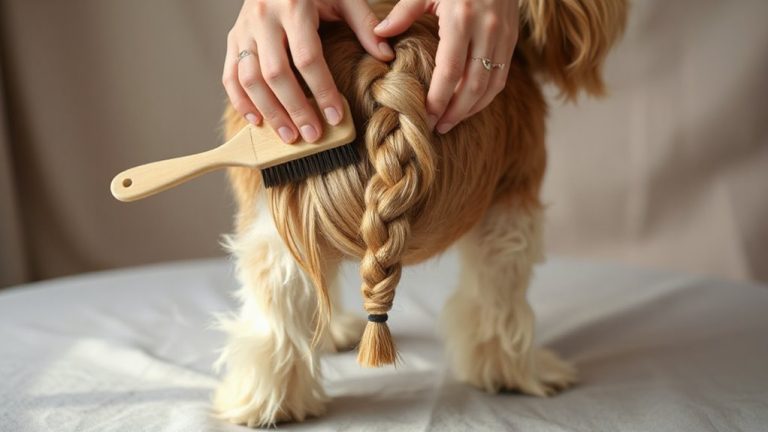
You should brush your long-haired Dachshund daily to prevent matting and maintain coat health. Use a pin brush with nylon-tipped bristles to detangle surface fur, followed by a stainless steel comb (teeth spaced 1/8 inch) to remove undercoat tangles. Start at the head and work rearward, lifting hair to reach the dense underlayer. Pay close attention to friction zones-behind ears, under legs, and the belly-where mats form rapidly. Mats thicker than a pencil eraser require safe dematting tools, not scissors. Incorporate ear cleaning weekly with a pH-balanced solution to prevent infections in the L-shaped canals. Simultaneously, practice dental care by brushing teeth with enzymatic dog toothpaste three times weekly. Consistent grooming reduces shedding by up to 40% and aids in early detection of skin abnormalities. Proper brushing maintains insulation and skin airflow, preserving coat function and hygiene year-round.
Make Brushing a Calming, Bonding Time
Why does your long-haired Dachshund tremble at the sight of the brush? Fear often stems from past discomfort or improper handling. Transform brushing into a calm, bonding experience with gentle strokes and consistent positive reinforcement. Begin by choosing a quiet space, free of distractions, where your dog feels secure. Use a slicker brush with fine, bent wires spaced 2–3 mm apart to minimize pulling. Apply light pressure, starting at the shoulders and moving rearward. Pair each stroke with a soft verbal cue and a small treat. This routine reinforces trust and compliance. Sessions should last 5–7 minutes daily, aligning with canine attention spans. Over time, your Dachshund associates brushing with safety and affection, improving coat health and emotional well-being. Consistent, kind interaction builds a cooperative grooming partner.
7 Brushing Mistakes That Cause Pain or Mats
If the brush pulls or tangles instead of gliding, it’s likely because you’re using the wrong tool or technique. Improper technique-like skipping sections or brushing too quickly-leads to missed undercoats and mat formation. Start with a slicker brush with fine, bent wires (0.3mm thickness) to loosen surface tangles, then follow with a long-toothed metal comb (1.5-inch teeth) to detangle deep layers. Applying excessive force rips hair follicles, causing pain and skin trauma. Use short, overlapping strokes of 2–3 inches, working from the skin outward. Focus on high-friction zones: behind ears, under legs, and along the belly. Never press down hard; let the tool do the work. If resistance occurs, stop and gently separate knots with your fingers or a mat splitter. Daily, gentle detangling prevents matting better than aggressive weekly sessions.
On a final note
Daily brushing prevents painful matting in your long-haired dachshund’s double coat. Mats bind tightly to the skin, causing tension, sores, and restricted blood flow. Use a slicker brush with fine, bent tines (2–3 mm spacing) and a metal comb (1.5 mm teeth) to penetrate the soft undercoat. Brush for 5–10 minutes daily, focusing on friction areas like behind ears and under legs. This removes dead hair, distributes sebum, and maintains coat integrity without irritation.