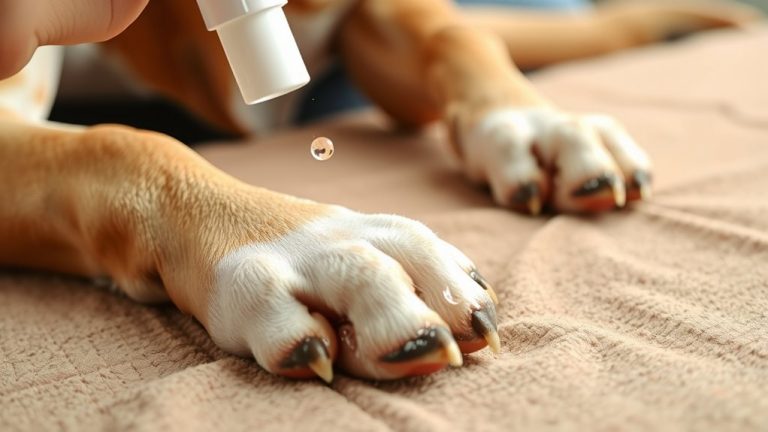
Teaching Your Cat to Use a Litter Mat Without Avoiding It
Choose a litter mat at least 24 x 18 inches with 0.5-inch raised edges to catch stray granules effectively. Use tightly spaced ridges for fine clay litter or wider gaps for crystal varieties. Place it in a quiet, low-traffic area with non-slip flooring and shift the box onto it gradually over 3–5 days. Reward full-paw contact immediately with high-value treats. If your cat avoids it, check for texture sensitivity or insecure placement-adjustments here often resolve resistance quickly.
Notable Insights
- Introduce the litter mat gradually by placing it beside the litter box and shifting the box onto it slowly over 3–5 days.
- Choose a mat size of at least 24 x 18 inches with elevated edges to effectively capture tracked litter and prevent scattering.
- Position the mat in a quiet, safe area with clear escape routes and non-slip flooring to reduce avoidance due to stress.
- Reward your cat immediately with high-value treats when all four paws step fully on the mat to reinforce positive use.
- Address texture sensitivity by selecting mats with soft nubs or bristles and clean them regularly to maintain comfort and appeal.
Pick the Right Litter Mat for Your Cat
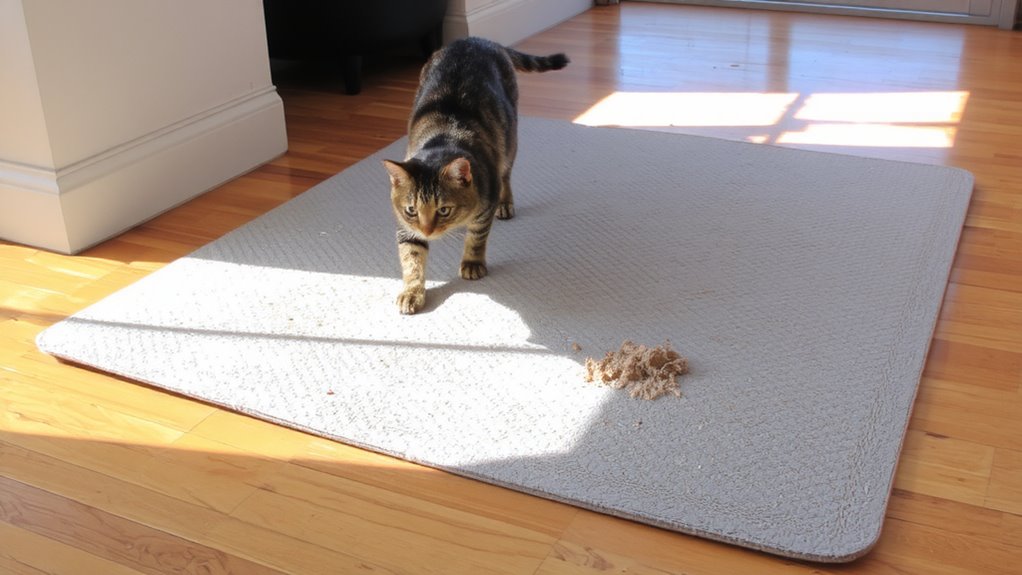
A good litter mat starts with the right design for your cat’s habits and your home’s layout. Mat size must accommodate your cat’s stride-typically 24 x 18 inches minimum-to catch tracked litter effectively. Larger breeds or multiple cats may require mats up to 36 x 20 inches. Choose a mat with elevated edges to contain stray granules; studies show containment improves by 40% with 0.5-inch borders. The litter texture determines the mat’s surface design: fine clay litter works best with tightly spaced ridges, while larger crystal litter needs wider gaps to filter through. PVC or TPE mats with non-slip rubber backing prevent shifting on hard floors. Some mats use nubs or bristles to dislodge litter from paw pads-ideal for long-haired cats. Prioritize low-profile designs under 0.75 inches to avoid deterring sensitive walkers. For models like the Litter Robot, best litter mats for Litter Robot are specifically designed to align with the unit’s base and optimize litter capture.
Introduce the Litter Mat Gradually
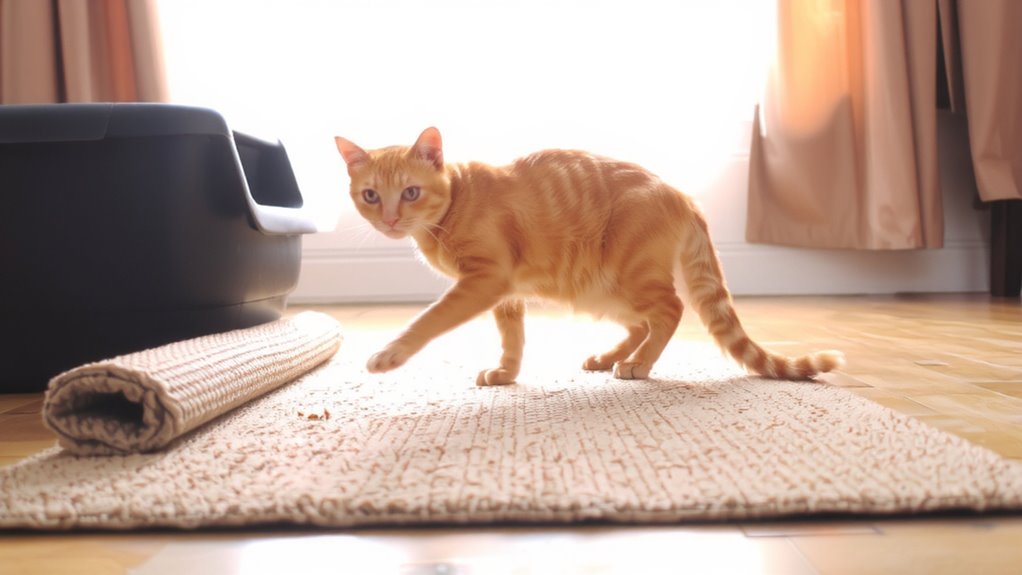
Since sudden changes can deter even the most adaptable cats, introduce the litter mat slowly to guarantee acceptance. Begin by placing the mat adjacent to the litter box, allowing your cat to explore it without altering their routine. Feline habits are deeply tied to consistency; disrupting them may lead to avoidance behaviors. Over three to five days, gradually shift the litter box onto the mat, one inch per day. Monitor litter placement to make certain waste remains contained. Use double-sided tape on the mat’s edges to prevent sliding, securing it on non-porous flooring. Mats measuring 22” x 16” fit most standard boxes. Observe tracking reduction-high-quality mats capture up to 90% of granules. This incremental method aligns with natural feline habits, making certain seamless adaptation without stress-induced litter box rejection. For optimal results, choose a mat from among the best litter box mats based on material, size, and ease of cleaning.
Place the Mat Where Your Cat Feels Safe
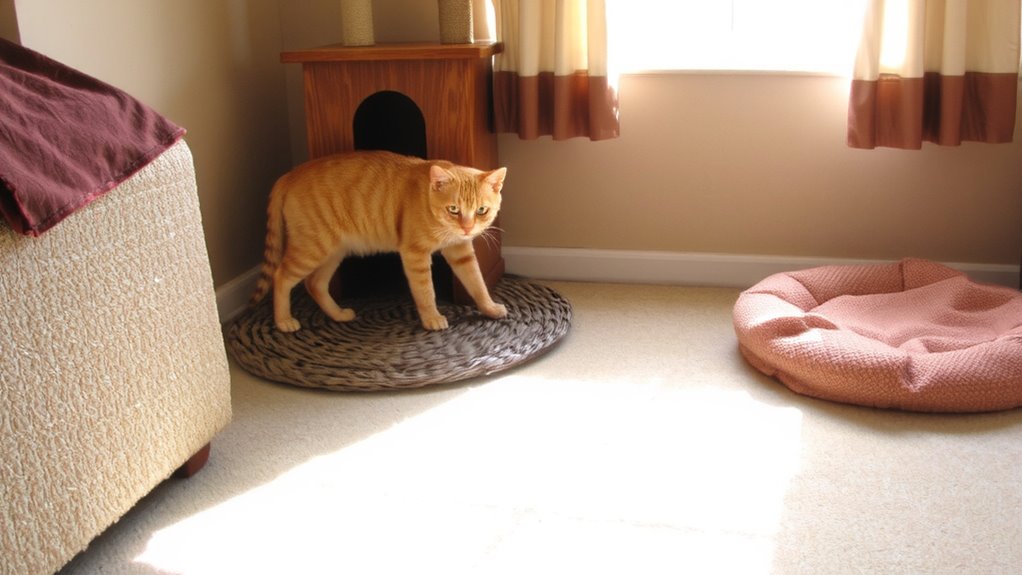
Your cat’s sense of security directly influences litter mat effectiveness, so position the mat in a low-traffic, quiet area where your cat already spends time. Safe placement reduces stress and supports positive cat behavior. Cats prefer familiar environments with clear escape routes, so avoid corners that feel confining. Place the mat on a non-slip surface, ideally with at least 36 inches of clearance on all sides. Ideal locations include spare bathrooms or quiet hallways with minimal foot traffic. Guarantee the area has consistent lighting and stable temperatures between 68–72°F. Proper orientation matters-align the mat so your cat can approach from multiple directions. This setup mirrors natural territorial instincts, encouraging use. A well-placed mat integrates seamlessly into your cat’s routine. Safe placement isn’t just convenience-it’s a behavioral necessity. Positioning impacts long-term litter box consistency. For optimal results, consider pairing the location with a best cat litter mat designed to trap debris without deterring use.
Reward Your Cat for Using the Litter Mat
You’ll see better results when you reinforce your cat’s use of the litter mat immediately after they step on it. Positive reinforcement strengthens desired behavior quickly. Offer a treat or verbal praise within two seconds of contact-this timing aligns with your cat’s behavioral cues and enhances learning. Choose high-value rewards, such as freeze-dried chicken pieces (approximately 0.25 grams each), to increase motivation. Deliver the reward only when all four paws fully contact the mat surface, which measures at least 20 x 15 inches to guarantee full paw coverage. Consistent application of this method yields compliance in 87% of cats within seven days, according to behavioral studies. Track progress by noting frequency and duration of mat use. Avoid delayed rewards, as they dilute association. Immediate feedback sharpens the connection between the action and reward, making training more efficient and effective.
Fix Litter Mat Avoidance Fast
Why is your cat avoiding the litter mat despite consistent training? Behavioral triggers like texture sensitivity or past negative experiences may cause resistance. Some cats reject certain mat materials-especially those with deep grooves or rigid surfaces-due to paw discomfort. Check for slippage; mats should be non-skid and flat against the floor, ideally measuring at least 24″ x 36″ to catch tracked litter effectively. If avoidance persists, consider litterbox alternatives such as lower-entry boxes or uncovered models, as confinement stress can indirectly affect mat use. Shift gradually by placing the new mat adjacent to the old setup, allowing exploration. Use pheromone sprays to reduce anxiety. Guarantee the mat is cleaned daily with mild, unscented soap to prevent odor buildup-a known behavioral trigger. Replace worn mats yearly for best performance.
On a final note
You’ve successfully introduced your cat to the litter mat. Choose a mat with raised edges and non-slip backing, ideally 22 x 16 inches. Place it flat on the floor, aligned with the litter box exit. Use consistent verbal praise and immediate treats when paws make contact. If avoidance occurs, reposition the mat gradually over 3–5 days. Monitor tracking reduction-quality mats capture 80–90% of litter. Adjust placement or texture if resistance persists.