How Often Should Senior Dogs Receive Comprehensive Veterinary Screenings?
You should take your senior dog to the vet every six months for thorough screenings. These biannual exams help detect early signs of age-related conditions like kidney disease, diabetes, and osteoarthritis. Vets perform physical exams, blood work (CBC, serum chemistry), urinalysis, and thyroid testing (T4). Dental radiographs and orthopedic assessments are also standard. Screening frequency depends on clinical biomarkers and existing health issues, not age alone. Early detection improves treatment outcomes-further details reveal how each test supports long-term health.
Notable Insights
- Senior dogs should receive comprehensive veterinary screenings every six months to detect early signs of age-related diseases.
- Biannual exams are crucial due to dogs’ faster aging rate compared to humans, enabling timely intervention.
- Dogs with chronic conditions like diabetes or kidney disease require checkups every six months for effective management.
- Screening frequency should be guided by clinical biomarkers and individual health status, not age alone.
- Routine blood panels, urinalysis, and physical exams every six months improve early detection of organ dysfunction and other illnesses.
How Often Should Senior Dogs See the Vet?
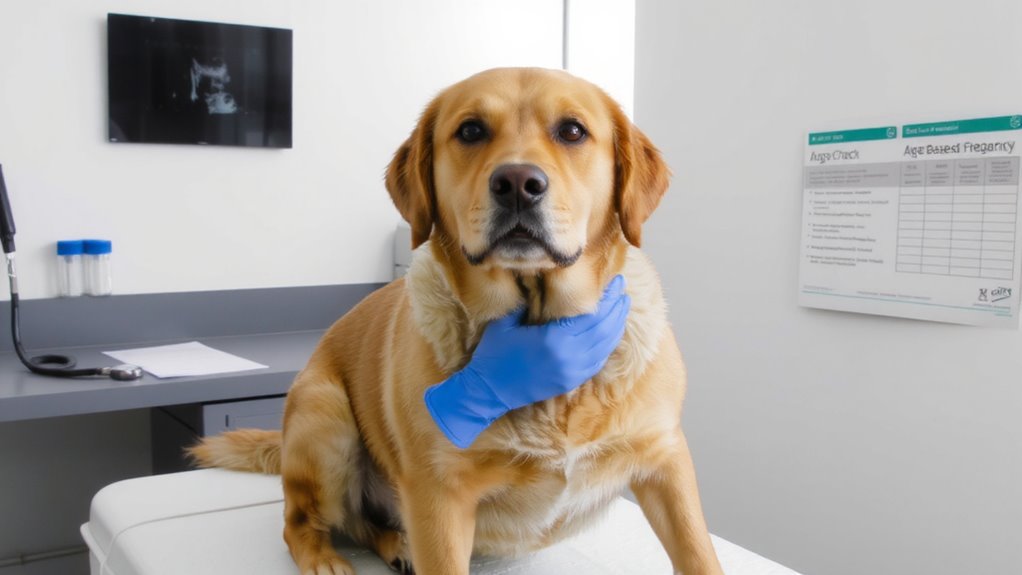
Generally, senior dogs should visit the veterinarian every six months for routine screenings. These biannual exams help detect early signs of illness and support long-term health. You’ll want to monitor your dog’s diet management closely, adjusting calorie intake by 20–30% if mobility declines, to prevent obesity. High-quality, easily digestible proteins and controlled phosphorus levels in food support kidney function. Exercise routines should include daily low-impact activity, like 20–30 minute leash walks, to maintain joint flexibility and muscle mass. Avoid high-intensity workouts, as aging joints and cardiac systems are less resilient. Regular vet visits guide precise modifications to diet and exercise, based on body condition scores and orthopedic assessments. Blood work every six months can reveal metabolic changes affecting nutritional needs. Consistent monitoring guarantees interventions are timely, evidence-based, and aligned with physiological changes in aging canines.
What Happens at a Senior Dog Checkup?
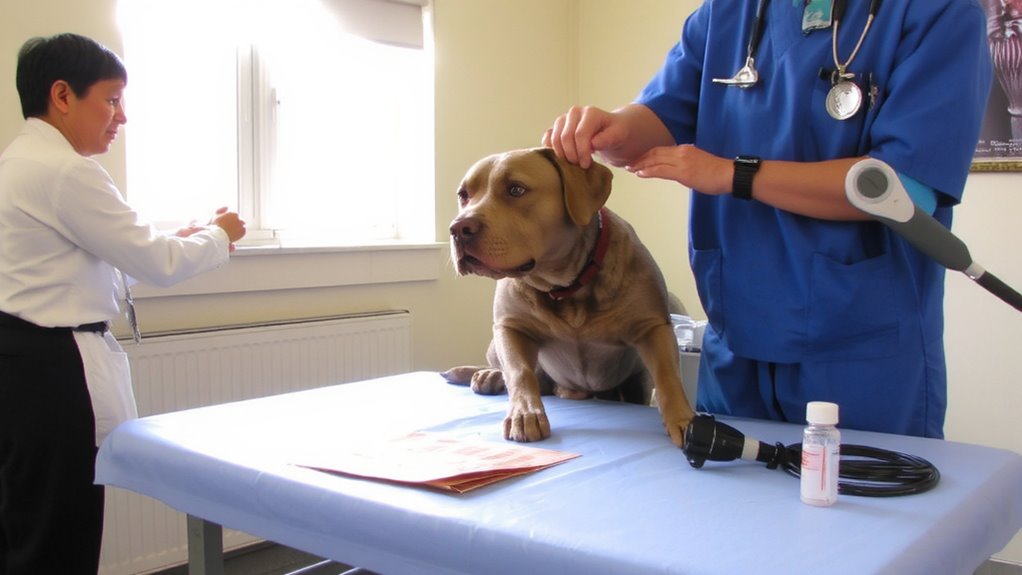
You already know your senior dog needs vet visits every six months, but those appointments involve more than just a quick look-over. The vet conducts a systematic physical exam, evaluating critical signs, body condition, and organ systems. Dental health is evaluated for plaque, gingivitis, and tooth resorption, which affect up to 8 grinding of joints, or reduced range of motion. Arthritis affects nearly all senior dogs, often subtly. The vet observes gait symmetry and weight distribution, noting lameness or muscle atrophy. Body weight and temperature are recorded precisely. Nutritional status, coat quality, and hydration levels are documented. Behavioral changes are discussed, as they may signal cognitive decline. Each parameter informs long-term care adjustments.
What Tests Do Senior Dogs Need?
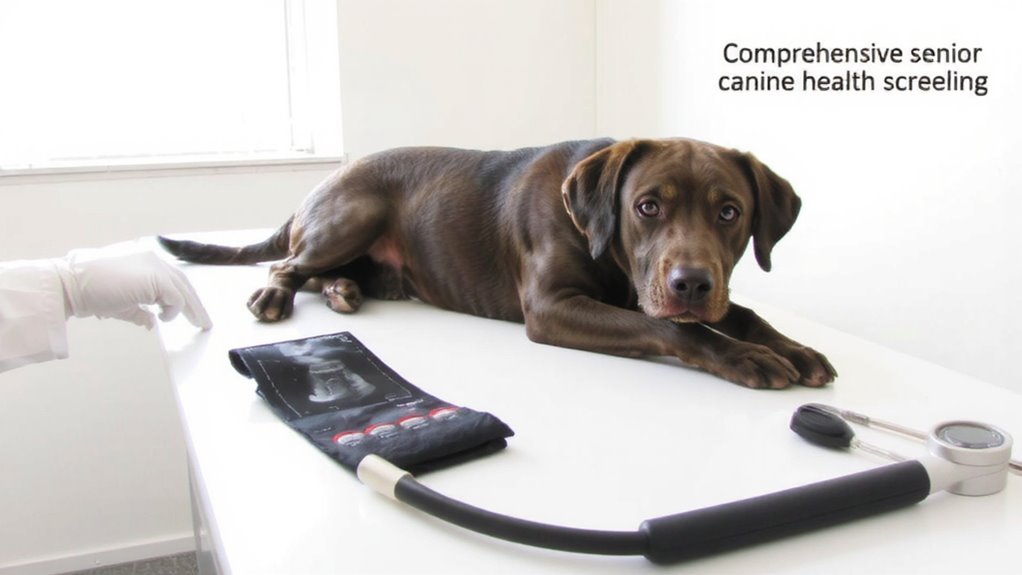
Often, routine blood work forms the cornerstone of senior dog screening, and you’ll likely need it at every six-month visit. A complete blood count (CBC) and serum chemistry panel assess organ function, glucose levels, and electrolyte balance. You should also expect urinalysis to evaluate kidney efficiency and detect early urinary tract issues. Dental health is assessed via oral examination, often under sedation, with dental radiographs revealing root abscesses or bone loss invisible externally. For joint mobility, veterinarians perform orthopedic assessments, observing gait and manipulating limbs to check for crepitus or reduced range of motion. Advanced imaging like radiographs can confirm osteoarthritis in hips or elbows. Thyroid testing (T4) is standard, especially in breeds prone to hypothyroidism. These tests collectively provide a detailed physiological snapshot. You’ll receive reference ranges and specific values, enabling precise tracking of changes over time.
Which Health Problems Are Found Early?
Regularly conducting diagnostic screenings increases the likelihood of detecting critical health issues in senior dogs before symptoms become severe. Early joint degeneration is often identified through radiographs and physical evaluation. Subtle changes in cartilage thickness and joint space narrowing indicate osteoarthritis onset. Detecting it early allows for timely intervention with chondroprotective agents. Cognitive decline is assessed using behavioral questionnaires and neurological exams. Dogs may show reduced awareness, altered sleep cycles, or disorientation. These signs correlate with brain atrophy and neurotransmitter changes visible on advanced imaging. Routine blood panels reveal organ dysfunction, while urinalysis detects early kidney disease. Thyroid function tests identify hypothyroidism, a common condition in aging dogs. Screening also uncovers dental disease, which can lead to systemic infection. Identifying these conditions early improves management outcomes. Early detection doesn’t prevent disease, but it does extend quality lifespan. You gain time to adapt care strategies proactively.
How Does Your Dog’s Health Affect Screening Frequency?
A dog’s current health status directly determines how often veterinary screenings should occur. If your dog has chronic conditions like diabetes or kidney disease, screenings are typically recommended every six months. Diet impact plays a measurable role in metabolic stability, influencing lab values such as blood glucose and BUN levels. Poor dietary management can accelerate organ stress, necessitating more frequent monitoring. Activity levels also serve as a clinical indicator; reduced mobility may signal musculoskeletal or cardiac issues requiring diagnostic follow-up. Dogs with normal activity and optimized nutrition profiles often maintain homeostasis longer, supporting annual or biannual evaluations. Screening intervals should align with clinical biomarkers, not age alone. Adjustments are based on CBC results, urinalysis trends, and physical exam findings. Consistent tracking enables early intervention, improving long-term outcomes without unnecessary testing.
Why Do Senior Dogs Need More Frequent Screenings?
Every year, your senior dog ages considerably faster than a human, making health changes accumulate rapidly and often without obvious symptoms. Early detection through frequent screenings improves treatment outcomes. Cognitive decline affects up to 60% of dogs over 11, manifesting as disorientation or altered sleep cycles. Regular neurological assessments help identify these changes. Joint degeneration, such as osteoarthritis, occurs in nearly 80% of senior dogs, reducing mobility and comfort. Radiographs and gait analysis detect subtle degenerative shifts before severe lameness develops. Annual blood panels miss 40% of early organ dysfunction; biannual screenings increase detection of kidney, liver, and endocrine issues. Urinalysis and blood pressure monitoring support early diagnosis of hypertension and protein-losing nephropathy. Frequency matters because physiological reserve declines with age. Biannual screenings establish baseline metrics, track progression, and adjust interventions. You guarantee timely care with data-driven decisions, extending both lifespan and healthspan.
On a final note
You should take your senior dog to the vet every six months. These biannual visits allow early detection of age-related diseases. Each checkup includes a complete physical exam, blood work, urinalysis, and blood pressure measurement. Lab tests assess kidney and liver function, glucose levels, and thyroid activity. Dental health and joint mobility are evaluated. Early screening improves treatment outcomes. Consistent monitoring helps maintain your dog’s quality of life as they age.