How to Identify and Treat Gunky Eye Discharge in Long-Haired Cats
Your long-haired cat’s eye discharge often stems from fur blocking tear drainage, causing irritation and porphyrin staining. Normal discharge is clear or slightly crusty; yellow or green pus signals infection. Wipe eyes daily with sterile saline and a lint-free cloth, moving from inner to outer corner. Trim hair around the eyes to less than 1 cm using rounded-tip scissors. Avoid human products. Persistent gunk, swelling, or squinting warrants veterinary evaluation for underlying conditions like conjunctivitis or corneal ulcers. Further details on targeted treatments follow.
Notable Insights
- Long-haired cats often develop gunky eye discharge due to excess fur interfering with tear drainage and irritating delicate eye tissues.
- Normal discharge is clear or slightly crusty; yellow, green, or thick pus indicates infection or underlying illness.
- Regular cleaning with sterile saline and a soft cloth helps manage discharge and prevent bacterial growth from moist fur.
- Trim hair around the eyes to less than 1 cm using rounded-tip scissors to reduce irritation and tear buildup.
- Seek veterinary care if discharge persists, worsens, or is accompanied by redness, squinting, or cloudiness in the eye.
Why Long-Haired Cats Get Eye Discharge
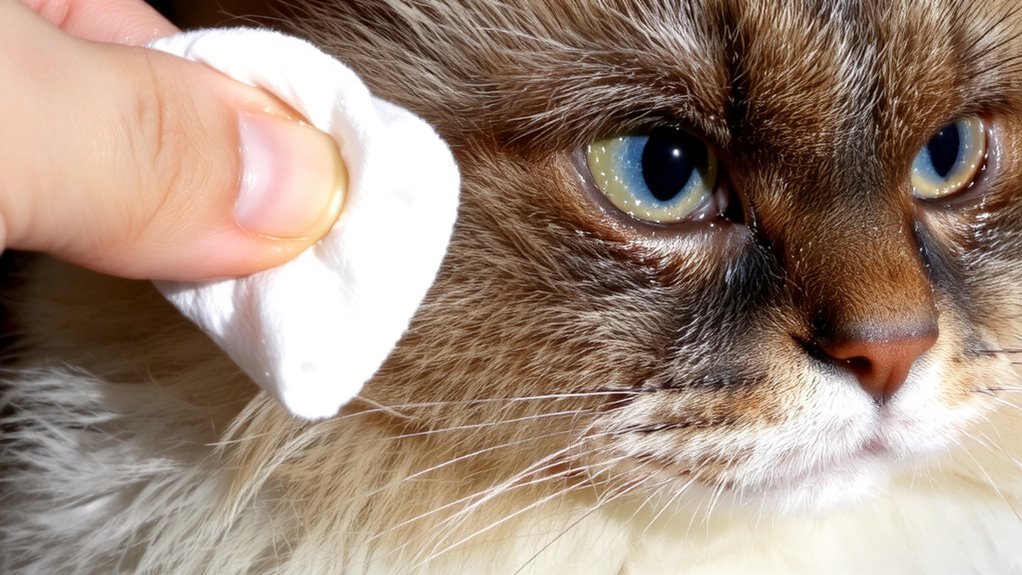
Tear production is essential for eye health, but in long-haired cats, excess fur often interferes with the natural drainage process. Hair irritates the delicate tissues around the eye, triggering excessive tearing. This irritation disrupts the lacrimal system’s ability to drain fluids efficiently through the nasolacrimal ducts. When tears overflow, they wet facial hair, creating a moist environment ideal for bacterial growth. Porphyrins in the tears oxidize when exposed to air, causing reddish-brown tear staining on light-colored fur. The combination of trapped moisture and staining compounds leads to visible discharge buildup. Hair irritation also promotes rubbing or pawing, which can worsen inflammation. Unlike short-haired breeds, long-haired cats have fur that commonly contacts the eye’s medial canthus, increasing mechanical irritation. Regular grooming reduces these effects, but anatomical predisposition means many still develop chronic tear staining. Preventive care includes daily facial wiping and keeping periocular hair trimmed to less than 1 cm.
How to Tell Normal Gunk From a Problem
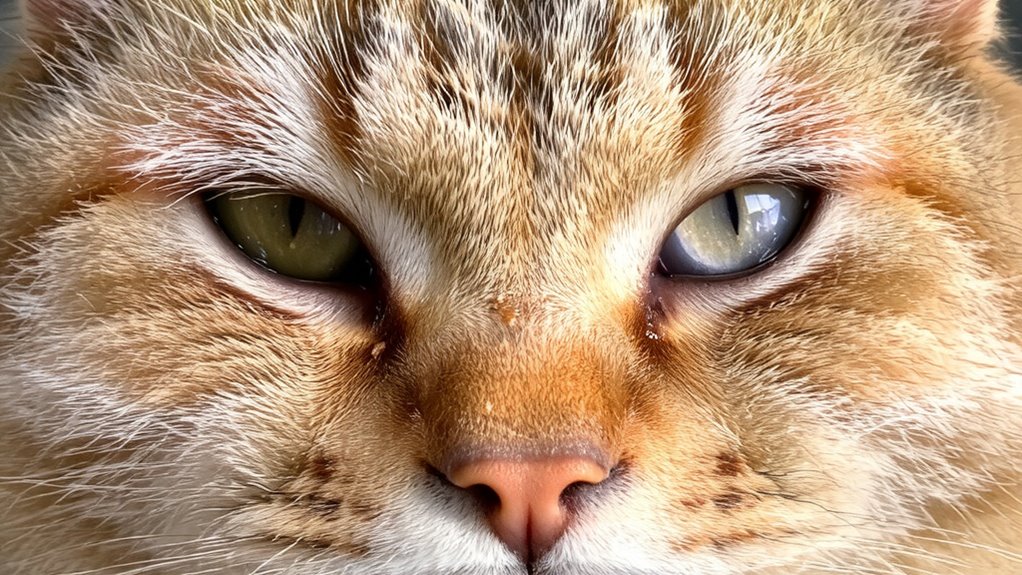
How can you tell if the gunk around your cat’s eyes is harmless or a sign of trouble? Normal discharge is usually minimal and dries clear or slightly crusty. Excessive buildup suggests tear staining, often from chronic moisture around the eyes. Persistent tear staining may lead to skin irritation and signal underlying eye irritation. Monitor color, frequency, and consistency.
| Normal Discharge | Problem Sign |
|---|---|
| Clear or light crust | Yellow or green pus |
| Mild, occasional | Consistent, heavy buildup |
| No redness or swelling | Visible eye irritation |
| Affects one eye mildly | Affects both eyes or worsens |
Tear staining alone isn’t dangerous, but when paired with redness, squinting, or swelling, it indicates a developing issue. Chronic eye irritation requires veterinary assessment to rule out pathology. Distinguish baseline grooming needs from clinical symptoms through daily observation and timely intervention.
Common Causes of Cat Eye Discharge
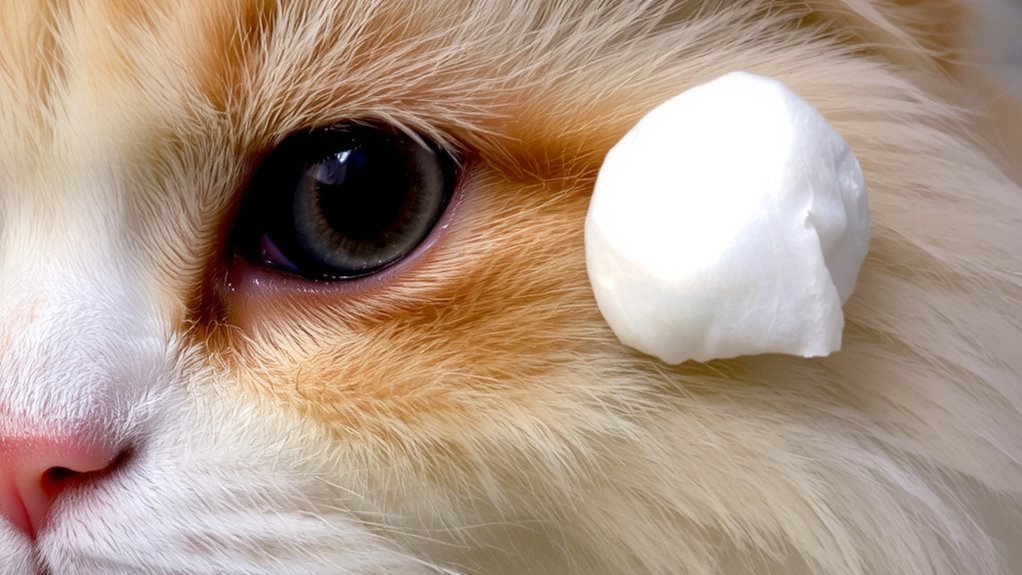
You’ve already learned how to spot the difference between routine eye gunk and signs of a problem-now it’s time to understand what’s behind that discharge when something’s off. The most common cause is conjunctivitis, an inflammation of the ocular membrane. Conjunctivitis symptoms include redness, swelling, and discharge that ranges from watery to thick and yellow-green. Viral agents like feline herpesvirus are frequent culprits, but bacterial infections such as Chlamydophila felis or Mycoplasma can also trigger it. These infections produce purulent exudate due to neutrophil infiltration. Upper respiratory infections often accompany these conditions, as they share transmission pathways. Less commonly, foreign bodies, corneal ulcers, or blocked tear ducts contribute. Allergens and environmental irritants like dust or smoke may exacerbate discharge. Each cause demands specific diagnostics, such as PCR testing or fluorescein staining, to guide treatment accurately. Persistent or severe cases require veterinary confirmation before intervention.
How to Safely Clean Your Cat’s Eyes at Home
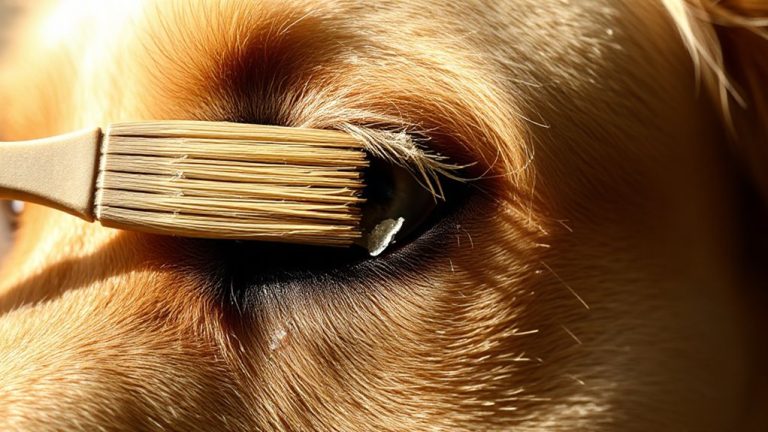
A cat’s eye area requires careful cleaning to prevent irritation or infection from worsening. Use a soft, lint-free cloth or cotton ball moistened with lukewarm sterile saline solution-never tap water. Gently wipe from the inner corner outward to remove discharge without spreading debris. For long-haired cats, daily cleaning helps manage tear staining caused by porphyrins in tears. Trim hair around the eyes with rounded-tip scissors to reduce moisture retention and matting. Incorporate this into routine cat grooming to prevent buildup. Avoid alcohol, soap, or human products, which disrupt ocular pH. Clean each eye with a fresh section of the cloth to avoid cross-contamination. Repeat 1–2 times daily, depending on discharge severity. Consistent hygiene reduces bacterial growth and minimizes persistent staining. Use hypoallergenic wipes if home-prepared solutions aren’t practical. Proper technique guarantees comfort and maintains ocular health.
When to See a Vet for Eye Discharge
What if the discharge doesn’t improve after a few days of careful cleaning? Then it’s time to see a vet. Persistent gunk can signal underlying issues like conjunctivitis symptoms-redness, swelling, and watery or pus-like discharge. These often stem from infections, allergies, or viral agents like feline herpesvirus. Left untreated, they may progress to more serious conditions. Corneal ulcers, for example, are open sores on the cornea caused by trauma or infection. They require immediate veterinary diagnosis using fluorescein staining, which highlights defects under blue light. Delay increases the risk of perforation or vision loss. Your vet may prescribe antibiotic ointments or antiviral medications tailored to the cause. Do not delay care if you notice squinting, cloudiness, or increased tearing. Early intervention prevents complications and supports faster healing in your long-haired cat.
On a final note
You must monitor eye discharge closely in long-haired cats. Normal tearing clears debris, but persistent gunk signals underlying issues. Use sterile saline and a lint-free cloth for daily cleaning. Discharge that’s yellow, green, or thick indicates infection. Conditions like conjunctivitis or blocked tear ducts require veterinary diagnosis. Chronic cases may need fluorescein staining or Schirmer tear tests. Antibiotics or anti-inflammatories are prescribed based on culture results. Early intervention prevents corneal damage.