Recognizing and Treating Chronic Prostatitis in Intact Male Dogs
You may notice your dog straining to urinate or defecate due to an enlarged, painful prostate pressing on nearby tissues. Look for frequent dribbling of urine, blood in urine, or excessive licking of the genital area. A vet will use digital rectal exam and ultrasound-measuring a prostate larger than 5 cm-to confirm. Prostatic fluid culture guides antibiotic choice. Treat with long-term trimethoprim-sulfamethoxazole or enrofloxacin for 4–6 weeks. Neutering reduces recurrence, and further details follow.
Notable Insights
- Intact male dogs may show straining to urinate, blood in urine, or lethargy due to chronic prostatitis.
- Diagnosis involves digital rectal exam, ultrasound, and prostatic fluid culture to confirm infection.
- Chronic prostatitis often results from bacteria like *E. coli* that resist immune clearance and antibiotics.
- Treatment requires long-term antibiotics with good prostatic penetration, guided by culture and sensitivity.
- Neutering significantly reduces recurrence by shrinking the prostate and lowering infection risk.
Signs of Prostate Infection in Dogs
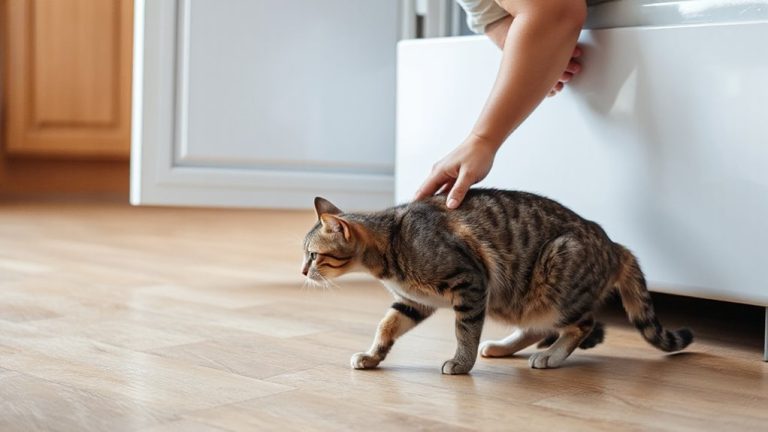
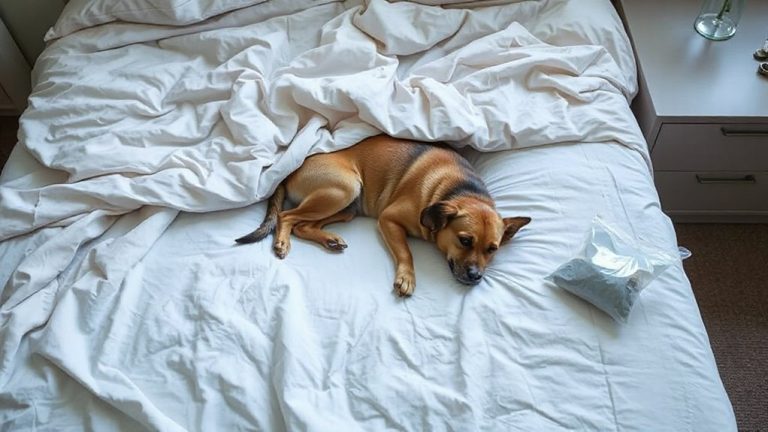
What signs should you watch for if you suspect your male dog has a prostate infection? Look for straining to urinate or defecate due to prostate inflammation pressing on surrounding structures. Your dog may show urinary discomfort, producing small, frequent dribbles of urine, sometimes with blood. He might lick his genital area excessively, signaling irritation. Lethargy and loss of appetite often accompany infection. You may notice rear limb stiffness or a hunched posture, caused by discomfort from an enlarged prostate measuring more than 5 cm in height on ultrasound. Fever can occur in acute cases. Unlike females, males don’t have a uterus, so swelling is limited to the prostate gland. Chronic cases develop slowly, so changes may seem mild at first. Abscesses or cysts can form if untreated. These signs require prompt evaluation.
How Vets Diagnose Prostatitis in Male Dogs
Your dog’s symptoms give the first clues, but diagnosis depends on what the vet finds through direct assessment and testing. A digital rectal exam lets the vet feel the prostate’s size, texture, and sensitivity. Enlargement or asymmetry suggests inflammation. Diagnostic imaging-like ultrasound-provides precise prostate measurements and detects abscesses or cysts. Ultrasound often reveals increased echogenicity or irregular parenchymal structure in prostatitis. The vet may collect prostatic fluid via urethral catheterization or prostatic massage. If fluid is obtained, a bacterial culture identifies the causative organism and guides antibiotic selection. Culture is critical because antibiotic resistance is common. Blood tests show secondary changes like elevated white blood cells. In some cases, a fine-needle aspirate under ultrasound guidance is used to sample the prostate directly. This method increases culture accuracy while minimizing contamination. These steps confirm prostatitis and rule out neoplasia or benign hyperplasia.
Treating Chronic Prostatitis in Dogs
Treatment for chronic prostatitis in dogs requires long-term antibiotic therapy, typically lasting 4 to 6 weeks or longer, to penetrate the prostate effectively. You’ll need antibiotics with good prostatic tissue penetration, such as trimethoprim-sulfamethoxazole or enrofloxacin. Always base your choice on culture and sensitivity results when possible. Pain management is essential-nonsteroidal anti-inflammatory drugs (NSAIDs) like carprofen help reduce inflammation and discomfort. Monitor your dog closely for adverse reactions and adjust treatment accordingly.
| Medication | Duration | Purpose |
|---|---|---|
| Enrofloxacin | 4–6 weeks | Antibiotic therapy |
| Trimethoprim-sulfamethoxazole | 6 weeks | Broad-spectrum coverage |
| Carprofen | As needed | Pain management |
| Meloxicam | Short-term | Anti-inflammatory |
Follow-up exams confirm resolution and prevent relapse.
Can Neutering Prevent Prostate Infections?
Neutering substantially reduces the risk of prostate infections in male dogs by altering the hormonal environment that supports prostate health. The removal of the testes eliminates most testosterone production, directly diminishing hormonal influence on the prostate gland. Without sustained androgen stimulation, the prostate undergoes significant atrophy-shrinking to about 20–30% of its original size within several weeks. This reduction limits glandular secretions, decreasing the nutrient-rich environment where bacteria thrive. Surgical outcomes consistently show neutered dogs have a markedly lower incidence of bacterial prostatitis. Studies report infection rates drop from up to 24% in intact males to less than 2% post-neutering. The procedure’s preventive benefit is most effective when performed before infection develops. While neutering isn’t a guaranteed shield, it’s a powerful, evidence-based strategy for long-term prostate health.
What Is Chronic Prostatitis in Male Dogs?
Chronic prostatitis in male dogs is a persistent bacterial infection of the prostate gland that develops when pathogens establish a long-term presence within the tissue. You’ll see ongoing prostate inflammation, often without sudden symptoms. This condition arises from deep bacterial colonization, typically involving *E. coli*, *Staphylococcus*, or *Streptococcus* species. Bacteria enter via the urethra or bloodstream and resist immune clearance. The prostate’s structure limits antibiotic penetration, allowing infection to persist. Affected dogs may show mild straining, blood-tinged urine, or intermittent fever. Unlike acute cases, symptoms develop slowly and fluctuate. Diagnosis requires prostatic fluid analysis, culture, and sometimes ultrasound. Culture confirms bacterial colonization and guides antibiotic choice. Long-term treatment-often 4 to 6 weeks-is essential. Fluoroquinolones are commonly used due to their ability to reach therapeutic levels in prostatic tissue. Early intervention improves outcomes.
On a final note
You now understand chronic prostatitis in intact male dogs. It’s a persistent inflammation often caused by bacterial infection. Vets diagnose it using ultrasound, cytology, and bacterial culture. Treatment requires prolonged antibiotics based on sensitivity testing-typically 4 to 6 weeks. Anti-inflammatories help manage pain. Neutering reduces recurrence by eliminating hormonal stimulation of the prostate. While not a cure alone, it’s a critical preventive step. Always follow up with imaging to confirm resolution.