Why Homemade Diets for Cats Must Include Fiber-Rich Ingredients Like Pumpkin
You need to include fiber-rich ingredients like pumpkin in your cat’s homemade diet to support proper digestion and colon health. Cats require 1.5–3.5% crude fiber on a dry matter basis for ideal gut motility and microbial balance. Pumpkin provides both soluble and insoluble fiber, promoting consistent bowel movements and reducing hairball retention. Use 1–2 teaspoons of plain, canned organic pumpkin per 10 lbs body weight daily. Overlooking fiber can impair nutrient absorption and lead to constipation. There’s more to optimizing your cat’s diet with precise supplementation.
Notable Insights
- Fiber supports intestinal motility and maintains a healthy gut microbiome in cats on homemade diets.
- Pumpkin provides both soluble and insoluble fiber, promoting balanced digestion and regular bowel movements.
- Soluble fiber in pumpkin ferments to produce short-chain fatty acids that nourish colon cells.
- Adding pumpkin helps move ingested hair through the GI tract, reducing hairball formation.
- Proper fiber levels (1.5–3.5% dry matter) prevent constipation without compromising protein absorption.
Why Fiber Is Essential for Homemade Cat Food
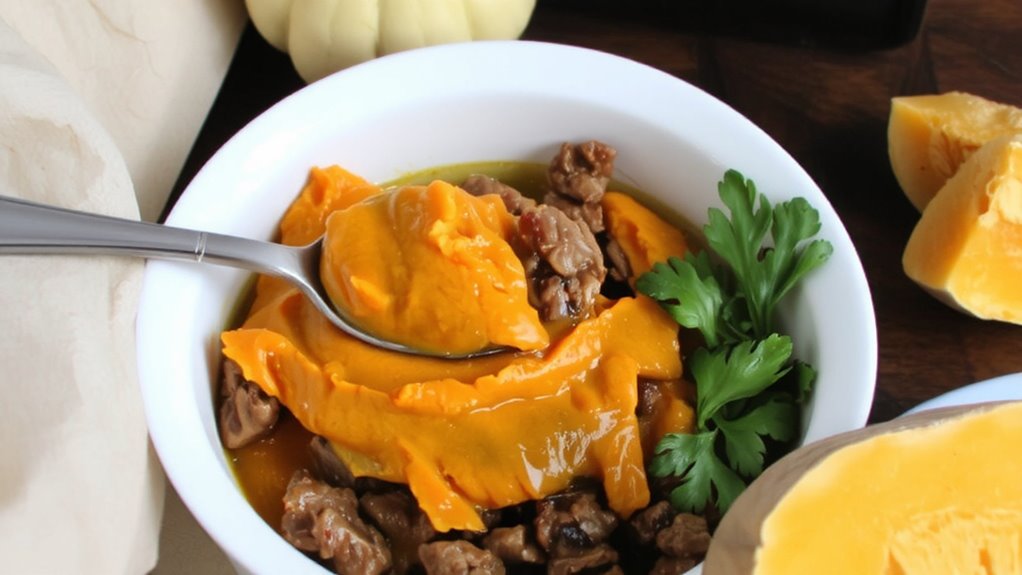
Fiber isn’t just filler-it’s a functional component in your cat’s diet. It directly supports gut health by maintaining ideal intestinal motility and microbial balance. Soluble fiber, like pectin, ferments in the colon, producing short-chain fatty acids (SCFAs) that nourish colonocytes and stabilize pH. This enhances nutrient absorption by improving transit time and reducing inflammation. Insoluble fiber adds bulk, preventing constipation without overloading the system. For homemade diets, aim for 1.5–3.5% crude fiber on a dry matter basis. Too little compromises gut health; too much hinders nutrient absorption. Fiber modulates digestion much like a regulator in an engine-keeping the system efficient. It stabilizes blood glucose and supports beneficial microbiota. Without adequate fiber, even well-formulated homemade meals may fail to deliver peak nutrition. Ensuring precise fiber inclusion maximizes digestive function and maximizes the benefits of high-quality ingredients you prepare.
How Pumpkin Improves Digestion and Reduces Hairballs
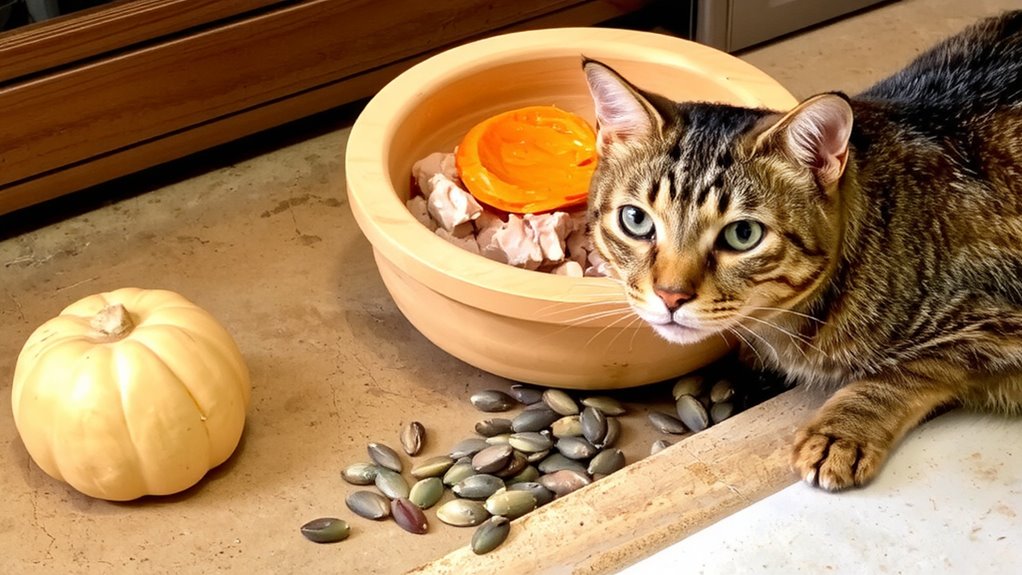
While many assume hydration and lubricants are the go-to solutions, canned pumpkin delivers a more natural and effective approach to managing digestion and hairballs in cats. The pumpkin texture contains both soluble and insoluble fiber, which regulates digestion speed for maximum nutrient absorption and waste movement. Soluble fiber absorbs water, forming a gel that slows digestion speed, stabilizing intestinal transit. Insoluble fiber adds bulk, promoting consistent bowel contractions. Together, they minimize hairball formation by moving ingested fur through the GI tract before clumping occurs. A typical dose of 1–2 teaspoons of pure pumpkin per 10 lbs of body weight daily supports gastrointestinal motility without excess calorie intake. With 86% water content and low fat, pumpkin improves stool quality while maintaining hydration. Its natural fiber composition offers a safer, long-term solution compared to chemical laxatives.
Pick the Right Pumpkin for Fiber and Safety
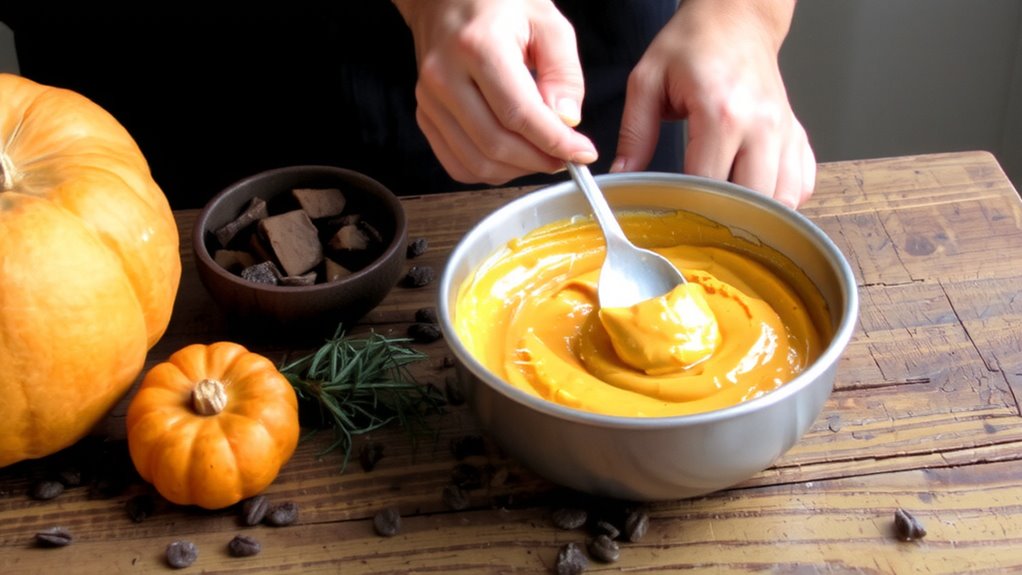
Why do some pumpkin products help your cat while others cause digestive upset? The answer lies in purity and fiber content. Always choose plain, canned organic pumpkin with no additives. Avoid pumpkin pie mix-it contains sugars and spices toxic to cats. Organic pumpkin guarantees minimal pesticide exposure and consistent nutrient levels. Check labels: ideal fiber content ranges between 3–5 grams per 100 grams. Steer clear of raw pumpkin or large seeds, which pose choking and intestinal risks. Here’s a comparison:
| Product Type | Fiber Content (g/100g) | Safety Notes |
|---|---|---|
| Organic pumpkin | 3.5 | Safest; no additives |
| Regular canned | 3.0 | May include non-organic agents |
| Pumpkin pie mix | 1.2 | Unsafe-contains xylitol, spices |
| Raw pumpkin cubes | 2.8 | Risk of digestive blockage |
Select wisely to maintain safety and fiber benefits.
Add Pumpkin Safely to Daily Meals
You’ve picked the right pumpkin-now it’s time to use it safely in your cat’s daily meals. Proper pumpkin portioning is critical: start with ½ teaspoon of plain, cooked pumpkin per 5 pounds of body weight daily. Gradually introduce it over 7–10 days to monitor digestive tolerance. Excessive amounts may cause loose stools or nutrient imbalance. For effective meal integration, mix the pumpkin thoroughly into your cat’s regular homemade food, guaranteeing even distribution. Use it as a fiber supplement, not a replacement for animal protein. Store unused portions in an airtight container; refrigerate for up to 5 days or freeze in 1-teaspoon cubes for longer storage. Consistent daily inclusion supports bowel regularity and urinary health. Always weigh ingredients to maintain dietary precision. Monitor your cat’s response closely, adjusting only as needed. This method guarantees safe, effective fiber enhancement in homemade diets.
Avoid These 5 DIY Fiber Mistakes
When adding fiber to your cat’s homemade diet, skipping proper ingredient analysis can compromise digestive health. Many owners assume all fiber sources are safe, but some disrupt nutrient absorption. First, don’t over-supplement-more than 2–3% fiber by dry matter can impair protein utilization. Second, never rely solely on insoluble fibers like wheat bran; balance with soluble fibers such as pumpkin. Third, ignore fiber entirely in raw diets at your cat’s peril-raw meat lacks adequate fiber, increasing constipation risk. Fourth, overlook potential food allergies; novel proteins paired with fiber supplements may trigger adverse reactions. Finally, failing to track stool quality undermines progress-optimal consistency should resemble playdough. Adjust fiber incrementally by 0.5 g per meal. Use a gram scale for accuracy. Consistency monitoring prevents diarrhea or impaction. Each cat’s gastrointestinal response varies; individualize fiber inclusion based on clinical observation, not guesswork.
Choose Plain, Canned Pumpkin: Not Pie Filling
Plain, canned pumpkin is one of the safest and most effective fiber sources to include in a homemade cat diet. You must choose 100% pure pumpkin without additives. Pumpkin benefits include improved digestion, regulated bowel movements, and support for weight management due to its low calorie and high fiber content. A single tablespoon provides about 0.6 grams of fiber, aiding in hairball control and stool firmness. Always avoid pie filling-it contains sugars, spices like cinnamon and nutmeg, and sometimes xylitol, all of which pose pie filling dangers. Nutmeg is toxic to cats, and added sugars contribute to obesity and insulin resistance. Pie fillings typically contain 10–15 grams of sugar per serving, far exceeding a cat’s nutritional limits. The consistency and nutrient profile of plain canned pumpkin are predictable, unlike pie filling, which varies by brand. Read labels carefully-ingredients should list only pumpkin.
On a final note
You must include fiber in homemade cat diets to support gastrointestinal health. Pumpkin provides soluble and insoluble fiber-ideally 1–2% of total diet volume. Use plain, canned pumpkin, not pie filling, to avoid sugars and spices. A tablespoon per 10 pounds of body weight aids stool consistency and hairball control. Always introduce fiber gradually to prevent digestive upset. Proper fiber balance improves nutrient absorption and colon function.