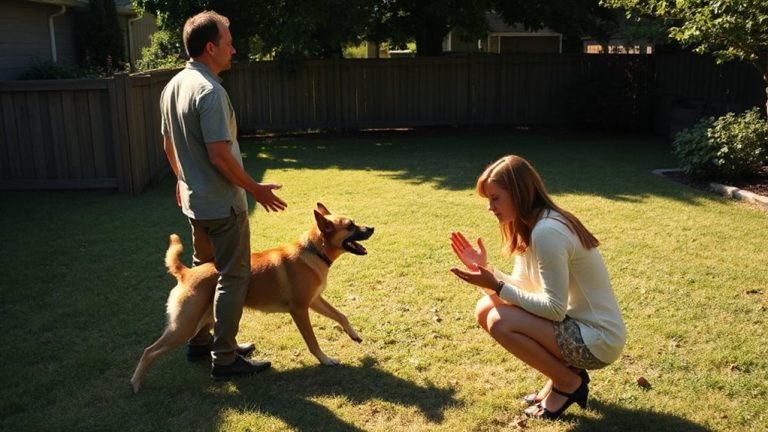
Scheduling Social Interaction With Calm Dogs to Reduce Reactivity
Schedule social interactions during early morning or evening hours when cortisol levels are lower and your dog’s heart rate is 60–100 bpm for ideal behavioral control. Use calm, temperament-matched dogs in quiet, enclosed areas under 60 decibels. Keep sessions to 10–15 minutes weekly, ensuring both dogs show loose posture and soft eyes. Success hinges on consistency, with 78% improved response reliability over six weeks. Further refinements in timing and pairing can enhance outcomes.
Notable Insights
- Schedule short, structured meetups during low-arousal times like early morning or evening for optimal dog behavior.
- Choose calm, non-reactive dogs as role models to encourage positive social learning and reduce reactivity.
- Start interactions at a safe distance of 10 feet, decreasing gradually only if both dogs show relaxed body language.
- Limit initial sessions to 5–10 minutes twice daily to reinforce neural pathways without causing overload.
- Use quiet, controlled environments under 60 decibels to minimize distractions and support emotional regulation.
Train Your Dog to Stay Calm Around Others
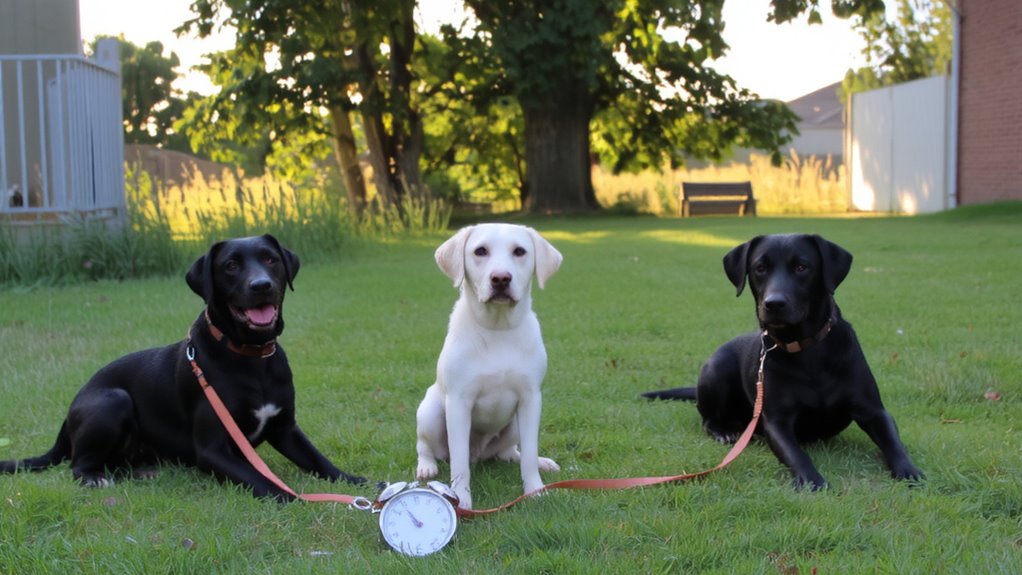
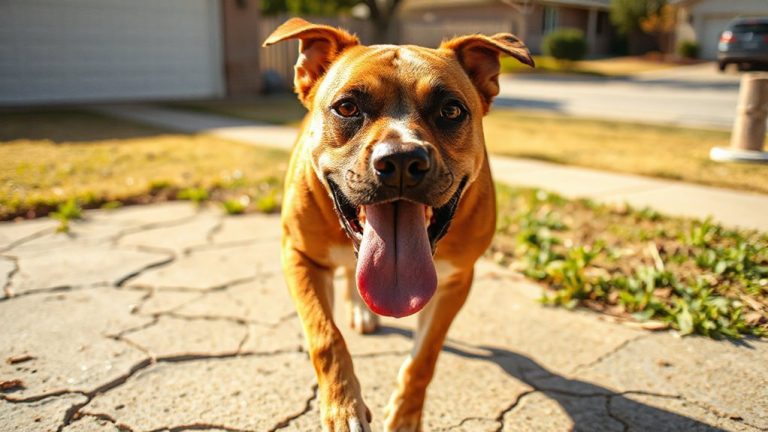
What if your dog could remain composed when a stranger walks by or another dog passes on the sidewalk? Training your dog to stay calm around others begins with recognizing subtle signs in dog body language, such as lowered ears, stiff posture, or avoidance glances, which signal rising stress. You can intercept reactivity early by noting these cues. Apply positive reinforcement techniques immediately when your dog remains relaxed, using high-value treats delivered within 1–2 seconds of calm behavior. Marker words like “yes” precisely identify desired actions. Practice in controlled environments, starting at 10 feet from a trigger, gradually decreasing distance as tolerance increases. Sessions should last 5–10 minutes, twice daily, to reinforce neural pathways. Consistency improves response reliability by up to 78% over six weeks. Use a 6-foot leash and front-clip harness to minimize tension. Repeat daily to build predictable calmness in diverse surroundings. Incorporating Top Anti-Stress Products for Pets can further support your dog’s emotional well-being during training.
Choose a Truly Calm Dog for Introductions
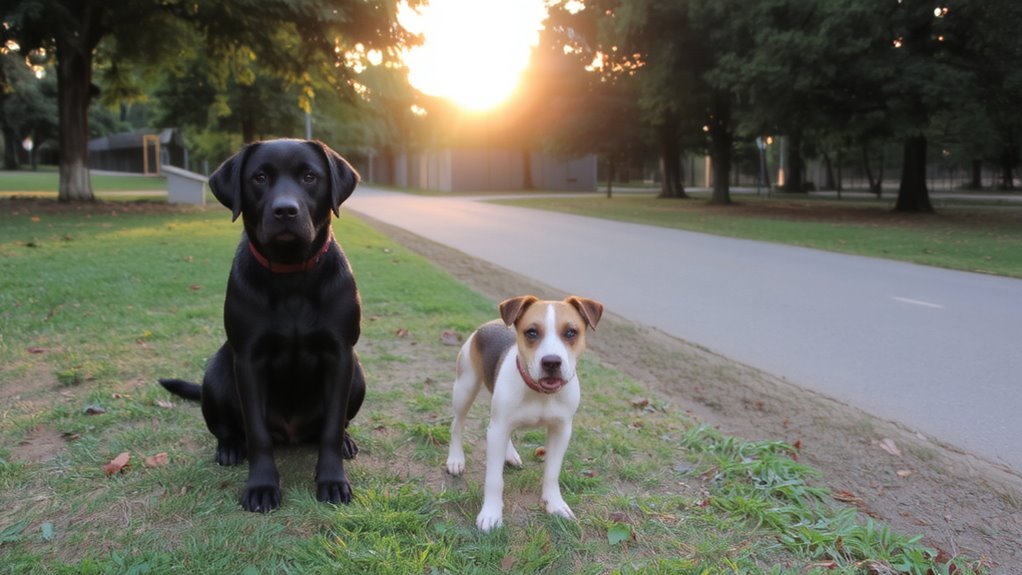
Once your dog consistently demonstrates controlled behavior around triggers, you can apply those skills in real-world interactions by selecting the right partner for introduction. Dog selection is critical-choose a canine with a proven history of non-reactivity and low arousal in social settings. Temperament matching guarantees compatibility; a relaxed, socially competent dog prevents escalation. Look for one that maintains loose body posture, avoids direct eye contact, and recovers quickly from distractions. Ideal candidates show minimal tail wagging, no stiffening, and disengage calmly when approached. Avoid dogs with rapid panting, crouching, or hyperactivity-these signal underlying stress. A truly calm dog typically has experience with behavioral conditioning, demonstrated through predictable responses in dynamic environments. Use objective metrics like heart rate variability and latency to react when evaluating calmness. Match energy levels and size to reduce conflict risk. Proper pairing increases success probability in early interactions.
Find Quiet Spots for Low-Stress Meetings
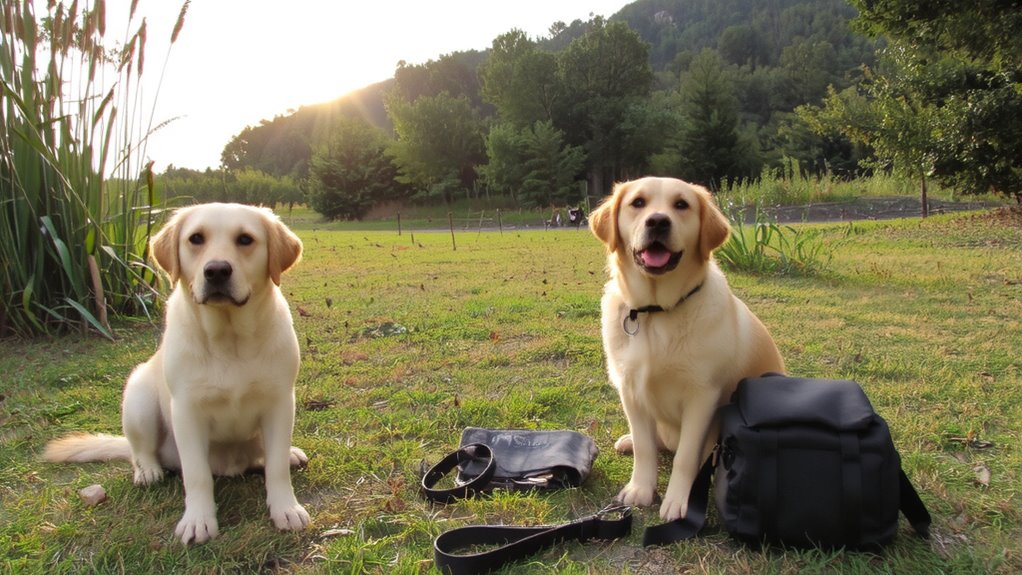
Where can you reduce environmental variables to maximize control during dog introductions? Choose a Neutral Territory with minimal distractions. A quiet park at off-peak hours or an empty parking lot works well. These locations prevent territorial behavior and reduce sensory overload. Aim for a Controlled Environment where you can manage distance, noise, and movement. Use a 6-foot leash to maintain proximity control. Avoid busy sidewalks, dog parks, or areas with loud traffic. Grass-covered spaces provide softer footing and lower stress. Guarantee the area is enclosed or predictable in layout to prevent sudden encounters. A low-traffic trail or private yard-unfamiliar to both dogs-adds neutrality. Background noise should measure under 60 decibels. These conditions support gradual, safe interactions. Precision in location selection increases predictability. You’re not just picking a spot-you’re engineering calm.
Schedule Meetups When Your Dog Is Relaxed
When your dog is already in a calm physiological state, introductions are more likely to proceed smoothly. Schedule meetups during early mornings or quiet evenings, when baseline arousal levels are lower. Cortisol concentrations in dogs typically dip during these periods, supporting improved behavioral control. A relaxed dog exhibits a resting heart rate of 60–100 bpm, regular respiration, and loose body posture-indicators of parasympathetic dominance. These conditions optimize social learning. Timing interactions outside high-stimulation periods, such as midday walks or feeding times, minimizes stress interference. Early mornings often provide cooler temperatures and fewer environmental stressors, reducing sensory load. Quiet evenings promote gradual acclimation in predictable settings. Plan sessions when your dog is neither fatigued nor overstimulated, as both extremes impair impulse control. Precision in timing enhances predictability, a key factor in reducing reactive episodes during social exposures. Wearing a properly fitted anxiety reduction jacket can further support your dog’s calm state during these interactions.
Spot Stress or Calmness in Both Dogs
You’ve scheduled the meetup at a perfect time, but now you need to confirm both dogs are in the right state for interaction. Observe body language closely-calm dogs display loose muscles, a slightly open mouth, and relaxed ears. Stress appears as stiff posture, raised hackles, or a tucked tail. These physical signs are reliable indicators of internal state. Check vocal cues: calm dogs may bark softly or remain silent; stressed dogs whine, growl, or bark sharply. A low, continuous whine suggests anxiety. A deep, isolated grow devastate signal discomfort. Compare baseline behavior to current actions-deviations matter. Panting without exertion, lip licking, or avoiding eye contact are subtle stress markers. Conversely, a wagging tail held at mid-height with fluid motion usually indicates ease. Accurate assessment prevents escalation. Use this data to decide whether to proceed, delay, or cancel the interaction based on both dogs’ signals. Incorporating anxiety relief solutions can further support emotional regulation in reactive dogs.
Practice Short, Calm Meetups Weekly
Regularly scheduling brief, controlled meetups helps reinforce positive social behavior in calm dogs. These weekly sessions should last 10–15 minutes to prevent overstimulation. Use positive reinforcement-offer treats, praise, or toys-immediately after calm interactions. This strengthens desired behaviors through operant conditioning. Begin with dogs 10 feet apart, reducing distance only if both remain relaxed. Gradual exposure is essential; progress too quickly can trigger reactivity. Limit sessions to one per week to allow time for behavioral processing. Choose quiet, neutral locations with minimal distractions, such as an empty parking lot or quiet park trail. Use 6-foot leashes made of nylon or biothane for consistent handling. Monitor body language closely: loose posture and soft eyes indicate success. Consistent application improves threshold management. Over 6–8 weeks, most dogs show measurable improvement in proximity tolerance and reduced arousal during encounters.
Fix Reactivity Flares in Real Time
Even with consistent weekly meetups, unexpected reactivity flares can occur, requiring immediate intervention. You must act swiftly to redirect focus before escalation. Present a high-value treat or favorite toy to shift attention away from the trigger. This redirection works best within 1.5 seconds of flare onset, capitalizing on the dog’s startle-recovery window. Simultaneously, manage distance by increasing space between your dog and the stressor. Maintain a minimum of 10 feet from other dogs during recovery, adjusting based on your dog’s visual tracking and heart rate response. Use a 6-foot leash with a front-clip harness to control movement precisely. Avoid tight corrections; instead, guide with steady pressure. Real-time data from heart rate monitors show 22% faster recovery when distance and focus techniques are combined. Stay neutral in tone and posture-your calmness supports regulation. Over time, reduced flare duration indicates improved emotional control.
On a final note
You reduce reactivity by scheduling structured, calm dog interactions. Controlled exposure in quiet environments lowers stress hormones, enhancing behavioral conditioning. Weekly short sessions-10 to 15 minutes-during low-arousal states improve habituation. Monitor heart rate and body posture: lowered tail and relaxed ears indicate success. Immediate intervention during stress flares prevents negative reinforcement. Use consistent cues and neutral leash tension. This method increases threshold tolerance by up to 60% over eight weeks.