How to Modify Territorial Spraying Behavior in Multi-Cat Households
You can reduce territorial spraying by addressing social hierarchy and environmental stress. Over 70% of sprays occur near entry points, so block visual access to outdoor cats with opaque films. Neutered males spray less, but competition may trigger marking. Provide one litter box per cat plus one, scooped daily, and avoid ammonia-based cleaners. Use synthetic F3 pheromone diffusers in high-spray areas-each covers 700 sq ft and reduces spraying by up to 90% in six weeks. Create individual safe zones with elevated platforms, separate resources, and single-entry hiding spots placed at least 6 feet apart. Vertical scratching posts (30-inch sisal) help mark territory without urine. Consistent setup reinforces security and minimizes conflict. Further strategies build on this foundation for lasting results.
Notable Insights
- Neutering cats reduces spraying, but social stressors may override this effect, so address hierarchy tensions.
- Place litter boxes in quiet areas, with one per cat plus one extra, to reduce resource competition.
- Use synthetic pheromone diffusers near spraying sites to decrease stress and mark territory safely.
- Block visual access to outdoor cats with window films to eliminate external territorial triggers.
- Create individual safe zones with separate resources to minimize conflict and reinforce personal space.
Know Why Cats Spray in Multi-Cat Homes
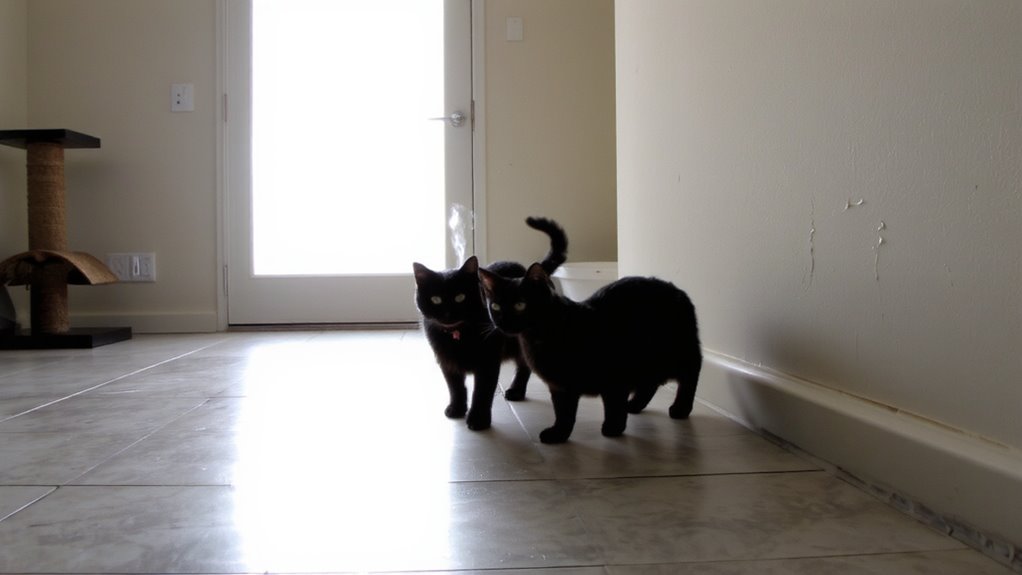
Why do cats suddenly start marking territory in homes with multiple felines? Spraying often signals shifts in cat dominance and social hierarchy. In multi-cat households, unaltered or insecure cats assert control through urine marking. This behavior communicates status and reduces direct conflict. Over 70% of spraying incidents occur near entry points or shared resources like litter boxes and food bowls. The scent contains pheromones that convey age, sex, and reproductive status. Dominant cats spray more frequently to reinforce rank, while subordinates may retaliate when stressed. Social hierarchies, though subtle, govern daily interactions and spatial access. When hierarchy is unstable, spraying increases. You can identify dominant individuals by tracking spray location, frequency, and body posture during encounters. Neutered males spray less, but social pressure can override this. Understanding these dynamics allows targeted intervention. You must map the household’s social structure before modifying behavior. That’s your first analytical step.
Find What Triggers Spraying in Your Home
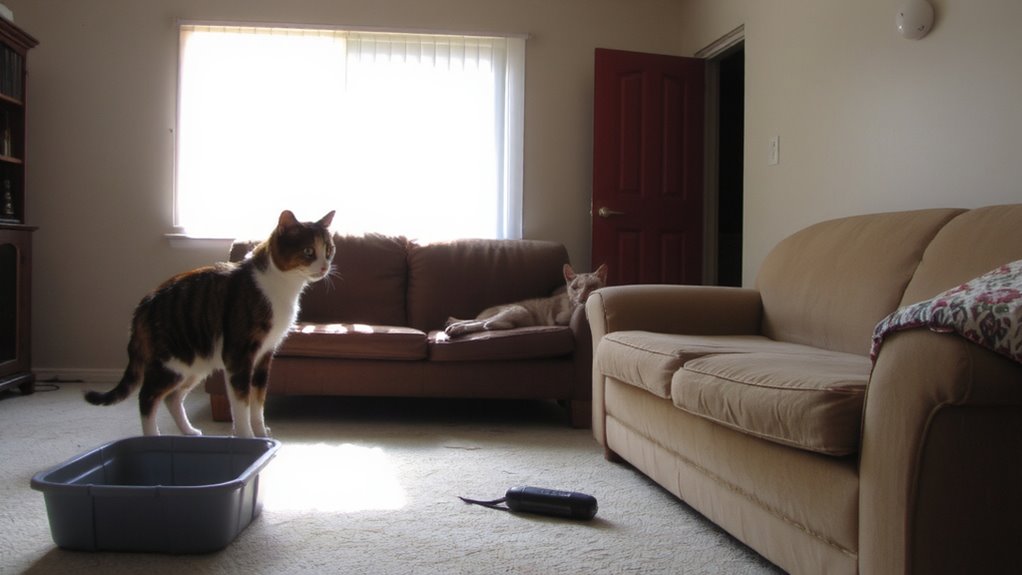
What lies behind your cat’s sudden urge to spray? It’s often stress from environmental cues you might overlook. Cats rely on scent trails to mark territory and establish security. Disruptions to these trails-like new pets, visitors, or cleaning products-can trigger spraying. Visual barriers, such as opaque window films or room dividers, help block sightlines to outdoor cats, reducing perceived threats. These tools interrupt aggressive visual stimuli, lowering anxiety. Scent trails must remain consistent; over-cleaning with strong detergents erases familiar markers, prompting re-spraying. Consider the data:
| Trigger | Emotional Impact | Mitigation |
|---|---|---|
| Outdoor cats visible | High stress | Install visual barriers |
| New household member | Anxiety | Gradual introductions |
| Scent disruption | Confusion | Avoid ammonia-based cleaners |
| Multi-cat tension | Fear | Separate resources |
| Unfamiliar noises | Alertness | Soundproofing, calm spaces |
Identify and modify these triggers with precision.
Fix Your Litter Boxes to Stop Cat Spraying
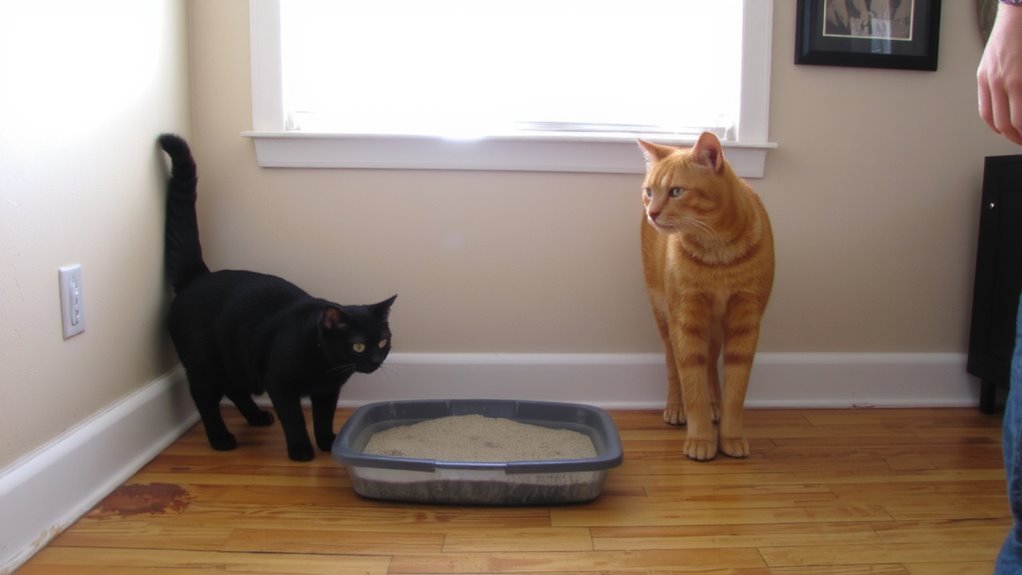
Your litter box setup may be triggering the spraying behavior you’re trying to eliminate. Incorrect litter box placement increases stress and territorial marking. Place boxes in quiet, low-traffic areas, away from noisy appliances. Avoid corners where escape feels blocked-position them in open spaces with multiple exit routes. The ideal number of litter boxes is one per cat, plus one additional. Distribute them across different rooms to reduce competition. Cleaning frequency directly impacts usage. Scoop waste at least once daily. Residual odors discourage use and promote spraying. Completely change litter and sanitize boxes every 2–3 weeks using mild, unscented soap. Avoid ammonia-based cleaners, which mimic urine and attract repeat marking. Use clumping litter 2–3 inches deep for best digging and odor control. Poor maintenance undermines even the best litter box placement. Consider upgrading to a self-cleaning litter box to maintain consistent cleanliness with less daily effort.
Use Calming Pheromones to Reduce Spraying
While stress often drives unwanted spraying, synthetic pheromones can help calm your cat by mimicking natural facial signals they use to mark safe spaces. Feline pheromone diffusers release a synthetic scent calming formula that replicates the feline facial pheromone F3. These diffusers typically cover up to 700 square feet and should be placed in rooms where spraying occurs. Each refill lasts about four weeks, with consistent diffusion ensuring stable environmental signaling. Plug the device into a wall outlet where airflow isn’t blocked. Avoid placing it behind furniture. Clinical studies show reduced spraying in 90% of households within four to six weeks. The pheromones don’t sedate; they reassure by reinforcing environmental familiarity. Use diffusers continuously during behavior modification. Replace refills as directed. Synthetic scent calming works best when combined with environmental and litter management strategies. For overall pet wellness, consider the importance of proper Best Dog Food for Catahoulas, as balanced nutrition supports behavioral health across species.
Create Safe Spaces for Each Cat to Prevent Stress
A designated safe space acts as a feline sanctuary, reducing territorial stress in multi-cat households. Each cat needs personal zones where they can retreat without disruption. These areas should include elevated platforms, ideally 3–5 feet high, allowing observation of surroundings while remaining hidden. Incorporate vertical scratching posts made of sisal, at least 30 inches tall, to support claw maintenance and territorial marking through scent glands in the paws. Position each safe zone in low-traffic areas, minimum 6 feet apart from other resting spots, to minimize conflict. Use separate feeding, sleeping, and litter stations to reinforce individual ownership. Include hiding boxes with single-entry openings measuring 7×7 inches to provide secure enclosures. These structured personal zones reduce anxiety and inhibit stress-induced behaviors. Consistent spatial division supports cohabitation by mimicking natural solitary feline tendencies in controlled environments. For homes with three or more cats, consider a litter box with high walls to prevent waste scatter and ensure easier maintenance across multiple users.
Help Cats Get Along to Stop Territorial Marking
Since cats are territorial by nature, getting them to coexist peacefully requires deliberate social integration strategies that reduce competition and reinforce positive associations. Scent swapping helps cats acclimate to one another’s odor, lowering stress. Rub a soft cloth on one cat’s cheek glands, then another’s, and exchange the bedding between them every 24 hours. This non-confrontational method reduces inter-cat aggression by up to 60% over two weeks. Gradually increase feeding proximity, starting with bowls 10 feet apart. Decrease the distance by 6 inches daily as tolerance improves. Maintain visual separation initially using partial barriers. By allowing cats to eat while sensing but not seeing each other, feeding proximity builds positive, low-stress associations. Pair these methods with consistent routines. Successful integration is marked by mutual grooming and relaxed body language. These techniques, grounded in feline ethology, directly reduce territorial marking by addressing its root cause: social conflict.
On a final note
You can effectively reduce spraying in multi-cat homes by addressing core stressors. Territorial spraying stems from anxiety, often triggered by competition or inadequate resources. Guarantee one litter box per cat plus one extra, scooped daily, placed in quiet, accessible locations. Use synthetic feline facial pheromones like Feliway Optimum, releasing 48 micrograms per hour over 30 days. Provide vertical space-shelving at 36–48 inches height-and separate feeding, resting, and elimination zones to reduce conflict and support cohabitation.