How to Support a Cat With Chronic Pancreatitis Through Diet and Medication
Feed your cat a low-fat diet with less than 10% fat on a dry matter basis to reduce pancreatic stress. Use highly digestible proteins like egg whites or hydrolyzed poultry, preferably in wet form for better hydration. Add powdered pancreatic enzymes (1/4–1/2 tsp per 10 lbs) to each meal to improve nutrient absorption. Control pain and inflammation with vet-prescribed buprenorphine or gabapentin. Avoid NSAIDs due to safety risks. Prednisolone may help if inflammation persists. You’ll also want to know how consistent monitoring supports long-term stability.
Notable Insights
- Feed a low-fat, highly digestible diet with less than 10% fat on a dry matter basis to reduce pancreatic stress.
- Use pancreatic enzyme supplements like powdered extracts containing lipase, dosed at 1/4 to 1/2 tsp per 10 lbs with each meal.
- Administer prescribed pain medications such as buprenorphine or gabapentin to manage discomfort and improve quality of life.
- Avoid NSAIDs; use prednisolone at veterinary-approved doses for inflammation control when appropriate.
- Monitor appetite, stool consistency, and behavior daily, and schedule vet checkups every 3–6 months for ongoing management.
How Chronic Pancreatitis Affects Your Cat
While chronic pancreatitis may not always show obvious symptoms right away, it can gradually impair your cat’s digestive system and overall health. The pancreas produces enzymes essential for digestion, and when inflamed, its output diminishes. This leads to maldigestion and malabsorption of nutrients. As a result, your cat is at risk for nutritional deficiencies, including fat-soluble vitamins and essential amino acids. Weight loss, poor coat condition, and steatorrhea may follow. Enzyme supplementation, such as powdered pancreatic extracts containing lipase, protease, and amylase, can support digestion. These supplements typically require dosing with every meal-usually 1/4 to 1/2 teaspoon per 10 pounds of body weight. Effectiveness varies, but many cats show improved stool consistency and weight stability within weeks. Proper dosing and consistent administration are critical. Left untreated, ongoing enzyme insufficiency worsens nutrient absorption, accelerating muscle wasting and metabolic imbalance.
Switch to a Low-Fat, Digestible Diet
Since fat intake directly influences pancreatic activity, reducing dietary fat is essential in managing chronic pancreatitis in cats. You should select a therapeutic diet with less than 10% fat content on a dry matter basis to minimize pancreatic stimulation. Low-fat diets help decrease enzyme production, reducing inflammation and discomfort. A digestible diet guarantees nutrients are absorbed efficiently without taxing the pancreas. Opt for highly digestible protein sources like egg whites or hydrolyzed poultry. Food texture also matters-canned or wet formulations are often easier to digest than kibble due to increased moisture and softer consistency. Moist diets support hydration and gentle transit through the digestive tract. Always shift gradually over 7–10 days to avoid gastrointestinal upset. Consult your veterinarian to choose a veterinary-specific formula, such as Hill’s i/d or Royal Canin Gastrointestinal Low Fat, proven effective in clinical studies. For commercial options specifically formulated for this condition, consider trying one of the best wet cat food for pancreatitis brands recommended by veterinarians.
Use Medications for Pain and Inflammation
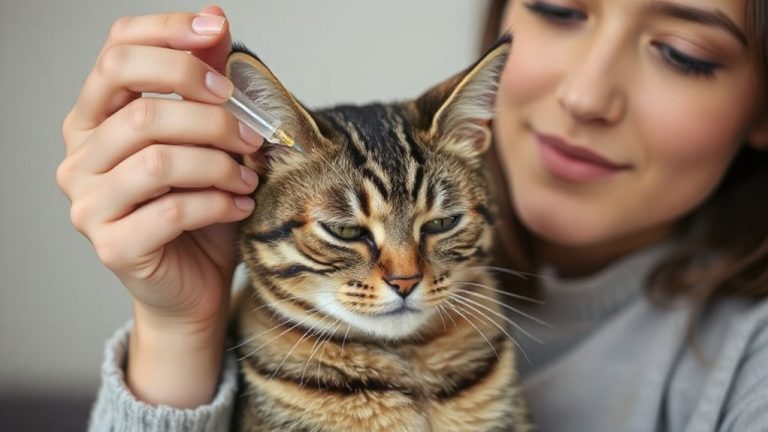
Pain and inflammation control is critical when managing chronic pancreatitis in cats. Effective pain management guarantees your cat remains comfortable and maintains quality of life. Veterinarians often prescribe opioids like buprenorphine for moderate to severe pain, administered at 0.01–0.03 mg/kg every 6–8 hours as needed. Non-opioid options such as gabapentin may also be used at 5–10 mg/kg every 12 hours. Anti-inflammatory treatment typically avoids NSAIDs due to renal and gastrointestinal risks. Instead, corticosteroids like prednisolone-administered at 0.5–1 mg/kg orally once daily-are favored for their potent anti-inflammatory effects. These drugs reduce pancreatic swelling and limit tissue damage. Always follow your vet’s dosing instructions precisely. Never adjust dosages or combine medications without professional guidance. Proper medication use supports healing and prevents complications.
Monitor Flare-Ups at Home
How do you know when your cat’s chronic pancreatitis is flaring up? Monitor appetite closely-sudden disinterest in food, even for a single meal, can signal inflammation. A healthy cat typically eats 2–3 small meals daily; deviations matter. Observe behavior for subtle shifts: lethargy, hiding, or reduced grooming often precede obvious symptoms. Your cat may adopt a hunched posture or avoid being touched near the abdomen due to discomfort. These behaviors correlate with pancreatic enzyme elevation. Track changes daily using a symptom log, noting food intake, activity levels, and stool consistency. Early detection improves outcomes. Flare-ups may last 24–72 hours without intervention. Use this window to adjust feeding-offer small portions of prescribed low-fat food. Do not administer medications without professional guidance. Recognizing patterns helps anticipate episodes. Consistent monitoring reduces emergency visits and supports stability over time.
Work With Your Vet for Long-Term Care
While managing chronic pancreatitis at home is essential, partnering with your veterinarian guarantees your cat receives scientifically sound, long-term care. Regular checkups every 3–6 months allow for monitoring liver enzymes, pancreatic lipase immunoreactivity (fPLI), and weight trends critical to disease management. Your vet may recommend abdominal ultrasounds annually to assess pancreatic inflammation. Fluid therapy, either subcutaneous or intravenous, corrects dehydration and supports renal function during flare-ups. Subcutaneous fluids, typically 10–15 ml/lb, can be administered at home under veterinary guidance. Long-term, your vet might prescribe low-dose pancreatic enzyme supplements or appetite stimulants like mirtazapine. Adjustments to diet-such as switching to a low-fat, highly digestible prescription formula-are based on clinical response and lab results. Consistent vet collaboration secures treatment aligns with your cat’s evolving condition.
On a final note
You must manage chronic pancreatitis in your cat with precision. A low-fat diet-containing less than 10% fat on a dry matter basis-reduces pancreatic strain. Digestible proteins like hydrolyzed chicken minimize digestive workload. Medications such as tramadol (2–4 mg/kg every 12 hours) control pain; prednisolone may reduce inflammation. Monitor appetite, vomiting, and activity daily. Routine vet visits guarantee treatment efficacy and adjust protocols based on clinical response.