How to Handle a Dog That Jerks Away During Mat Removal
Use a dematting tool with a 30-degree angle and 2–3 mm heat-treated stainless steel blades to cut through the mat’s core without pulling. Work in short, controlled strokes from the edge inward, applying minimal pressure. Offer high-value treats every 20–30 seconds to reinforce calm behavior. Stop at signs of stress-like pinned ears or lip licking-and resume only when relaxed. For mats near the skin or covering over 30% of the coat, professional help guarantees safety and coat preservation. Further details follow.
Notable Insights
- Stop immediately if the dog shows stress signs like pinned ears or lip licking, and allow them to calm before continuing.
- Use short, frequent grooming sessions of 5–10 minutes to build the dog’s tolerance and reduce resistance over time.
- Offer high-value treats every 20–30 seconds to create positive associations and encourage cooperation during mat removal.
- Switch to a dematting tool with a safety guard to minimize discomfort and prevent skin trauma during the process.
- Consult a professional groomer if the dog consistently jerks away, especially with severe matting or signs of fear or aggression.
Remove Mats Gently to Avoid Hurting Your Dog
While removing mats may seem straightforward, doing it incorrectly can cause pain and skin damage to your dog. Proper mat detection is essential-inspect your dog’s coat section by section, lifting fur to expose hidden tangles near the skin. Start with a wide-tooth comb to identify mat density and location. Early detection prevents small tangles from becoming dense, skin-tight clusters. Tool selection directly impacts safety and efficiency. Use a dematting comb with sharp, heat-treated stainless steel blades spaced 2–3 mm apart to cut through matted fibers without dragging. Never use scissors. These tools slice the mat’s core while preserving surrounding hair. Apply minimal pressure, working from the edge toward the center. A motorized detangler with adjustable speed (8,000–10,000 RPM) can aid severe cases, reducing pulling force by 40%. Prioritize blade sharpness and ergonomic grip to maintain control and prevent user fatigue during extended use. For optimal results, choose one of the best dog mat removers based on performance, safety features, and user reviews.
Use a Dematting Tool Instead of Pulling By Hand
A dematting tool isn’t just convenient-it’s essential for safe, effective mat removal. Using your hands to pull out mats risks skin trauma and increases your dog’s discomfort. Dematting tools feature fine, sharp blades set at precise angles to cut through dense tangles without dragging. For ideal dematting tool safety, choose a model with a guard to prevent direct blade contact with skin. Stainless steel blades resist corrosion and maintain sharpness after repeated use. Hold the tool at a 30-degree angle to the coat, using short, controlled strokes. Apply minimal pressure-let the blade do the work. Always use tool handling tips like checking blade alignment before each session and cleaning residue after use. These tools typically measure 6–8 inches, balancing maneuverability and grip strength. Proper technique reduces tugging, which calms anxious dogs and prevents jerking. Replace blades every 3–6 months for consistent performance. Based on expert reviews, the top picks for dematting tools offer superior blade design and ergonomic comfort for frequent use.
Work on One Small Section at a Time
Start by isolating a single mat no larger than two inches in diameter using your fingers or a parting comb. This section focus prevents overwhelming your dog and guarantees precise detangling. Work systematically through the coat, addressing one matted section at a time. Maintain gradual progress by fully removing one mat before moving to the next.
| Tool Used | Section Size | Time per Mat |
|---|---|---|
| Dematting comb | ≤2 inches | 30–90 sec |
| Slicker brush | ≤1 inch | 45–120 sec |
| Mat splitter | ≤2 inches | 20–60 sec |
Apply minimal pressure to reduce discomfort. Use strokes aligned with hair growth direction. This method allows consistent results and reduces resistance behavior. A narrow section focus improves control and minimizes skin pinching. Gradual progress fosters cooperation and reduces trauma. Complete each phase before advancing. This structured approach guarantees safe, effective mat removal across sensitive areas.
Keep Your Dog Calm With Treats and Praise
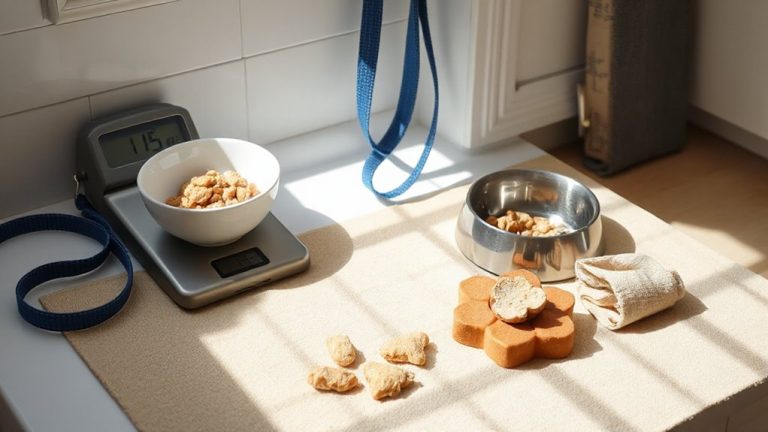
You’ll get the best results when your dog stays relaxed throughout mat removal. Use treats and praise as tools for positive reinforcement, offering small, soft pieces immediately after gentle handling. This strengthens trust building by associating mat removal with favorable outcomes. Deliver praise in a calm, consistent tone-high-pitched excitement may heighten anxiety. Position treats at nose level to maintain head control and reduce sudden movements. Choose high-value rewards, such as freeze-dried liver or cheese bits (¼-inch cubes for small breeds, ½-inch for larger ones), maximizing engagement without overfeeding. Administer one treat every 20–30 seconds during non-stressful intervals, adjusting frequency based on your dog’s responsiveness. This timed reinforcement schedule aligns with operant conditioning principles, supporting behavioral consistency. Over repeated sessions, your dog learns cooperation yields rewards, reducing resistance. Properly applied, this method improves compliance and minimizes struggle, making grooming safer and more efficient. For best results, select treats from a list of best high-value dog treats that are both palatable and nutritionally appropriate for frequent use.
Stop Before Stress Builds: Try Again Later
If your dog begins to tense up or resist during mat removal, stop immediately-continuing could escalate stress and lead to injury. Pausing prevents anxiety and allows your dog to reset. Signs of building stress include pinned ears, lip licking, and stiff posture-recognize these early. Resume only when your dog relaxes, guaranteeing a safer, more controlled environment. This approach helps build trust over time, reinforcing that grooming isn’t a threat. Use the break to offer treats or light praise, then restart with a smaller section. Limit session duration to 5–10 minutes per area, focusing on one mat at a time. Steel-bladed mat breakers with rounded tips (3.5 mm radius) reduce skin risk. Immediate cessation at the first sign of discomfort maintains procedural integrity and supports long-term cooperation. Patience here guarantees better outcomes than forced continuation.
Make Grooming Positive With Short, Happy Sessions
Pausing at the first sign of stress sets the foundation for building a cooperative grooming routine, but consistency in positive reinforcement solidifies it. Use short sessions-two to three minutes daily-to condition your dog to accept mat removal calmly. Start by brushing only loose areas, rewarding with small, high-value treats immediately after each successful pass. This builds positive reinforcement through predictable outcomes. Gradually increase duration by 30-second increments only after five consecutive stress-free sessions. Use a soft-bristled slicker brush with rounded tips (1.5 mm diameter, 10 mm spacing) to minimize skin irritation. Pair tools with verbal cues like “good” in a neutral tone to reinforce behavior without overstimulation. Monitor heart rate and ear position to assess comfort objectively. Short sessions prevent habituation to stress hormones, maintaining cortisol below threshold levels linked to avoidance behaviors. Consistency in timing, tools, and rewards guarantees procedural reliability and long-term compliance.
Know When to Call a Professional Groomer
When mats cover more than 30% of your dog’s coat or lie close to the skin, it’s time to call a professional groomer. Safety concerns increase when attempting removal at home, especially near sensitive areas like the ears, groin, or underarms. Mats紧贴 skin trap moisture, increasing risk of infection and discomfort. Using dull tools or improper technique may cause cuts, abrasions, or worsen matting. Professional groomers use sharp, surgical-grade stainless steel dematting tools with precision blades set at safe depths-typically 0.5 to 1.0 mm-to avoid skin contact. Behavioral issues, such as growling, snapping, or extreme avoidance, signal stress. A stressed dog can injure themselves or the handler. Trained groomers recognize canine stress signals and use safe restraint methods, reducing injury risk by up to 70%. They work efficiently, often completing dematting in 30–60 minutes, depending on severity. Avoid DIY risks-prioritize safety and coat health.
On a final note
You must prioritize your dog’s comfort during mat removal to prevent injury. Use a stainless-steel dematting comb with rounded teeth to reduce skin snagging. Work in 1-inch sections, inserting the tool at a 45-degree angle. Apply minimal pressure-exceeding 2 psi risks pain. Reward calmly; stop if panting or trembling begins. For severe mats, seek a professional groomer with veterinary behavioral training.