Essential Vitamin Supplementation Checklist for Vegetarian Cat Recipes
You must supplement taurine-50–200 mg daily depending on age-since cats can’t synthesize enough. Add synthetic vegan B12: 2.8 mcg/kg to prevent neurological damage. Include algae-based arachidonic acid at 20–40 mg/kg; plant oils don’t convert efficiently. Balance calcium and phosphorus 1:1 to 1.2:1 using calcium carbonate, targeting 1.2 g per 1,000 kcal. Always verify levels through lab testing. Missing any component risks heart, bone, or nerve failure. Proper formulation transforms impossibility into viability-if you’re committed to getting every detail right.
Notable Insights
- Taurine must be supplemented daily (50–200 mg depending on age) as cats cannot synthesize enough and deficiency causes heart and vision issues.
- Vitamin B12 (2.8 mcg/kg) is essential; use cyanocobalamin or methylcobalamin with lab-verified batch data to prevent neurological damage.
- Arachidonic acid (20–40 mg/kg) must be provided via algae-based or fermented sources due to poor conversion from plant linoleic acid.
- Calcium must be added (1.2 g/1,000 kcal) using carbonate or citrate to balance phosphorus and support bone health.
- Maintain a calcium-to-phosphorus ratio of 1:1 to 1.2:1 through laboratory-tested formulations to ensure proper mineral absorption and metabolism.
Why Cats Can’t Thrive on Vegetarian Diets Without Supplements
While you might think a vegetarian diet could meet your cat’s needs, it simply can’t support their biological requirements without heavy supplementation. Cats are obligate carnivores, meaning their bodies require nutrients only found in animal tissues. Plant-based proteins often have incomplete amino acid profiles, lacking taurine, arginine, and methionine essential for cardiac and metabolic health. Even with legumes or soy included, protein digestibility in plant sources averages 70–80%, compared to over 90% in animal proteins. Your cat’s digestive system isn’t designed to extract sufficient nutrients from cellulose-rich plants. Without carefully formulated supplements, deficiencies develop rapidly. Proper supplementation must address not just protein quantity but quality-ensuring ideal amino acid profiles and high protein digestibility. This isn’t a matter of preference. It’s a physiological necessity. Without it, long-term health deteriorates.
Taurine: Why Your Cat Needs It and How to Replace It
Taurine isn’t something your cat can do without-it’s a non-negotiable part of their diet. Cats can’t synthesize enough taurine on their own, so you must supply it. Without it, your cat risks taurine deficiency, which can lead to severe heart health issues like dilated cardiomyopathy. This amino acid also supports vision and reproductive function. Since plant-based ingredients don’t provide adequate taurine, supplementation is essential in vegetarian cat recipes. Top taurine supplements for cats are specifically formulated for optimal absorption and best taurine supplements for cats.
Use synthetic, vegan-sourced taurine to guarantee purity and bioavailability. Below are common supplementation guidelines:
| Life Stage | Daily Taurine Requirement (mg) | Primary Function |
|---|---|---|
| Adult | 50–100 | Heart health, retinal function |
| Kitten | 100–200 | Growth, neurological development |
| Senior | 75–150 | Prevent taurine deficiency, support metabolism |
Always verify levels through lab analysis of final product formulations.
Vitamin B12: Fixing the Biggest Gap in Vegan Cat Food
A deficiency in vitamin B12 can quietly undermine your cat’s health, even if the rest of their diet appears balanced. This water-soluble vitamin is essential for DNA synthesis and red blood cell formation. Cats cannot synthesize B12 in sufficient amounts and must obtain it through diet. In vegetarian and vegan formulations, B12 is absent unless supplemented. Without adequate intake, your cat risks irreversible neurological damage over time. It supports neurological health by maintaining myelin sheaths around nerves. It also provides metabolic support, aiding in fatty acid and amino acid metabolism. The recommended daily intake is 2.8 mcg per kg of body weight. Use cyanocobalamin or methylcobalamin supplements at verified concentrations. Products should list B12 levels on labels with batch-specific assay data. Absorption requires intrinsic factor in the ileum, so consistent daily dosing guarantees stable plasma levels.
Arachidonic Acid: Can Plant-Based Diets Provide Enough?
How can a plant-based diet meet your cat’s need for arachidonic acid (AA), an essential omega-6 fatty acid critical for inflammatory response, skin health, and reproductive function? Cats can’t efficiently convert plant sources like linoleic acid into AA. You’ll need to rely on synthetic alternatives designed for feline physiology. These lab-produced AA supplements are bioavailable and dosed at 20–40 mg per kg of body weight daily. Below compares options:
| Source Type | Arachidonic Acid Yield (mg/g) |
|---|---|
| Soybean oil (plant sources) | 0.1 (inefficient conversion) |
| Algae-based (synthetic alternatives) | 25.0 (direct supply) |
| Lab-cultured yeast | 30.0 (high-purity) |
| Microbial fermentation | 28.5 (consistent bioavailability) |
Synthetic alternatives bypass metabolic limitations. They guarantee precise, repeatable dosing. Plant sources alone won’t suffice. You must supplement.
Calcium and Phosphorus: Balancing Bones on Meat-Free Meals
Maintaining proper calcium and phosphorus levels is non-negotiable for skeletal integrity and neuromuscular function in cats. You must guarantee precise phosphorus ratios-ideally between 1:1 and 1.2:1 (calcium to phosphorus)-to prevent mineral imbalances. Deviations disrupt calcium absorption, increasing risks of bone demineralization or soft tissue calcification. Plant-based ingredients lack bioavailable calcium and often contain excess phosphorus, making supplementation essential. You’ll need a pure calcium carbonate or calcium citrate source, dosed to meet the National Research Council’s cat requirement of 1.2 g calcium per 1,000 kcal. Monitor formulation labels carefully; incorrect phosphorus ratios inhibit vitamin D metabolism, further impairing calcium absorption. Always calculate mineral content from all ingredients, including fortified plant proteins and grains. Failure to balance these minerals compromises structural development and nerve transmission. Use laboratory mineral analysis when possible to validate final diet composition.
Safe Supplement Forms and Dosing for Picky Cats
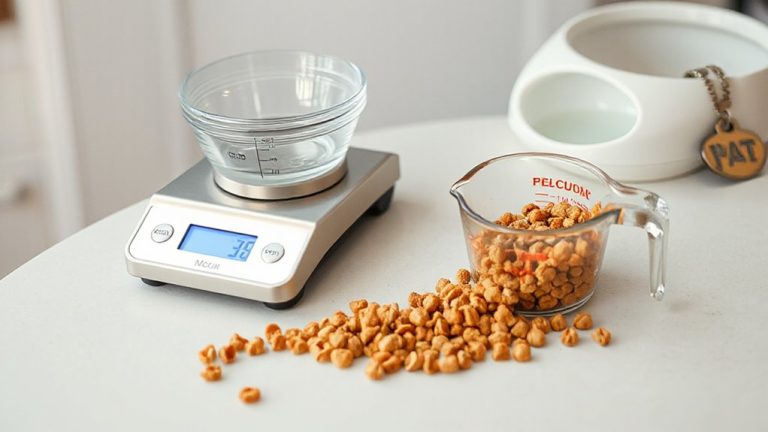
Getting the right supplements into your cat’s vegetarian diet means more than just picking a powder off the shelf-especially when picky eating habits are involved. Supplement palatability is critical; cats often reject strong or unfamiliar flavors. Opt for supplements formulated with natural flavorings like yeast or malt, which increase acceptance without compromising nutrition. Soft gels and chewable tablets offer better palatability than powders, particularly for finicky eaters. Dosing accuracy matters just as much-use supplements with clearly marked measurements and species-specific dosing. Liquid forms allow precise adjustments, often measured in milliliters per kilogram of body weight. Always follow manufacturer guidelines based on your cat’s weight and dietary needs. Combining high palatability with precise dosing guarantees your cat receives essential nutrients reliably. Never exceed recommended levels, as toxicity risks increase with improper supplementation. Consistency and accuracy support long-term health on a vegetarian diet.
On a final note
You must supplement vegetarian cat diets carefully to prevent deficiency. Taurine-essential for heart and vision-requires daily dosing of 50–200 mg/kg of food. Vitamin B12 (cobalamin), absent in plants, needs 2.5–10 mcg per kg of diet to support nerve and blood health. Arachidonic acid, typically from animal fats, can be sourced from fungal or algal oils at 0.01–0.05% of total fat. Calcium and phosphorus must be balanced at a 1.2:1 ratio to maintain bone integrity. Use only vet-approved, bioavailable forms.