Recognizing Subtle Body Language Cues That Indicate Chronic Stress in Indoor Cats
Your cat’s flattened ears pressed tightly back signal acute discomfort, not just momentary annoyance. Dilated pupils that stay black even in bright light indicate autonomic arousal linked to anxiety. Rapid, repetitive tail flicks under 2 cm suggest sustained frustration. Over-grooming for over 30 minutes daily can lead to hair loss. Avoidance and litter box neglect point to chronic stress-these signs together reveal more than behavior alone.
Notable Insights
- Flattened ears pressed tightly against the head signal acute or chronic stress, especially when sustained over time.
- Dilated pupils that remain large regardless of lighting may indicate anxiety or autonomic nervous system activation.
- Repetitive tail flicking with short, sharp movements reflects underlying frustration or prolonged arousal.
- Excessive grooming leading to symmetrical hair loss suggests chronic stress, not dermatological causes.
- Persistent hiding, avoidance, and litter box neglect are behavioral signs of long-term discomfort or environmental stress.
Flattened Ears? A Sign of Stress in Indoor Cats
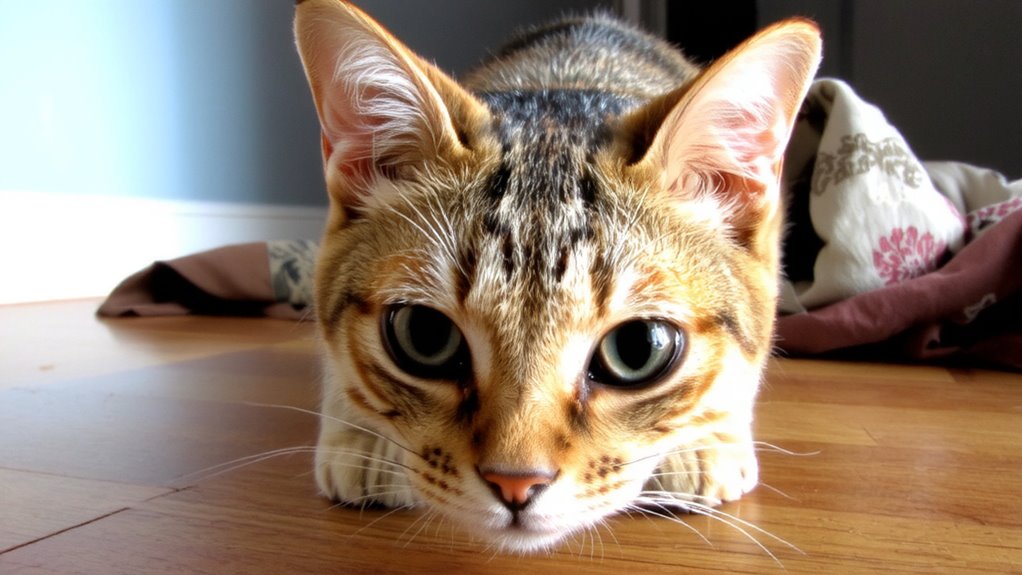
Why do your cat’s ears suddenly lie flat against its head? This ear positioning is a reliable stress signal. When your cat’s ears press tightly backward, it’s not just annoyance-this change is a clear physiological response. Flattened ears act as emotional indicators, often preceding aggression or withdrawal. The auricular muscles contract sharply, rotating the pinnae to reduce surface exposure, a behavior rooted in defensive physiology. Unlike relaxed forward positioning or slight sideways tilt, fully flattened ears indicate acute discomfort. You’ll notice rigidity in muscle tension around the scalp. These shifts occur rapidly, within seconds, during threatening stimuli. Though brief, sustained flattening suggests chronic unease. Observing this gesture-especially alongside retracted whiskers or low tail carriage-adds diagnostic value. Ear positioning alone isn’t definitive, but combined with context, it offers measurable insight into your cat’s internal state, making it an essential cue for early stress intervention in indoor environments.
Dilated Pupils? Your Cat Might Be Anxious
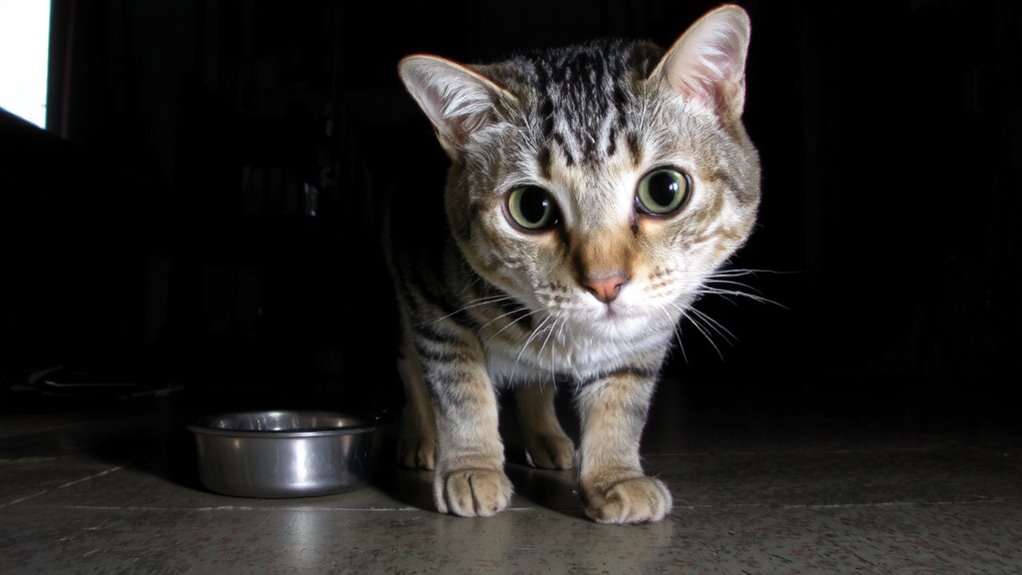
What could cause your cat’s pupils to suddenly expand, turning their eyes into black pools even in bright light? This pupil response often signals anxiety. Unlike normal dilation in low light, persistent dilation in well-lit environments indicates stress. Your cat’s autonomic nervous system triggers this reaction, similar to a fight-or-flight response in humans.
Recognizing such anxiety signals early improves welfare outcomes.
| Normal Pupil Size | Anxious Pupil Size |
|---|---|
| Slit-like in bright light | Fully dilated, near-black appearance |
| Responsive to light changes | Stays dilated despite brightness |
| Calm facial expression | Tense body, alert posture |
Chronic cases may require environmental adjustments or veterinary consultation. Always rule out medical causes like hypertension first. Regular monitoring helps differentiate emotional from pathological pupil response. Accurate observation guarantees timely intervention.
Is Your Cat Flicking Its Tail? What It Means
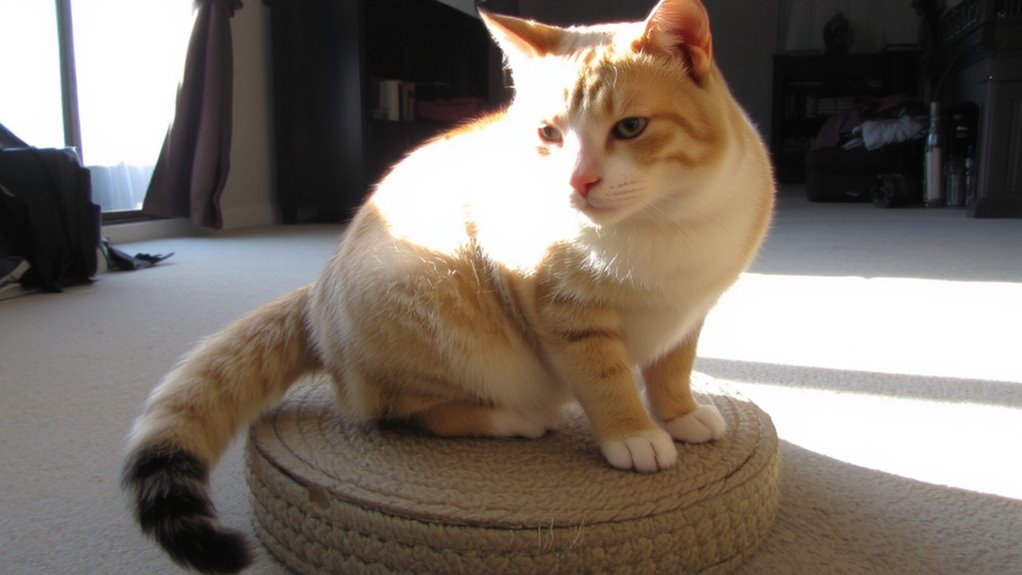
Ever noticed your cat’s tail twitching in rapid, controlled bursts while they’re staring at a bird through the window? That motion isn’t excitement-it’s tail flicking, a sign of subtle agitation. Unlike relaxed swishing, which involves slow, fluid movements, tail flicking occurs in sharp, repetitive motions under 2 cm in amplitude. It often accompanies focused attention or environmental frustration. The behavior stems from overactivation of the caudal tail muscles, triggered by sustained arousal. Chronic tail flicking-more than 5 episodes per day-may indicate persistent stress, not momentary annoyance. This cue is easily missed but highly predictive of internal tension, especially in indoor cats with limited outlets. Monitoring duration and frequency provides objective data. If tail flicking coincides with avoidance or hypervigilance, consider environmental enrichment or behavioral consultation. Recognizing this minute behavior allows early intervention before symptoms escalate.
Over-Grooming? It Could Be Chronic Stress
How often have you noticed your cat licking the same spot until the fur wears thin? This behavior may signal chronic stress. Compulsive licking is a displacement activity triggered by psychological distress, not just grooming. It often results in symmetrical fur thinning, particularly on the abdomen, legs, or flanks. Unlike normal grooming, which is brief and systematic, compulsive licking persists for minutes at a time, sometimes exceeding 30 minutes daily. Hair loss occurs because the cat pulls or breaks hairs rather than shedding them naturally. Dermatological exams typically reveal no infection or allergy, confirming a behavioral origin. Underlying stressors-such as environmental changes or social conflict-must be identified. Treatment involves environmental enrichment, routine stability, and, in severe cases, veterinarian-prescribed anxiolytics. Early intervention prevents skin damage and reduces long-term welfare impacts. Monitor frequency and location of licking to assess progression. Providing your cat with access to anxiety comfort items can help reduce compulsive behaviors by promoting a sense of security.
Avoiding You? That’s Not Just Moodiness
Why is your cat suddenly dodging your presence, slipping out of rooms when you enter, or refusing contact altogether? This isn’t just moodiness-it’s a behavioral red flag. Avoidance indicates chronic stress, often rooted in environmental instability or social conflict. Hiding behavior, such as retreating under furniture for hours or occupying isolated spaces, correlates with elevated cortisol levels. Cats under prolonged stress reduce affiliative behaviors, including rubbing, head-bunting, and lap-sitting. Reduced play-which includes diminished chasing, pouncing, or disinterest in interactive toys-disrupts natural predatory sequences essential for psychological well-being. These signs are measurable: studies show stressed cats exhibit up to 60% less object interaction and spend 3–5 times longer in concealment than baseline. Avoidance persists beyond 72 hours; acute shyness resolves faster. Document duration, frequency, and context of withdrawal. This data helps differentiate stress from illness. Early recognition enables intervention. Incorporating anxiety prevention products can support long-term behavioral improvement in stressed indoor cats.
Litter Box Problems? Think Stress, Not Spite
Could something as simple as a misplaced litter box be triggering your cat’s avoidance of elimination? Litter accidents often signal stress, not defiance. Cats prefer a quiet, accessible location-ideally 24–36 inches from noise sources and high-traffic areas. A stressed cat may avoid the box if it’s near loud appliances or in isolated spots requiring navigation through perceived threats. Territorial marking, distinct from litter box avoidance, involves spraying upright surfaces with visible urine deposits. This behavior increases with multi-cat household density-studies show a 40% rise in marking when more than three cats share space. Use unscented clumping litter, changed daily, in a box 1.5 times your cat’s length. Guarantee one box per cat, plus one extra. Medical issues must first be ruled out, but when those are excluded, environmental stressors are the likely culprit behind unwanted elimination. Enclosing the litter box in a well-ventilated litter box enclosure can reduce anxiety by providing privacy while containing odors.
On a final note
You can detect chronic stress in your indoor cat by observing subtle body language cues. Flattened ears indicate heightened arousal, often due to environmental stressors. Dilated pupils persisting beyond low light suggest sustained sympathetic nervous system activation. Tail flicking reflects irritability or anxiety. Over-grooming may lead to alopecia and is linked to elevated cortisol. Avoidance and litter box issues are behavioral biomarkers, not defiance. These signs require veterinary assessment.