Using Weighted Blankets Strategically Approved for Large Breeds to Ease Trembling
Large dogs often tremble due to anxiety, joint pain, or poor support, especially in breeds prone to musculoskeletal stress. Weighted blankets apply 10% to 12% of your dog’s body weight in deep, even pressure, calming the nervous system like a steady hand. High-density, non-toxic glass beads in internal baffles guarantee consistent weight distribution without shifting. Use durable, breathable 300D+ fabrics to withstand size and heat. Begin with short sessions to build comfort-results improve with proper fit and material safety. You’ll discover more about ideal sizing and safe usage patterns next.
Notable Insights
- Large dogs tremble due to anxiety, joint pain, or poor nutrition, which weighted blankets can help alleviate through deep pressure therapy.
- Choose a weighted blanket with 10% of your dog’s body weight, up to 20 lbs, for optimal calming effect without restricting movement.
- Use high-density, non-toxic fillers in baffled compartments to ensure even weight distribution and prevent clumping or ingestion risks.
- Introduce the blanket gradually over 7–10 days with 10–15 minute supervised sessions, rewarding calm behavior to build positive association.
- Select durable, breathable fabrics like 300D+ polyester with double-stitched seams to withstand large breed use and prevent overheating.
Why Big Dogs Shake and How Weighted Blankets Help
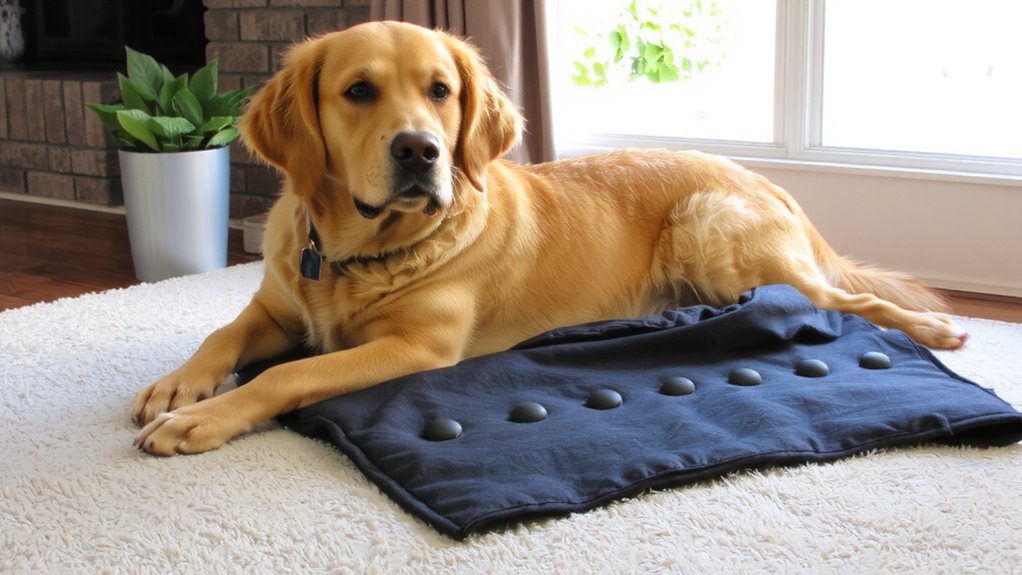
Why does your large dog tremble during storms or at night? Trembling often stems from anxiety, discomfort, or poor joint health. Large breeds are prone to musculoskeletal issues due to their size and weight. Inadequate dog nutrition can worsen inflammation and reduce mobility. Joint health depends on proper intake of glucosamine, chondroitin, and omega-3 fatty acids. Deficiencies increase stiffness and pain, especially in cooler, damp conditions common during storms. Anxiety amplifies physical discomfort, creating a cycle of stress and trembling. Weighted blankets apply gentle, evenly distributed pressure-typically 10% of the dog’s body weight-to promote proprioceptive feedback. This mimics therapeutic touch, stabilizing the nervous system. The deep pressure response reduces cortisol levels. It does not treat joint disease, but complements sound nutrition and vet care. Use only with healthy dogs over 50 lbs. Blankets range from 8 to 15 lbs, with non-toxic, washable fills. Proper fit prevents overheating.
How Weighted Blankets Calm Anxiety and Storm Fears
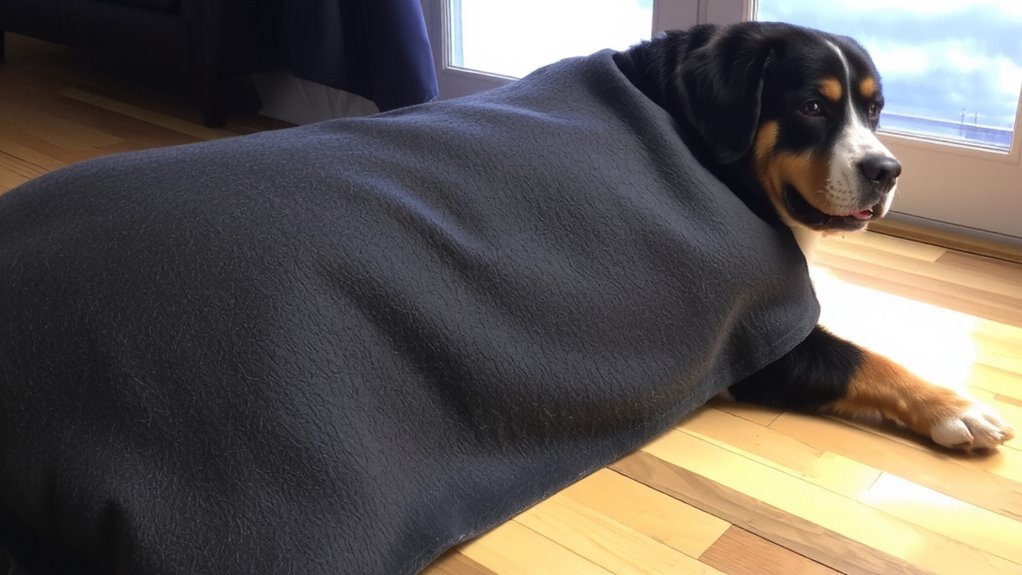
Though loud noises and environmental changes can overwhelm your large dog’s senses, weighted blankets offer a non-invasive way to reduce anxiety during storms and stressful events. These blankets apply consistent deep pressure across your dog’s body, mimicking the calming effect of being held or swaddled. Deep pressure stimulates the parasympathetic nervous system, slowing heart rate and lowering cortisol levels. This sensory input helps regulate your dog’s response to fear triggers. Most therapeutic blankets for large breeds weigh between 10% and 12% of the dog’s body weight-typically 15 to 30 pounds-to guarantee effective yet safe application. High-density glass beads or plastic pellets provide even weight distribution without shifting. Breathable, machine-washable covers maintain hygiene. The fabric’s gentle compression creates a grounding sensation, improving focus and reducing hyperarousal. Unlike sedatives, this mechanical intervention requires no recovery time. Properly designed blankets allow free movement while delivering targeted sensory input.
Get Your Large Dog Used to a Weighted Blanket Safely
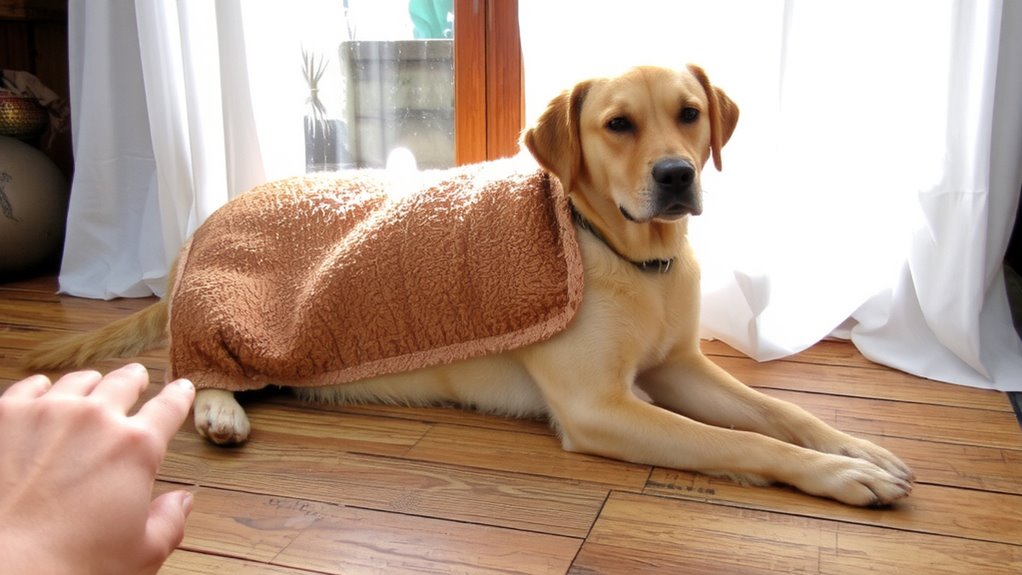
Introducing a weighted blanket to your large dog requires a structured approach to guarantee safety and acceptance. Begin with a brief introduction period of 10–15 minutes daily, gradually increasing duration over 7–10 days. Use positive reinforcement by offering treats and praise when your dog interacts calmly. Place the blanket loosely over the back, ensuring it covers no more than 10% of your dog’s body weight to avoid strain. Monitor respiration and movement; remove the blanket immediately if distress occurs. Never secure it in place or allow unsupervised use during the initial phase. Position it during low-stress moments, not panic events. This controlled exposure builds trust. Maintain consistency in timing and location to reinforce routine. Over time, your dog will associate the blanket with calmness through repeated positive experiences.
Must-Have Features in Large-Dog Weighted Blankets
A well-designed weighted blanket for large dogs should prioritize safety, durability, and proper weight distribution. You need even weight dispersion-typically 10% of your dog’s body weight-for therapeutic pressure without restriction. Look for blankets with internal baffling to prevent pellet shifting, ensuring consistent coverage. Temperature control is critical; choose breathable, moisture-wicking fabrics like bamboo or certified cooling polyester to prevent overheating during extended use. These materials maintain thermal neutrality, especially in dogs prone to anxiety-induced rises in body heat. Fabric durability hinges on double-stitched seams and high-denier outer layers (at least 300D) to resist tearing from claws or frequent washing. Reinforced edges reduce fraying. Non-toxic, hypoallergenic fillers such as glass or plastic pellets must be fully encapsulated to eliminate ingestion risks. Size matters-blankets should cover the torso without impeding movement. For optimal results, consider models included in expert-vetted top anxiety blanket picks.
Choose the Right Weighted Blanket for Your Big Dog
You’ve seen what features define a well-constructed weighted blanket for large dogs, from evenly distributed fill to durable, high-denier fabrics. Now, choose the right blanket by prioritizing material durability and size accuracy. High-denier nylon or polyester resists tearing and withstands repeated washing-critical for dogs over 70 pounds. Reinforced stitching along seams prevents fraying under sustained pressure. Size accuracy ensures full torso coverage; measure your dog from base of neck to tail and add 2 inches. A properly sized blanket typically weighs 10% of your dog’s body weight, up to 20 pounds. Blankets too heavy restrict movement; too light reduce deep-pressure stimulation effectiveness. Look for evenly sewn compartments to prevent fill shifting. Each chamber should hold 1–2 pounds of glass or plastic pellets. Accurate sizing and rugged materials guarantee consistent therapeutic pressure, improving comfort and reducing trembling episodes efficiently.
On a final note
You can reduce your large dog’s trembling with a properly weighted blanket. Choose one that weighs 10% of your dog’s body mass, plus or minus one pound. Durable, machine-washable fabrics like 300-thread-count cotton-polyester blends guarantee longevity. Evenly distributed glass beads prevent shifting. Pressure is distributed uniformly across the torso, mimicking deep-touch stimulation. Always supervise initial use. This non-invasive tool complements behavioral training and veterinary care.