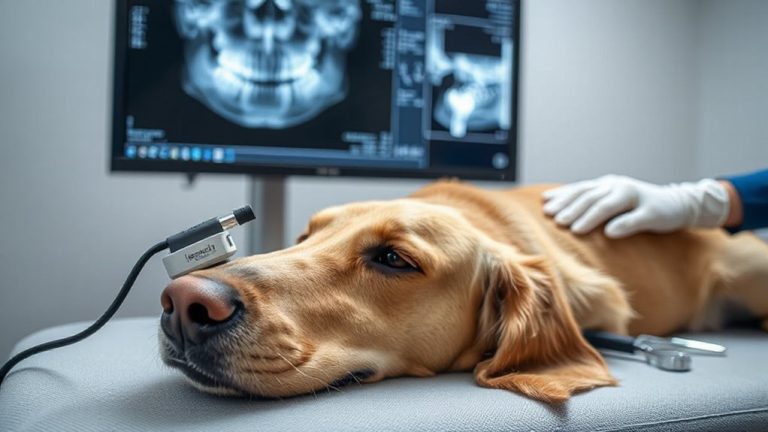
When to Schedule an Extra Veterinary Checkup for Your Diabetic Pet
Schedule an extra vet checkup if your pet’s blood glucose drops below 40 mg/dL or rises above 400 mg/dL, as both indicate life-threatening emergencies. Watch for seizures, weakness, or disorientation with low glucose, and signs of diabetic ketoacidosis like vomiting or lethargy with high levels. Persistent symptoms over 12 hours, recurring infections, or lack of appetite also demand prompt evaluation. Glucose curves outside the normal range-100–250 mg/dL in dogs, 150–300 mg/dL in cats-for more than 48 hours signal the need for professional reassessment. Immediate adjustments may be required to prevent organ damage or insulin resistance. Recognizing these indicators early improves outcomes markedly. Further details reveal how subtle changes can guide timely interventions.
Notable Insights
- Schedule an extra checkup if your pet shows signs of low blood sugar like seizures, trembling, or disorientation.
- Visit the vet immediately if blood glucose levels exceed 400 mg/dL or remain above 300 mg/dL in dogs or 350 mg/dL in cats.
- Seek veterinary care if your pet loses appetite, exhibits unusual fatigue, or shows weakness lasting more than 12 hours.
- Arrange a checkup if glucose levels remain outside the target range for over 48 hours despite consistent insulin dosing.
- Contact your vet promptly if your diabetic pet develops recurrent infections or illness affecting appetite or hydration.
Is Your Diabetic Pet in Danger? Emergency Signs
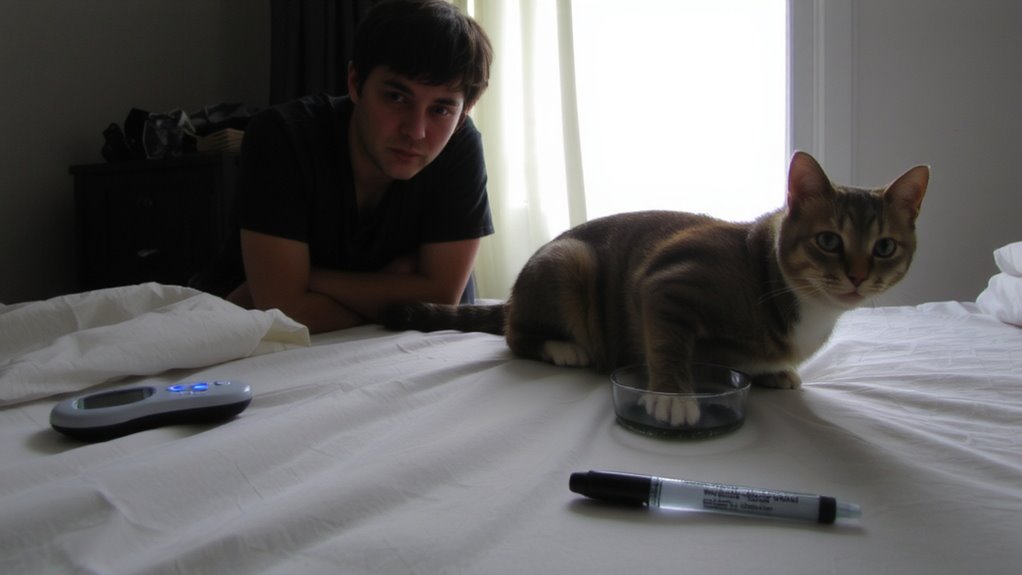
Could your diabetic pet be heading for a crisis without you realizing it? Diabetic shock occurs when blood glucose drops below 40 mg/dL, triggering seizures, weakness, or collapse. You might notice trembling, disorientation, or unresponsiveness-signs demanding immediate intervention. Left untreated, prolonged hypoglycemia can lead to brain dysfunction or coma. Concurrently, persistently high glucose above 400 mg/dL risks diabetic ketoacidosis, a precursor to organ failure. Elevated liver enzymes, increased BUN, and creatinine levels indicate developing renal or hepatic compromise. Ketones in urine confirm metabolic decompensation. Organ failure follows when cellular metabolism severely deranges, impairing essential functions. Emergency care requires IV dextrose for shock or insulin regulation for hyperglycemia. Blood work, electrolyte panels, and urinalysis are critical diagnostics. Rapid response prevents irreversible damage. Don’t wait-act at the first sign of instability.
Drinking More or Losing Weight? Early Red Flags
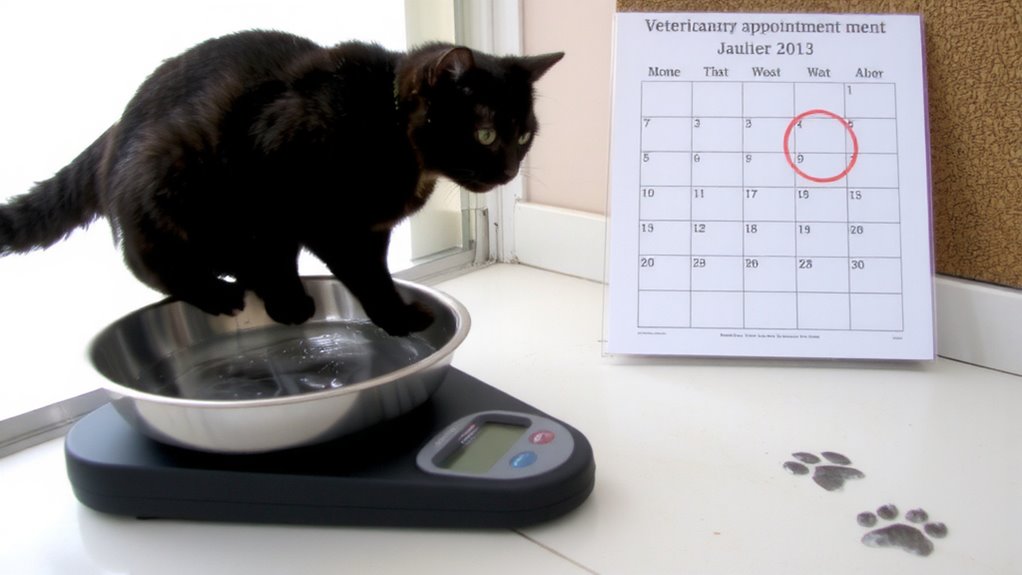
Why might your diabetic pet seem thirsty all the time? Increased thirst is a common early sign of unregulated diabetes. Your pet drinks more because excess glucose in the bloodstream pulls fluid from tissues, leading to dehydration. This triggers constant thirst. Alongside this, you’ll likely notice excessive urination-your pet’s kidneys work overtime to excrete glucose, pulling water with it. These two symptoms are linked: increased thirst compensates for fluid loss from excessive urination. Weight loss often follows despite normal or increased eating, as the body breaks down fat and muscle for energy when cells can’t absorb glucose. Blood glucose levels may rise above 300 mg/dL in dogs or 350 mg/dL in cats. Catching these red flags early improves treatment outcomes. Schedule a vet visit promptly to adjust insulin therapy and prevent complications.
No Appetite or Lethargic? Diabetes May Be Flaring
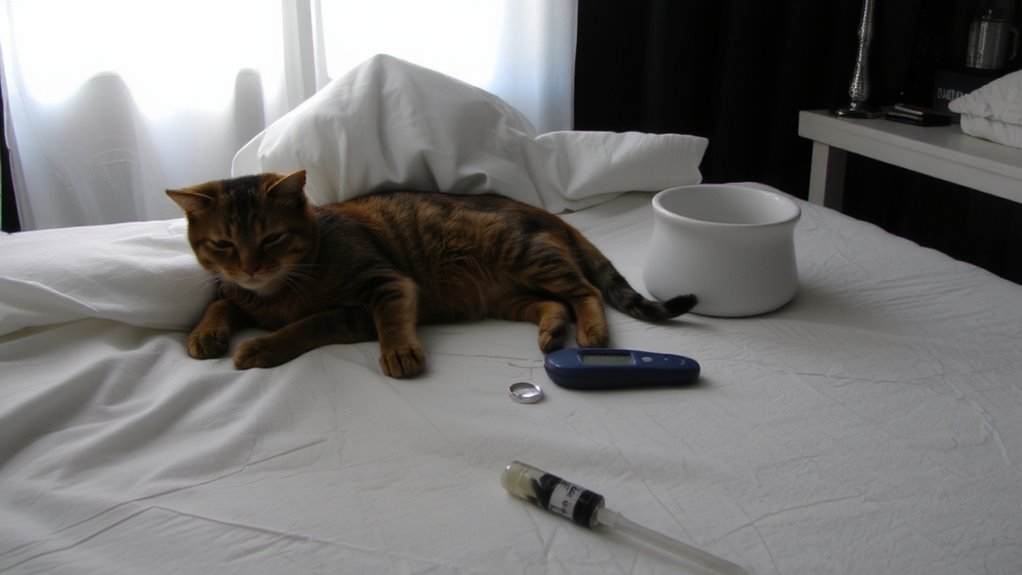
How can you tell when your diabetic pet’s condition is worsening? Loss of appetite and unusual fatigue are key warning signs. If your pet skips meals or shows disinterest in food, it may signal blood glucose instability. Unusual fatigue-such as reluctance to move or prolonged sleeping-can indicate metabolic imbalance. These symptoms often precede dangerous complications like diabetic ketoacidosis. Blood sugar fluctuations impair cellular energy production, much like a car sputtering without fuel. Monitor glucose levels every 2–4 hours if symptoms appear. Normal ranges are 100–250 mg/dL in dogs and 150–300 mg/dL in cats. Persistent loss of appetite or unusual fatigue lasting over 12 hours warrants immediate veterinary evaluation. Early intervention prevents hospitalization. Do not adjust insulin dosage without professional guidance. Schedule an urgent checkup to assess hydration, ketones, and overall metabolic status.
Insulin Not Working? Signs Your Pet Needs Adjustment
A sudden spike in blood glucose despite consistent insulin dosing often signals that your pet’s treatment plan needs adjustment. Insulin resistance can develop due to underlying conditions like pancreatitis or hormonal imbalances, reducing insulin effectiveness. You might notice increased thirst, frequent urination, or unexplained weight loss even with proper feeding and injection routines. Dosage errors, including incorrect measurement or improper injection technique, can also mimic resistance. Always verify insulin type, concentration (U-40 vs. U-100), and syringe compatibility. Store insulin properly-refrigerated but not frozen-and inspect for clumping. If glucose curves remain outside the target range (typically 100–250 mg/dL in dogs and 150–300 mg/dL in cats) for more than 48 hours, consult your vet. Adjustments require veterinary guidance to avoid hypoglycemia or prolonged hyperglycemia.
Recurring Infections? How Diabetes Weakens Immunity
Could it be more than just bad luck when your diabetic pet keeps getting infections? High blood glucose impairs white blood cell function, weakening your pet’s immune response. This makes recurring urinary tract and skin infections more likely. Glucose in the urine promotes bacterial growth, increasing urinary tract infection risk. Skin infections occur because poor circulation and elevated tissue glucose create ideal environments for pathogens. Even minor wounds or scratches can become infected quickly. Chronic hyperglycemia also disrupts the skin barrier and alters normal flora. You might notice frequent licking, odor, redness, or discharge-especially around the genital area or on the skin. These are not isolated incidents but signs of systemic immune suppression. Each infection places added stress on glucose regulation. Left unchecked, they can lead to more severe complications. Monitoring for these infections is critical. Early detection improves outcomes.
How Often Should Diabetic Pets See the Vet?
Regular veterinary visits become even more important when your diabetic pet is facing repeated infections. You should schedule vet visits every 3 to 4 weeks initially to stabilize blood sugar. Once regulated, monitoring frequency typically drops to every 3 months. However, any illness or change in appetite requires immediate re-evaluation. Blood sugar curves, measured every 2–4 hours over 12 hours, guide insulin dosage adjustments. Your vet may adjust insulin dosage by 0.5 to 1 unit per adjustment, never exceeding 2 units without direct supervision. Consistent monitoring frequency guarantees early detection of hypoglycemia or insulin resistance. At-home glucose testing complements professional vet visits but doesn’t replace them. Annual blood panels and urine cultures are essential. Think of insulin management like calibrating a sensitive instrument-small changes have large effects. Maintaining accurate records of blood sugar and insulin dosage improves long-term outcomes.
On a final note
You must act quickly if your diabetic pet shows warning signs. Increased thirst and unexplained weight loss suggest poor glucose control. Lethargy or appetite loss may signal hypoglycemia or hyperglycemia. If insulin fails to regulate blood sugar-persistent levels above 300 mg/dL despite treatment-adjustment is critical. Recurring infections indicate weakened immunity. Schedule immediate vet visits when these occur. Regular monitoring, every 3–6 months, guarantees effective management.