How to Use Hydration-Boosting Smoothies for Pets
You can use hydration-boosting smoothies to increase your pet’s fluid intake, especially if they’re prone to dehydration. Start with safe, pet-approved ingredients like unsweetened coconut water (30–50 ml per 5 kg) or bone broth. Add moisture-rich foods such as pumpkin or banana, and always pre-soak chia seeds. Blend to a 2–3 cps viscosity for easy consumption. Offer dogs 1/4 cup per 10 lbs up to 1.5 cups daily; give cats 1–2 tablespoons, 2–3 times weekly. Monitor stool and urine to adjust frequency. Proper portioning guarantees benefits without digestive upset-further details on species-specific formulations follow.
Notable Insights
- Choose pet-safe ingredients like unsweetened coconut water, bone broth, or plain yogurt as a hydration base.
- Follow species-specific recipes with appropriate portion sizes for dogs, cats, or small mammals.
- Limit coconut water to 30–50 ml per 5 kg body weight and chia seeds to ½ tsp per 10 kg.
- Freeze smoothies in silicone molds or ice trays for convenient, portion-controlled treats.
- Serve 1–2 tablespoons daily for cats, 1/4 cup per 10 lbs for dogs, up to 3–5 times weekly.
Why Your Pet Needs Hydration Smoothies
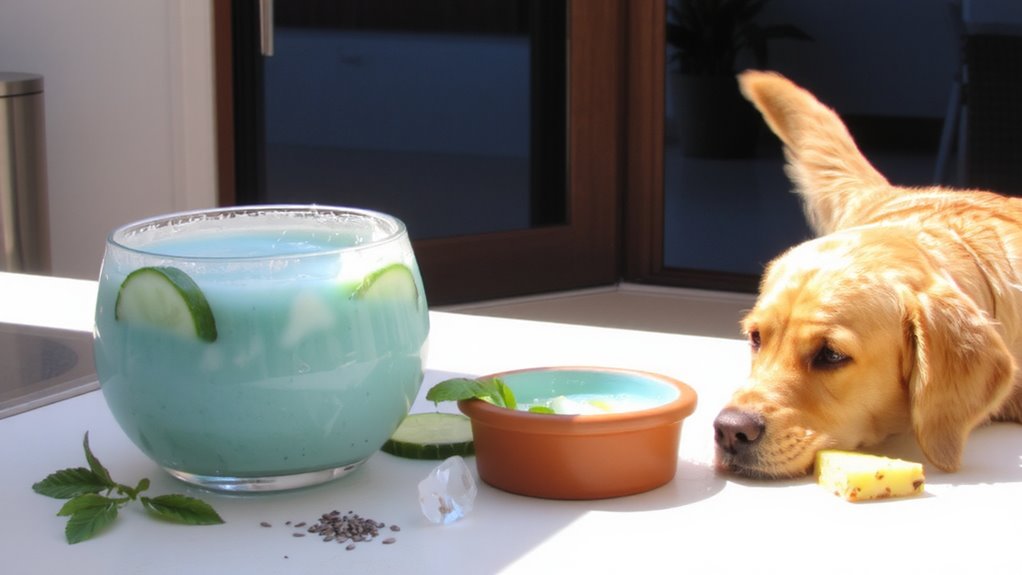
Why is your pet not getting enough water? Many pets, especially cats and older animals, don’t drink sufficient water daily, increasing risks of dehydration. Proper hydration supports essential functions like electrolyte balance and digestive health. Electrolyte balance regulates nerve and muscle function by maintaining correct levels of sodium, potassium, and chloride. Even mild imbalances can impair cellular function. Digestive health relies on consistent fluid intake to move food through the gastrointestinal tract and prevent constipation. Hydration smoothies provide a palatable way to increase fluid consumption. They deliver water in a form pets are more likely to accept, especially if they’re picky drinkers. These smoothies aren’t just water-they contain moisture-rich ingredients that enhance absorption. Including them in your pet’s routine helps maintain ideal hydration levels. Consistent use supports kidney function, nutrient transport, and overall metabolic efficiency.
Safe Ingredients for Pet Hydration Smoothies
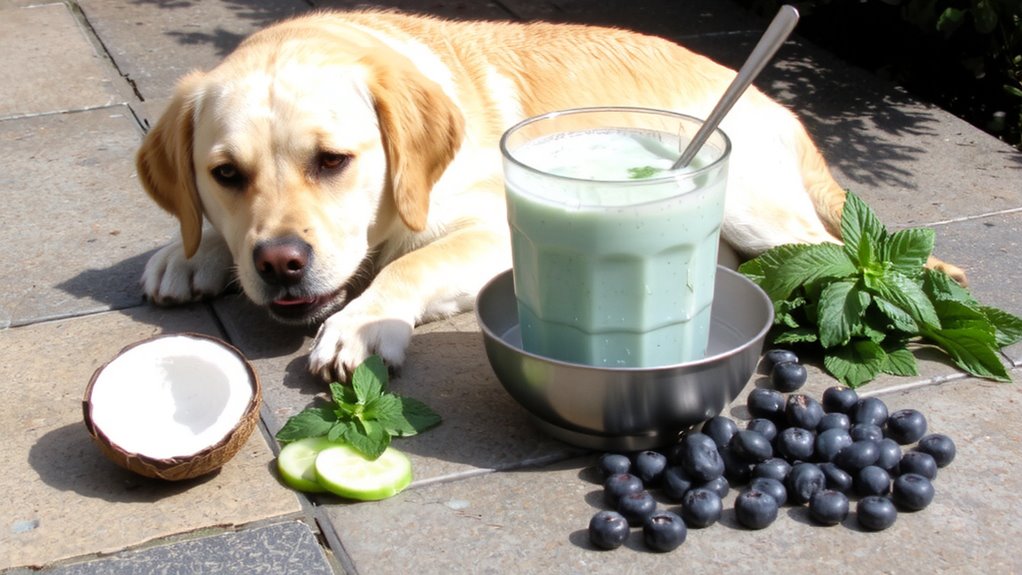
Hydration starts with the right ingredients. You must select components that support fluid balance without causing digestive distress. Coconut water benefits include natural electrolytes like potassium and magnesium, which aid cellular hydration-choose unsweetened, additive-free versions to avoid xylitol toxicity. Limit coconut water to 30–50 ml per 5 kg of body weight to prevent excessive potassium intake. Chia seed safety is proven when seeds are pre-soaked and used in moderation; they absorb up to 10 times their weight in water, forming a gel that slows hydration release. Use no more than ½ teaspoon per 10 kg of body weight, ensuring seeds are fully hydrated to prevent intestinal blockage. Avoid toxic additives like caffeine, grapes, or artificial sweeteners. Stick to vet-approved produce such as cucumber or watermelon (seedless). Each ingredient must be introduced gradually, monitoring for allergic reactions or gastrointestinal upset.
How to Make a Hydrating Smoothie for Pets
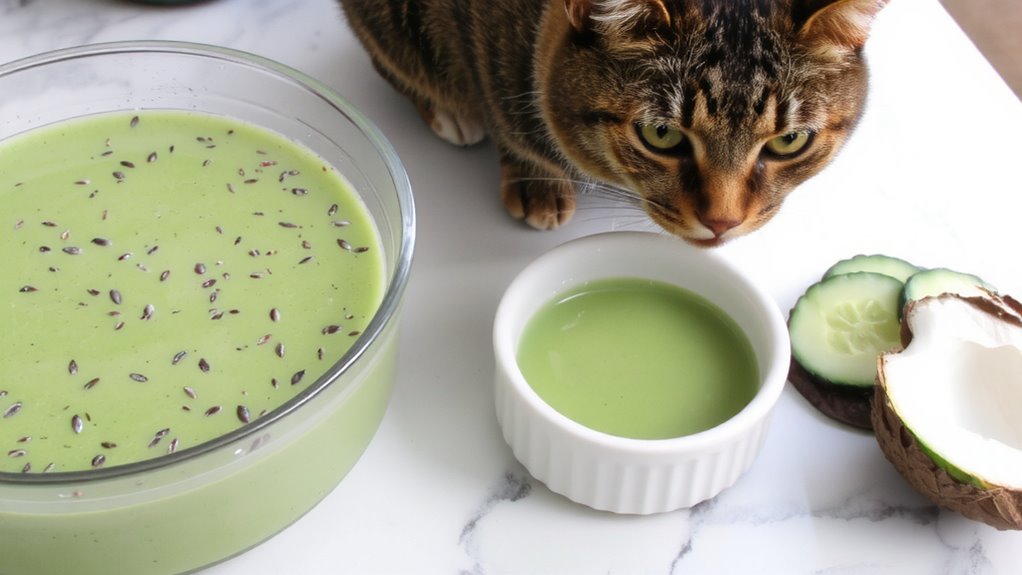
When preparing a hydrating smoothie for your pet, start by gathering clean, pet-safe ingredients in precise proportions to guarantee both safety and effectiveness. Use a high-quality blender with stainless steel blades for consistent texture and reliable blending performance. Guarantee blender safety by securing the lid firmly before operation and never submerging the base in water. Operate at low to medium speeds initially, gradually increasing to avoid spills or motor strain. Blend for 45–60 seconds until smooth, achieving a viscosity that flows easily but retains thickness. Pour the mixture into silicone molds or ice trays to create customizable frozen treats. Freeze for at least 3 hours at -18°C (0°F) to guarantee solidification. Thaw for 5–10 minutes before serving to reduce choking risk. This method maintains nutrient integrity and hydration potential, delivering a controlled, palatable option for maintaining your pet’s fluid intake under veterinary dietary guidelines.
Hydrating Smoothie Recipes for Dogs and Cats
You’ve learned how to properly blend and freeze hydr在玩家中 smoothies for pets using safe equipment and precise timing, ensuring nutritional integrity and best texture. Now, apply that knowledge to specific recipes tailored to dogs and cats. Pet flavor preferences differ markedly-dogs enjoy bold fruit combinations, while cats prefer mild, meat-infused blends. Always use pet-safe ingredients and avoid toxic substances like grapes or xylitol.
| Pet Type | Base Ingredient | Fruit Combination |
|---|---|---|
| Dog | Coconut water (60 ml) | Banana + blueberry (30 g) |
| Cat | Bone broth (50 ml) | Pumpkin + apple (20 g) |
| Both | Plain yogurt (40 ml) | Strawberry + mango (25 g) |
Adjust viscosity with filtered water to achieve a pourable consistency of 2–3 cps. Serve immediately or freeze in silicone molds at −18°C for later use. These formulations support hydration without compromising digestive tolerance.
Serving Sizes by Pet Type
Since proper portioning directly influences hydration efficacy and digestive health, serving sizes must align with species-specific metabolic demands and body weight. For dogs, offer 1/4 cup per 10 lbs of body weight daily-larger breeds shouldn’t exceed 1.5 cups total. Cats need just 1–2 tablespoons daily due to smaller gastrointestinal capacity. Practice strict portion control to prevent dilution of essential nutrients in their primary diet. Overfeeding smoothies may disrupt electrolyte balance. Follow frequency guidelines: administer smoothies 3–5 times weekly for dogs, 2–3 times for cats, spaced to avoid gastrointestinal upset. Frequency and volume should reflect activity level and ambient temperature. Small mammals like rabbits or guinea pigs tolerate only 1 teaspoon per 2 lbs body weight, twice weekly. Always introduce gradually. Use a calibrated measuring cup. Monitor urine concentration and stool consistency to assess tolerance. Adjust portions if diarrhea or reduced kibble intake occurs.
When to Avoid Hydration Smoothies
Why risk complications when prevention is straightforward? Avoid hydration smoothies if your pet has known medical conditions that affect fluid balance, such as kidney disease, heart failure, or diabetes. These conditions alter electrolyte levels and may worsen with unregulated fluid intake. Introducing smoothies can disrupt carefully managed hydration protocols. Additionally, consider medication interactions-ingredients like potassium-rich bananas or herbal additives may interfere with diuretics, insulin, or blood pressure drugs. Even natural components can amplify or inhibit drug effects. For pets on prescription diets or chronic medications, consult your veterinarian before introducing any supplement. Smoothies containing xylitol, dairy, or high sugar levels pose further risks. When in doubt, stick to fresh water and vet-approved hydration solutions. Prevention beats treatment-especially when incorrect use leads to hospitalization. Monitor your pet’s response closely if approved for use.
On a final note
Hydration smoothies support your pet’s fluid balance and kidney function. Use only vet-approved, non-toxic ingredients like plain yogurt, pumpkin puree, and low-sodium broth. For dogs, serve up to 1/4 cup per 20 lbs body weight; cats should have no more than 1 tablespoon. Avoid smoothies if your pet has diabetes or dairy sensitivity. Always introduce new foods gradually and monitor for digestive changes. Smoothies are supplements-not replacements-for fresh water.