Addressing Sudden Litter Box Avoidance in Senior Cats
If your senior cat suddenly avoids the litter box, start by ruling out medical issues like urinary infections or arthritis. Urinalysis and radiographs can diagnose infections or joint degeneration. Look for stiff movements, reduced grooming, or difficulty jumping. Provide low-entry boxes-under 4 inches high-and use fine-grained, unscented clumping litter. Place large, open-top boxes on each floor, and consider non-slip mats. Cognitive dysfunction may also contribute; over 80% of cats over 16 show some decline. Further evaluation reveals more subtle signs and targeted solutions.
Notable Insights
- Sudden litter box avoidance in senior cats often signals underlying medical issues like urinary infections or arthritis.
- Rule out urinary tract infections with a urinalysis, as pain or urgency can lead to inappropriate elimination.
- Arthritis may limit mobility, making standard litter boxes difficult to access due to high entry sides.
- Provide low-entry, large litter boxes on every floor to accommodate joint pain and reduce physical strain.
- Cognitive dysfunction, common in older cats, can cause disorientation and litter box confusion despite proper setup.
Rule Out Medical Issues First
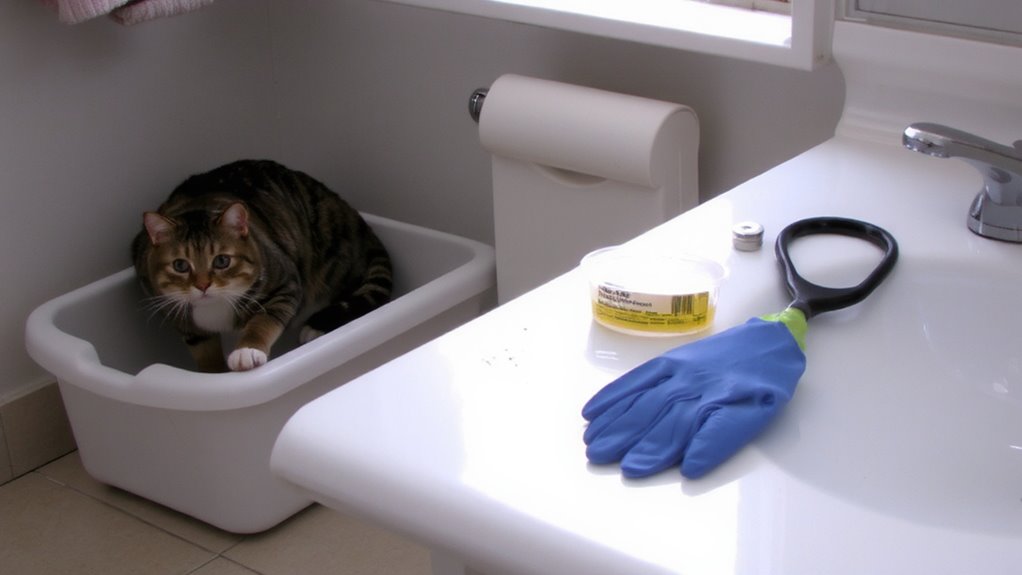
While aging cats may show subtle changes in behavior, it’s critical to first consider underlying health problems before assuming the cause is behavioral. Urinary infections are a common medical cause of litter box avoidance and can lead to pain or urgency during urination. These infections often result in frequent, small voids or accidents outside the box. A urinalysis, including specific gravity and culture, confirms diagnosis and guides antibiotic selection. Joint inflammation, such as osteoarthritis, restricts mobility, making it painful for cats to climb into high-sided boxes. Radiographs and physical exams help assess joint degeneration. Affected cats may avoid boxes due to difficulty accessing them, not defiance. Low-entry litter boxes (under 4 inches high) reduce strain. Eliminating medical causes like urinary infections and joint inflammation guarantees behavioral solutions aren’t misapplied. Always consult a veterinarian for diagnostic testing before adjusting litter box placement or type.
Spot Pain Signs in Senior Cats
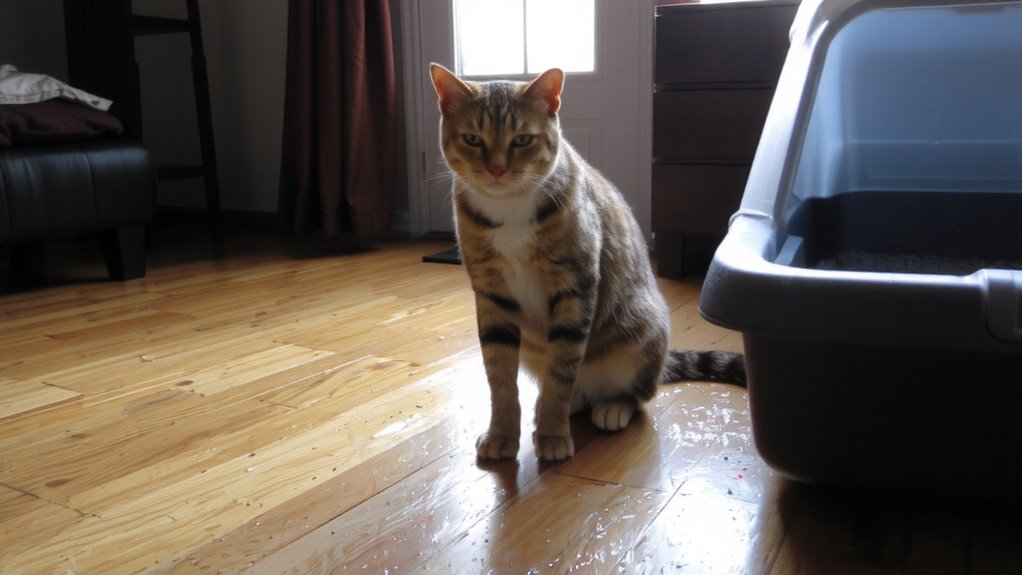
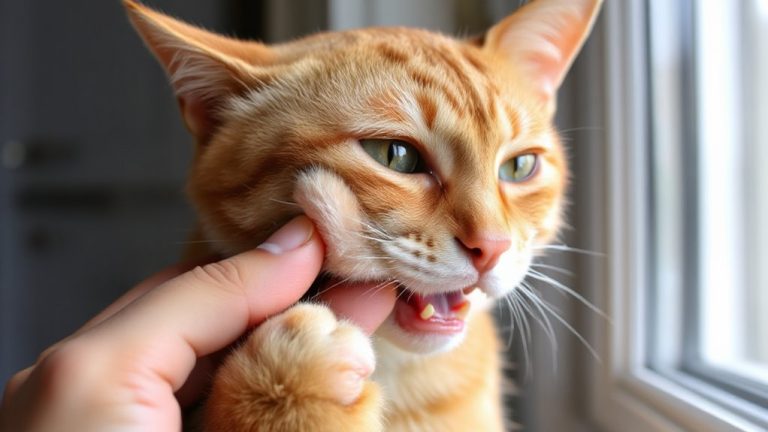
Pain in senior cats often hides in plain sight, masked by instinctive behaviors that suppress obvious symptoms. You might overlook subtle changes indicating discomfort. Arthritis signs include reduced grooming, stiff movements, and reluctance to jump. These behaviors stem from chronic joint inflammation, commonly in the hips or elbows. Cats with mobility issues often avoid stairs or high surfaces. They may struggle to rise after resting. Watch for altered posture or muscle atrophy around limbs. Lameness may be intermittent, worsening in cold or damp conditions. A cat’s stride length shortens with joint degeneration. Pain can cause decreased activity or vocalization during movement. These physical changes directly impact daily functions. Identifying these signs early supports timely intervention. Mobility issues aren’t just aging-they’re clinical symptoms requiring assessment. Document behavior changes for your vet. Early detection improves treatment outcomes markedly.
Make the Litter Box Senior-Friendly
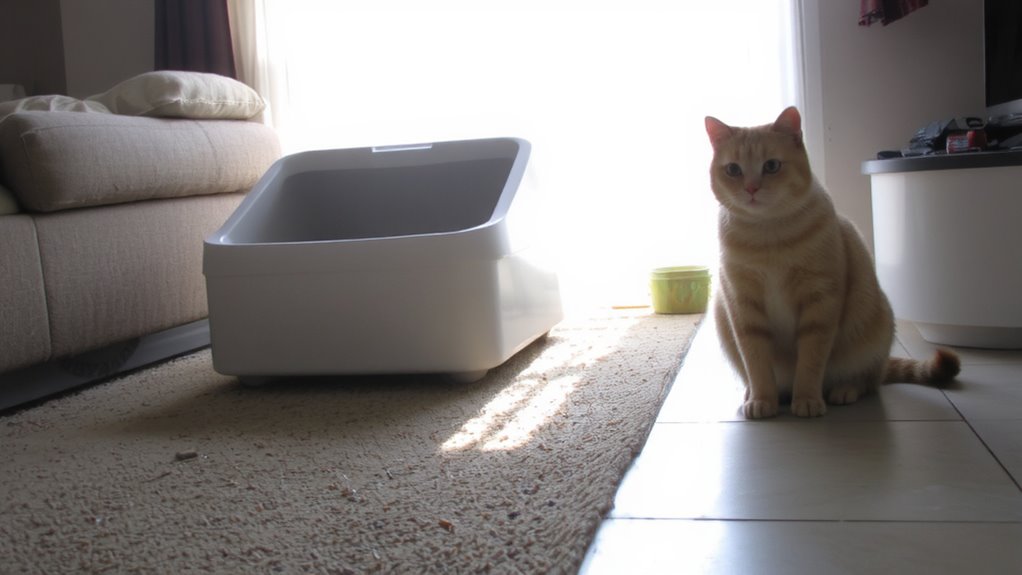
A litter box isn’t just a container-it’s a critical part of your senior cat’s daily health routine. Proper litter box accessibility supports urinary and gastrointestinal health. For senior cat comfort, choose a low-entry box: ideal height is 4–5 inches at the entrance. Place non-slip mats around the box to prevent slips. Use fine-grained, unscented clumping litter to avoid paw irritation. Best large litter boxes are especially beneficial for accommodating the size and mobility needs of larger breeds like Maine Coons, ensuring they can move freely without strain.
| Feature | Standard Box | Senior-Friendly Upgrade |
|---|---|---|
| Entry Height | 7–9 inches | 4–5 inches |
| Litter Type | Scented, coarse | Unscented, fine-grained |
| Surface | Hard plastic | Non-slip base + mat |
These modifications reduce physical strain and encourage consistent use. A roomy interior allows full-body turns, which is essential for arthritic cats. Maintain one box per floor for multi-level homes.
Ease Stress for Your Older Cat
Why does your senior cat seem unsettled in a home they’ve known for years? Age-related sensory decline and cognitive changes can heighten stress. Environmental enrichment reduces anxiety by stimulating natural behaviors. Provide vertical spaces like cat trees 3–5 feet tall with sisal-wrapped posts (90–120 grit texture) for scratching. Rotate interactive toys every 7–10 days to maintain novelty. Maintain a consistent daily routine-feeding, play, and rest at predictable times-to support circadian regulation. Disruptions elevate cortisol levels, impairing elimination behavior. Use pheromone diffusers (Feliway Classic) in common areas; they release analogs of feline facial pheromones every 4–6 hours, promoting security. Place hideouts within 6 feet of resting zones to increase perceived safety. Guarantee auditory stressors remain below 60 dB. These measurable interventions stabilize your cat’s psychological state, reducing litter box avoidance linked to anxiety. For optimal coverage, select a high-quality device such as the top-rated diffuser.
Choose the Best Litter & Spot
Where should you start when selecting the right litter and location for your senior cat’s box? Begin with litter texture-opt for soft, clumping, low-dust formulas. Coarse or heavily scented litter irritates sensitive paws and respiratory systems. Senior cats often prefer finer grains, similar to sand, which cause less discomfort when digging. Unscented clay or crystal-based litters reduce olfactory stress. Next, evaluate box location. Place the box in a quiet, low-traffic area with easy access. Avoid basements or stairs if arthritis limits mobility. Ideal locations are on the main living level, near resting spots but away from loud appliances. Use large, open-top boxes-minimum dimensions of 18” x 14”-to accommodate stiff joints. Guarantee one box per floor in multi-level homes. Proper litter texture and thoughtful box location greatly increase usage and prevent accidents. For added portability during vet visits or travel, consider a mini rabbit travel cage-style carrier that provides secure, ventilated space for safe transport.
Watch for Cognitive Changes in Cats
Could confusion be behind your senior cat’s sudden litter box issues? Cognitive decline in aging cats often manifests as disorientation episodes, affecting spatial awareness and routine behaviors. You might notice your cat staring at walls, getting stuck in corners, or forgetting the litter box location-signs linked to feline cognitive dysfunction syndrome (CDS). These episodes typically worsen at night and may occur several times weekly. Studies show over 55% of cats aged 11–15 years exhibit some cognitive decline; that jumps to more than 80% in cats over 16. Neural degeneration reduces neurotransmitter activity, impairing memory and learning. Environmental cues become less effective, so even a clean, well-placed box may be ignored. Recognizing these patterns early helps differentiate cognitive causes from medical ones. Monitoring behavior changes over time increases diagnostic accuracy. Document instances of confusion or aimless wandering to assess progression.
When to See the Vet for Litter Box Issues?
How quickly should you act when your senior cat starts avoiding the litter box? Immediately. Sudden changes in litter box behavior often signal underlying medical conditions. A urinary infection can cause pain during urination, leading your cat to associate the litter box with discomfort. Left untreated, it may progress to bladder stones or urethral obstruction. Kidney disease, common in older cats, alters urine concentration and increases volume, causing accidents outside the box. Blood tests and urinalysis are essential for diagnosis-look for elevated creatinine and BUN levels. Early detection improves prognosis. If your cat strains, vocalizes, or produces small urine amounts, seek veterinary care within 24 hours. Imaging like ultrasound may be needed. Do not delay. Medical intervention prevents complications and maintains quality of life. Behavior changes aren’t just “getting old”-they’re warning signs.
On a final note
Address litter box avoidance promptly. Medical issues like arthritis or kidney disease are common causes. Check for pain signs-stiff gait, difficulty jumping. Use a low-entry litter box-4 inches high sides. Place it in a quiet, accessible location. Opt for unscented, clumping litter. Cognitive dysfunction affects 28% of cats 11–14 years old. Persistent issues require veterinary evaluation to rule out UTIs or hyperthyroidism.