Including Emergency Pet Booties in Your Winter Disaster Preparedness Kit
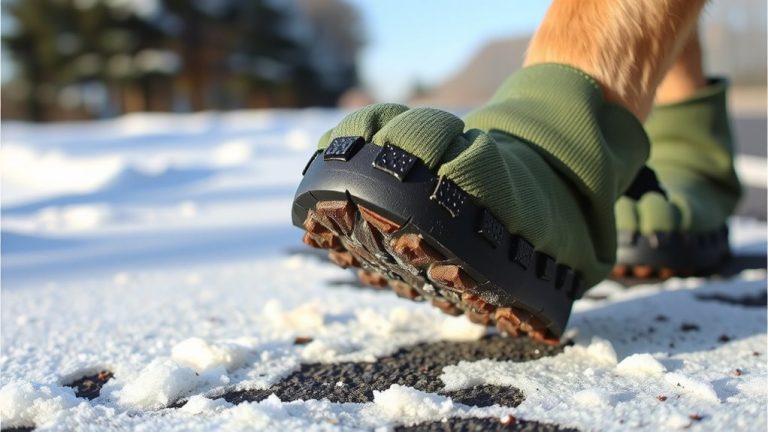
You need emergency pet booties in your winter disaster kit to shield your pet’s paws from frostbite, ice, and chemical burns. They form a durable barrier against subzero temperatures, blocking contact with corrosive salts like calcium chloride. Look for models made with ballistic nylon or TPU, capable of withstanding 5,000+ flex cycles and 30 psi compressive force. Multidirectional rubber outsoles with 3–5mm lugs guarantee reliable snow and ice traction. Store four properly sized booties in a waterproof, rigid polycarbonate case with desiccant packs to maintain performance through repeated freeze-thaw cycles. Training beforehand guarantees fast, stress-free application during real emergencies-secure fits cut average wear time to under 20 seconds per paw. Discover how proper fit and material science maximize protection in extreme winter conditions.
Notable Insights
- One in four pets suffer paw injuries in winter storms, making emergency booties essential for protection.
- Booties shield paws from ice, deicing salts, and subzero temperatures that can damage tissue within minutes.
- Choose booties with durable materials, secure closures, and rugged outsoles for reliable winter performance.
- Store four properly sized booties in a waterproof, rigid case with desiccant to maintain readiness.
- Train your pet beforehand to wear booties, reducing stress and application time during emergencies.
How Winter Storms Harm Your Pet’s Paws
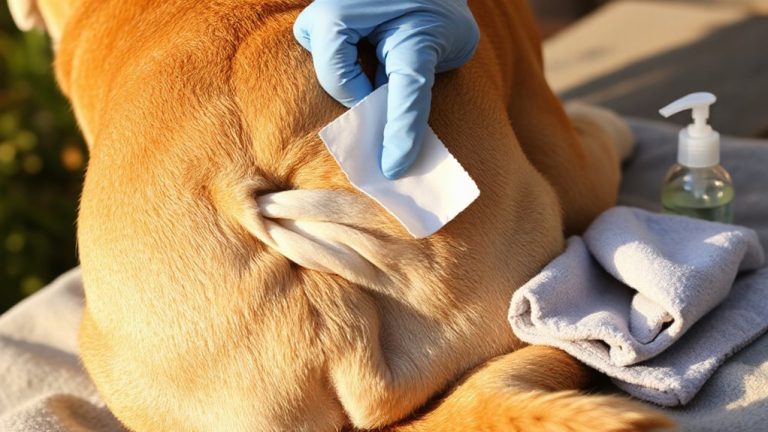
One in four pets suffers paw injuries during winter storms due to exposure to ice, salt, and subzero temperatures. You must recognize that prolonged contact with frozen surfaces increases frostbite risk, especially in breeds with short coats or low body fat. Temperatures below 32°F (0°C) can damage paw tissue within 15 minutes. Chemical exposure from de-icing salts like calcium chloride or magnesium chloride causes irritation, blistering, and dermatitis. These compounds are hygroscopic, drawing moisture from skin and accelerating tissue damage. Ice buildup between paw pads leads to cracking, reducing natural traction and increasing slip hazards. Urban environments intensify exposure, with concentrated road treatments and refreeze cycles. Without protection, pets ingest toxins while grooming, compounding health risks. Cold stress impairs circulation, compounding injury severity. You need solutions that address both thermal regulation and contaminant barriers. Consider material permeability, thermal resistance, and fit retention under dynamic conditions. Best pet travel boots provide durable, weather-resistant protection ideal for winter emergency preparedness.
How Emergency Pet Booties Prevent Injury
Emergency pet booties serve as a critical defense against winter hazards when used correctly. They provide a durable, weather-resistant barrier between your pet’s paws and extreme conditions. For frostbite prevention, booties retain heat by trapping a microclimate of warm air around the paw, reducing conductive heat loss on snow or ice below -10°C. The inner lining wicks moisture, minimizing prolonged dampness that accelerates tissue freezing. Regarding chemical exposure, booties block direct contact with deicing agents like calcium chloride or ethylene glycol, which cause dermatitis or toxicity if ingested during grooming. The outsole resists abrasion from sharp ice and gravel, while the secure ankle fit prevents slippage on uneven terrain. Materials typically include TPU-coated nylon (minimum 450D) for waterproofing and tear resistance. Seams are sealed to prevent fluid ingress. Each bootie withstands compressive forces up to 30 psi, ensuring structural integrity during emergency evacuation or prolonged shelter-in-place scenarios.
What To Look For In Emergency Pet Booties
Your pet’s safety in winter emergencies hinges on the quality of their booties. Choose models with high material durability, such as ballistic nylon or reinforced TPU overlays, to resist abrasion from ice, rocks, and rough pavement. These materials typically withstand over 5,000 flex cycles in lab testing, ensuring longevity. Seams should be bonded and stitched to prevent splitting under stress. Traction design is equally critical-opt for booties with multidirectional rubber outsoles featuring 3-5mm lugs for grip on snow and ice. Some soles use ice-grip compounds with micro-textured surfaces that increase friction, similar to winter tire treads. A secure fit with adjustable hook-and-loop closures prevents slippage. The bootie should allow natural paw articulation while maintaining full toe protection. Properly designed, they balance flexibility with structural integrity for reliable winter performance.
Keep Booties Ready In Your Emergency Kit
Every winter emergency kit should include at least four properly sized pet booties, stored in a designated compartment to guarantee immediate access during sudden evacuations or hazardous conditions. Use waterproof, rigid storage solutions like sealed polycarbonate cases to prevent deformation and moisture damage. These containers should measure at least 6 x 4 x 3 inches to accommodate folded booties without creasing critical seams. Durability factors include bonded thermal lining, tear-resistant nylon uppers, and non-slip TPR outsoles rated for temperatures down to -20°F. Booties must retain structural integrity after 50+ freeze-thaw cycles. Store them with desiccant packs to control humidity and extend material lifespan. Make certain the compartment is labeled and insulated to reduce thermal transfer. Proper storage solutions directly impact bootie performance, preserving elasticity and tread adhesion. You’ll need them functional within seconds-delayed access risks frostbite or chemical burns from ice-melting agents.
Practice Putting On Booties Before Emergencies
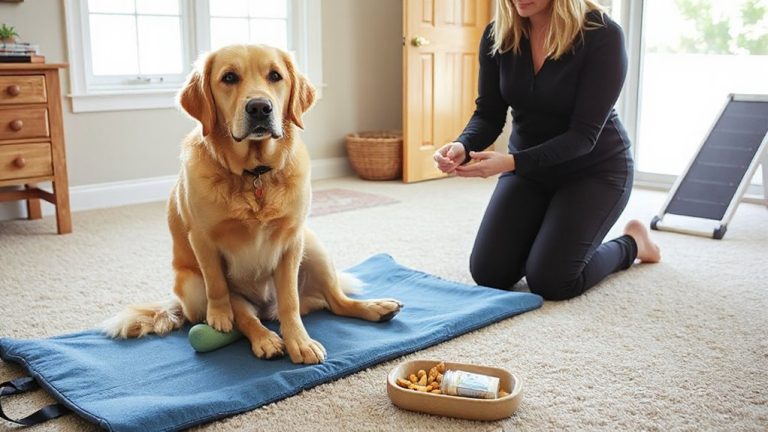
You’ve got the right gear packed and ready-now it’s time to make certain you can actually use it when every second counts. Practice fitting booties on your pet’s paws well before an emergency. This helps reduce stress caused by paw sensitivity and guarantees quicker application in extreme conditions. Most pet booties use adjustable hook-and-loop closures, with fit depending on proper sizing-measure paw width and length according to manufacturer charts. In testing, models like the Ruffwear Grip Trex provide up to 85% improved traction control on ice due to Vibram® outsoles. Without prior practice, application can take over 90 seconds per paw; trained handlers reduce this to under 20. Rehearse in low-light, cold conditions to simulate real emergencies. Booties must stay secure during movement, so guarantee snug, gap-free fit. Routine practice builds muscle memory, reduces resistance, and enhances emergency mobility.
On a final note
You need emergency pet booties in your winter disaster kit. They shield paws from ice, salt, and lacerions. Choose waterproof nylon with rubberized treads; secure with adjustable neoprene ankle straps. Size range: XS to XL, fitting paws 1.5 to 4 inches wide. Abrasion-resistant soles withstand -20°F to 32°F conditions. Test fit booties monthly. Proper fit guarantees traction and prevents frostbite. Preparedness reduces risk. Your pet’s mobility depends on it.