Creating a Positive Reinforcement Plan for Teaching Dogs to Stay
Start by marking your dog’s stillness the instant they sit or lie down. Say “stay” and show an open palm, then deliver a ¼-inch high-value treat like dehydrated liver within 2 seconds. Reinforce three sets of five trials daily. Step back six inches only after they hold focus for 3 seconds, returning immediately to reward in place. Use a clicker or verbal marker to bridge the behavior. Extend duration by 3–5 seconds per session, increasing no more than 10% daily. Introduce one distraction at six feet, progressing only after 80% success over five trials. Practice in real-world settings-sidewalks, parks, cafés-with 10-minute sessions, 3–5 times weekly. Leash use and precise timing maintain reliability. Mastery in complex environments builds over 7–10 days with incremental challenges.
Notable Insights
- Begin by marking calm sits or downs with a verbal “stay” and immediate treat delivery to build initial understanding.
- Use a clear hand signal paired with the verbal cue to support communication and reinforce focus.
- Reward only after the desired duration is met, using precise timing to strengthen behavior accuracy.
- Gradually increase distance and duration in small increments, ensuring 80% success before progressing.
- Introduce distractions one at a time in controlled environments, reinforcing successful stays with high-value rewards.
Start With the Stay Cue and an Instant Treat
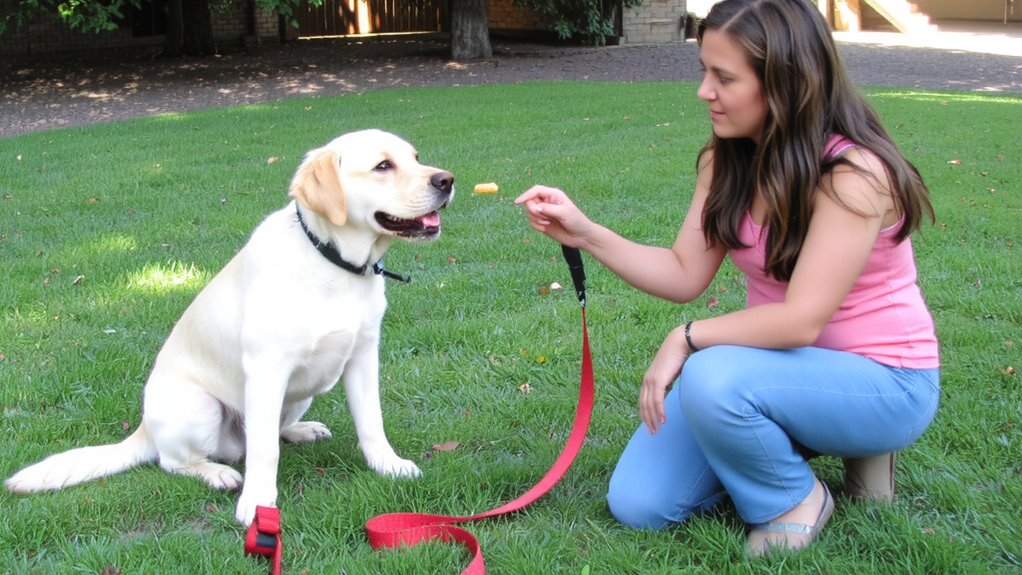
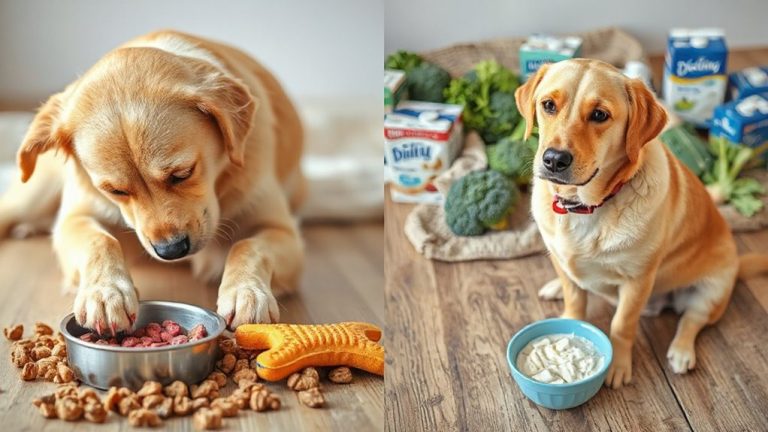
Timing is everything when teaching the stay cue. You must capture your dog’s initial focus the moment they sit or lie down. Use a clear verbal cue like “stay” followed immediately by an open palm signal. The initial focus is critical-it sets the foundation for all future repetitions. Deliver an immediate reward, such as a small treat (approximately ¼ inch in size for medium dogs), within two seconds of correct behavior. This tight timing guarantees accurate association. Delayed rewards reduce learning efficiency by up to 70%, studies show. Use high-value treats like dehydrated liver to maximize reinforcement. Practice in short sessions-three sets of five trials daily-to maintain precision. Consistency in cue presentation and reward delivery shapes reliable behavior. Each repetition strengthens neural pathways linked to impulse control. Precision in timing and reward guarantees rapid acquisition.
Step Back Slowly: Keep the Stay Going
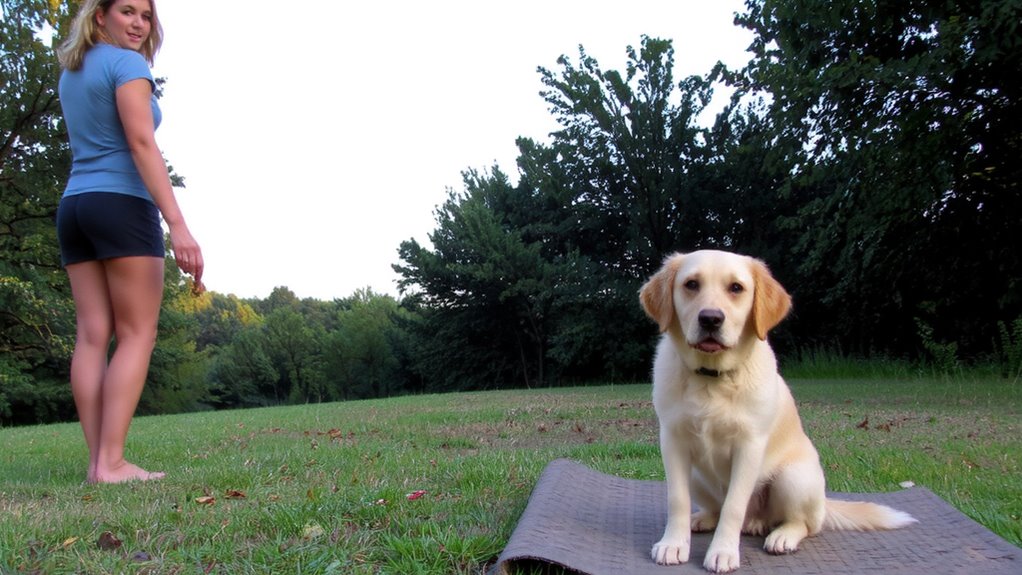
Once your dog holds the stay for three seconds with consistent focus, you can begin introducing movement to test duration and attention. Step back slowly, starting with just six inches. This builds distance control while minimizing the chance of breaking the stay. Return immediately and reward in place to reinforce compliance. Timing precision is essential-deliver the treat within 0.5 to 1 second after returning to mark correct behavior. Use a clicker or verbal marker to bridge the action and reward. Gradually increase steps: one, then two, then three-each time ensuring the dog remains still. Maintain eye contact and a neutral expression to avoid cueing movement. Practice five repetitions per session, increasing difficulty only when success exceeds 80%. Distance control strengthens impulse management, preparing your dog for real-world distractions.
Extend the Stay: Build Up Time Gradually
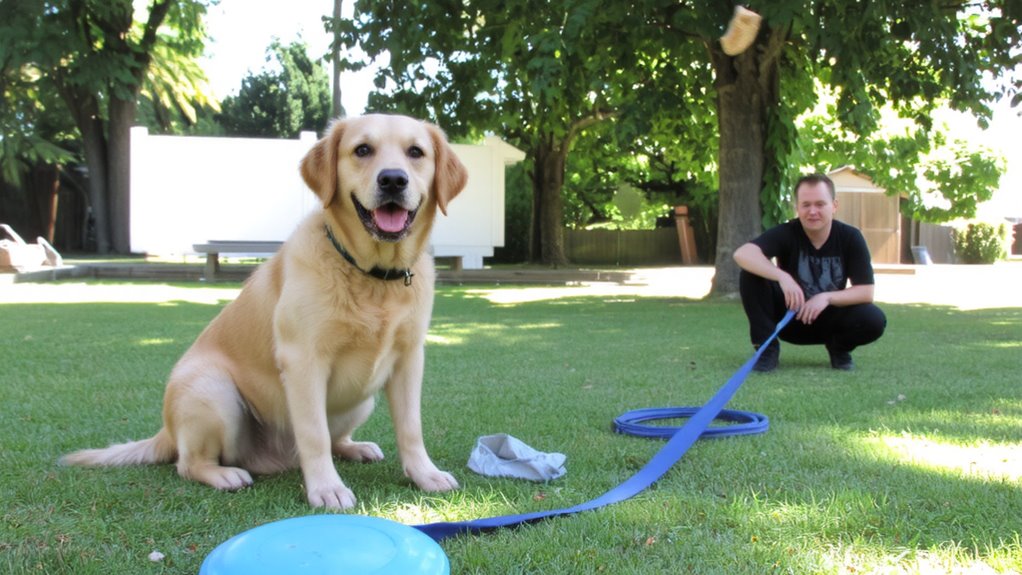
You’ve built solid distance control by stepping back in small increments while maintaining your dog’s focus-now it’s time to extend the duration of the stay itself. Begin by increasing duration in three-to-five-second intervals. Hold the hand signal and remain silent to avoid cuing the dog prematurely. Reinforce only after the full time elapses. Use a timer initially to guarantee accuracy. If your dog breaks early, reset calmly and try again with a shorter interval. Consistency strengthens neural associations. Maintain consistency in cues, timing, and reinforcement. Work in sessions of five to ten minutes, two to three times daily. Gradual progression prevents reinforcement of failure. Over seven to ten days, most dogs achieve a 30-second stay. Increase duration by no more than 10% per session. This incremental approach mirrors operant conditioning protocols for behavioral shaping. Precision here guarantees reliable long-term performance.
Add One Distraction at a Time
While your dog reliably holds a stay for 30 seconds in a quiet setting, real-world environments demand resistance to distractions. Introduce only one distraction at a time to maintain training integrity. Begin in a novel environment with minimal stimuli, such as a quiet backyard. Present a single distraction-like dropping keys or opening a door-at a moderate distance of six feet. If your dog breaks the stay, reduce the distraction’s intensity. Reinforce successful holds with immediate treats. Gradually decrease distance or increase distraction intensity. Social interaction is a high-value distraction; start with a familiar person standing still three feet away. Use a 1:1 reinforcement schedule initially. Progress only when your dog achieves 80% success over five trials. Each session should last 5–7 minutes to prevent fatigue. Avoid combining distractions until mastery occurs.
Practice the Stay in Real-World Spots
Where does your dog need to perform a reliable stay? Real-world spots like public parks and busy sidewalks demand consistent behavior amid unpredictable stimuli. Begin training in low-distraction versions of these environments, then systematically increase difficulty. Use a leash and high-value treats to maintain compliance. Duration, distance, and distraction level should increase incrementally.
| Environment | Criteria for Success |
|---|---|
| Busy Sidewalks | 30-second stay, passersby within 5 ft |
| Public Parks | 1-minute stay, dogs 20 ft away |
| Outdoor Cafés | Stay during chair movement, 45 sec |
| Parking Lots | Resist food lure, 20-second stay |
Maintain session length under 10 minutes. Conduct 3–5 sessions weekly. Record success rate per location to track progress. Avoid overfacing-success should occur 80% of trials before advancing.
Fix Leaping, Breaking Early, and Ignoring Cues
When your dog leaps, breaks a stay prematurely, or ignores cues, these issues often stem from inconsistent reinforcement history or undergeneralized behavior across environments. Start by shortening the duration and distance of the stay to a level your dog can successfully maintain. Use minimal leash pressure-just enough to gently guide and reset-when your dog begins to rise or move forward prematurely. Avoid jerking; steady tension prevents reinforcement of unwanted motion. Reinforce only after a calm release, meaning you mark and reward the instant your dog remains seated as you step back or return. Practice in low-distraction areas first, then systematically increase difficulty. Each session should include at least 10 repetitions with variable timing to prevent predictability. Reinforce quiet, settled behavior immediately. Over time, this builds reliability under distraction.
Replace Treats With Life Rewards
You can start phasing out treats without losing behavioral reliability by substituting them with real-life reinforcers that match your dog’s motivation. Life rewards are opportunities your dog values, such as play time, sniffing, or family greetings. These maintain engagement while promoting long-term retention. Use them strategically after successful “stay” responses.
| Behavior Completed | Life Reward | Duration/Type |
|---|---|---|
| Stay before meal | Food bowl access | Immediate |
| Stay at front door | Play time outdoors | 5–10 min |
| Stay during arrival | Family greetings | Full interaction |
| Stay on cue (quiet) | Sniffing privilege | 2 min |
| Stay before toy play | Tug session | 3 min |
Deliver rewards immediately post-behavior. Pair cues consistently. This systematic transfer from food to life rewards sustains performance accuracy. Over 2–3 weeks, reduce treat frequency by 20% weekly while increasing life-based reinforcement. Monitor response latency; if it exceeds 2 seconds, recalibrate reinforcement value.
On a final note
You now have a structured, science-based plan to teach your dog a reliable stay. Start with immediate treats upon cueing, ensuring instant reinforcement. Gradually increase duration, distance, and distractions using systematic desensitization. Practice in real-world environments with controlled stimuli. Replace treats with life rewards like door access. Success hinges on precise timing: reward only after holding position, reinforcing impulse control and compliance under varying conditions.