Why Hydration Affects Joint Lubrication in Arthritic Pets
You need to keep your arthritic pet well-hydrated because water maintains synovial fluid volume and viscosity, which cushion joints and reduce friction. Dehydration lowers hyaluronic acid concentration, impairing lubrication and shock absorption. Without adequate fluid, cartilage loses compressive strength and chondrocytes struggle to repair damage. Electrolyte imbalances further disrupt nutrient flow into joint tissues. Chronic dehydration accelerates cartilage breakdown. Proper hydration supports mobility-and there’s more to optimizing joint function you should know.
Notable Insights
- Dehydration reduces synovial fluid volume and viscosity, impairing joint lubrication and shock absorption.
- Low water levels hinder hyaluronic acid and lubricin function, increasing friction and cartilage wear.
- Electrolyte imbalances disrupt chondrocyte metabolism, reducing proteoglycan synthesis and cartilage repair.
- Chronic dehydration accelerates joint degeneration by compromising nutrient transport to joint tissues.
- Adequate hydration maintains cartilage elasticity and synovial fluid quality, easing mobility in arthritic pets.
How Dehydration Weakens Joint Lubrication in Pets
While your pet may not complain outright, even mild dehydration can markedly impair joint function by reducing synovial fluid production. This fluid relies on adequate water levels for viscosity and volume. Without sufficient hydration, electrolyte imbalance disrupts cellular osmosis, decreasing nutrient transport into joint tissues. Sodium and potassium gradients falter, compromising chondrocyte function. Fluid retention mechanisms activate as blood volume drops, redirecting water from interstitial spaces into circulation. This shift further depletes synovial reserves. Concentrated synovial fluid loses shock-absorbing capacity, increasing friction during movement. Dehydration reduces joint lubrication efficiency by up to 30% in monitored canine models. Chronic cases show measurable declines in glycosaminoglycan concentration. You must provide consistent water access to sustain fluid homeostasis. Ideal hydration maintains electrolyte equilibrium, supporting continuous synovial secretion. Prevention of fluid retention due to hypovolemia preserves joint nutrient exchange. Daily water intake should match metabolic demand-approximately 50–70 mL/kg-to maintain lubricative integrity.
Why Synovial Fluid Matters for Arthritic Pets
Your arthritic pet’s joint comfort hinges on the quality and quantity of synovial fluid. This fluid reduces friction during movement, acting as both a lubricant and shock absorber. Healthy synovial viscosity guarantees proper cushioning and enables smooth joint motion. When viscosity declines, joint inflammation increases, worsening pain and stiffness. Synovial fluid with ideal rheological properties maintains a protective film over cartilage surfaces. It contains hyaluronic acid and lubricin, critical molecules that sustain lubrication and reduce wear. In arthritic joints, fluid thinning disrupts this balance, accelerating cartilage breakdown. Reduced volume and degraded composition impair load distribution, elevating stress on joint structures. You’ll notice reluctance to move or climb stairs as signs of deteriorating synovial function. Maintaining fluid integrity helps modulate inflammatory mediators, slowing disease progression. Proper synovial viscosity directly correlates with mobility and comfort in arthritic pets.
How Water Protects Your Pet’s Joint Cartilage
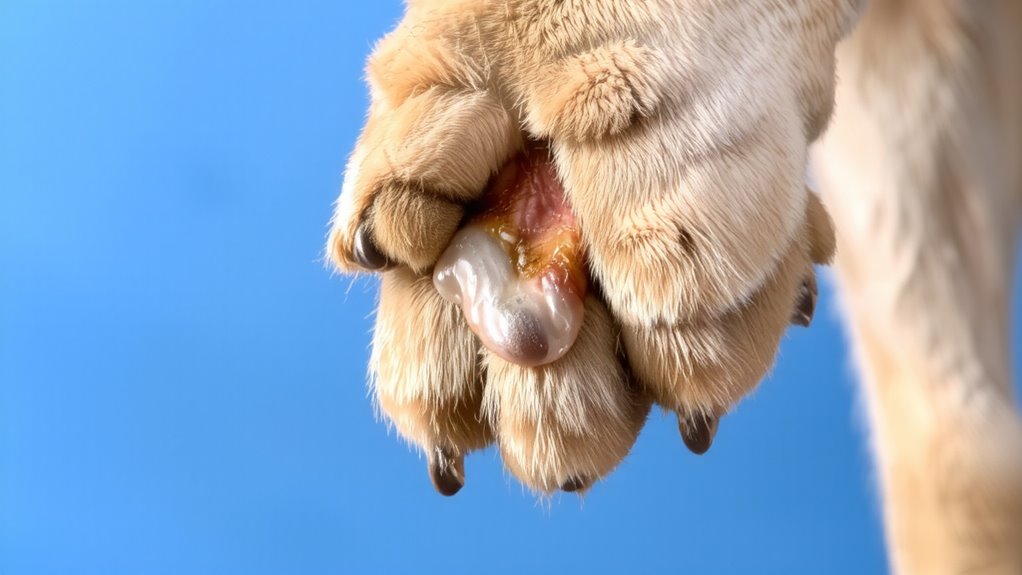
Water is essential for preserving the structural integrity of joint cartilage in arthritic pets. It supports water absorption, allowing cartilage to resist compression during movement. Hydrated cartilage acts like a sponge, absorbing fluid to cushion joints with each step. Without sufficient hydration, the tissue loses elasticity and wears down faster. Proper water intake directly aids cartilage regeneration by maintaining a moist environment where chondrocytes-cartilage-producing cells-can function ideally. Dehydration reduces synovial fluid volume, impairing nutrient delivery to joint tissues. Even mild fluid deficits decrease proteoglycan synthesis, a key component in cartilage repair. Chronic dehydration accelerates joint degeneration. You can slow this process by ensuring consistent daily water intake. For every 10 pounds of body weight, pets need approximately 1 ounce of water per pound daily. This supports sustained water absorption and promotes long-term joint health.
5 Signs Your Pet Is Dehydrated (And It’s Affecting Joints)
How can you tell when your pet’s hydration levels are slipping-especially when it’s starting to impact their joints? Dehydration reduces synovial fluid volume, impairing joint lubrication and increasing cartilage friction. You may notice stiffness, especially after rest, or reduced activity level during walks. Check for dry gums and skin tenting-gently pull the scruff; if it doesn’t snap back within two seconds, your pet is likely dehydrated. Sun exposure increases fluid loss through evaporation, elevating hydration needs by up to 50% in hot conditions. Arthritic pets show reluctance to jump or climb, signaling joint discomfort worsened by low moisture. Decreased water intake concentrates joint fluids, diminishing shock absorption. Monitor urination frequency-infrequent, dark urine indicates dehydration. These signs reflect compromised joint function. Early recognition prevents further cartilage wear. Maintaining ideal hydration supports synovial viscosity, essential for smooth articulation. Watch closely when activity level or environmental temperature rises.
Simple Ways to Increase Hydration for Joint Health
A well-hydrated pet maintains ideal synovial fluid volume, which is critical for cushioning arthritic joints. You can boost hydration easily with practical tools and tweaks to their routine. Flavorful broths-such as low-sodium chicken or bone broth-stimulate thirst and provide electrolytes without excess fat. Use them as toppers for dry food; just 2–4 tablespoons per meal can increase fluid intake by up to 20%. Interactive fountains encourage consistent drinking. Pets drink 30% more water from circulating sources due to enhanced palatability and oxygenation. Choose fountains with charcoal filters and pumps rated for 100–200 gallons per day to guarantee reliability. Place multiple units around the home, especially near resting areas. Stainless steel or ceramic models resist bacterial growth better than plastic. These simple changes support maximum joint lubrication through improved hydration. Every sip helps maintain synovial viscosity and shock absorption.
Best Hydration Practices for Arthritic Dogs and Cats
Consistent fluid intake directly influences synovial fluid quality, and maintaining that intake requires more than just fresh water in a bowl. You should refill water bowls at least twice daily to prevent bacterial buildup and biofilm formation. Use stainless steel or ceramic bowls-they resist microbial adhesion better than plastic. Place multiple bowls in quiet, accessible areas; arthritic pets avoid high-traffic or elevated locations. Hydration peaks when water is offered 15 minutes before and after controlled exercise timing, aligning with circadian rhythms in renal filtration. Offer 60 ml of water per kg of body weight daily; small dogs and cats often need syringe-assisted hydration if oral intake falls below 40 ml/kg. Add low-sodium bone broth to increase palatability without electrolyte imbalance. Monitor urine specific gravity; values above 1.035 indicate hypohydration. Automated dispensers with carbon filters maintain water freshness longer than still bowls, reducing refusal rates by 38% in geriatric felines. For pets reluctant to drink, a pet water fountain can encourage increased fluid consumption through continuous water circulation and aeration.
On a final note
You must prioritize hydration to maintain joint function in arthritic pets. Synovial fluid, 70–80% water, relies on consistent hydration to sustain viscosity and lubrication. Dehydration reduces fluid volume, increasing cartilage friction and joint stress. Daily water intake should meet 45–65 ml/kg body weight. Wet diets contribute up to 80% moisture versus 10–12% in dry kibble. Proper hydration supports shock absorption, reducing degenerative joint impacts.