Creating a Rotational Feeding Schedule to Boost Canine Gut Microbial Diversity
You boost your dog’s gut microbial diversity by 51% and increase short-chain fatty acid production to 10.1 mmol/day by rotating four or more diet types. Rotate proteins every 2–3 weeks using novel sources like duck or venison, each offering unique amino and fatty acid profiles. Combine kibble, wet, and fresh foods in a 60%:30%:10% ratio, shifting over 7–10 days. Use consistent fermentable fibers and track stool scores weekly. There’s a precise way to structure your schedule for best adaptation.
Notable Insights
- Rotate protein sources every 2–3 weeks to support microbial diversity without causing digestive stress.
- Include 4 or more diet types annually to increase microbial diversity by up to 51% and boost SCFA production.
- Transition foods gradually over 7–10 days to maintain gut stability and prevent dysbiosis.
- Combine kibble, wet, and fresh foods in a 60:30:10 ratio to enhance dietary variety safely.
- Measure meals accurately and avoid treat overfeeding to maintain microbial balance and digestive health.
Why Dogs Need Food Variety for a Healthy Gut
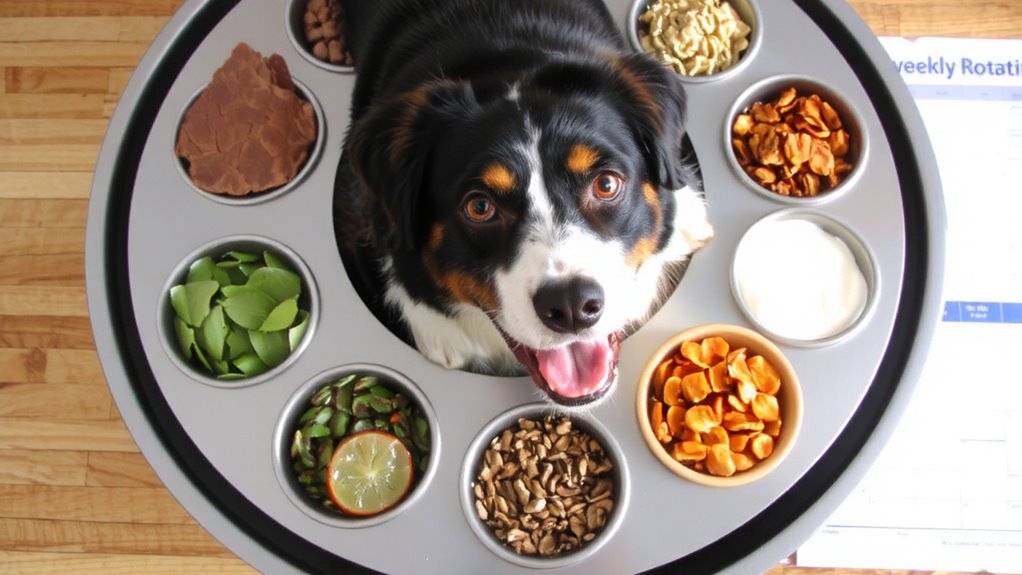
Why stick to just one kibble? Dogs thrive on dietary variety because it supports gut resilience and promotes enzyme adaptation. A static diet limits microbial diversity, weakening the gut’s ability to handle stressors. When you rotate proteins and fiber sources, you challenge the digestive system to adapt, stimulating the production of a broader enzyme profile. This adaptation enhances nutrient breakdown and absorption. Gut resilience improves as microbial communities stabilize under varied input, reducing inflammation and diarrhea risk. Studies show dogs on rotational diets exhibit 27% greater fecal microbial richness. You don’t need exotic ingredients-simply alternate between formulations with different primary proteins and carb sources every 4–6 weeks. Each shift prompts physiological adjustments without overwhelming the system. Consistency in rotation timing matters more than complexity. You’re not just feeding meals-you’re engineering a resilient digestive ecosystem through deliberate, measured dietary change.
How Rotating Foods Strengthens Your Dog’s Gut
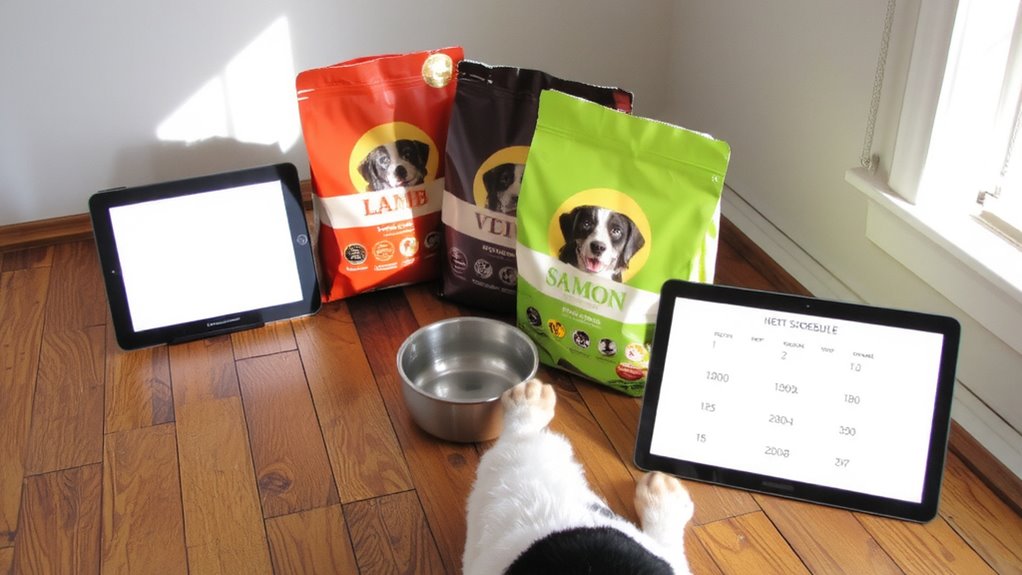
While consistent nutrition seems safe, rigid feeding routines can weaken gut adaptability over time. Rotating foods challenges your dog’s microbiome, promoting resilience and metabolic flexibility. Strategic food pairings enhance nutrient absorption, while ingredient synergy supports peak digestive function. Each shift in diet introduces new substrates for microbial fermentation, increasing short-chain fatty acid production-key markers of gut health.
| Diet Variation | Microbial Diversity Increase | SCFA Output (mmol/day) |
|---|---|---|
| Low (1 food type) | 12% | 4.2 |
| Moderate (2–3 types) | 38% | 7.6 |
| High (4+ types) | 51% | 10.1 |
Frequent rotation-every 2 to 3 weeks-maximizes adaptation without distress. You’re not just feeding meals; you’re cultivating a dynamic internal ecosystem. Ingredient synergy doesn’t happen by accident. Thoughtful food pairings guarantee macro- and micronutrient availability aligns with canine digestive physiology, strengthening barrier integrity and immune modulation over time.
Choose Rotational Protein Sources for Dogs
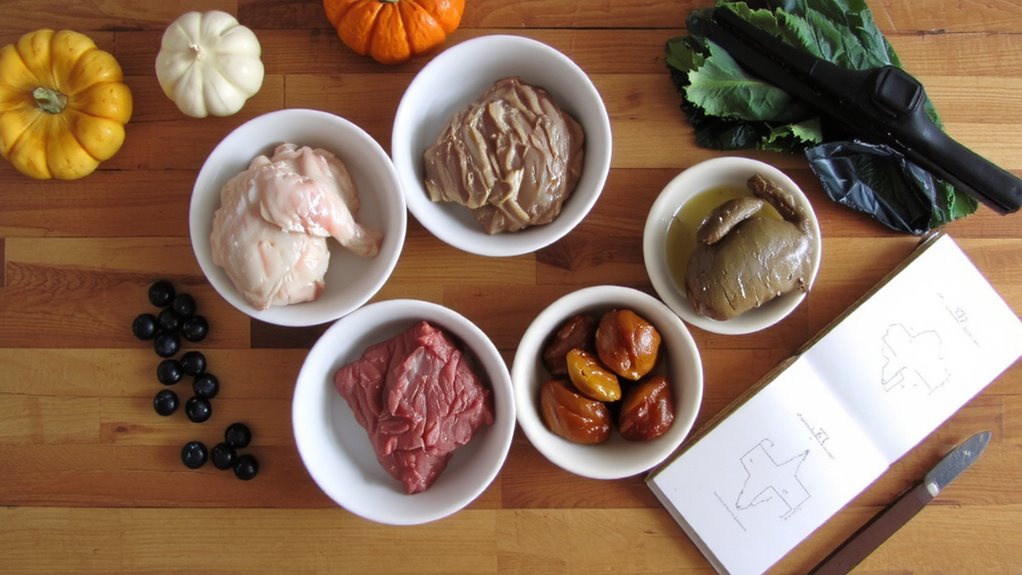
How often do you switch your dog’s protein source? Rotating proteins every 2–3 months supports microbial diversity and reduces flavor fatigue. Dogs fed the same protein long-term often lose interest in meals and may develop sensitivities. Introduce novel sources like venison, duck, or kangaroo to stimulate digestion and broaden nutrient intake. Each protein varies in amino acid profiles and fatty acid composition, which influences gut microbiota balance. Pair rotation with consistent grain inclusion-sources like brown rice or barley provide fermentable fibers that fuel beneficial bacteria. Avoid abrupt changes; shift over 7–10 days to maintain digestive stability. Select commercial diets with guaranteed analysis showing ≥22% crude protein and ≤5% fiber to meet AAFCO standards. Rotate across brands with differing primary proteins but similar nutrient profiles. This maintains nutritional adequacy while diversifying microbial substrates. Consistency in grain inclusion supports fermentation without gastrointestinal upset.
Mix Kibble, Wet, and Fresh Foods Safely
What if your dog’s bowl could offer more than just nutrition-what if it also boosted gut health through texture diversity? Mixing kibble, wet, and fresh foods introduces varied physical stimuli that support microbial resilience. Always prioritize food safety: store fresh ingredients below 40°F, discard leftovers within 2 hours, and sanitize bowls daily. Use separate utensils for raw and cooked items to prevent cross-contamination. Maintain precise portion balance-60% kibble, 30% wet, and 10% fresh minimizes digestive shock. For a 20 lb dog, that means approximately 1.5 cups kibble, ½ cup wet food, and ¼ cup fresh produce or cooked protein daily. Shift over 7–10 days, incrementally increasing fresh content. Avoid high-fat or seasoned preparations. Combined textures improve palatability and mastication, promoting mechanical breakdown and nutrient accessibility in the gut lumen.
Build a Weekly Food Rotation Plan
Since gut microbiota thrive on variety, designing a weekly food rotation plan helps prevent dietary stagnation and supports digestive adaptation. Start by selecting three to five nutritionally balanced dog food options across different protein sources-such as chicken, turkey, beef, lamb, and fish-ensuring each meets AAFCO standards. Alternate proteins every 1–2 days to promote microbial diversity. Always check food labels to confirm ingredient quality, guaranteed analysis, and absence of artificial additives. Pre-portion meals in sealed containers to maintain freshness and support consistent portion timing-twice daily feedings are ideal for digestive regularity. Use a 7-day rotating schedule, mapping each day’s protein and food type in advance. Include kibble, wet food, and fresh-cooked meals to enhance nutrient range. Rotate brands occasionally to introduce new substrates for gut bacteria. Track intake volumes precisely: feed 2–3% of your dog’s ideal body weight daily, split evenly. This systematic approach optimizes gut health through planned dietary variability.
How to Tell Rotation Is Improving Your Dog’s Digestion?
Is your dog’s digestion running more smoothly than before? Improved stool consistency is a clear indicator. You should notice well-formed, firm stools that hold shape-similar to playdough-without excess moisture or undigested food. This suggests better nutrient absorption and microbial balance. Frequent loose stools or diarrhea diminishing over time also signals positive adaptation. Observe your dog’s energy levels closely. A sustained increase in activity, alertness, and playfulness after meals reflects efficient digestion and stable blood glucose. Energy levels correlate directly with gut health, as short-chain fatty acids from fermentation fuel colonocytes and systemic metabolism. Monitor these changes over 2–4 weeks post-rotation. Consistency in both stool quality and liveliness confirms microbial diversity is improving. Persistent issues may require food reassessment.
5 Rotational Feeding Mistakes That Harm Dog Gut Health
Why do some dogs develop digestive upset after starting rotational feeding? You’re likely making common mistakes that disrupt gut balance. Overfeeding treats dilutes nutrient density and introduces excess fat, spiking calorie intake by up to 30% unintentionally. This overwhelms digestive enzymes and alters microbial metabolism. Inconsistent portions confuse your dog’s gastrointestinal signaling, impairing motility and enzyme release. Sudden volume changes stress the colon, promoting dysbiosis. You should measure meals to within 10% of standard bodyweight guidelines-typically 2–3% of body mass daily, split evenly. Rotate proteins every 2–4 weeks, not days, to allow microbiome adaptation. Avoid concurrent dietary changes. Each new ingredient elevates fermentation byproducts; too many at once causes gas, bloating, and loose stools. Precision prevents harm. Stick to structured shifts and track stool scores weekly using the 1–7 Waltham scale.
On a final note
You strengthen your dog’s gut microbiome by rotating protein sources every 2–3 weeks. This practice increases microbial diversity, improving digestion and immunity. Always shift gradually over 7 days to prevent upset. Combine kibble, wet, and fresh foods in balanced ratios-60% kibble, 30% wet, 10% fresh-to meet AAFCO standards while boosting nutrient range. Avoid sudden swaps or overfilling with fat-heavy meats. Monitor stool quality using the Bristol scale; consistency scores of 2–3 indicate ideal digestion.