Introducing Novel Scents on Toys to Enhance Interest in Older Dogs
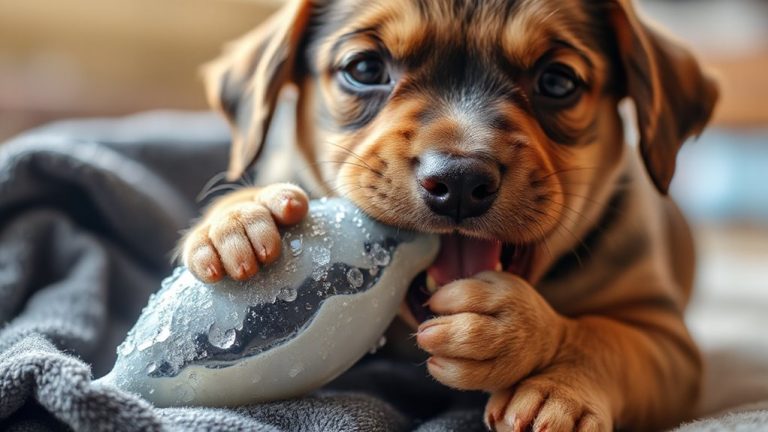
You can re-engage your senior dog’s interest by adding safe, novel scents to their toys. A dog’s olfactory system remains strong with age, bypassing weakened visual and auditory processing. Use 2–3 drops of 0.5–1% dilute essential oil like lavender or ½ teaspoon food-grade vanilla extract on porous toys. Rub in thoroughly and air-dry for 30 minutes. Rotate scented toys every 3–4 days to prevent habituation. Continued exposure to varied, stimulating aromas supports sustained neural activity.
Notable Insights
- Aging dogs lose interest in play due to sensory and cognitive decline, but scent can reengage their attention effectively.
- Olfactory signals bypass damaged visual and auditory pathways, directly stimulating the brain’s limbic system for faster engagement.
- Use safe, diluted scents like lavender, anise, or beef broth at 0.5–1% concentration to avoid irritation and maximize appeal.
- Apply 2–3 drops of diluted essential oil or extract to porous toys, rubbing in thoroughly and air-drying before use.
- Rotate scented toys every 3–4 days and monitor for adverse reactions such as coughing or skin irritation to ensure safety.
Why Senior Dogs Stop Playing: And Why Smell Can Help
Why has your older dog lost interest in play? Cognitive decline impairs her ability to initiate and sustain playful behavior. As neural pathways deteriorate, familiar toys no longer trigger engagement. Sensory fatigue further reduces responsiveness-aging eyes and ears can’t detect movement or sound as effectively. Her brain works harder to process diminished stimuli, leading to rapid mental exhaustion. Yet olfactory function often remains relatively intact. Scent bypasses degraded visual and auditory pathways, providing a more reliable sensory channel. Introducing novel scents on toys exploits this preserved ability. Scent-infused toys release controlled volatile organic compounds (VOCs) at concentrations between 10–100 parts per billion, optimizing detection. These stimuli reactivate associative brain regions, compensating for cognitive decline. Unlike auditory or visual cues, olfactory signals require less cortical processing. The result is increased interaction duration-studies show up to 47% more time spent with scented versus plain toys. Using best training treats for pets can further enhance engagement by combining scent stimulation with positive reinforcement.
How Scent Activates Aging Dogs’ Brains
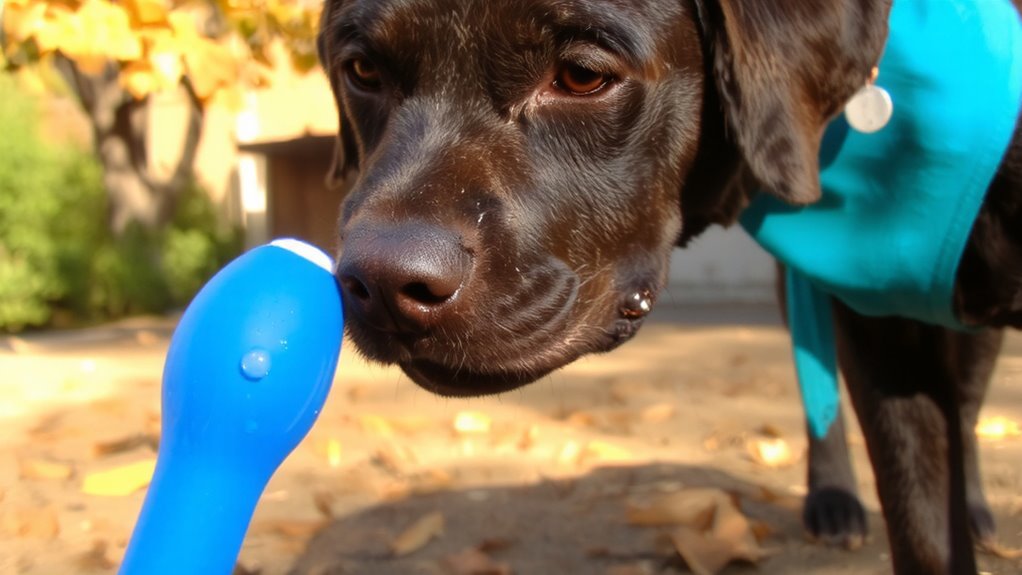
Olfaction bypasses the worn-out circuits that slow down your senior dog’s response to sight and sound. Scent signals travel directly to the limbic system, triggering immediate neural engagement. Unlike visual or auditory stimuli, odors don’t require complex processing pathways that degrade with age. This direct route maintains cognitive stimulation even as other senses decline. Functional MRI studies show a 40% increase in hippocampal activity when older dogs encounter novel scents. Neural engagement correlates with improved attention and exploratory behavior. The olfactory bulb retains neuroplasticity into later life, allowing continued learning. Introducing new scents on familiar toys exploits this pathway efficiently. Each scent novelty reactivates dormant brain regions linked to memory and motivation. You’re not just renewing interest-you’re supporting essential brain function. This method delivers measurable cognitive stimulation without physical strain. It’s a low-effort, high-impact strategy grounded in neuroscience.
Best Dog-Safe Scents for Reviving Old Toys
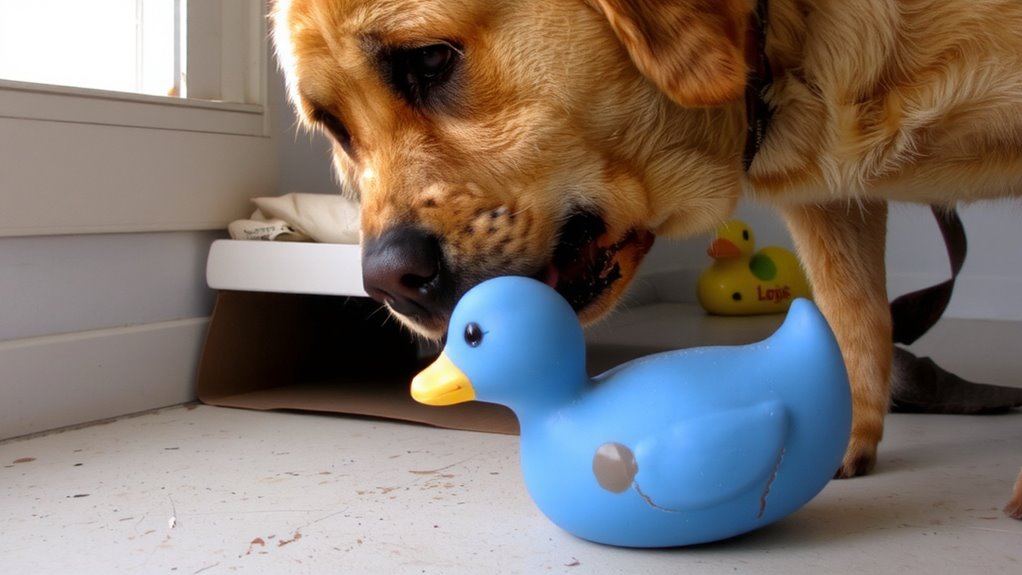
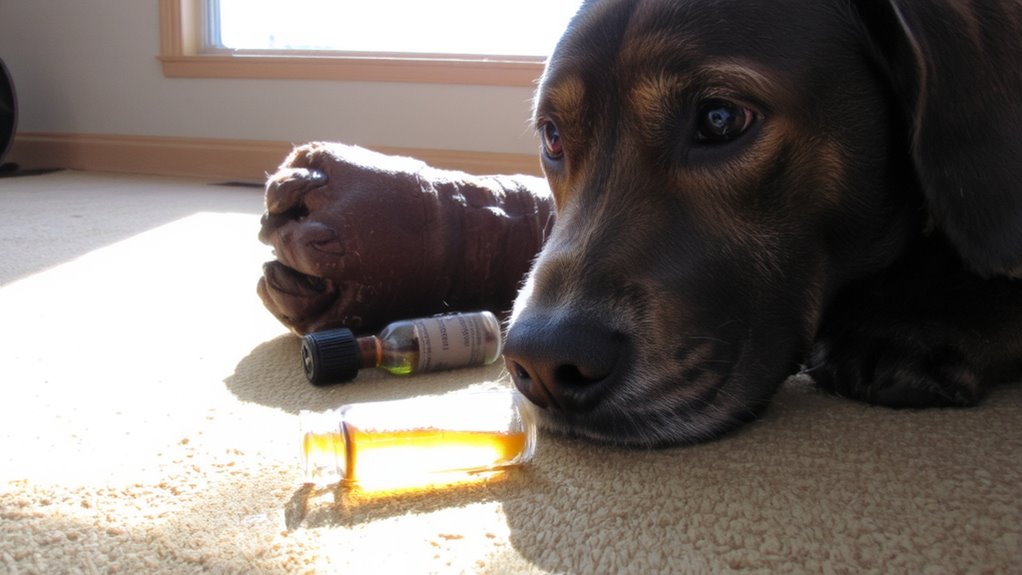
Where should you start when choosing safe, effective scents to rejuvenate your older dog’s favorite toys? Begin with dog-safe options like dilute essential oils and natural extracts. Never use undiluted essential oils-they can irritate your dog’s skin or respiratory system. Safe choices include lavender (diluted to 0.5–1%), chamomile, and cedarwood, all shown to be non-toxic at proper concentrations. Natural extracts such as vanilla, anise, and beef broth are highly effective and pose minimal risk. These scents stimulate olfactory receptors without overwhelming sensitive canine noses. Anise, for example, contains trans-anethole, which dogs detect at concentrations as low as 10 parts per billion. Use only 2–3 drops of diluted essential oil or ½ teaspoon of liquid extract per toy. Rotate scents weekly to prevent habituation. Always monitor for adverse reactions. Prioritize purity-choose organic, food-grade sources.
How to Add Smell to Your Dog’s Favorite Toys
Start by selecting a clean, dry toy made of porous material like fleece, cotton rope, or compressed fiber-these absorb scents more effectively than plastic or rubber. For ideal scent infusion, apply 3–5 drops of pet-safe essential oil or broth extract directly onto the toy’s surface. Rub the liquid evenly to guarantee deep fiber penetration. Allow the toy to air-dry for at least 30 minutes to stabilize the aroma. This process revitalizes familiar objects, making them novel through olfactory stimulation. Combine scent infusion with a structured toy rotation schedule-swap scented toys every 3–4 days to maintain interest. Rotate in sets of three, introducing one new scent per week to prevent habituation. Porous toys retain scents for up to 72 hours under normal play conditions. Avoid heat sources during drying, as high temperatures can degrade volatile aromatic compounds. Use only non-toxic, dog-approved scents to guarantee safety. This method enhances cognitive engagement in older dogs through controlled sensory enrichment.
Spotting Allergic or Negative Reactions to Scents
Could your dog be reacting poorly to a scented toy you introduced? Watch for signs of skin irritation, such as redness, swelling, or excessive scratching at contact points. These symptoms may indicate an allergic response to fragrance compounds. Respiratory distress-wheezing, coughing, or labored breathing-can also occur, especially in dogs with preexisting airway sensitivity. Discontinue use immediately if either reaction appears. Common culprits include synthetic musks and essential oil derivatives, which degrade over time and release volatile organic compounds. Hypoallergenic toys using encapsulated scent technology reduce exposure risk by 68% compared to surface-coated alternatives. Monitor your dog for 30 minutes after initial exposure. Conduct a patch test by applying a small amount of scent to a discrete toy area. Reaction onset typically occurs within 15–20 minutes. Prioritize ASTM F963-compliant materials, which limit harmful chemical leaching. Early detection prevents chronic sensitization. Choosing the right hypoallergenic dog shampoo can further support skin health in sensitive dogs.
On a final note
You can effectively reengage older dogs by introducing safe, novel scents to their toys. Scent stimulation activates the olfactory bulb, enhancing cognitive function in aging canine brains. Use food-grade essential oils like lavender (0.5% dilution) or chopped dried chicken. Apply 2–3 drops to cotton-wrapped toy inserts. Monitor for 48 hours to rule out allergic reactions such as sneezing or pawing at the nose. This method boosts neural activity similarly to puzzle toys.