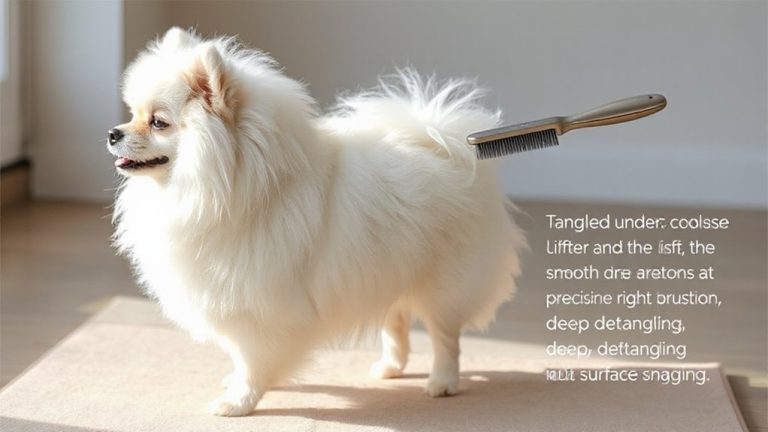
Step-By-Step Guide to Brushing a Cat With a Double Coat in Spring
You should brush your double-coated cat weekly in spring to manage heavy shedding triggered by longer daylight. Use a slicker brush with fine, 2–3 mm-spaced angled bristles to remove loose undercoat efficiently. Work in small sections with short, firm strokes from head to tail, maintaining a 45-degree angle to avoid skin irritation. Add a de-shedding rake with 3/16-inch tines for stubborn fur. Check for mats behind ears and under legs. A calm, warm, quiet space improves cooperation. Further details reveal breed-specific routines that boost effectiveness.
Notable Insights
- Start grooming in a quiet, warm room with soft lighting and a non-slip surface for your cat’s comfort.
- Use a slicker brush with fine, angled bristles to remove loose undercoat hair in short, gentle strokes.
- Work in small sections from head to tail, maintaining a 45-degree angle to avoid skin irritation.
- Address mats with a dematting tool, holding the base of the mat to minimize pulling and discomfort.
- Brush long-haired breeds daily and short-haired double-coated cats weekly to manage spring shedding effectively.
Why Double-Coated Cats Need Spring Brushing
Why does your double-coated cat suddenly shed more in spring? Increased daylight triggers hormonal changes, accelerating coat shedding to shed the dense winter undercoat. This natural process prepares your cat for warmer months but creates excess loose fur. Without intervention, this loose hair accumulates indoors, worsening seasonal allergies in sensitive individuals. Your cat also risks ingesting more fur during self-grooming, potentially forming dangerous hairballs. Regular brushing disrupts this cycle by removing dead hair before it disperses. Double coats consist of a soft, insulating undercoat and a coarser guard layer-each requiring targeted removal. Brushing during spring reduces airborne allergens by up to 80% compared to unbrushed cats. It also improves skin circulation and distributes natural oils. You maintain a cleaner home and support your cat’s health. Spring brushing is not optional-it’s a necessary response to biological and environmental demands.
Pick the Best Brush for Spring Grooming
Spring brings heavier shedding, and your double-coated cat needs the right tool to manage it. Choosing tools requires evaluating bristle type, spacing, and material. A slicker brush with fine, angled wires removes loose undercoat without damaging top hairs. Look for one with stainless steel pins set 1/8 inch apart-this spacing captures dead fur efficiently. For dense undercoats, a shedding blade with micro-grooved edges safely lifts trapped hair when used in short strokes. Identifying needs means evaluating coat density and sensitivity. If your cat has thick undercoat and sensitive skin, opt for a de-shedding rake with rounded tips and 3/16-inch tine spacing to prevent irritation. Avoid brushes with wide gaps-they miss fine undercoat debris. Rubber curry brushes work well for finishing, stimulating skin and distributing oils. Always choose ergonomic handles for better grip and control during grooming.
Create a Quiet Spot for Stress-Free Sessions
When choosing a grooming location, starting in a quiet, low-traffic area of your home helps reduce distractions that can unsettle your cat. Establishing a calm environment minimizes stress and improves cooperation. Select a room with minimal foot traffic, such as a spare bedroom or quiet corner of the bathroom. Turn off televisions and silence mobile devices to maintain consistent auditory conditions. Use soft lighting-avoid harsh overhead lights that may cause discomfort. Speak in soothing tones to reinforce feelings of safety. Keep the temperature between 70–75°F (21–24°C), which most cats find comfortable. Limit access to other pets during sessions. A non-slip mat on the floor or table prevents slipping and enhances security. A calm environment supports effective grooming by reducing heart rate and minimizing defensive behaviors. Consistency in location and routine conditions builds positive associations over time.
Brush Your Double-Coated Cat the Right Way
Start with the right tool: a slicker brush with fine, angled bristles spaced 2–3 millimeters apart cuts through the outer guard hairs without scratching the skin. This spacing matches the density of your cat’s topcoat, allowing efficient reach to the undercoat. Brushing aligns with cat anatomy, targeting hair follicles oriented in natural growth patterns. Use short, firm strokes from head to tail, following the lay of the fur. This method removes loose undercoat hairs loosened by seasonal shedding. Work in small sections to guarantee full coverage. The brush captures dead undercoat without damaging the protective topcoat. Avoid pressing too hard-excessive pressure irritates the skin. Maintain a 45-degree angle for maximum detangling. Regular sessions reduce hairballs and support skin health. Consistent brushing manages shedding volume, minimizing household fur accumulation. Proper stroke direction and brush design enhance coat function and thermoregulation during spring changes.
Remove Mats Without Upsetting Your Cat
A slicker brush handles loose fur, but matted hair demands a different strategy-using the right tool and technique prevents discomfort and skin trauma. Use a mat splitter or dematting tool with blunt-tipped blades; these safely slice through tight tangles without harming skin. Hold the base of the mat to reduce pulling, then gently saw through the mat in thin layers. For mild tangles, apply a leave-in detangling spray and use a wide-tooth comb to separate fibers gradually. Effective detangling techniques involve steady, controlled motions-never yank. Regular use of a quality undercoat rake between grooming sessions supports mat prevention by removing trapped underfur before it binds. Mats often form behind ears, under legs, and along the belly-check these areas daily. If a mat is larger than a quarter or pressed against the skin, consult a professional. Early intervention preserves coat integrity and reduces stress. Choosing the right tool like a best cat deshedding brush can significantly improve coat management during heavy shedding seasons.
Know How Often to Brush Based on Breed
Though coat length and density vary widely across breeds, your cat’s grooming frequency should align with its specific double-coat structure to prevent matting and excessive shedding. Brushing frequency depends on coat thickness and breed-specific traits. Long-haired breeds like Maine Coons or Persians have dense undercoats and require daily brushing. Their coat thickness traps loose fur, increasing matting risk. Use a slicker brush with 0.5-inch bristles followed by a wide-toothed comb to remove tangles. Medium-haired breeds like Siamese with double coats need brushing 3–4 times weekly. Their moderate coat thickness sheds seasonally but resists matting. Short-haired breeds like British Shorthairs still possess a double coat. Despite minimal visible length, their dense undercoat demands weekly brushing. Use a rubber curry brush with 0.25-inch nubs to lift dead hair. Adjust brushing frequency during spring when shedding peaks. For optimal results, choose the right tool by consulting a buying guide for grooming brushes.
Make Brushing a Bonding Moment
Consistency in grooming schedules sets the stage for turning brushing into a positive interaction. Daily 10- to 15-minute sessions promote coat health and support trust building. Use a 7-inch slicker brush with fine, bent wires spaced 2mm apart to reduce static and snagging. Follow with a wide-tooth comb (1/4-inch teeth spacing) to remove residual tangles. Pair grooming with playtime bonding using interactive toys like feather wands immediately after sessions. This reinforces positive associations. Monitor your cat’s body language: flattened ears signal stress; relaxed posture indicates comfort. Maintain a quiet environment with ambient temperature between 68–72°F to minimize agitation. Reward calm behavior with high-value treats, such as freeze-dried chicken pieces (no more than 10 calories per treat). Over 4–6 weeks, this routine strengthens compliance, reduces shedding by up to 60%, and enhances skin inspection accuracy-critical for early detection of dermatological issues. Consider incorporating best interactive bunny toys to further enrich your cat’s post-grooming play routine.
On a final note
You must brush your double-coated cat weekly during spring to manage shedding and prevent matting. Use a slicker brush with fine, 0.5 mm wires spaced 2 mm apart to penetrate the dense undercoat. Follow with an undercoat rake featuring 12 mm teeth to remove loose fur. Proper technique reduces hairballs by up to 60%. Consistent grooming maintains coat health and strengthens trust without causing stress.