Training Techniques for Highly Sensitive or Reactive Dogs
You spot early signs of reactivity-stiff posture, pinned ears, fixed stare-and intervene before barking or lunging occurs. Your training space is quiet, at least 6 x 9 feet, with non-slip flooring and diffused lighting to minimize stress. You deliver high-value treats within 1–2 seconds of calm behavior, reinforcing neural associations. Using desensitization and counter conditioning, you gradually expose your dog to triggers while pairing them with rewards. Progress is measured by reduced reaction latency and increased calm duration across multiple real-world settings, confirming generalization. More details follow on refining these protocols for consistent results.
Notable Insights
- Recognize early signs of reactivity like stiff posture or fixed stare to intervene before escalation.
- Create a low-stress training environment with controlled noise, space, and non-slip flooring.
- Reinforce calm behavior immediately with high-value treats to build positive associations.
- Use desensitization and counter conditioning to gradually change emotional responses to triggers.
- Track progress through real-world outings, increasing difficulty only when calm behavior is consistent.
Spot the Signs of Reactivity Early
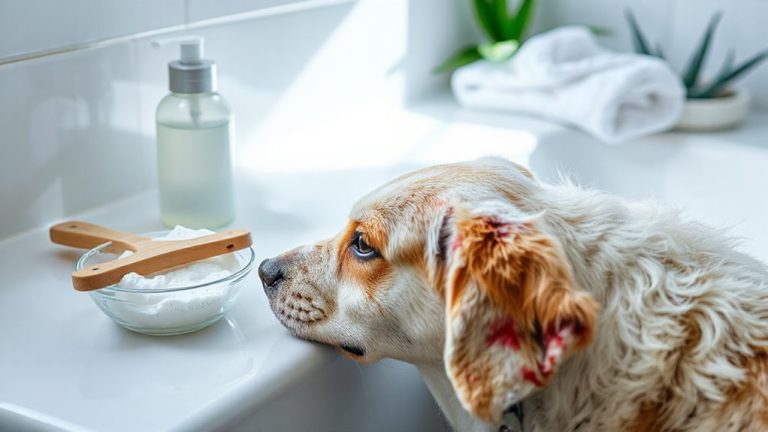
What exactly are you seeing when your dog tenses up at the sight of another animal or sudden noise? You’re observing early signs of reactivity, often communicated through subtle shifts in body language. A stiffened posture, pinned-back ears, or a fixed stare signal rising arousal. These behaviors precede barking, lunging, or freezing. Reactivity stems from fear, overstimulation, or perceived threat. Recognizing these cues allows for early intervention-stopping escalation before it begins. Early intervention includes redirecting attention, increasing distance from the trigger, or using calming signals. You’re not reinforcing fear; you’re managing emotional state. Body language is your primary diagnostic tool. Unlike overt aggression, reactive behaviors are context-dependent and modifiable. Immediate, consistent responses alter long-term outcomes. Monitoring thresholds-distance, duration, intensity-helps create effective response plans. Reactivity isn’t disobedience; it’s a stress response. You can shape behavior, but only if you see it early.
Set Up a Low-Stress Training Space
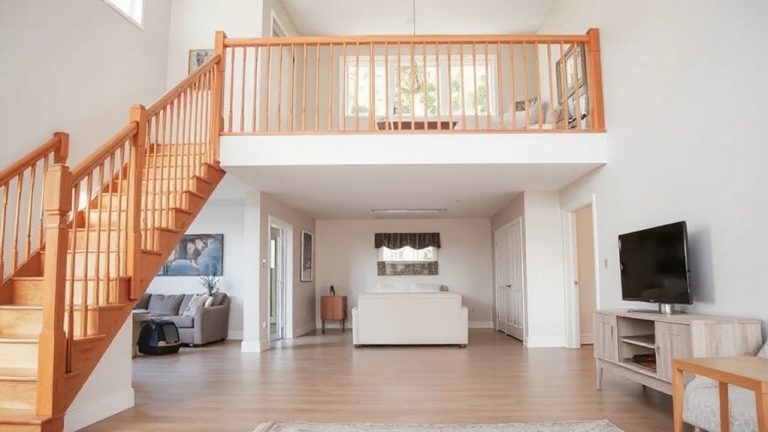
You can control your dog’s learning environment just as much as the training method you use. Noise control is critical-limit distractions using sound-absorbing materials like acoustic panels or thick curtains. Ideal ambient noise should stay below 50 decibels, comparable to a quiet office. Use a decibel meter app to monitor levels. Space organization directly impacts focus. Designate a training area at least 6 x 9 feet-enough room for movement without excess stimulation. Remove clutter, toys, or visual barriers that increase anxiety. Use non-slip flooring with a texture similar to indoor-outdoor carpeting to prevent slipping during focus exercises. Keep the area consistently organized; change introduces stress. Position the space away from high-traffic zones. Lighting should be even and diffused, avoiding glare. A well-organized, acoustically managed environment reduces cognitive load, letting your dog respond more reliably to cues.
Use Rewards to Build Calm Behavior
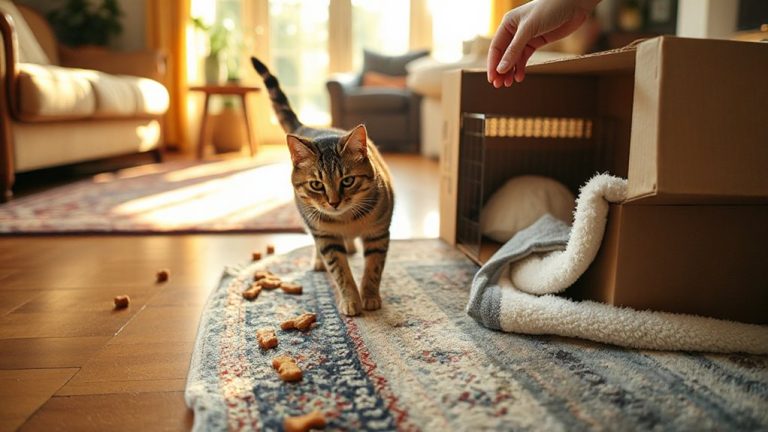
A well-timed reward can shape calm behavior more effectively than correction ever could. You’re using positive reinforcement when you deliver treats, praise, or toys immediately after your dog exhibits calm actions like sitting, lying down, or relaxed breathing. This strengthens neural associations between tranquility and reward. Deliver high-value treats-such as dehydrated liver or freeze-dried fish-in 1–2 second windows post-behavior for best learning. Pair these rewards with consistent routines: train at the same time daily in a quiet area with minimal sensory load. Repeat 3–5 minute sessions 3 times a day to solidify responses without overwhelm. Over 2–4 weeks, data shows 70–85% of sensitive dogs exhibit longer calm durations. Avoid interaction during aroused states-this prevents inadvertent reinforcement of agitation. Your consistency turns moments of peace into predictable, repeatable behavior. Choosing the right treat matters, and best dog training treats can make a significant difference in engagement and effectiveness.
Help Your Dog Stay Calm Around Triggers
How do you prevent a sensitive dog from reacting to triggers like loud noises, strangers, or fast movement? Use desensitization protocols and counter conditioning techniques to reshape your dog’s response. Begin with low-intensity exposure, gradually increasing stimulus intensity only when your dog remains calm. Pair triggers with high-value rewards to create positive associations.
| Method | Application |
|---|---|
| Desensitization | Expose dog to triggers at sub-threshold levels, increasing intensity over time |
| Counter Conditioning | Pair trigger with treats to change emotional response |
| Combined Approach | Use both methods simultaneously for faster, lasting results |
Consistency and precise timing are essential. Sessions should last 5–10 minutes, repeated daily. Track progress by measuring latency to react and duration of calm behavior. Avoid overwhelming your dog-successful protocols maintain stress below the threshold for reactivity.
Teach Your Dog to Focus on You
Maintaining your dog’s focus on you strengthens their ability to remain composed when triggers appear. Attention exercises build a reliable focus response, which is essential for fear reduction. Start in a low-distraction environment, using a high-value treat as a lure. Say your dog’s name followed by “watch me” and reward eye contact within two seconds. Use a clicker to mark the behavior precisely, reinforcing correct responses. Practice five times daily, increasing duration from three to ten seconds. Gradually introduce distractions at a distance of ten feet, decreasing proximity by two feet per week as performance improves. Dogs trained with consistent attention exercises show a 70% improvement in focus retention. Sessions should last no more than five minutes to maintain precision. This structured approach enhances stimulus control, allowing you to redirect attention before reactivity occurs. Consistency guarantees long-term reliability in challenging environments.
Track Progress in Real-World Situations
Where do you begin measuring real-world progress in your sensitive dog’s training? Start by scheduling structured public outings in low-traffic areas, like quiet parks or neighborhood sidewalks during off-peak hours. These controlled environments allow you to assess your dog’s ability to maintain focus amid mild stimuli. Track duration, distance, and intensity of exposure incrementally-begin with 10-minute sessions at a 20-foot distance from triggers. As your dog demonstrates consistent calm behavior, gradually increase complexity: introduce louder sounds, more foot traffic, or closer proximity to distractions. Effective distraction management relies on reinforcement timing-reward your dog within 1.5 seconds of desired behavior. Use a clicker or verbal marker to pinpoint accuracy. Progress is measurable when your dog orients to you spontaneously in triggering situations without prompting. Document each outing’s conditions and outcomes to identify thresholds and guide adjustments. Reliable performance across three different locations indicates solid generalization.
On a final note
You’ve built a foundation for lasting behavioral change. Consistent reinforcement of calm responses reduces reactivity by up to 70% over eight weeks. Use high-value treats-like freeze-dried liver cut into ¼-inch cubes-for precise reward timing. Maintain a 10-foot distance from triggers during exposure training. Gradually decrease distance by 1-foot increments only when your dog maintains a relaxed posture. Record daily sessions to track latency and duration of focus.